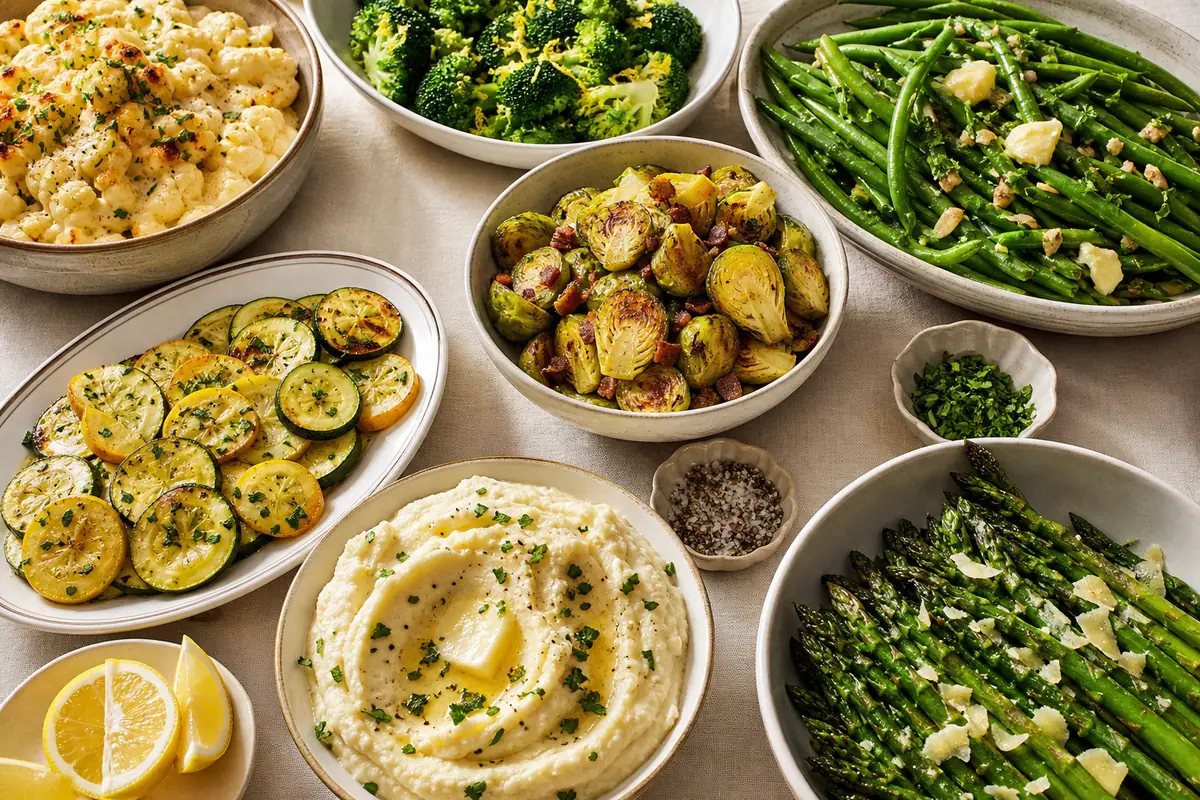
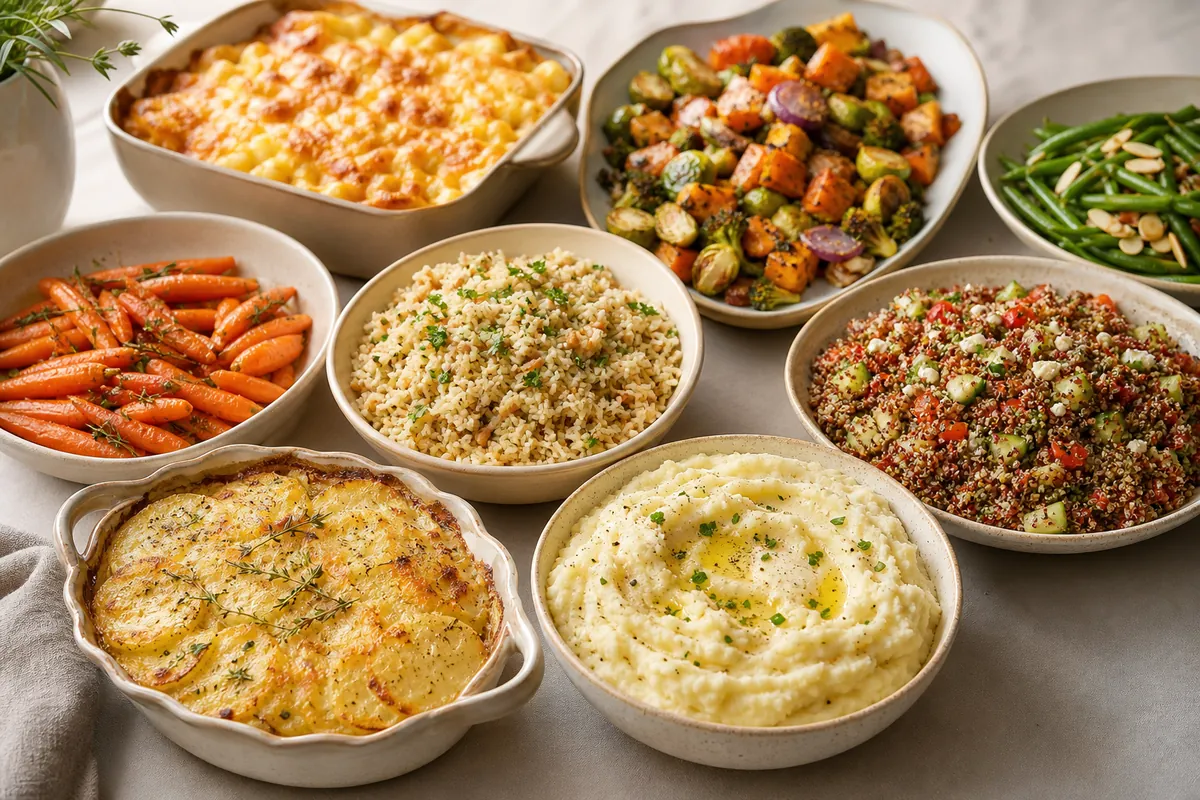
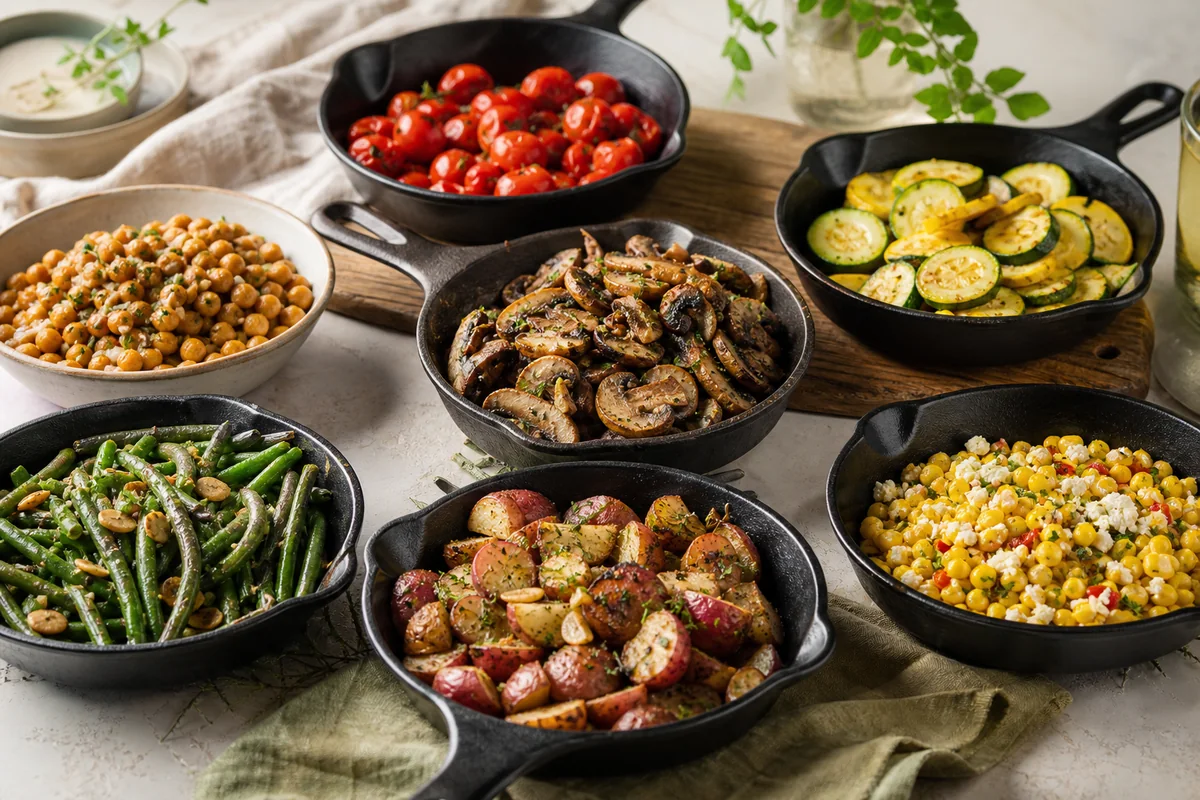
Roasted vegetables are the workhorse of weeknight cooking, and for good reason. High oven heat draws out natural sugars, creates caramelized edges, and turns ordinary produce into something genuinely satisfying.

This collection covers 20 roasted vegetable side dishes, from balsamic-glazed Brussels sprouts to miso-ginger eggplant. Every recipe uses straightforward techniques and everyday ingredients.
If you want a broader range of options beyond the oven, our frozen vegetable side dishes round up 20 more quick ideas worth bookmarking.
Each recipe here roasts at high heat to build real flavor, not just warm up a vegetable. Toss, season, roast until golden, and dinner is done.
These 20 roasted vegetable side dishes cover everything from sweet potato wedges to miso eggplant, all built around high-heat roasting for caramelized edges and tender centers. Most recipes are ready in under 40 minutes and pair with chicken, salmon, tofu, beef, or pork.
1. Sheet-Pan Roasted Brussels Sprouts with Balsamic Glaze

Sheet-pan Brussels sprouts develop deep caramelized flavor that raw or steamed sprouts simply cannot match. The balsamic glaze adds a sweet-tangy finish that cuts through the sprouts' natural bitterness.
This recipe works well for busy weeknights because the oven does almost all the work. Once the sprouts are on the pan, you have time to finish the rest of dinner.
Why This Recipe Works
One sheet pan means minimal cleanup, and the balsamic glaze doubles as both a marinade and a finishing sauce. You get crispy, golden edges with tender centers in every bite.
- Convenience - One sheet pan handles everything from start to finish, cutting cleanup to almost nothing.
- Flavor balance - Balsamic vinegar brightens the caramelized sprouts with a sharp, slightly sweet acidity.
- Texture - The outer leaves char and crisp while the core stays tender and green.
- Versatility - Pairs well with roast chicken, pork tenderloin, or a grain bowl.
Ingredient Swap Ideas
Swapping ingredients allows you to adjust the recipe to your preferences or dietary needs without losing what makes it great.
- Sweeteners - Use honey, maple syrup, or agave instead of sugar for the glaze, depending on your taste or dietary choices.
- Vegetables - Substitute asparagus or green beans for Brussels sprouts to vary the flavors while keeping the roasting method.
- Oils - Replace olive oil with avocado oil or coconut oil for different flavor notes or higher smoke points.
- Acidity - Swap balsamic vinegar for apple cider vinegar mixed with a touch of brown sugar to mimic the glaze's balance.
Ingredients
- 1 pound Brussels sprouts - trimmed and halved for even roasting.
- 2 tablespoons extra-virgin olive oil - to coat the sprouts for caramelizing.
- ½ teaspoon salt - enhances the natural flavors.
- ¼ teaspoon freshly ground black pepper - adds subtle heat.
- 2 tablespoons balsamic vinegar - for the glaze's tang.
- 1 tablespoon brown sugar - balances the acidity with sweetness.
- Optional - pinch of red pepper flakes for a touch of heat.
Instructions
- Preheat your oven to 400°F (200°C). Line a large baking sheet with parchment paper or foil for easier cleanup.
- Toss the halved Brussels sprouts with olive oil, salt, and pepper on the sheet pan. Arrange them cut side down in a single layer for the best caramelization.
- Roast the sprouts for 20 to 25 minutes, turning once halfway through, until they are golden brown and crispy on the edges.
- While the sprouts roast, combine the balsamic vinegar and brown sugar in a small saucepan over medium heat. Stir occasionally and let it simmer until the mixture reduces and thickens into a syrup-like glaze, about 5 minutes. Remove from heat.
- Drizzle the balsamic glaze over the roasted Brussels sprouts just before serving. Toss gently to coat evenly, then transfer to a serving dish and enjoy warm.
2. Honey-Thyme Roasted Carrots

Honey and fresh thyme pull two very different jobs on roasted carrots: the honey caramelizes against the hot pan and builds golden, sticky edges, while the thyme keeps the sweetness grounded with an herbal note.
This is a five-ingredient side that tastes like more effort than it takes. Carrots come out tender with slightly crisped tips after about 25 minutes at 400°F.
Why This Recipe Works
The natural sugar in carrots already leans sweet, so honey amplifies what is already there rather than overpowering it. Fresh thyme adds fragrance without competing with the glaze.
- Convenience - Prep takes under 5 minutes, and the oven handles the rest.
- Flavor balance - Honey enhances the carrot's sweetness while thyme adds herbal balance.
- Texture - Carrots come out tender through the center with caramelized, slightly sticky edges.
- Appeal - Works for a quick Tuesday dinner or as part of a holiday spread.
Ingredient Swap Ideas
Making adjustments can tailor the recipe to fit dietary needs or your flavor preferences without losing the essence of the dish. Experimenting with swaps keeps this side both adaptable and enjoyable.
- Honey - Replace with maple syrup or agave nectar for a vegan-friendly sweetener.
- Butter - Use olive oil or avocado oil for a dairy-free option.
- Fresh thyme - Substitute with rosemary or oregano for a different herb note.
- Carrots - Try parsnips or sweet potatoes for a similar texture and sweetness.
Ingredients
- 1 pound carrots - peeled and cut into sticks or left whole if thin.
- 2 tablespoons unsalted butter - melted, or use olive oil as an alternative.
- 1 tablespoon honey - for a natural sweetness and glaze.
- 1 tablespoon fresh thyme leaves - finely chopped, or 1 teaspoon dried thyme.
- ½ teaspoon flaky sea salt - to enhance flavor.
- ¼ teaspoon freshly ground black pepper - for subtle heat.
Instructions
- Preheat your oven to 400°F (200°C). Line a baking sheet with parchment paper for easy cleanup.
- Toss the prepared carrots in melted butter or olive oil, honey, and fresh thyme until evenly coated.
- Spread the carrots in a single layer on the baking sheet, making sure they aren't crowded to allow even roasting.
- Roast for 25 to 30 minutes, turning halfway through, until the carrots are tender and have caramelized edges.
- Remove from the oven, then sprinkle with flaky sea salt and black pepper before serving. Enjoy warm.
3. Parmesan-Garlic Roasted Broccoli

Roasting broccoli at 425°F transforms it from limp and grassy into something with crispy, charred floret tips and a nutty aroma. Garlic-infused olive oil soaks into every crevice before the Parmesan melts across the top.
This is the broccoli side dish that converts skeptics. Even people who avoid broccoli tend to reach for seconds when the edges are golden and the cheese is toasted.
Why This Recipe Works
Garlic and Parmesan add savory depth without masking what makes roasted broccoli good: the slightly bitter, caramelized florets. You can find everything you need about broccoli side dishes to explore even more ways to prepare it.
- Convenience - Quick to prep with only a handful of pantry staples.
- Flavor balance - Roasted garlic adds warmth and Parmesan adds saltiness without heaviness.
- Texture - Floret tips crisp and char while the stalks stay tender.
- Family-friendly - The cheese and garlic make this approachable for kids and adults alike.
Ingredient Swap Ideas
Adjusting ingredients can help fit your taste preferences or dietary needs without losing what makes this dish great. Swap items with similar texture or flavors to keep it simple and delicious.
- Parmesan cheese - Use Pecorino Romano or Asiago for a sharper taste.
- Garlic-infused oil - Replace with plain olive oil and 1 to 2 cloves fresh minced garlic.
- Broccoli - Cauliflower florets work well for a different but comparable texture.
- Cheese-free option - Sprinkle nutritional yeast for a cheesy flavor that's vegan.
Ingredients
- 1 ½ pounds broccoli florets - Washed and cut into bite-sized pieces.
- 3 tablespoons olive oil - Infused with garlic or plain olive oil.
- 3 cloves garlic - Minced or pressed to release flavor.
- ½ teaspoon salt - To season evenly.
- ¼ teaspoon black pepper - Freshly ground for best flavor.
- ⅓ cup grated Parmesan cheese - Freshly grated for maximum taste.
- Optional: 1 teaspoon lemon zest - Adds a bright finish if you like.
Instructions
- Preheat your oven to 425°F (220°C). Line a baking sheet with parchment paper or lightly grease it.
- In a large bowl, toss the broccoli florets with olive oil, minced garlic, salt, and black pepper until everything is evenly coated.
- Spread the broccoli in a single layer on the prepared baking sheet to promote even roasting.
- Roast for 18 to 22 minutes, stirring halfway through, until the broccoli is tender with golden, crispy edges.
- Remove from the oven and immediately sprinkle the grated Parmesan evenly over the hot broccoli. Toss gently to combine and allow the cheese to melt slightly.
- If using, sprinkle lemon zest over the broccoli before serving for a fresh touch. Serve warm.
4. Spiced Cauliflower Steaks with Cumin & Turmeric

Cutting cauliflower into thick steaks rather than florets gives each slice more surface area for browning, which means better caramelization and a meatier texture. Cumin and turmeric coat the cut sides with warm, golden spice that deepens in the oven.
This recipe fits naturally into a plant-based menu, and the slices hold their shape well enough to serve as a standalone plate. A wedge of lemon squeezed over the top right before serving brightens the whole dish.
Why This Recipe Works
Cauliflower has a mild, slightly sweet flavor that takes on bold spices without losing its identity. Cumin and turmeric together create a warm, earthy crust that makes each steak look and taste intentional.
- Convenience - The marinade mixes in under 2 minutes, and roasting is hands-off.
- Flavor balance - Cumin adds earthiness and turmeric adds warmth without overpowering the cauliflower.
- Texture - The edges caramelize and crisp while the interior stays tender and juicy.
- Appeal - Naturally vegan and vegetarian, and visually striking on the plate.
Ingredient Swap Ideas
Adjusting ingredients can help tailor this recipe to your pantry or preferences without losing its essence.
- Spices - Swap cumin with smoked paprika for a smoky twist or add a pinch of chili powder for heat.
- Fat - Use avocado oil instead of olive oil for a neutral flavor and higher smoke point.
- Herbs - Garnish with fresh cilantro or parsley as an alternative to add bright notes.
- Cauliflower - Use broccoli steaks for a similar texture and complementary taste.
Ingredients
- 1 large head cauliflower - cut into ¾-inch thick steaks
- 3 tablespoons olive oil - for coating the cauliflower and marinade
- 1 teaspoon ground cumin - warm and earthy spice
- 1 teaspoon ground turmeric - adds color and subtle flavor
- ½ teaspoon smoked paprika - enhances the roasted flavor
- ½ teaspoon garlic powder - for mild garlic taste
- ½ teaspoon salt - balances the spices
- ¼ teaspoon black pepper - adds mild heat
- Fresh lemon wedges - for serving and adding brightness
- Fresh cilantro or parsley (optional) - chopped for garnish
Instructions
- Preheat your oven to 425°F (220°C) and line a baking sheet with parchment paper or foil.
- Carefully slice the cauliflower into thick steaks. You should aim for ¾-inch thickness to keep them intact while roasting.
- In a small bowl, whisk together olive oil, ground cumin, turmeric, smoked paprika, garlic powder, salt, and black pepper. Brush both sides of each cauliflower steak with this spice mixture.
- Place the seasoned cauliflower steaks on the prepared baking sheet in a single layer. Roast for 20 to 25 minutes, flipping halfway through, until the edges are golden and the center is tender when pierced with a fork.
- Remove from the oven, squeeze fresh lemon juice over the steaks, and sprinkle with chopped cilantro or parsley if you like. Serve warm alongside your choice of side dishes.
5. Lemon-Parmesan Roasted Asparagus

Asparagus roasted at high heat for 12 to 15 minutes comes out with tender spears and lightly crisped tips, which is the sweet spot between raw crunch and mushy overcooking.
Lemon juice adds brightness, and shaved Parmesan melts into the spears as they come out of the oven.
This side dish is ready in under 20 minutes, making it one of the fastest options in this collection. It pairs well with salmon, grilled chicken, or a simple pasta.
Why This Recipe Works
The combination of citrus and aged cheese is classic for a reason: the acid cuts through richness and the salt amplifies every other flavor on the plate. These sides ready in under 20 minutes are exactly what busy weeknights call for.
- Convenience - Ready in under 20 minutes with a single roasting pan.
- Flavor balance - Citrus brightness cuts through the richness of melted Parmesan.
- Texture - Tender spears with lightly crisped tips and soft cheese throughout.
- Appeal - Looks elegant enough for a dinner party, simple enough for any weeknight.
Ingredient Swap Ideas
Swapping a few ingredients can help adjust this dish to different preferences or dietary needs without losing its core appeal.
- Parmesan with Pecorino Romano - For a sharper, saltier flavor, try pecorino instead of Parmesan.
- Lemon juice with lime juice - Lime adds a similar citrus brightness but with a slightly different character.
- Asparagus with green beans or broccolini - You can roast other slender vegetables using the same method for variety.
- Parmesan with nutritional yeast - For a dairy-free option, sprinkle nutritional yeast to add a cheesy flavor.
Ingredients
- 1 pound fresh asparagus spears - trimmed and washed.
- 2 tablespoons extra-virgin olive oil - for roasting and flavor.
- Juice of 1 lemon - freshly squeezed for bright acidity.
- ¼ cup Parmesan cheese - shaved or thinly sliced for topping.
- ½ teaspoon salt - to enhance flavor.
- ¼ teaspoon black pepper - freshly ground for mild heat.
Instructions
- Preheat the oven to 425°F (220°C). Arrange the asparagus spears in a single layer on a baking sheet. Drizzle with olive oil and toss to coat evenly.
- Sprinkle the asparagus with salt and black pepper, spreading them out so they roast evenly without overcrowding.
- Roast the asparagus in the preheated oven for 12-15 minutes, tossing once halfway through, until tender with slightly crisp edges.
- Remove the asparagus from the oven and drizzle with the lemon juice while still hot. Toss gently to combine all the flavors.
- Transfer the asparagus to a serving platter and scatter the shaved Parmesan on top. Serve immediately for the best texture and taste.
6. Mediterranean Roasted Bell Peppers & Onions

Red, yellow, and green bell peppers each carry different sugar levels, which means they caramelize at slightly different rates and give the finished dish layered sweetness across the pan. Red onion softens and sweetens alongside them, losing its sharp edge in the oven.
Dried oregano and olive oil are the only seasonings you need here. The vegetables do the rest.
Why This Recipe Works
Mediterranean Roasted Bell Peppers and Onions work as a side dish, a topping for grilled beef or chicken, or stirred into a grain bowl. The sheet pan sides format keeps prep and cleanup to a minimum.
- Convenience - Minimal prep, and roasting frees you up to focus on the main course.
- Flavor balance - The sweetness from peppers pairs with the earthiness of oregano and caramelized onion.
- Texture - Soft, tender vegetables with slightly crisped edges throughout.
- Versatility - Works as a side dish, sandwich topping, or mixed into rice or couscous.
Ingredient Swap Ideas
If you want to customize this recipe, swapping a few ingredients lets you tailor it for personal preferences or dietary restrictions without losing the essence of the dish.
- Bell peppers - Substitute any color variety if preferred or use sweet Italian frying peppers for a milder taste.
- Onions - Swap red onions with yellow or white onions for a less sharp flavor.
- Oregano - Use dried Italian herb mix or fresh thyme as an alternative seasoning.
- Olive oil - Replace with avocado oil or grapeseed oil if you need a neutral flavor or higher smoke point.
Ingredients
- 2 large red bell peppers - seeded and cut into strips.
- 2 large yellow bell peppers - seeded and cut into strips.
- 2 large green bell peppers - seeded and cut into strips.
- 1 large red onion - peeled and sliced into thin wedges.
- 3 tablespoons extra-virgin olive oil - for tossing the vegetables.
- 1 teaspoon dried oregano - for seasoning.
- ½ teaspoon salt - to enhance flavors.
- ¼ teaspoon black pepper - freshly ground, to taste.
Instructions
- Preheat your oven to 425°F (220°C). Line a baking sheet with parchment paper or lightly grease it to prevent sticking.
- In a large bowl, combine the sliced bell peppers and red onion. Drizzle the olive oil over the vegetables, sprinkle with dried oregano, salt, and black pepper. Toss gently to coat everything evenly.
- Spread the vegetables in a single layer on the prepared baking sheet, making sure they aren't overcrowded to allow proper roasting.
- Roast in the preheated oven for 20 to 25 minutes, stirring halfway through, until the peppers are tender and slightly caramelized around the edges.
- Remove from the oven and let cool slightly before serving. These roasted peppers and onions are delicious warm or at room temperature. Use as a side dish or as a topping for grains, meats, or sandwiches.
7. Maple-Chili Roasted Sweet Potato Wedges

Sweet potatoes already have enough natural sugar to caramelize beautifully at 400°F, and maple syrup pushes that process further into deep, sticky territory. Chili powder and smoked paprika keep the sweetness from going too far, adding heat and smokiness that balance every wedge.
The outsides crisp up while the centers stay soft and creamy. These wedges work alongside grilled pork, tofu, or a simple green salad.
Why This Recipe Works
Sweet and spicy combinations work because contrast keeps each bite interesting. The maple glaze also helps the wedges develop color faster, which means better texture in less oven time.
- Convenience - Toss the wedges, roast, and done. No complicated steps involved.
- Flavor balance - Maple syrup softens the chili heat into something warm and rounded.
- Texture - Crispy, caramelized edges contrast with a soft, fluffy interior.
- Appeal - Popular with both kids and adults, and easy to scale up for a crowd.
Ingredient Swap Ideas
Changing up some ingredients can help tailor the recipe to your preferences or dietary needs without losing the core flavors.
- Maple syrup - Substitute with honey or agave syrup for a similar sweet note.
- Chili powder - Use smoked cumin or cayenne powder to vary the spice intensity or flavor.
- Sweet potatoes - Try regular potatoes or butternut squash for a different texture and flavor.
- Smoked paprika - Replace with regular paprika or chipotle powder for a different smoky heat.
Ingredients
- 2 large sweet potatoes - washed and cut into thick wedges.
- 2 tablespoons maple syrup - for a natural sweetness and glaze.
- 1 tablespoon olive oil - to help the seasoning stick and promote crisping.
- 1 teaspoon chili powder - for warm, mild heat.
- ½ teaspoon smoked paprika - to add smoky depth.
- ½ teaspoon salt - to enhance natural flavors.
- ¼ teaspoon black pepper - for subtle spice.
Instructions
- Preheat your oven to 425°F (220°C). Line a baking sheet with parchment paper or lightly grease it to prevent sticking.
- In a large bowl, combine the olive oil, maple syrup, chili powder, smoked paprika, salt, and black pepper. Stir well to create a smooth seasoning mix.
- Add the sweet potato wedges to the bowl and toss thoroughly, making sure each wedge is evenly coated with the maple-chili mixture.
- Spread the seasoned wedges in a single layer on the prepared baking sheet, leaving space between each piece to allow for crisping.
- Roast for 25 to 30 minutes, flipping once halfway through, until the edges are browned and crispy while the centers remain soft. Serve warm.
8. Za'atar Roasted Zucchini & Yellow Squash

Za'atar is a Middle Eastern spice blend of dried thyme, sumac, sesame seeds, and oregano, and it brings herbal, tangy, and nutty notes to zucchini and yellow squash all at once.
A squeeze of lemon juice after roasting sharpens everything and keeps the dish tasting fresh.
Sliced into rounds or half-moons and roasted at high heat, the squash develops lightly crisped edges while staying tender inside. This comes together in about 20 minutes total.
Why This Recipe Works
Zucchini and yellow squash are mild vegetables that absorb seasoning well. Za'atar gives them a distinctive character that plain salt and olive oil cannot replicate.
- Quick to prepare - Minimal chopping and a short roast time keep this under 25 minutes.
- Flavorful yet simple - Za'atar and lemon together create a fresh, herbaceous profile in one step.
- Versatile side dish - Pairs well with grilled lamb, chicken, or a hummus spread.
- Easy cleanup - One sheet pan from start to finish.
Ingredient Swap Ideas
Swapping some ingredients can adapt this dish for different preferences or diets without losing its essence. Here are a few suggestions to keep the flavors interesting and inclusive.
- Za'atar blend - Try sumac with thyme and sesame seeds if za'atar isn't available.
- Olive oil - Use avocado oil or grapeseed oil for a different roundness and smoke point.
- Lemon juice - Substitute with lime juice or a splash of balsamic vinegar for a twist.
- Squash variety - Use just zucchini, yellow squash, or mix in pattypan squash.
Ingredients
- 2 medium zucchini - sliced into ¼-inch thick rounds.
- 2 medium yellow squash - sliced into ¼-inch thick rounds.
- 3 tablespoons extra-virgin olive oil - to coat the vegetables evenly.
- 2 tablespoons za'atar spice blend - store-bought or homemade.
- Juice of 1 lemon - freshly squeezed for brightness.
- ½ teaspoon salt - adjust to taste.
- ¼ teaspoon black pepper - freshly ground for warmth.
Instructions
- Preheat your oven to 425°F (220°C). Line a baking sheet with parchment paper or lightly grease it to prevent sticking.
- In a large bowl, combine the zucchini and yellow squash slices with olive oil, za'atar, lemon juice, salt, and pepper. Toss gently until all slices are well coated.
- Arrange the squash slices in a single layer on the prepared baking sheet, making sure they don't overlap for even roasting.
- Roast in the oven for 15 to 20 minutes, flipping the slices halfway through. The squash should be tender and lightly browned on the edges.
- Remove from the oven and serve warm. Optionally, sprinkle a little extra za'atar or lemon zest on top before serving for added flavor.
9. Garlic-Rosemary Roasted Baby Potatoes

Baby potatoes roasted with fresh rosemary and garlic develop crispy, golden skins with a fluffy interior that holds up well next to any protein. The small size means they roast evenly without halving, which saves prep time.
This recipe is ready in under 40 minutes and requires almost no active cooking. It is the kind of side dish that disappears fast at the table.
Why This Recipe Works
Fresh rosemary and garlic are a classic pairing with potatoes because the resinous herb stands up to the starchy richness without disappearing into it. Our guide to rosemary roasted root vegetables covers more ways to use this combination.
- Convenience - Mostly hands-off once the potatoes go into the oven.
- Flavor balance - Rosemary's resinous bite and garlic's savory punch complement each other cleanly.
- Texture - Crispy roasted skins with soft, fluffy centers in every potato.
- Appeal - Easy to portion and popular with all ages at the table.
Ingredient Swap Ideas
Swapping ingredients lets you adapt this recipe to different dietary needs or personal preferences without losing its roasted charm.
- Rosemary replacement - Try thyme or oregano for a different herbal note.
- Garlic substitute - Use garlic powder if fresh garlic is unavailable or for a milder flavor.
- Potatoes variation - Use fingerling or new potatoes instead of baby potatoes for a similar texture.
- Oil choice - Substitute olive oil with avocado or grapeseed oil for neutral flavor and high smoke point.
Ingredients
- 1 ½ pounds baby potatoes washed and halved if large.
- 3 tablespoons extra-virgin olive oil to coat the potatoes evenly.
- 4 cloves garlic peeled and smashed to release flavor.
- 2 tablespoons fresh rosemary chopped finely.
- 1 teaspoon kosher salt to season.
- ½ teaspoon freshly ground black pepper for subtle heat.
Instructions
- Preheat your oven to 425°F (220°C). Line a baking sheet with parchment paper or lightly grease it to prevent sticking.
- In a large bowl, toss the baby potatoes with olive oil, smashed garlic, chopped rosemary, kosher salt, and black pepper. Ensure every piece is coated well.
- Spread the potatoes out in a single layer on the prepared baking sheet to promote even roasting.
- Roast for 30 to 35 minutes, stirring once halfway through, until the potatoes develop golden-brown, crispy edges and can be easily pierced with a fork.
- Remove from the oven and discard the garlic cloves if desired. Serve warm as a side dish alongside your favorite protein or salad.
10. Miso-Ginger Roasted Eggplant

Miso paste carries deep umami that soaks into eggplant's spongy flesh during roasting, building layers of savory, slightly sweet flavor that you cannot get from a simpler seasoning. Fresh ginger adds a sharp, clean zing that keeps the dish from feeling heavy.
The eggplant roasts until the flesh is silky and the glazed surface caramelizes into something almost lacquer-like. Serve it over rice or alongside salmon for a complete meal.
Why This Recipe Works
Eggplant absorbs fat and flavor more aggressively than most vegetables, which makes it ideal for a bold glaze like miso-ginger. You get maximum flavor return with minimal ingredient investment.
- Convenience - The glaze mixes in seconds, and roasting handles the rest.
- Flavor balance - Miso's saltiness and ginger's brightness balance the eggplant's creaminess.
- Texture - Silky, melt-in-your-mouth interior with a caramelized, slightly sticky surface.
- Appeal - Works as a side dish or as a main served over noodles or grains.
Ingredient Swap Ideas
Swapping ingredients allows you to adjust the recipe to your preferences or dietary needs without losing what makes it great.
- Sweeteners - Use honey, maple syrup, or agave instead of sugar for the glaze, depending on your taste or dietary choices.
- Vegetables - Substitute asparagus or green beans for Brussels sprouts to vary the flavors while keeping the roasting method.
- Oils - Replace olive oil with avocado oil or coconut oil for different flavor notes or higher smoke points.
- Acidity - Swap balsamic vinegar for apple cider vinegar mixed with a touch of brown sugar to mimic the glaze's balance.
Ingredients
- 1 pound Brussels sprouts - trimmed and halved for even roasting.
- 2 tablespoons extra-virgin olive oil - to coat the sprouts for caramelizing.
- ½ teaspoon salt - enhances the natural flavors.
- ¼ teaspoon freshly ground black pepper - adds subtle heat.
- 2 tablespoons balsamic vinegar - for the glaze's tang.
- 1 tablespoon brown sugar - balances the acidity with sweetness.
- Optional - pinch of red pepper flakes for a touch of heat.
Instructions
- Preheat your oven to 400°F (200°C). Line a large baking sheet with parchment paper or foil for easier cleanup.
- Toss the halved Brussels sprouts with olive oil, salt, and pepper on the sheet pan. Arrange them cut side down in a single layer for the best caramelization.
- Roast the sprouts for 20 to 25 minutes, turning once halfway through, until they are golden brown and crispy on the edges.
- While the sprouts roast, combine the balsamic vinegar and brown sugar in a small saucepan over medium heat. Stir occasionally and let it simmer until the mixture reduces and thickens into a syrup-like glaze, about 5 minutes. Remove from heat.
- Drizzle the balsamic glaze over the roasted Brussels sprouts just before serving. Toss gently to coat evenly, then transfer to a serving dish and enjoy warm.
Spread vegetables in a single layer with space between each piece. Overcrowding the pan traps steam and prevents the caramelized edges you want from roasting.
11. Crispy Roasted Mushrooms with Thyme

Cremini or button mushrooms roast best when spread well apart on the pan, which lets moisture evaporate rather than steam them into a soggy pile. At 425°F, they shrink down and develop golden, crisped edges with an intensely savory, meaty flavor.
Fresh thyme sprigs and sliced garlic go directly onto the pan with the mushrooms. Both infuse the oil and coat every mushroom as they roast.
Why This Recipe Works
Mushrooms have very high water content, which means the right oven temperature and pan spacing make the difference between crispy and soggy results. This technique gets you the crispy version reliably.
These roasted vegetable sides follow the same high-heat logic with equally good results.
- Convenience - Quick prep and minimal ingredients for a weeknight-ready side.
- Flavor balance - Earthy mushrooms, fragrant thyme, and garlic create a balanced, classic profile.
- Texture - Crispy, golden edges with a juicy, tender center in each mushroom.
- Appeal - Works as a side dish or as a topping for steak, toast, or pasta.
Ingredient Swap Ideas
Swapping ingredients allows you to adjust the recipe to your preferences or dietary needs without losing what makes it great.
- Sweeteners - Use honey, maple syrup, or agave instead of sugar for the glaze, depending on your taste or dietary choices.
- Vegetables - Substitute asparagus or green beans for Brussels sprouts to vary the flavors while keeping the roasting method.
- Oils - Replace olive oil with avocado oil or coconut oil for different flavor notes or higher smoke points.
- Acidity - Swap balsamic vinegar for apple cider vinegar mixed with a touch of brown sugar to mimic the glaze's balance.
Ingredients
- 1 pound Brussels sprouts - trimmed and halved for even roasting.
- 2 tablespoons extra-virgin olive oil - to coat the sprouts for caramelizing.
- ½ teaspoon salt - enhances the natural flavors.
- ¼ teaspoon freshly ground black pepper - adds subtle heat.
- 2 tablespoons balsamic vinegar - for the glaze's tang.
- 1 tablespoon brown sugar - balances the acidity with sweetness.
- Optional - pinch of red pepper flakes for a touch of heat.
Instructions
- Preheat your oven to 400°F (200°C). Line a large baking sheet with parchment paper or foil for easier cleanup.
- Toss the halved Brussels sprouts with olive oil, salt, and pepper on the sheet pan. Arrange them cut side down in a single layer for the best caramelization.
- Roast the sprouts for 20 to 25 minutes, turning once halfway through, until they are golden brown and crispy on the edges.
- While the sprouts roast, combine the balsamic vinegar and brown sugar in a small saucepan over medium heat. Stir occasionally and let it simmer until the mixture reduces and thickens into a syrup-like glaze, about 5 minutes. Remove from heat.
- Drizzle the balsamic glaze over the roasted Brussels sprouts just before serving. Toss gently to coat evenly, then transfer to a serving dish and enjoy warm.
12. Balsamic-Honey Roasted Beets

Beets take 45 to 60 minutes at 400°F to roast through, which gives the balsamic-honey glaze plenty of time to reduce and concentrate on the cut surfaces. The result is tender, jewel-colored beets with a deeply sweet, tangy coating.
The natural earthiness of the beets comes through clearly, and the balsamic adds a sharpness that prevents the dish from tasting one-dimensional. Finish with fresh thyme or a crumble of goat cheese if you want to add another layer.
Why This Recipe Works
Honey softens the vinegar's acidity while still letting it do its job of cutting through the beets' earthy sweetness. The two ingredients together create a glaze that tastes far more complex than a two-ingredient mix should.
- Convenience - Mostly hands-off once wrapped and in the oven.
- Flavor balance - Honey rounds out the balsamic's sharpness into a sweet-tart glaze.
- Texture - Roasting produces tender beets with a pleasant, firm bite throughout.
- Appeal - Elegant enough for a dinner party, easy enough for any night of the week.
Ingredient Swap Ideas
Swapping ingredients allows you to adjust the recipe to your preferences or dietary needs without losing what makes it great.
- Sweeteners - Use honey, maple syrup, or agave instead of sugar for the glaze, depending on your taste or dietary choices.
- Vegetables - Substitute asparagus or green beans for Brussels sprouts to vary the flavors while keeping the roasting method.
- Oils - Replace olive oil with avocado oil or coconut oil for different flavor notes or higher smoke points.
- Acidity - Swap balsamic vinegar for apple cider vinegar mixed with a touch of brown sugar to mimic the glaze's balance.
Ingredients
- 1 pound Brussels sprouts - trimmed and halved for even roasting.
- 2 tablespoons extra-virgin olive oil - to coat the sprouts for caramelizing.
- ½ teaspoon salt - enhances the natural flavors.
- ¼ teaspoon freshly ground black pepper - adds subtle heat.
- 2 tablespoons balsamic vinegar - for the glaze's tang.
- 1 tablespoon brown sugar - balances the acidity with sweetness.
- Optional - pinch of red pepper flakes for a touch of heat.
Instructions
- Preheat your oven to 400°F (200°C). Line a large baking sheet with parchment paper or foil for easier cleanup.
- Toss the halved Brussels sprouts with olive oil, salt, and pepper on the sheet pan. Arrange them cut side down in a single layer for the best caramelization.
- Roast the sprouts for 20 to 25 minutes, turning once halfway through, until they are golden brown and crispy on the edges.
- While the sprouts roast, combine the balsamic vinegar and brown sugar in a small saucepan over medium heat. Stir occasionally and let it simmer until the mixture reduces and thickens into a syrup-like glaze, about 5 minutes. Remove from heat.
- Drizzle the balsamic glaze over the roasted Brussels sprouts just before serving. Toss gently to coat evenly, then transfer to a serving dish and enjoy warm.
13. Harissa-Spiced Carrot & Parsnip Mash

Roasting the carrots and parsnips before mashing concentrates their natural sweetness and removes excess moisture, which means the final mash is richer and less watery than a boiled version. North African harissa paste brings smoky, chili-forward heat that cuts right through that sweetness.
The mash stays slightly textured rather than completely smooth. That contrast between the creamy base and the small, roasted pieces makes it more interesting on the plate.
Why This Recipe Works
Parsnips add a subtle peppery note that carrots alone cannot provide. Together they create a more complex root vegetable base that holds up to the bold heat of harissa.
- Convenience - Roasting and mashing are both straightforward steps with minimal equipment.
- Flavor balance - Harissa's smoky heat meets the mellow sweetness of roasted carrots and parsnips.
- Texture - A slightly coarse mash with roasted bits throughout, not a smooth purée.
- Appeal - A colorful, warming side that pairs well with lamb, beef, or roasted chicken.
Ingredient Swap Ideas
Swapping ingredients allows you to adjust the recipe to your preferences or dietary needs without losing what makes it great.
- Sweeteners - Use honey, maple syrup, or agave instead of sugar for the glaze, depending on your taste or dietary choices.
- Vegetables - Substitute asparagus or green beans for Brussels sprouts to vary the flavors while keeping the roasting method.
- Oils - Replace olive oil with avocado oil or coconut oil for different flavor notes or higher smoke points.
- Acidity - Swap balsamic vinegar for apple cider vinegar mixed with a touch of brown sugar to mimic the glaze's balance.
Ingredients
- 1 pound Brussels sprouts - trimmed and halved for even roasting.
- 2 tablespoons extra-virgin olive oil - to coat the sprouts for caramelizing.
- ½ teaspoon salt - enhances the natural flavors.
- ¼ teaspoon freshly ground black pepper - adds subtle heat.
- 2 tablespoons balsamic vinegar - for the glaze's tang.
- 1 tablespoon brown sugar - balances the acidity with sweetness.
- Optional - pinch of red pepper flakes for a touch of heat.
Instructions
- Preheat your oven to 400°F (200°C). Line a large baking sheet with parchment paper or foil for easier cleanup.
- Toss the halved Brussels sprouts with olive oil, salt, and pepper on the sheet pan. Arrange them cut side down in a single layer for the best caramelization.
- Roast the sprouts for 20 to 25 minutes, turning once halfway through, until they are golden brown and crispy on the edges.
- While the sprouts roast, combine the balsamic vinegar and brown sugar in a small saucepan over medium heat. Stir occasionally and let it simmer until the mixture reduces and thickens into a syrup-like glaze, about 5 minutes. Remove from heat.
- Drizzle the balsamic glaze over the roasted Brussels sprouts just before serving. Toss gently to coat evenly, then transfer to a serving dish and enjoy warm.
14. Fennel & Orange Roasted Salad

Roasting fennel at 400°F for 20 to 25 minutes transforms its firm, anise-forward crunch into something soft and subtly sweet. Fresh orange segments added after roasting provide a juicy, cooling contrast to the warm, caramelized fennel.
A light citrus vinaigrette pulls the salad together without weighing it down. This works well as a refreshing side for rich mains like pork belly or braised beef.
Why This Recipe Works
The combination of roasted fennel and fresh orange is a study in contrasts: warm and cool, caramelized and bright. If you want ideas for building a salad around roasted produce, these salads with roasted vegetables offer plenty of direction.
- Convenience - Roasting time is short, and the salad assembles in minutes.
- Flavor balance - Sweet fennel and bright oranges harmonize with a tangy vinaigrette.
- Texture - Tender roasted fennel paired with juicy, fresh orange segments.
- Appeal - Elegant presentation that works equally well at casual dinners or gatherings.
Ingredient Swap Ideas
Swapping ingredients allows you to adjust the recipe to your preferences or dietary needs without losing what makes it great.
- Sweeteners - Use honey, maple syrup, or agave instead of sugar for the glaze, depending on your taste or dietary choices.
- Vegetables - Substitute asparagus or green beans for Brussels sprouts to vary the flavors while keeping the roasting method.
- Oils - Replace olive oil with avocado oil or coconut oil for different flavor notes or higher smoke points.
- Acidity - Swap balsamic vinegar for apple cider vinegar mixed with a touch of brown sugar to mimic the glaze's balance.
Ingredients
- 1 pound Brussels sprouts - trimmed and halved for even roasting.
- 2 tablespoons extra-virgin olive oil - to coat the sprouts for caramelizing.
- ½ teaspoon salt - enhances the natural flavors.
- ¼ teaspoon freshly ground black pepper - adds subtle heat.
- 2 tablespoons balsamic vinegar - for the glaze's tang.
- 1 tablespoon brown sugar - balances the acidity with sweetness.
- Optional - pinch of red pepper flakes for a touch of heat.
Instructions
- Preheat your oven to 400°F (200°C). Line a large baking sheet with parchment paper or foil for easier cleanup.
- Toss the halved Brussels sprouts with olive oil, salt, and pepper on the sheet pan. Arrange them cut side down in a single layer for the best caramelization.
- Roast the sprouts for 20 to 25 minutes, turning once halfway through, until they are golden brown and crispy on the edges.
- While the sprouts roast, combine the balsamic vinegar and brown sugar in a small saucepan over medium heat. Stir occasionally and let it simmer until the mixture reduces and thickens into a syrup-like glaze, about 5 minutes. Remove from heat.
- Drizzle the balsamic glaze over the roasted Brussels sprouts just before serving. Toss gently to coat evenly, then transfer to a serving dish and enjoy warm.
15. Roasted Cherry Tomatoes with Basil & Garlic

Cherry tomatoes roasted at 425°F for 20 minutes burst and concentrate into intensely sweet, jammy bites with slightly charred skins. Garlic cloves roast alongside them and turn soft and golden, losing their raw sharpness completely.
Fresh basil goes on after the pan comes out of the oven, not before. Heat kills basil's fragrance, so adding it at the end keeps the aroma bright and vivid.
Why This Recipe Works
This recipe produces a side dish that doubles as a sauce. The roasted tomato juices pool on the pan and taste incredible spooned over pasta, grilled salmon, or toasted bread.
- Convenience - A handful of ingredients and 20 minutes in the oven is all it takes.
- Flavor balance - Sweet, roasted tomatoes pair with savory garlic and fresh, fragrant basil.
- Texture - Tomatoes burst and turn jammy with slightly crisped, charred skins.
- Appeal - Works as a side dish, pasta sauce, or topping for grilled chicken and fish.
Ingredient Swap Ideas
Swapping ingredients allows you to adjust the recipe to your preferences or dietary needs without losing what makes it great.
- Sweeteners - Use honey, maple syrup, or agave instead of sugar for the glaze, depending on your taste or dietary choices.
- Vegetables - Substitute asparagus or green beans for Brussels sprouts to vary the flavors while keeping the roasting method.
- Oils - Replace olive oil with avocado oil or coconut oil for different flavor notes or higher smoke points.
- Acidity - Swap balsamic vinegar for apple cider vinegar mixed with a touch of brown sugar to mimic the glaze's balance.
Ingredients
- 1 pound Brussels sprouts - trimmed and halved for even roasting.
- 2 tablespoons extra-virgin olive oil - to coat the sprouts for caramelizing.
- ½ teaspoon salt - enhances the natural flavors.
- ¼ teaspoon freshly ground black pepper - adds subtle heat.
- 2 tablespoons balsamic vinegar - for the glaze's tang.
- 1 tablespoon brown sugar - balances the acidity with sweetness.
- Optional - pinch of red pepper flakes for a touch of heat.
Instructions
- Preheat your oven to 400°F (200°C). Line a large baking sheet with parchment paper or foil for easier cleanup.
- Toss the halved Brussels sprouts with olive oil, salt, and pepper on the sheet pan. Arrange them cut side down in a single layer for the best caramelization.
- Roast the sprouts for 20 to 25 minutes, turning once halfway through, until they are golden brown and crispy on the edges.
- While the sprouts roast, combine the balsamic vinegar and brown sugar in a small saucepan over medium heat. Stir occasionally and let it simmer until the mixture reduces and thickens into a syrup-like glaze, about 5 minutes. Remove from heat.
- Drizzle the balsamic glaze over the roasted Brussels sprouts just before serving. Toss gently to coat evenly, then transfer to a serving dish and enjoy warm.
Do not add fresh herbs like basil or parsley before roasting. High heat destroys their flavor in minutes. Add delicate herbs after the pan comes out of the oven.
16. Smoky Paprika Roasted Radishes

Raw radishes have a sharp, peppery bite, but roasting at 400°F for 20 minutes mellows them into something tender and mildly sweet. They shrink slightly and develop a soft interior that is completely different from their raw texture.
Smoked paprika adds a deep, smoky warmth that suits the roasted radish well. Fresh parsley at the end brings a clean, green note that keeps the dish balanced.
Why This Recipe Works
Roasted radishes are an underused side dish, and the transformation they undergo in the oven surprises most people who try them for the first time. Smoked paprika is the right spice to introduce here because its depth matches the sweetness that roasting creates.
- Convenience - Only a few ingredients, and the radishes roast quickly.
- Flavor balance - Smoked paprika deepens the radishes' mild sweetness without masking it.
- Texture - Roasting produces a tender bite that replaces the sharp, raw crunch.
- Versatility - Pairs well with grilled meats, grains, or a simple green salad.
Ingredient Swap Ideas
Swapping ingredients allows you to adjust the recipe to your preferences or dietary needs without losing what makes it great.
- Sweeteners - Use honey, maple syrup, or agave instead of sugar for the glaze, depending on your taste or dietary choices.
- Vegetables - Substitute asparagus or green beans for Brussels sprouts to vary the flavors while keeping the roasting method.
- Oils - Replace olive oil with avocado oil or coconut oil for different flavor notes or higher smoke points.
- Acidity - Swap balsamic vinegar for apple cider vinegar mixed with a touch of brown sugar to mimic the glaze's balance.
Ingredients
- 1 pound Brussels sprouts - trimmed and halved for even roasting.
- 2 tablespoons extra-virgin olive oil - to coat the sprouts for caramelizing.
- ½ teaspoon salt - enhances the natural flavors.
- ¼ teaspoon freshly ground black pepper - adds subtle heat.
- 2 tablespoons balsamic vinegar - for the glaze's tang.
- 1 tablespoon brown sugar - balances the acidity with sweetness.
- Optional - pinch of red pepper flakes for a touch of heat.
Instructions
- Preheat your oven to 400°F (200°C). Line a large baking sheet with parchment paper or foil for easier cleanup.
- Toss the halved Brussels sprouts with olive oil, salt, and pepper on the sheet pan. Arrange them cut side down in a single layer for the best caramelization.
- Roast the sprouts for 20 to 25 minutes, turning once halfway through, until they are golden brown and crispy on the edges.
- While the sprouts roast, combine the balsamic vinegar and brown sugar in a small saucepan over medium heat. Stir occasionally and let it simmer until the mixture reduces and thickens into a syrup-like glaze, about 5 minutes. Remove from heat.
- Drizzle the balsamic glaze over the roasted Brussels sprouts just before serving. Toss gently to coat evenly, then transfer to a serving dish and enjoy warm.
17. Turmeric & Garlic Roasted Cauliflower Florets

Turmeric turns cauliflower a vivid golden yellow in the oven and adds an earthy, slightly bitter warmth that contrasts nicely with the vegetable's mild sweetness. Garlic powder works into every nook of the florets for consistent, savory flavor throughout.
A pinch of cayenne gives the dish a low, background heat that you notice more in the finish than the first bite. These florets roast well alongside chicken thighs or as part of a vegetarian spread.
Why This Recipe Works
Cauliflower's neutral flavor takes on seasoning readily, which makes it one of the most versatile vegetables for roasting with bold spices. Turmeric and garlic together provide complexity without requiring a long ingredient list.
For a broader look at sides that go with any protein, browse our roasted vegetable sides collection.
- Convenience - Minimal prep and a straightforward roast at 425°F for 25 minutes.
- Flavor balance - Turmeric and garlic provide earthiness and savoriness with cayenne adding subtle heat.
- Texture - Tender florets with lightly crisped, golden edges throughout.
- Versatility - Works alongside chicken, salmon, tofu, or as a snack with tahini dip.
Ingredient Swap Ideas
Swapping ingredients allows you to adjust the recipe to your preferences or dietary needs without losing what makes it great.
- Sweeteners - Use honey, maple syrup, or agave instead of sugar for the glaze, depending on your taste or dietary choices.
- Vegetables - Substitute asparagus or green beans for Brussels sprouts to vary the flavors while keeping the roasting method.
- Oils - Replace olive oil with avocado oil or coconut oil for different flavor notes or higher smoke points.
- Acidity - Swap balsamic vinegar for apple cider vinegar mixed with a touch of brown sugar to mimic the glaze's balance.
Ingredients
- 1 pound Brussels sprouts - trimmed and halved for even roasting.
- 2 tablespoons extra-virgin olive oil - to coat the sprouts for caramelizing.
- ½ teaspoon salt - enhances the natural flavors.
- ¼ teaspoon freshly ground black pepper - adds subtle heat.
- 2 tablespoons balsamic vinegar - for the glaze's tang.
- 1 tablespoon brown sugar - balances the acidity with sweetness.
- Optional - pinch of red pepper flakes for a touch of heat.
Instructions
- Preheat your oven to 400°F (200°C). Line a large baking sheet with parchment paper or foil for easier cleanup.
- Toss the halved Brussels sprouts with olive oil, salt, and pepper on the sheet pan. Arrange them cut side down in a single layer for the best caramelization.
- Roast the sprouts for 20 to 25 minutes, turning once halfway through, until they are golden brown and crispy on the edges.
- While the sprouts roast, combine the balsamic vinegar and brown sugar in a small saucepan over medium heat. Stir occasionally and let it simmer until the mixture reduces and thickens into a syrup-like glaze, about 5 minutes. Remove from heat.
- Drizzle the balsamic glaze over the roasted Brussels sprouts just before serving. Toss gently to coat evenly, then transfer to a serving dish and enjoy warm.
18. Kabocha Squash Wedges with Sage

Kabocha squash has a dense, dry flesh that roasts into something almost chestnut-like in texture, sweeter and richer than butternut squash with a firmer bite. The skin is thin enough to eat after roasting, which saves peeling time entirely.
Fresh sage fried briefly in butter before drizzling over the wedges adds a crisp, fragrant finish. The butter browns slightly in the process, bringing a nutty depth that pairs naturally with the squash's sweetness.
Why This Recipe Works
Kabocha's density means it holds its shape through a full roast, unlike softer squash varieties that can collapse. The sage-butter finish takes only two minutes and transforms this from a plain roasted side into something that feels more considered.
- Convenience - No peeling required, and the oven does most of the work.
- Flavor balance - The squash's sweetness works with savory brown butter and aromatic sage.
- Texture - Dense, tender interior with lightly caramelized, slightly crisp edges.
- Appeal - A seasonal side that suits autumn and winter menus alongside pork or chicken.
Ingredient Swap Ideas
Swapping ingredients allows you to adjust the recipe to your preferences or dietary needs without losing what makes it great.
- Sweeteners - Use honey, maple syrup, or agave instead of sugar for the glaze, depending on your taste or dietary choices.
- Vegetables - Substitute asparagus or green beans for Brussels sprouts to vary the flavors while keeping the roasting method.
- Oils - Replace olive oil with avocado oil or coconut oil for different flavor notes or higher smoke points.
- Acidity - Swap balsamic vinegar for apple cider vinegar mixed with a touch of brown sugar to mimic the glaze's balance.
Ingredients
- 1 pound Brussels sprouts - trimmed and halved for even roasting.
- 2 tablespoons extra-virgin olive oil - to coat the sprouts for caramelizing.
- ½ teaspoon salt - enhances the natural flavors.
- ¼ teaspoon freshly ground black pepper - adds subtle heat.
- 2 tablespoons balsamic vinegar - for the glaze's tang.
- 1 tablespoon brown sugar - balances the acidity with sweetness.
- Optional - pinch of red pepper flakes for a touch of heat.
Instructions
- Preheat your oven to 400°F (200°C). Line a large baking sheet with parchment paper or foil for easier cleanup.
- Toss the halved Brussels sprouts with olive oil, salt, and pepper on the sheet pan. Arrange them cut side down in a single layer for the best caramelization.
- Roast the sprouts for 20 to 25 minutes, turning once halfway through, until they are golden brown and crispy on the edges.
- While the sprouts roast, combine the balsamic vinegar and brown sugar in a small saucepan over medium heat. Stir occasionally and let it simmer until the mixture reduces and thickens into a syrup-like glaze, about 5 minutes. Remove from heat.
- Drizzle the balsamic glaze over the roasted Brussels sprouts just before serving. Toss gently to coat evenly, then transfer to a serving dish and enjoy warm.
19. Green Bean Almondine (Roasted Style)

The classic French almondine preparation uses blanched and sautéed green beans, but roasting them instead develops charred, snappy edges with a deeper, more concentrated flavor. The technique is simpler and requires only one pan.
Toasted almonds and fresh lemon zest go on after the beans come out of the oven, so the almonds stay crunchy and the lemon stays bright. This version holds up well for holiday meals or weeknight dinners with equal ease.
Why This Recipe Works
Roasting green beans at 425°F for 15 minutes achieves a tender-crisp texture that blanching alone cannot replicate. The almonds add a buttery crunch that contrasts directly with the snappy beans.
You can also browse our cheesy vegetable sides if you want to add a melted topping to these beans instead.
- Convenience - Roasting streamlines the classic method into a single pan with no blanching step.
- Flavor balance - Bright lemon zest and toasted almonds contrast the savory, roasted beans.
- Texture - Tender-crisp beans with crunchy almonds in every bite.
- Versatility - Works alongside weeknight chicken or as part of a Thanksgiving spread.
Ingredient Swap Ideas
Swapping ingredients allows you to adjust the recipe to your preferences or dietary needs without losing what makes it great.
- Sweeteners - Use honey, maple syrup, or agave instead of sugar for the glaze, depending on your taste or dietary choices.
- Vegetables - Substitute asparagus or green beans for Brussels sprouts to vary the flavors while keeping the roasting method.
- Oils - Replace olive oil with avocado oil or coconut oil for different flavor notes or higher smoke points.
- Acidity - Swap balsamic vinegar for apple cider vinegar mixed with a touch of brown sugar to mimic the glaze's balance.
Ingredients
- 1 pound Brussels sprouts - trimmed and halved for even roasting.
- 2 tablespoons extra-virgin olive oil - to coat the sprouts for caramelizing.
- ½ teaspoon salt - enhances the natural flavors.
- ¼ teaspoon freshly ground black pepper - adds subtle heat.
- 2 tablespoons balsamic vinegar - for the glaze's tang.
- 1 tablespoon brown sugar - balances the acidity with sweetness.
- Optional - pinch of red pepper flakes for a touch of heat.
Instructions
- Preheat your oven to 400°F (200°C). Line a large baking sheet with parchment paper or foil for easier cleanup.
- Toss the halved Brussels sprouts with olive oil, salt, and pepper on the sheet pan. Arrange them cut side down in a single layer for the best caramelization.
- Roast the sprouts for 20 to 25 minutes, turning once halfway through, until they are golden brown and crispy on the edges.
- While the sprouts roast, combine the balsamic vinegar and brown sugar in a small saucepan over medium heat. Stir occasionally and let it simmer until the mixture reduces and thickens into a syrup-like glaze, about 5 minutes. Remove from heat.
- Drizzle the balsamic glaze over the roasted Brussels sprouts just before serving. Toss gently to coat evenly, then transfer to a serving dish and enjoy warm.
20. Mixed Root Vegetable Medley

Combining carrots, parsnips, turnips, and sweet potatoes on one pan gives you four different textures and sugar levels roasting side by side, which is what makes a medley more interesting than any single vegetable alone.
Cut everything to roughly the same size so they finish at the same time.
Olive oil, salt, and fresh thyme are all the seasoning this needs. The vegetables caramelize at their own pace and develop slightly different flavors across the pan, which makes each forkful different from the last.
Why This Recipe Works
Root vegetables are some of the best candidates for roasting because their dense starches convert to sugars with heat and their low water content means they caramelize rather than steam.
Our lentil side dishes pair particularly well with this medley if you want to add protein to a vegetarian plate.
- Convenience - Simple prep and hands-off roasting with just a few pantry seasonings.
- Flavor balance - The earthiness of turnips and parsnips plays against the sweetness of carrots and sweet potatoes.
- Texture - Soft, tender interiors with lightly crisped edges across the pan.
- Appeal - Flexible enough for weeknight meals or a holiday side dish spread.
Ingredient Swap Ideas
Making adjustments can tailor the recipe to fit dietary needs or your flavor preferences without losing the essence of the dish. Experimenting with swaps keeps this side both adaptable and enjoyable.
- Honey - Replace with maple syrup or agave nectar for a vegan-friendly sweetener.
- Butter - Use olive oil or avocado oil for a dairy-free option.
- Fresh thyme - Substitute with rosemary or oregano for a different herb note.
- Carrots - Try parsnips or sweet potatoes for a similar texture and sweetness.
Ingredients
- 1 pound carrots - peeled and cut into sticks or left whole if thin.
- 2 tablespoons unsalted butter - melted, or use olive oil as an alternative.
- 1 tablespoon honey - for a natural sweetness and glaze.
- 1 tablespoon fresh thyme leaves - finely chopped, or 1 teaspoon dried thyme.
- ½ teaspoon flaky sea salt - to enhance flavor.
- ¼ teaspoon freshly ground black pepper - for subtle heat.
Instructions
- Preheat your oven to 400°F (200°C). Line a baking sheet with parchment paper for easy cleanup.
- Toss the prepared carrots in melted butter or olive oil, honey, and fresh thyme until evenly coated.
- Spread the carrots in a single layer on the baking sheet, making sure they aren't crowded to allow even roasting.
- Roast for 25 to 30 minutes, turning halfway through, until the carrots are tender and have caramelized edges.
- Remove from the oven, then sprinkle with flaky sea salt and black pepper before serving. Enjoy warm.
Frequently Asked Questions
What goes well with roasted vegetables?
Roasted vegetables pair well with grilled chicken, salmon, pork tenderloin, beef, and tofu. They also work alongside grains like farro, quinoa, or rice for a complete vegetarian plate.
How long do roasted vegetables last in the fridge?
Most roasted vegetables stay fresh for up to 4 days in an airtight container in the fridge. Reheat them at 400°F for 8 to 10 minutes to restore their edges.
Can you freeze roasted vegetables after roasting?
Yes, most roasted vegetables freeze well for up to 3 months. Watery vegetables like zucchini and tomatoes lose texture after freezing and are better eaten fresh.
What herbs go well with roasted vegetables?
Rosemary, thyme, and oregano hold up to high oven heat and suit root vegetables well. Add delicate herbs like basil, parsley, or dill after roasting to preserve their fresh flavor.
What is the best oil for roasting vegetables?
Extra-virgin olive oil is the most common choice and suits most vegetables well. For very high heat above 450°F, use avocado oil, which has a smoke point around 520°F.
Save This for Later
Pin this 20 irresistible roasted vegetable side dishes for every meal guide so you always have it when you need it.

Carrie is a food writer and editor with more than 15 years of experience. She has worked for some of the biggest names in the food industry, including Bon Appétit, Food & Wine, and Martha Stewart Living.
As the Editor in Chief of EpicureDelight, Carrie oversees all of the content on the site. She also manages the team of contributing writers and editors, who help to create delicious recipes, helpful tips, and informative articles that you’ll find on the site.
A native of the Chicago area, Carrie is passionate about all things food. She loves trying new restaurants and experimenting with new recipes in her kitchen. She’s also a graduate of the Culinary Institute of America, so she knows a thing or two about food!