
Running out of dashi powder mid-recipe is one of those quiet kitchen disasters - the broth looks right, but something flat and one-dimensional sits where depth should be.
Understanding what dashi powder brings to a dish makes it easier to replace: it delivers concentrated umami built on two distinct pillars, kelp (kombu) for mineral depth and katsuobushi (bonito flakes) for smoky, sea-forward notes.
Commercial powder runs about 10-15% concentrated umami extract with salt and glutamates, reconstituting at roughly 1 teaspoon per 1 cup (240 ml) of water.
No single pantry item replicates both pillars at once. Below you'll find five specific swaps with exact ratios, best uses, and one clear limitation each.
---
The closest swap for dashi powder is homemade kombu + katsuobushi dashi (10 g each per 1 L water), but it takes 30-40 minutes. For speed, instant fish or vegetable bouillon at 1 teaspoon per cup works in most cooked dishes. Dried shiitake mushroom dashi is the best vegetarian route.
---
5 Best Substitutes for Dashi Powder to Try
Each substitute below matches dashi powder's reconstitution strength at about 1 teaspoon per cup. Pick based on what's in your pantry and how much time you have.
| # | Substitute | Best For | Ratio | Key Note |
|---|---|---|---|---|
| 1 | Kombu + Katsuobushi | ✨ Both | 10 g + 10 g / 1 L | Closest flavor match |
| 2 | Dried Shiitake Dashi | 🌱 Vegan | 3 shiitake / 1 L | No smoky fish note |
| 3 | Instant Fish/Veg Bouillon | 🍳 Cooking | 1 teaspoon / 1 cup | Watch sodium levels |
| 4 | Anchovy + Kombu Stock | 🍳 Cooking | 8-10 g + 8 g / 1 L | Bold; skip delicate soups |
| 5 | Shiitake/Kombu Powder Blend | ✨ Both | 1 teaspoon / 1 cup | May add grit if undissolved |
---
1 - Kombu + Katsuobushi (Homemade Dashi)
This is the real thing made from scratch, and it's the swap that comes closest to powdered dashi in flavor profile.
Use 10 g kombu + 10 g katsuobushi per 1 liter (4 cups) of water: soak the kombu for 20-30 minutes, heat the water to just under 80°C (175°F), then add the katsuobushi off-heat for 1-2 minutes before straining.
Going over temperature or over-steeping the bonito pulls bitterness from both ingredients.
Best for miso soup, simmered vegetables, and noodle broths where the broth itself is the feature.
The main limitation is time and having both dried ingredients on hand - if bonito flakes runs out, the kombu alone delivers mineral umami but loses that smoky depth.
---
2 - Dried Shiitake Mushroom Dashi (Vegetarian)
Dried shiitake dashi builds strong umami from guanylate, the glutamate compound concentrated in dried mushrooms. It has real depth, but its profile sits earthier and darker than traditional dashi.
Understanding shiitake mushroom's strengths and limits helps set expectations before you swap.
- Use 3 large dried shiitake (about 10-12 g) per 1 L water; simmer 20-30 minutes for standard extraction.
- For stronger umami, soak overnight in cold water for 8-12 hours - cold extraction pulls more glutamates without muddiness.
- Slice mushrooms and simmer for 30 minutes if you need maximum output quickly.
- Add 1 teaspoon soy sauce per cup when using this in miso soup to partially compensate for the missing smoky iodine notes.
- Avoid if your recipe needs a crystal-clear, light broth - shiitake dashi runs noticeably darker.
Shiitake Dashi
Works for: vegetarian miso, simmered tofu, noodle sauces, braised vegetables
Skip if: the recipe relies on katsuobushi's smoky, oceanic note or requires a pale clear broth
Kombu + Katsuobushi Dashi
Works for: almost any Japanese broth - from delicate clear soups to robust miso
Skip if: you need a fully plant-based dish or don't have 30-40 minutes to steep and strain
---
3 - Instant Fish or Vegetable Bouillon (Pantry Convenience)
Instant bouillon - fish or vegetable - is the fastest pantry swap and works at the same reconstitution ratio as dashi powder: 1 teaspoon per 1 cup (240 ml) of water.
Fish bouillon lands closer to dashi's oceanic character; vegetable bouillon is the better choice when you need a neutral base.
Bouillon works well in quick soups, stir-fry sauces, and simmered one-pot dishes. It won't produce the clean, subtle background that kombu + katsuobushi delivers in a refined broth.
Use it where the other ingredients carry the dish and dashi is more of a background booster.
---
4 - Anchovy + Kombu Stock (Pantry Fish Forward)
Dried anchovies (niboshi) paired with kombu make a quick, punchy stock used widely in Korean and Japanese home cooking.
Use 8-10 g dried anchovies plus 8 g kombu per 1 liter of water: remove the heads and gut strings if you want a cleaner flavor, then simmer gently for 10-15 minutes.
Overcooking anchovies past that window pulls bitter, oily notes from the flesh.
This stock suits robust soy-braised dishes, hearty stews, and any recipe where a pronounced fish-forward base is welcome. Delicate clear soups are not the right application - the anchovy presence is assertive and can dominate.
If you're curious about what anchovy brings to a dish before committing to this swap, that context is worth reading first.
---
5 - Shiitake/Kombu Powder Blend (Shelf-Stable Umami)
A blend of shiitake powder and kombu powder is the pantry-ready answer when you need dashi's umami without any simmering at all.
Match dashi powder strength at 1 teaspoon of the blend per 1 cup (240 ml) of water.
These powders stay shelf-stable for 12-18 months when kept dry and sealed - a useful backup when dashi powder storage methods have been pushed past their limits.
Shiitake/Kombu Powder Blend
Works for: dry rubs, baked savory goods, quick sauces, and any recipe where dissolving into liquid is possible
Skip if: the recipe is a delicate clear broth - undissolved grit shows up and the color can run slightly green-brown
Instant Dashi Powder
Works for: any Japanese broth application; fully soluble and color-neutral
Skip if: you need a vegan product - most commercial dashi powders contain katsuobushi extract
For baking or dry seasoning, this blend is the only swap that works without liquid extraction. Dissolve it into whatever liquid the recipe calls for before mixing dry ingredients - that step prevents gritty crumb texture.
---
Adjusting Your Recipe for Each Substitute
Swapping dashi powder is mostly straightforward, but a few small adjustments keep the result on target.
- Salt reduction: When using instant bouillon, cut added salt by ¼ teaspoon per cup of broth - bouillon already carries significant sodium.
- Fishiness fix: For mushroom-based dashi in miso soup, stir in 1 teaspoon soy sauce per cup to partially replace the smoky, oceanic note.
- Simmer timing: Add homemade kombu or shiitake dashi early in the cook so the broth absorbs into the dish; add bouillon later to avoid over-salting reduced sauces.
- Baking use: Dissolve powdered blends into the recipe's liquid component first - adding powder dry to a batter guarantees gritty pockets.
- Color control: For pale or clear soups, stick to kombu-only or lightly steeped kombu dashi; shiitake and anchovy stocks both add noticeable color.
---
Frequently Asked Questions
Soy sauce adds saltiness and some glutamate-driven umami, but it lacks the mineral and smoky depth that kombu and katsuobushi provide. It works as a last-resort seasoning boost in a finished dish, not as a structural broth replacement - and it will darken anything it touches. If soy sauce runs out at the same time as your dashi powder, that's a separate problem worth solving first.
Yes - kombu and shiitake together produce enough glutamate-based umami to support a miso soup base. Add 1 teaspoon soy sauce per cup to compensate for the missing smokiness that katsuobushi would normally contribute.
Properly strained and stored in a sealed container, homemade dashi keeps for 3-4 days in the refrigerator. Freeze it in ice cube trays for up to one month if you've made a larger batch.
Fish bouillon tends to produce a slightly golden or pale amber broth, which is close enough for most home applications. Vegetable bouillon can run yellow-green depending on the brand, which makes it a poor fit for suimono or other soups where a crystal-clear appearance matters.
Fish sauce delivers fermented umami and a pronounced fish note, but it's far more pungent and salty than dashi powder - start with no more than ½ teaspoon per cup and dilute with water. It works better as a flavor accent in robust cooked dishes than as a broth base, and it will significantly darken and salt any recipe it enters.
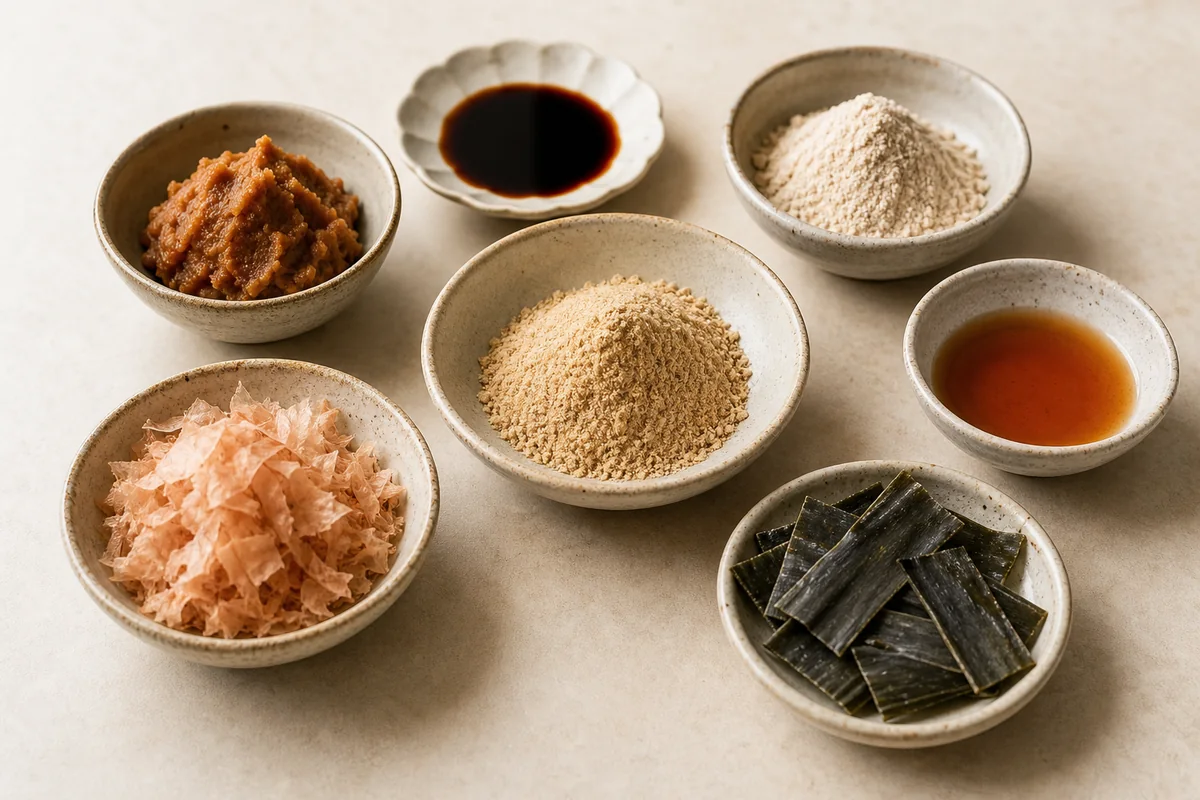
5 Best Dashi Powder Substitutes (Pantry Swaps)
Ingredients
Equipment
Method
- Measure your chosen substitute at the adjusted ratio listed above (e.g., 1 teaspoon bouillon per cup).
- If the substitute is solid (kombu/bonito or shiitake), steep or simmer as directed (see notes) and strain before adding to the recipe at the same stage you would add dashi.
- Taste and adjust salt: when using instant bouillon, reduce added salt by about ¼ teaspoon per cup of broth; when using mushroom dashi, add 1 teaspoon soy sauce per cup for fishiness if needed.
- For baking or dry-seasoning uses, dissolve powdered blends into the recipe liquid first to avoid gritty texture; use powder at 1 teaspoon per cup reconstitution equivalence.
Notes
- Ratios are tuned to match typical instant dashi powder strength (1 teaspoon per cup)
- When a smoky fish note is essential, prefer kombu+katsuobushi or niboshi-based stocks
Tried this recipe?
Let us know how it was!
Carrie is a food writer and editor with more than 15 years of experience. She has worked for some of the biggest names in the food industry, including Bon Appétit, Food & Wine, and Martha Stewart Living.
As the Editor in Chief of EpicureDelight, Carrie oversees all of the content on the site. She also manages the team of contributing writers and editors, who help to create delicious recipes, helpful tips, and informative articles that you’ll find on the site.
A native of the Chicago area, Carrie is passionate about all things food. She loves trying new restaurants and experimenting with new recipes in her kitchen. She’s also a graduate of the Culinary Institute of America, so she knows a thing or two about food!



