
Those tiny pasta pearls are doing more work than you'd think. Acini di pepe are small enough to slip between a spoon's tines, yet they add body to a broth without overwhelming it. When your pantry doesn't have them, the swap needs to respect one thing: size.
Most substitutes here are 1:1 by dry volume. The one exception is pearl tapioca, which expands more aggressively and needs a 1:2 ratio (half the amount).
Understanding how acini di pepe in cooking actually behaves helps you pick the right match fast.
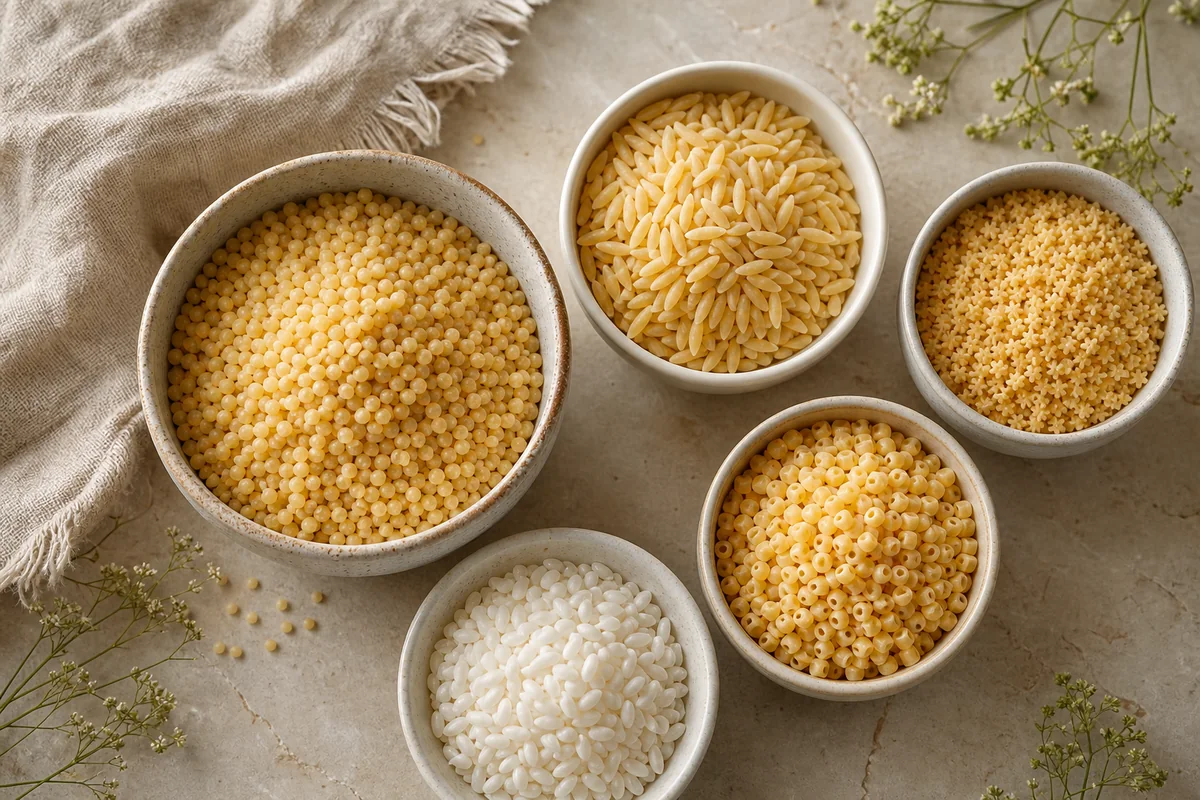
The five best acini di pepe substitutes are orzo, Israeli couscous, ditalini, pearl tapioca, and small shells. Most swap 1:1 by dry volume. Pearl tapioca is the exception: use half the amount. Match by dish type first, then adjust simmer time to prevent softening.
5 Acini Di Pepe Substitutes With Consistent Texture and Ratios
Every option below was chosen because it stays small enough to cook evenly and won't visually hijack the dish. The table covers the essentials at a glance.
| # | Substitute | Best For | Ratio | Key Note |
|---|---|---|---|---|
| 1 | Orzo (broken) | Both | 1:1 | Break pieces before boiling |
| 2 | Israeli Couscous | Both | 1:1 | Softens fast once tender |
| 3 | Ditalini | Cooking | 1:1 | Tubes hold broth longer |
| 4 | Pearl Tapioca | Cooking | 1:2 | Expands, thickens broth |
| 5 | Small Shells | Baking | 1:1 | Undercook before the oven |
1. Orzo (Broken)
Orzo is the most familiar swap, and it works especially well when you snap or roughly crush the dry pieces before they hit the water. The fragments cook to a similar size as acini di pepe and hold their shape in a simmering broth without going limp.
For deeper reading on this pasta's versatility, check out the orzo swaps that work in different dish contexts. Use a 1:1 ratio and expect a cook time of around 7-9 minutes.
Orzo (Broken)
Works for: Soups, stews, pasta salads, and any brothy dish where small pasta pieces add body
Skip if: You need distinctly round pearl shapes - broken orzo reads as irregular fragments, not pearls
- Snap technique: Place dry orzo in a zip-lock bag and press with a rolling pin once or twice - don't pulverize it.
- Cook time watch: Broken pieces cook 1-2 minutes faster than whole orzo; start testing at 6 minutes.
- In salads: Rinse under cold water immediately after draining to stop carryover cooking.
2. Israeli Couscous
Israeli couscous - also called pearl couscous - is already shaped into spheres, which makes it the closest visual match to acini di pepe. It holds sauce well and has a slightly chewy bite that most people actually prefer in warm pasta salads.
- Ratio: 1:1 by dry volume - no adjustment needed.
- Cook time watch: It goes from tender to mushy in under 90 seconds; pull it right at al dente.
- Texture tip: Toast it dry in a pan for 2 minutes before adding liquid - the surface firms up and resists softening.
- Cold dishes: Rinse under cold water and toss with 1 teaspoon of olive oil immediately to prevent clumping.
Skip if your recipe is served very cold for a long time (think overnight salads). The pearls cluster together and can turn gummy by the next day.
3. Ditalini
Ditalini are small hollow tubes - closer to a pencil eraser than a pearl - but they hit the same scale as acini di pepe in a bowl of soup. Because of the replacements for ditalini pasta discussion, you'll notice ditalini itself is often swapped the same way: small size, mild flavor, starch-releasing structure.
That hollow center actually helps here. It traps broth inside, so every bite delivers a concentrated sip of the soup.
Use a 1:1 ratio and cook for 8-10 minutes - about 2 minutes longer than acini di pepe typically needs.
- In brothy soups: Add ditalini during the last 10 minutes of cooking, not earlier.
- Starch release: It will thicken the broth slightly - stir occasionally and add a splash of stock if needed.
- Skip if: You need a perfectly round pearl shape; the tube silhouette is noticeable in clear broths.
4. Pearl Tapioca
Pearl tapioca is the only gluten-free option on this list that gets genuinely close to the "pearly" texture of the original. It is not pasta, so it behaves differently: it swells, turns translucent, and thickens whatever liquid surrounds it.
| Use | Ratio | Notes |
|---|---|---|
| Broth-based soups | 1:2 (half the amount) | Add near end of cooking; stir to prevent sticking |
| Baked dishes | 1:2 (half the amount) | Pre-soak 30 min; reduce total liquid in recipe by 3-4 tbsp |
| Creamy soups | 1:2 (half the amount) | Works best; thickens naturally into a velvety consistency |
- Ratio: Use half the dry volume - pearl tapioca expands nearly twice as much as pasta.
- Rinse guidance: Do not rinse after cooking; rinsing removes the starch coating that gives tapioca its body.
- Liquid adjustment: Reduce your broth or sauce by about 3 tablespoon per cup of tapioca used.
- Skip if: The dish must stay fully al dente - tapioca softens completely once hydrated and will not firm back up.
5. Small Shells
Small shells - sometimes labeled "conchigliette" - are the best choice for baked casseroles and baked pasta dishes. Their curved interior catches sauce and holds onto it through oven heat better than a flat or round pasta would.
For a sense of how sauce adherence affects the final dish, the same principle applies when you look at acini di pepe in cooking - the shape drives the experience as much as the ingredient itself.
Small Shells
Works for: Baked casseroles, cold pasta salads with chunky dressings, and dishes that need sauce to cling
Skip if: You're cooking a quick stovetop soup - shells overshoot tenderness fast in fast-boiling liquid
- Undercook before baking: Boil for 2 minutes less than the package says - the oven finishes the job.
- Sauce tip: Toss immediately with sauce after draining so the shells absorb flavor as they cool slightly.
- Ratio: 1:1 by dry volume; no adjustment needed.
Making the Swap Work (Ratios, Timing, and Texture)
The single biggest mistake is cooking the substitute to the same time as the original without accounting for size differences. Most of these swaps cook in the same window as acini di pepe, but Israeli couscous and small shells hit tenderness fast and keep going.
If you undercook by 30-60 seconds before combining with a sauce or broth, carryover heat finishes the work.
- Always taste early: Start testing 2 minutes before the package time ends - small pasta cooks faster than the label assumes.
- For soups and stews: Add the substitute later in the cooking process than you think necessary; most will fully hydrate from residual heat alone.
- Adjust liquid last: If your substitute thickens the broth (especially ditalini and tapioca), stir in a small splash of stock at the end rather than adding it at the start.
Frequently Asked Questions
Ditalini or broken orzo are the most reliable 1:1 swaps for soups. Both hold their shape in simmering broth and release starch at a similar rate to acini di pepe.
Yes. Rinse under cold water immediately to stop cooking and prevent clumping. Toss with a small amount of oil right after rinsing.
Use half the amount called for - a 1:2 ratio. Pearl tapioca expands significantly more than pasta and will thicken your broth if you use a full 1:1 amount.
Yes, if you undercook it by 2 minutes before it goes in the oven. Toasting the dry couscous first also helps it hold structure during baking.
Pearl tapioca is the best gluten-free option. Use it at a 1:2 ratio and expect a softer, slightly thicker result than traditional pasta.
5 Best Acini Di Pepe Substitutes (with Ratios)
Ingredients
Equipment
Method
- Choose your substitute by dish: Israeli couscous or orzo for soups/sauces, ditalini for hearty stews, and tapioca pearls for gluten-free creamy dishes.
- Use the listed ratio against your original acini di pepe amount (1:1 for most swaps; 1:2 for pearl tapioca).
- Start timing early: cook until just tender, then drain/rinse if you need to stop carryover (especially for salads).
- If your swap absorbs more liquid (common with tapioca and couscous), add a splash of broth or water at the end to loosen.
- Taste and adjust salt/sauce thickness after cooking so the substitute has the same seasoning intensity as the original pasta.
Notes
- Acini di pepe cooks quickly; the best substitute is the one closest in size to the original pearls.
- For salads or cold dishes, stop cooking promptly and cool quickly to prevent mushiness.
Tried this recipe?
Let us know how it was!
Carrie is a food writer and editor with more than 15 years of experience. She has worked for some of the biggest names in the food industry, including Bon Appétit, Food & Wine, and Martha Stewart Living.
As the Editor in Chief of EpicureDelight, Carrie oversees all of the content on the site. She also manages the team of contributing writers and editors, who help to create delicious recipes, helpful tips, and informative articles that you’ll find on the site.
A native of the Chicago area, Carrie is passionate about all things food. She loves trying new restaurants and experimenting with new recipes in her kitchen. She’s also a graduate of the Culinary Institute of America, so she knows a thing or two about food!



