
That subtle almond sweetness in a good Danish or frangipane tart? It almost always comes from almond paste.
When you don't have it, a careless swap can flatten the whole recipe.
The good news: most almond paste substitutes can carry the flavor if you match both sweetness and texture. A paste that stays loose will ruin a tightly rolled pastry; one that's too crumbly won't hold a filling together.
Pick your substitute based on what the recipe actually needs. For shaped fillings and structured baking, lean toward marzipan or a blended almond flour paste.
For softer applications like spreads or cakes, dairy-based swaps work better.
Marzipan is the closest overall swap. For a DIY option, blend almond flour with powdered sugar into a thick paste. Ground almonds, strained ricotta, and almond butter all work in specific recipes. Match texture first, then adjust sweetness to avoid over-sweetening your bake.
Almond Paste Substitute: Flavor-Matched Swaps That Work
The five substitutes below cover the full range from closest-to-paste to emergency pantry fixes. Each one handles differently in the oven, so knowing your recipe's texture goal matters before you choose.
Understanding almond paste in cooking helps you see why sweetness and fat content together define how a substitute behaves. A swap that's too oily won't set; one that's too dry will crack.
| # | Substitute | Best For | Ratio | Key Note |
|---|---|---|---|---|
| 1 | Marzipan | Both | 1:1 | Reduce added sugar |
| 2 | Almond Flour + Sugar Paste | Baking | 1:1 | Blend until smooth |
| 3 | Ground Almonds + Sugar | Baking | 1:1 | Slightly grainy texture |
| 4 | Ricotta + Extract + Sugar | Fillings | ¾:1 | Strain well first |
| 5 | Almond Butter + Sugar | Both | 1:1 | Chill to firm up |
5 Best Almond Paste Substitutes for Baking and Fillings
1. Marzipan
Marzipan is the swap most people already have or can easily find. It has the same base - ground almonds and sugar - and blends into fillings without changing the bake structure.
The key difference is sweetness. Marzipan is noticeably sweeter than almond paste, so you should reduce any added sugar in the recipe by about 15-20% when using it as a swap.
- Sweetness gap: Reduce recipe sugar by 2-3 tablespoon per cup of marzipan used
- Texture in baking: Holds shape well in rolled pastries and tart fillings
- Blending tip: Soften marzipan at room temperature for 10 minutes before working it into a filling
- Best uses: Danish pastries, croissants, filled cookies, tart bases
If you ever find yourself needing to go the other direction, the guide on swapping out marzipan covers when that swap becomes necessary too.
Skip if: Your recipe is already high in sugar - the additional sweetness will push the finished bake over the edge.
2. Almond Flour + Powdered Sugar Paste
This is the best DIY route when you have almond flour in the pantry. The goal is a smooth, spreadable paste, not a crumbly mix, so a food processor is non-negotiable here.
The ratio is roughly 1 cup almond flour to ¾ cup powdered sugar, with 1-2 teaspoons of neutral oil (like grapeseed) to bring it together. Blend for 2-3 minutes until it forms a cohesive mass.
If you're planning ahead, knowing about freezing almond flour properly means you'll always have a supply on hand for this exact situation.
- Texture fix: If it stays crumbly after blending, add oil ½ teaspoon at a time
- Best uses: Bar fillings, layer cake fillings, cookie centers
- Add-in tip: A few drops of almond extract deepens the flavor when using store-bought almond flour
- Egg binding: One egg white blended in creates a paste that holds shape during baking
Skip if: You don't have a food processor - a fork won't get this smooth enough to behave like real almond paste.
3. Ground Almonds + Powdered Sugar
Ground almonds give you a slightly more rustic result than finely milled almond flour. The texture is coarser, but in many baked goods - frangipane, almond cookies, crumble-style pastries - that difference is barely noticeable.
For a useful overview of flavor before you choose, the taste of ground almond tells you exactly what you're working with before committing to this swap.
- Ratio: 1 cup ground almonds to ½ cup powdered sugar, blended or stirred together
- Texture note: Expect a slightly grainy, sandy consistency rather than a smooth paste
- Best uses: Frangipane, almond cookies, crumble toppings, rustic tarts
- Binding help: Add 1 egg white to firm the mixture into a more paste-like consistency
Ground Almonds + Sugar
Works for: frangipane, cookies, rustic pastry fillings where slight texture is fine
Skip if: your recipe needs a perfectly smooth, spreadable filling - choose blended almond flour paste instead
Skip if: Smooth texture is critical. A fine-milled almond flour paste will outperform ground almonds in any recipe where the filling is a prominent layer.
4. Ricotta (Strained) + Almond Extract + Sugar
This swap is for softer applications - think layered cakes, soft pastry fills, or cannoli-style creations. The flavor profile lands close to almond paste once you add ½ teaspoon almond extract and 3-4 tablespoons powdered sugar per cup of strained ricotta.
Straining is the step most people skip, and it's the step that matters most. Press ricotta through a fine-mesh strainer for at least 30 minutes, then chill the mixture for 20 minutes before using.
For guidance on keeping your ricotta fresh until you need it, storing ricotta correctly is worth a quick read.
- Moisture control: Strain for a minimum of 30 minutes; overnight in the fridge is better
- Flavor boost: Almond extract is mandatory here - ricotta alone tastes neutral
- Best uses: Soft cake fillings, pastry cream-style applications, soft-baked pastries
- Avoid in: Strudel, croissant, or any recipe where the filling must hold a firm shape
Skip if: Your recipe bakes at high heat for a long time - ricotta fills can weep during extended baking even when strained.
5. Almond Butter + Powdered Sugar
Almond butter is the emergency option. It's fast, it's pantry-available, and it carries genuine almond flavor.
The problem is oil content - natural almond butter can stay soft after baking, which means it doesn't behave like a structured paste.
To firm it up, mix ¾ cup unsweetened almond butter with ½ cup powdered sugar, stir thoroughly, and chill for at least 30 minutes before using. The sugar adds structure; the cold temperature helps it hold shape.
Knowing your almond extract stand-ins is useful here too, since almond butter can taste mild on its own and a small hit of extract brings it closer to the real thing.
- Firming method: Add powdered sugar in 2 tablespoon increments until the paste holds its shape when pressed
- Best uses: Cookie centers, crumbly crust fillings, quick spreads for pastry
- Chilling: Refrigerate the mixture for 20-30 minutes before rolling or shaping
- Flavor note: Add ¼ teaspoon almond extract to boost the intensity if using a mild almond butter
Skip if: You need a dense, rolled filling - almond butter may soften and spread during baking even after chilling.
Making Almond Paste Substitutes Work (Texture + Sweetness)
Two things determine whether a substitute works: how thick it is before baking and how sweet it is relative to your recipe. Get both right and most substitutes perform close to the original.
For a deeper look at what you're matching against, the guide to almond paste in cooking walks through the flavor notes and fat content that make the original behave the way it does.
- Adjust texture: If your substitute is too loose, chill it for 20-30 minutes or blend in 1 extra tablespoon of almond flour until it holds shape when pressed
- Adjust sweetness: Taste the substitute before adding it to the recipe; if it's sweeter than expected, reduce the recipe's added sugar by 10-25%
- Blend before use: Even well-mixed substitutes benefit from a final 30-second pulse in a food processor right before use - it homogenizes the fat and prevents streaky fillings
Frequently Asked Questions
Marzipan is the closest match for baking fillings. It has the same almond-and-sugar base, holds shape well, and blends smoothly - just reduce added sugar slightly since marzipan is sweeter.
It can if you don't adjust. Reduce recipe sugar by 2-3 tablespoons per cup of marzipan used and taste the filling before baking.
Blend in a food processor for at least 2-3 minutes and add 1-2 teaspoons of neutral oil. A short blend isn't enough - the mixture needs time to release natural fats and smooth out.
Yes, but only if you strain it well first. Press ricotta through a fine-mesh strainer for 30 minutes minimum, then chill the mixture before using it in your recipe.
Stir in powdered sugar 2 tablespoons at a time until the paste holds its shape, then refrigerate for 20-30 minutes. Cold temperature firms the oil and gives the mixture more structure.
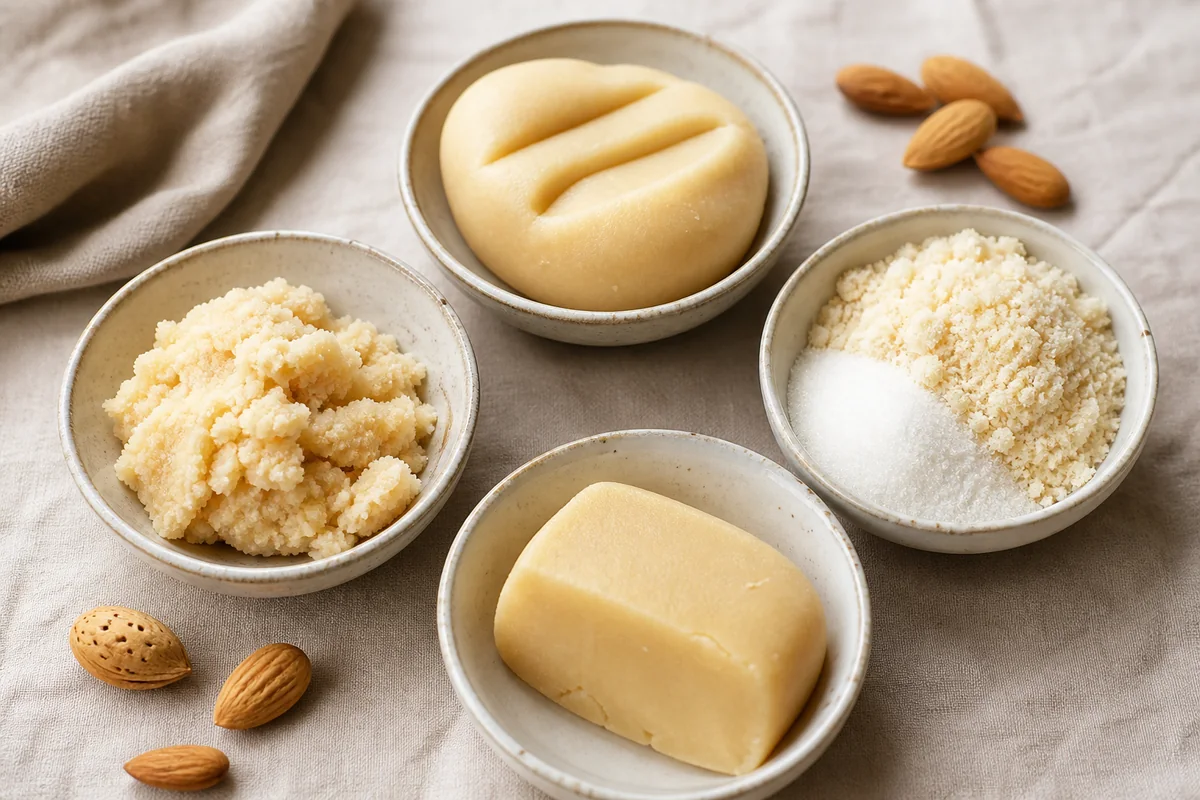
5 Best Almond Paste Substitutes (Flavor-Matched)
Ingredients
Equipment
Method
- Choose the substitute by texture: pick marzipan or a blended almond-flour/sugar paste for a true “paste” consistency.
- For baking fillings, ensure the substitute holds shape: if it’s loose, chill 20 minutes or add a bit more powdered sugar/almond flour.
- If the substitute tastes sweeter than your original almond paste, reduce any added sugar in the recipe by 10–25%.
- If the substitute feels too dry or crumbly, mix in 1–2 teaspoons neutral oil (or a few drops of water) per batch and blend again.
- Use the listed ratio in your recipe, then taste before you commit—almond extract intensity varies by brand.
Notes
- Almond paste is usually a dense almond base sweetened enough to hold shape; match both flavor and thickness.
- For the closest results, blend any dry nut-based mix into a paste before using in fillings.
Tried this recipe?
Let us know how it was!
Carrie is a food writer and editor with more than 15 years of experience. She has worked for some of the biggest names in the food industry, including Bon Appétit, Food & Wine, and Martha Stewart Living.
As the Editor in Chief of EpicureDelight, Carrie oversees all of the content on the site. She also manages the team of contributing writers and editors, who help to create delicious recipes, helpful tips, and informative articles that you’ll find on the site.
A native of the Chicago area, Carrie is passionate about all things food. She loves trying new restaurants and experimenting with new recipes in her kitchen. She’s also a graduate of the Culinary Institute of America, so she knows a thing or two about food!



