
Running out of apple juice mid-recipe is frustrating, but the fix is usually already in your kitchen.
The right apple juice substitute keeps your batter moist, your glaze glossy, and your browning on track-because apple juice does more than add flavor; it adds sugar, acidity, and liquid body all at once.
Knowing the apple juice taste helps you pick a match. It's lightly sweet, mildly tannic, and just acidic enough to react with baking soda.
That combination is what you're trying to recreate, not just the fruit flavor.
Apple juice adds sweetness, mild acidity, and moisture to recipes. For baking, apple cider or reconstituted concentrate are the closest matches at 1:1. For a milder fruit swap, pear juice or white grape juice work well with a small lemon adjustment. In a pinch, thinned applesauce mimics both body and sweetness.
5 Best Apple Juice Substitutes (Closest Match)
Each option below is chosen for how well it copies apple juice's sweetness, acidity, and liquid behavior in a recipe-not just how fruit-forward it tastes. The table gives you the fast answer; the sections below add the detail you need to adjust confidently.
If your recipe uses nectar or a thicker liquid, thin it with water before measuring so your batter doesn't end up dense.
| # | Substitute | Best For | Ratio | Key Note |
|---|---|---|---|---|
| 1 | Apple cider (unfiltered) | Both | 1:1 | Closest apple flavor match |
| 2 | Pear juice or nectar | Both | 1:1 | Milder; add lemon if flat |
| 3 | Apple juice concentrate | Both | 1:1 | Reconstitute before using |
| 4 | White grape juice | Baking | ¾:1 | Sweeter; needs acid balance |
| 5 | Pineapple juice | Baking | ¾:1 | Sharp; skip delicate pastries |
1. Apple Cider (Unfiltered)
Unfiltered apple cider is the single closest swap you'll find-same fruit base, similar sugar content, and a comparable level of mild acidity. The main difference is that cider carries slightly more earthy, spiced notes because it's pressed from whole apples without the filtering step that strips those compounds out.
If you're making an apple glaze or a spiced cake, cider's extra depth is actually an upgrade. For a cleaner profile-like a light muffin or a pale glaze-strain the cider through a fine mesh before measuring.
- Baking: Use 1:1 with no other changes; browning and moisture stay consistent.
- Glazes: Reduce by 1 tablespoon if your glaze is already sweet, since cider can concentrate more intensely than juice.
- Spice-sensitive recipes: Filter through cheesecloth and chill before using to mute the earthier notes.
Skip if: your recipe is highly spice-sensitive and you can't filter the cider first.
2. Pear Juice or Pear Nectar
Pear juice lands just behind apple cider in terms of flavor compatibility. It's a gentle fruit juice with a similar sweetness level and only a slightly lower acidity, which makes it a reliable 1:1 swap in most baking situations.
The difference between juice and nectar matters here. Pear juice pours like apple juice-thin and clear. Pear nectar is thicker and has more body, which works well in heavier batters like banana bread or spice cake but can make a thinner batter slightly too dense.
- Use pear juice: When the recipe needs a thin liquid (vinaigrettes, light batters, poaching liquids).
- Use pear nectar: When you need moisture and body together, such as in quick breads or dense muffin batters.
- Flat batter fix: Add 3-4 drops of fresh lemon juice per cup of pear juice to restore the mild tang that apple juice naturally provides.
Skip if: your recipe relies on a sharper apple-like acidity for structure-pear's softness won't carry the same lift without a lemon correction.
3. Apple Juice Concentrate (Reconstituted)
This is the closest-performance substitute on the list because it's literally apple juice in a more concentrated state. Reconstitute it exactly as the label directs, then measure out the ready-to-use liquid at a 1:1 ratio for your recipe.
The only real risk is sweetness. Concentrate is more intense than standard juice, so if you know yours runs sweet, replace 2-3 tablespoon of the reconstituted liquid with plain water before adding it to your batter. This keeps the flavor dialed in without spiking the sugar level and altering how the recipe browns.
Checking your apple juice before opening is always worth a moment-but if you've already used it up, concentrate is the most faithful backup option available.
Skip if: you can't control the sweetness level and your recipe is already at the sweet edge of the intended balance.
4. White Grape Juice
White grape juice is sweeter than apple juice and notably less tangy. That gap matters in baking, where acidity helps activate leaveners and contributes to even browning.
White Grape Juice
Works for: cakes, muffins, and glazes where mild fruity sweetness is welcome
Skip if: your recipe depends on apple's tang for leavening reactions or color development
Use white grape juice at a ¾:1 ratio-meaning for every 1 cup of apple juice the recipe needs, use ¾ cup of grape juice. This prevents the sweetness from tipping the balance.
Then add 1 teaspoon of fresh lemon juice per ¾ cup to bring the acidity back up to where apple juice would land.
- Cakes and muffins: ¾ cup grape juice + 1 teaspoon lemon juice per cup called for.
- Glazes: Use as-is at ¾:1; the extra sweetness in reduced glazes is usually absorbed by the other ingredients.
If you run low on grape juice and need to compensate with something acidic, look at replacements for lemon juice to find an appropriate corrector.
Skip if: apple tang is load-bearing in your recipe (certain sourdough-adjacent quick breads, for example).
5. Unsweetened Pineapple Juice
Pineapple juice doesn't taste like apple juice-but it brings the acidity and fruity sweetness that apple juice delivers in baking, which makes it a functional emergency swap. Think of it as replacing the job, not the flavor.
- Best for: Quick breads, muffins, and spiced cakes where the bold fruit note blends into the other flavors.
- Use with caution: Delicate cookies or pale pound cakes-pineapple's brightness will show up noticeably in a light-flavored background.
- Ratio: Use ¾ cup for every 1 cup of apple juice called for, since pineapple intensity can overwhelm a balanced batter.
Before you commit to this swap, it's worth knowing how pineapple juice holds up over time-because a freshly opened can performs very differently than one that's been sitting open for three days.
Skip if: your recipe needs subtle apple flavor as a background note-pineapple is not subtle.
6. Water + Smooth Applesauce (DIY)
When the pantry has nothing but applesauce, you can still get close. The approach is straightforward: whisk smooth applesauce with water until the mixture reaches a pourable consistency, then use it at a ¾:1 ratio in place of apple juice.
The table below maps the texture targets so you know how much to water down depending on what the recipe needs.
| Use | Ratio | Notes |
|---|---|---|
| Thin batter or sauce | 1 part applesauce + 2 parts water | Whisk until fully smooth; strain if clarity matters |
| Standard baking (muffins, cake) | 1 part applesauce + 1 part water | Use ¾ cup of this mixture per 1 cup juice called for |
| Dense quick bread | 1 part applesauce + ½ part water | Body is closer to nectar; adjust liquid balance elsewhere |
- Smoothness matters: Whisk vigorously or blend briefly-lumpy applesauce won't distribute evenly in a thin batter.
- Sweetness check: Sweetened applesauce will push sugar levels up; reduce any added sugar in the recipe by 1-2 teaspoon to compensate.
- Glazes: This won't produce a clear glaze-strain through a fine mesh if you need any translucency.
If you're concerned about swapping pineapple juice elsewhere in the same recipe, the applesauce approach can often cover both fruit-liquid roles at once.
Skip if: you need a perfectly clear liquid-this mixture stays opaque even when strained.
Making Apple Juice Substitutes Work
Picking the right swap is step one. Getting the result to behave like apple juice is step two, and that's mostly about three variables: sweetness, acidity, and thickness.
Nail those and your recipe won't notice the difference.
- Sweetness balance: If your substitute is noticeably sweeter than apple juice (grape juice, sweetened pear nectar), reduce it by 2-3 tablespoon and replace that volume with water before measuring.
- Acidity adjustment: Apple juice has a gentle tang that activates baking soda. If your substitute is milder, add 1 teaspoon of lemon juice per cup to restore that reaction.
- Thickness and viscosity: Nectars and applesauce blends are thicker than juice. Thin them with water until they pour freely at roughly the same speed as standard juice-this keeps your batter's hydration in the right range.
Frequently Asked Questions
Yes, at a 1:1 ratio. Unfiltered cider is the closest match for flavor and acidity, though it may add slight earthy notes-strain it first if your recipe is spice-sensitive.
Use ¾ cup of white grape juice for every 1 cup of apple juice. Add 1 teaspoon of lemon juice per ¾ cup to compensate for grape juice's lower acidity.
It works at ¾:1 in spiced or strongly flavored cakes, but the tropical note will be noticeable. Skip it in delicate or lightly flavored recipes.
Mix equal parts smooth applesauce and water, whisk until lump-free, then use ¾ cup of that mixture per 1 cup of apple juice the recipe calls for.
Apple cider and reconstituted concentrate are nearly undetectable. Pineapple juice and white grape juice can shift the flavor noticeably-adjust acidity and sweetness to minimize the difference.
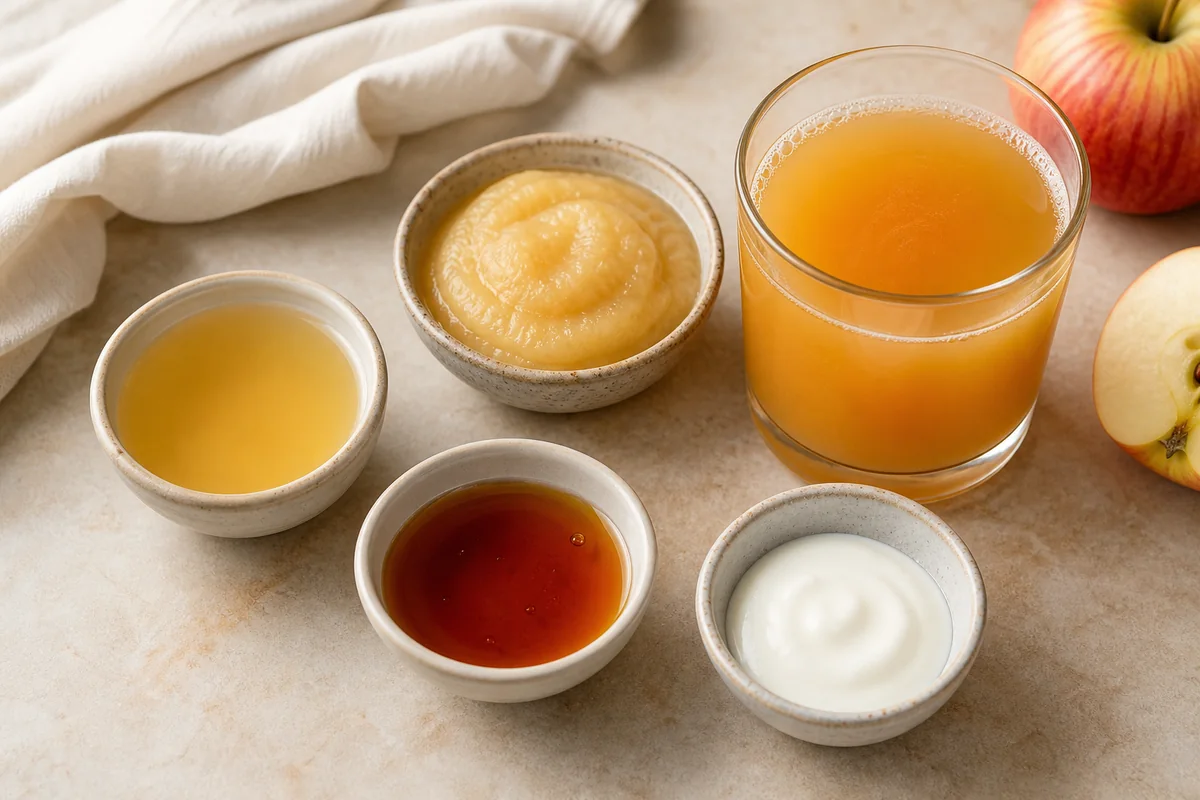
5 Best Apple Juice Substitutes (Closest Match)
Ingredients
Equipment
Method
- Identify your goal: for baking, match both sweetness and acidity so browning and flavor balance stay on track.
- Choose a substitute from the list, using the listed ratio (1:1 for closest matches; reduce for sweeter options).
- If your substitute is thicker (nectar or applesauce), whisk it smooth and consider adding 1-2 extra spoonfuls of water to restore pourability.
- If your substitute tastes flat or too sweet, add a small squeeze of lemon (or a few drops of vinegar) to recreate apple juice's gentle tang.
- Add the substitute to your recipe, then taste-adjust any remaining sweetness or spice at the end (especially for frostings and glazes).
Notes
- For batter and dough, aim for similar acidity to prevent bland flavor and keep browning consistent.
- If swapping into a glaze, prioritize flavor first; if swapping into cake batter, prioritize acidity + viscosity.
Tried this recipe?
Let us know how it was!
Carrie is a food writer and editor with more than 15 years of experience. She has worked for some of the biggest names in the food industry, including Bon Appétit, Food & Wine, and Martha Stewart Living.
As the Editor in Chief of EpicureDelight, Carrie oversees all of the content on the site. She also manages the team of contributing writers and editors, who help to create delicious recipes, helpful tips, and informative articles that you’ll find on the site.
A native of the Chicago area, Carrie is passionate about all things food. She loves trying new restaurants and experimenting with new recipes in her kitchen. She’s also a graduate of the Culinary Institute of America, so she knows a thing or two about food!



