
Asparagus has a short window at the market, and when it's gone, it's really gone. The good news is that several vegetables match its snap-to-tender texture well enough that your dish won't miss it.
The key is matching two things: cooking time and thickness. A thin green bean roasts in roughly the same time as a medium asparagus spear; a thick zucchini wedge does not.
Get those two factors right and the swap is nearly invisible.
This list covers the five best options for roasting, sautéing, grilling, and baking. Each one is mapped to a texture target so you can pick before you start cooking.
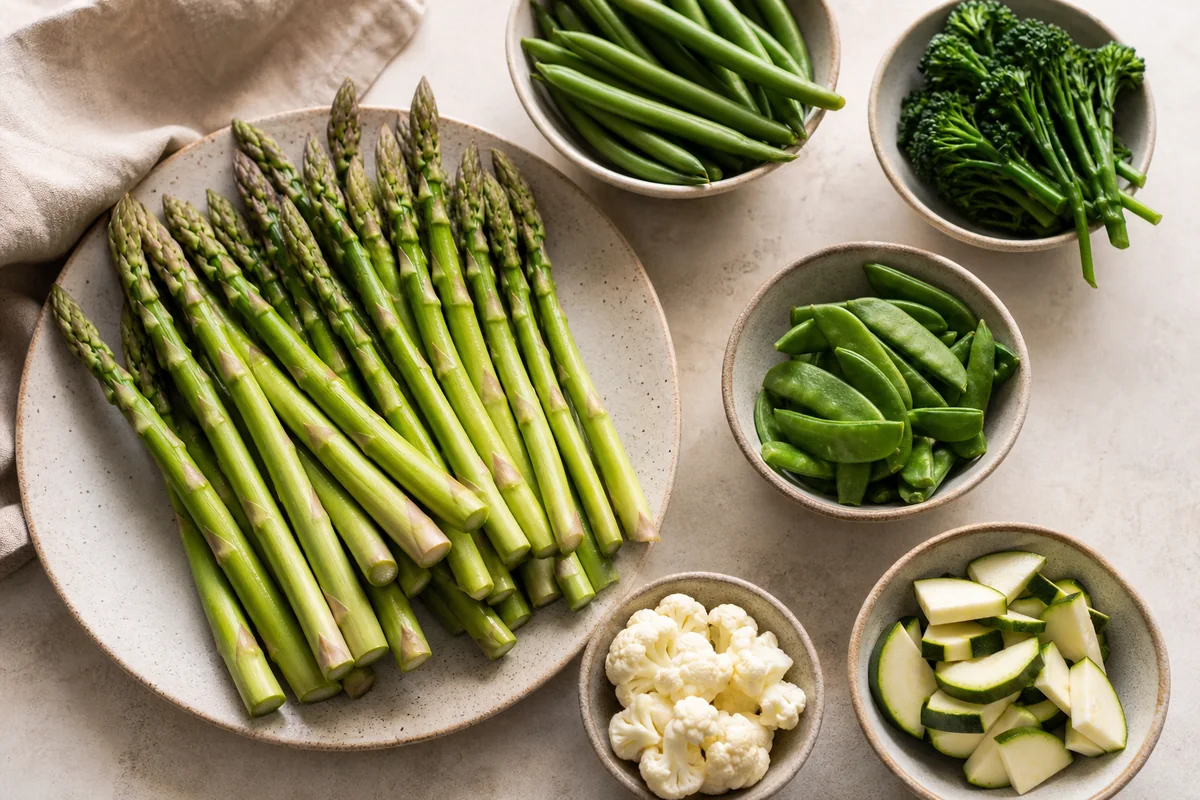
The best asparagus substitute depends on your cooking method. Green beans and broccolini are the closest 1:1 swaps for roasting and sautéing. Snap peas win for speed. Baby zucchini works in baked dishes if you reduce moisture. Fennel adds a sweet edge when browned.
5 Asparagus Alternatives Mapped by Cooking Results
Before you read the detailed breakdowns, use this table to match your substitute to your cooking method. Timing is the thing most cooks miss when making an asparagus alternative swap-and it's what causes vegetables to go limp or stay raw.
| # | Substitute | Best For | Ratio | Key Note |
|---|---|---|---|---|
| 1 | Green Beans | Roast / Sauté | 1:1 | Blanch 60 sec first |
| 2 | Broccolini | Roast / Grill | 1:1 | High heat to caramelize |
| 3 | Snap Peas | Sauté / Steam | 1:1 | 2-3 min max cook time |
| 4 | Baby Zucchini | Bake / Roast | ¾:1 | Pat dry before cooking |
| 5 | Fennel Bulb | Roast / Braise | 1:1 | Sweet, not green-flavored |
1. Green Beans
Green beans are the most reliable asparagus substitute you can grab at any grocery store. They share the same snap-to-tender texture, hold up under high heat, and brown at roughly the same rate as medium asparagus spears when you roast them at 425°F.
If you want to understand more about how they compare flavor-wise before committing, the breakdown of what green bean tastes like is worth a quick read. One difference worth noting: green beans are thinner, so they cook about 2 minutes faster than thick asparagus-pull them from the oven earlier than you think.
Green Beans
Works for: roasting, sautéing, stir-frying, blanching alongside pasta or grains
Skip if: you need the tall spear presentation, or the dish involves long braising (they turn soft fast)
- Blanch first: 60-90 seconds in salted boiling water stops enzyme activity and keeps color bright.
- Match thickness: Use the thinnest beans you can find; thicker ones take longer and don't brown as evenly.
- Finish with acid: A squeeze of lemon at the end mimics asparagus's natural brightness.
2. Broccolini
Broccolini is the asparagus alternative most cooks overlook, and that's a mistake. It has thin stalks, small florets that crisp up under heat, and a mildly bitter-sweet flavor that lands very close to asparagus when roasted at high heat.
If your recipe needs something to fill the broccolini role instead, check out options for replacing broccolini in a pinch. For asparagus swaps specifically, broccolini is the one that earns the most compliments at the table.
- Trim the stems: Cut off the bottom 1 inch; they're woody and won't soften in time.
- No blanching needed: Broccolini roasts well from raw; blanching makes it too soft for high-heat methods.
- Season at the end: Add salt during the last 2 minutes to pull moisture out only after edges brown.
- Skip if: Your dish needs a raw or barely-cooked garnish-broccolini tastes grassy and slightly harsh without heat.
3. Snap Peas
Snap peas are the best asparagus substitute for quick sauté dishes where you want sweetness and crunch without any bitterness. They cook faster than asparagus by about 3 minutes and hold their bright green color longer in a hot pan, which matters for plating.
When you need alternatives to sugar snap peas themselves, the list of swaps shifts significantly-but for replacing asparagus in a fast weeknight sauté, snap peas are hard to beat. Add them to a hot pan for 2-3 minutes only.
Any longer and that signature crunch is gone and you're left with something limp and sweet in all the wrong ways.
Skip if: you're baking anything over 15 minutes, or adding them to a slow braise. Heat breaks them down quickly and there's no recovering the texture once it's lost.
4. Baby Zucchini Spears
Zucchini is a solid asparagus substitute in baking, but only if you deal with its moisture problem upfront. Zucchini holds more water than asparagus by a significant margin, and in a 375°F oven that water steams the vegetable from the inside rather than letting it roast.
| Use | Ratio | Notes |
|---|---|---|
| Roasting (425°F+) | ¾:1 | Baby zucchini spears; pat very dry before oiling |
| Baking (375°F) | ¾:1 | Reduce oven time by 4-5 min; check for browning early |
| Sautéing | 1:1 | High heat, don't crowd the pan, flip only once |
- Pat very dry: Press zucchini spears between paper towels for 5 minutes before oiling.
- Cut thick: Half-moons or spears at least ¾ inch wide brown better than thin slices, which just collapse.
- Salt at the end: Salting early draws out water mid-cook and leads to steam instead of browning.
- Skip if: You need a firm, stalk-like bite-zucchini always softens faster and won't hold the same shape.
5. Fennel Bulb Wedges
Fennel is a flavor-shift swap, not a flavor-match one. It doesn't taste like asparagus-it leans sweet and faintly anise-but when cut into thick wedges and roasted hard, it develops a caramelized edge that satisfies the same "interesting vegetable" role on the plate.
If you've been avoiding fennel because of the anise note, know that roasting mellows it considerably.
When you finish with acid, like a few drops of the replacements for lemon juice you might already have on hand, the fennel reads bright and balanced rather than sweet-heavy.
- Cut wedges thick: At least ½ inch; thinner slices dry out and burn before the interior softens.
- Leave the core: The core holds wedges together on the pan-remove it only after cooking.
- Finish with vinegar: A small splash of white wine vinegar at the end sharpens the flavor and cuts sweetness.
- Skip if: Your dish requires purely green, grassy asparagus flavor-fennel will read sweet and distinct every time.
Making the Switch: Match Texture, Timing, and Seasoning
The single biggest substitution mistake is treating every vegetable like it cooks the same way asparagus does. Cut thickness and pan temperature matter more than which vegetable you choose. Thin snap peas in a 400°F oven will be mush in 8 minutes; thick green beans in a lukewarm pan won't brown before they're soft.
For stir-fry dishes especially, knowing about keeping stir fry fresh helps you plan ahead and pick a substitute that still works as leftovers.
Also, if you end up needing to swap out more than just the asparagus, checking the best green bean alternatives can help you chain substitutions without losing the whole dish.
- Match thickness first: Cut your substitute to roughly the same width as the asparagus spears called for-this syncs the cook time.
- Start checking 2 minutes early: Every substitute here cooks faster than thick asparagus; pull it when you see browning at the edges.
- Season last, not first: Salt draws moisture; add it in the final 2 minutes to keep the vegetable's surface dry and able to crisp.
Frequently Asked Questions
Broccolini is the closest match for roasting-it caramelizes at the same high heat and has a similar mild bitterness. Green beans are a strong second if you can't find broccolini.
Yes, but use ¾ of the amount called for and pat it very dry first. Zucchini releases more water than asparagus, which can make baked dishes watery if you skip that step.
Keep cook time to 2-3 minutes maximum in a very hot pan. Snap peas lose their crunch fast; don't cover the pan and don't walk away.
Okra works in stir-fries only if it's bone-dry before it hits the pan. Any moisture triggers sliminess; roast or dry-sauté at high heat for best results.
For roasting, blanching 60-90 seconds first gives a better result-the interior softens while the outside still crisps. For sautéing, you can skip it and cook from raw.
5 Best Asparagus Substitutes (Tested)
Ingredients
Equipment
Method
- Choose your target texture: crisp-tender (green beans/snap peas) or tender-with-edges (broccolini/baby zucchini).
- Use the ratio: aim for 1:1 for most swaps, but use ¾:1 for zucchini to avoid watery results.
- Match cook time to density: quick-heat (snap peas) needs less time than long-roast veggies (green beans/broccolini).
- Prep for even doneness: cut into similar thickness to your asparagus spears (about the same width).
- Season after cooking (or during the last 1–2 minutes) to help prevent sogginess—then taste for salt and brightness (lemon/vinegar).
Notes
- For asparagus-like bite, don’t overcook: stop when the center is just tender.
- If your substitute releases water (zucchini/okra), use higher heat and a shorter cook or roast on a preheated pan.
Tried this recipe?
Let us know how it was!
Carrie is a food writer and editor with more than 15 years of experience. She has worked for some of the biggest names in the food industry, including Bon Appétit, Food & Wine, and Martha Stewart Living.
As the Editor in Chief of EpicureDelight, Carrie oversees all of the content on the site. She also manages the team of contributing writers and editors, who help to create delicious recipes, helpful tips, and informative articles that you’ll find on the site.
A native of the Chicago area, Carrie is passionate about all things food. She loves trying new restaurants and experimenting with new recipes in her kitchen. She’s also a graduate of the Culinary Institute of America, so she knows a thing or two about food!



