
Banana leaves do three things that most wrappers can't: they add a faint grassy aroma, they lock in steam without getting soggy, and they release food cleanly. Finding the right banana leaf substitute means matching the replacement to whichever of those jobs your recipe actually needs.
Some dishes need the wrap for structure only. Others rely on the leaf for moisture control during a long steam, and a few genuinely want that mild botanical scent to transfer into the food.
The swaps below are organized by how closely they match each job, so you can pick by function rather than just availability.
The best banana leaf substitutes are parchment paper (clean release), aluminum foil (tight steam barrier), cabbage leaves (leaf-wrap feel), rice paper (light wraps), and plantain leaves (closest structural match). Pick by function: barrier first, aroma second.
5 Best Banana Leaf Substitutes That Actually Work
Each substitute below handles banana leaf's job differently. This table shows the quick picture; the sections that follow explain when each one earns its place and when to walk past it.
| # | Substitute | Best For | Ratio | Key Note |
|---|---|---|---|---|
| 1 | Parchment Paper | Both | 1:1 | Oil lightly before use |
| 2 | Aluminum Foil | Both | 1:1 | Fold seams twice for seal |
| 3 | Cabbage Leaves | Steam | 1:1 | Blanch 30-60 sec first |
| 4 | Rice Paper | Wrap | 1:1 | Quick dip only, don't soak |
| 5 | Plantain Leaves | Both | 1:1 | Closest leaf substitute |
Understanding the banana leaf taste helps you decide how much the aroma gap will matter in your dish.
- Barrier vs. aroma: If your recipe needs steam containment more than flavor, parchment or foil wins every time.
- Leaf-feel wraps: Cabbage and plantain behave more like actual leaves; both need softening before you wrap.
- Delicate wraps: Rice paper is the thinnest option and tears if over-wetted - handle it last and work fast.
- Prep first: Cut every substitute slightly larger than your food so you have enough edge to fold without splitting.
1. Parchment Paper
Parchment is the workhorse swap when your only goal is clean release and even steaming. It won't add aroma, but it won't absorb moisture from the filling either, which makes it reliable for sticky dishes like glutinous rice or tamales.
- Prep: Brush one side lightly with neutral oil before placing food on it - this mimics the slight slickness of a banana leaf surface.
- Size it: Cut at least 3 inches wider than your food on every side so the fold holds without gaping.
- Steaming: Place the wrapped parcel seam-side down in the steamer so gravity holds the fold closed.
- Baking: Double-layer for anything baked longer than 45 minutes; a single sheet can dry and crack at the edges.
If you find parchment is unavailable too, there are good parchment paper substitutes worth knowing.
Skip if: Your recipe depends specifically on banana-leaf aroma - parchment is barrier-only and transfers no flavor.
2. Aluminum Foil
Foil is the right call when a watertight seal matters more than anything else. It doesn't breathe the way a leaf does, so interior moisture stays trapped, which is exactly what you want for a long-cooked filling.
Foil vs. Parchment for Steam Wraps
Works for: dishes that need zero steam leakage, structured wraps that must travel, and anything steamed over 1 hour
Skip if: baking at high direct heat (above 425°F) where foil edges can over-brown the food's exterior
- Fold technique: Double-fold every seam - fold once, then fold again - so steam pressure can't push it open.
- Inner layer: If you want to prevent direct metal contact with acidic fillings, lay a small square of parchment against the food before wrapping in foil.
- Sizing: Use heavy-duty foil when the parcel needs to hold its shape; standard foil tears at the corners under weight.
For a practical example of foil sealing in action, look at how salmon in aluminum foil holds moisture during cooking.
Skip if: You're baking at very high direct heat where foil edges will over-brown the outside of the parcel.
3. Cabbage Leaves
A blanched cabbage leaf is the most accessible "actual leaf" swap in most supermarkets. It folds without cracking and holds a parcel together during steaming, which is more than raw cabbage can do.
- Blanch time: 30 seconds for thin outer leaves, up to 60 seconds for thicker inner ones. Pull them while they still have some resistance.
- Ice bath: Drop blanched leaves into ice water immediately to stop cooking and preserve structure.
- Overlap trick: Use two leaves slightly overlapped if one doesn't fully cover the filling - cabbage leaves are rarely as wide as banana leaves.
If you want to keep extra leaves on hand without cooking them, check out tips on storing kale without blanching - the same logic applies to cabbage in the fridge.
Skip if: Your recipe needs a delicate aromatic leaf flavor. Cabbage is neutral to mildly green-tasting and will not replicate that grassy banana-leaf note.
4. Rice Paper Sheets
Rice paper works when you want a thin, tender wrap that turns almost translucent after steaming. It is more delicate than any leaf, so technique matters more here than with any other swap.
For recipes where rice paper is itself the ingredient you're short on, knowing about replacing rice paper helps you think through the whole dish.
- Dip, don't soak: Dip each sheet in warm water for 5-8 seconds only - over-wetting makes it tear during folding.
- Flat surface first: Lay the dampened sheet on a clean, dry cutting board before placing the filling; this prevents stretching.
- No sharp edges: Remove any bones, hard vegetable pieces, or ridged items from the filling - they will puncture the sheet from the inside out.
- Steam, don't bake: Rice paper holds better over gentle steam than in dry oven heat, where it can stiffen and crack.
Understanding rice paper flavor tells you how neutral the wrap is, which can help you decide if the swap will affect your dish's overall taste.
Skip if: You need a robust wrap that can be handled, transported, or turned during cooking - rice paper is not built for that.
5. Plantain Leaves
Plantain leaves are the closest structural substitute for banana leaves. They fold similarly, hold a seam under steam, and carry a mild green aroma that is noticeably closer to banana leaf than any of the other options on this list.
- Rinse thoroughly: Wipe both sides of the leaf with a damp cloth after rinsing - field dust and residue can affect flavor.
- Soften before folding: Hold each leaf 6-8 inches over a medium flame for 10-15 seconds per side, or run a hot skillet over it, until it turns a shade darker and becomes pliable.
- Tear to size: Tear, don't cut, along the natural grain so the edges stay strong rather than fraying.
- Seam placement: Fold the stem-side edge under the parcel first, then bring the wider end over - this mimics standard banana-leaf tamale technique.
Skip if: You can only find pre-packaged plantain leaves that are already stiff or cracked. They won't fold cleanly without tearing, and forced folds leak steam.
Cheesecloth with a Barrier Liner
Cheesecloth is rarely the first choice, but it works when you want a fabric-style wrap that allows a little aroma exchange. The key word is "with a liner" - cheesecloth alone lets too much steam escape.
For other fabric-based options, cheesecloth swaps covers alternatives worth considering.
| Use | Ratio | Notes |
|---|---|---|
| Steamed delicate fish | 1 layer cheesecloth + 1 layer parchment | Parchment liner prevents sticking; cheesecloth holds shape |
| Baked rice parcels | 1 layer cheesecloth + 1 layer foil | Foil liner keeps moisture in; cheesecloth prevents direct metal contact |
| Long-steam fillings | Double cheesecloth + foil outer wrap | Double cheesecloth adds strength; foil seals the steam entirely |
- Tie, don't tuck: Tie the cheesecloth bundle with kitchen twine rather than tucking the ends - tucked ends pull open under steam pressure.
- Pre-wet slightly: Dampen the cheesecloth before wrapping so it doesn't wick moisture away from the filling.
- Cleanup: Expect staining from colored fillings; soak the cloth in cold water immediately after use.
Skip if: Your dish is very delicate and you can't afford any fabric texture pressing against the surface during steaming.
Making Banana Leaf Substitutes Work in Real Dishes
The single most useful rule is to match the substitute to the job, not to the ingredient. If banana leaf is doing steam containment in your dish, go for foil or parchment.
If it's doing structural wrapping, plantain or cabbage. If aroma is part of the recipe, only the leafy options get close - and understanding parchment paper in cooking confirms just how neutral the paper options are by comparison.
- Prep before you assemble: Blanch cabbage, soften plantain leaves over heat, oil parchment, and cut foil to size before the filling is ready - wet fillings left waiting will soak through unprepared wrappers.
- Seam check before heat: Press every fold closed and place the parcel seam-down in the steamer or pan; if you can feel a gap, rewrap rather than hoping steam pressure won't find it.
- Timing stays the same: None of these substitutes require cooking time adjustments - the filling drives the clock, not the wrapper.
Frequently Asked Questions
Yes. Parchment paper or aluminum foil both create reliable steam barriers. Parchment is better for delicate foods that need clean release; foil is better for long steaming sessions that need a tight seal.
Plantain leaves are the closest structural match for folding and wrapping. For release only, lightly oiled parchment paper is the most reliable option in most kitchens.
Parchment adds no flavor at all, while banana leaves contribute a faint grassy aroma. If that aroma matters in your dish, a leafy substitute like plantain or cabbage is a better call.
Dip the sheet for no more than 8 seconds and work on a flat, dry surface. Remove any hard or sharp items from the filling that could puncture the sheet from inside.
Aluminum foil is the strongest barrier against moisture loss and re-absorption. Double-folding the seams keeps steam inside the parcel rather than letting it condense back onto the filling.
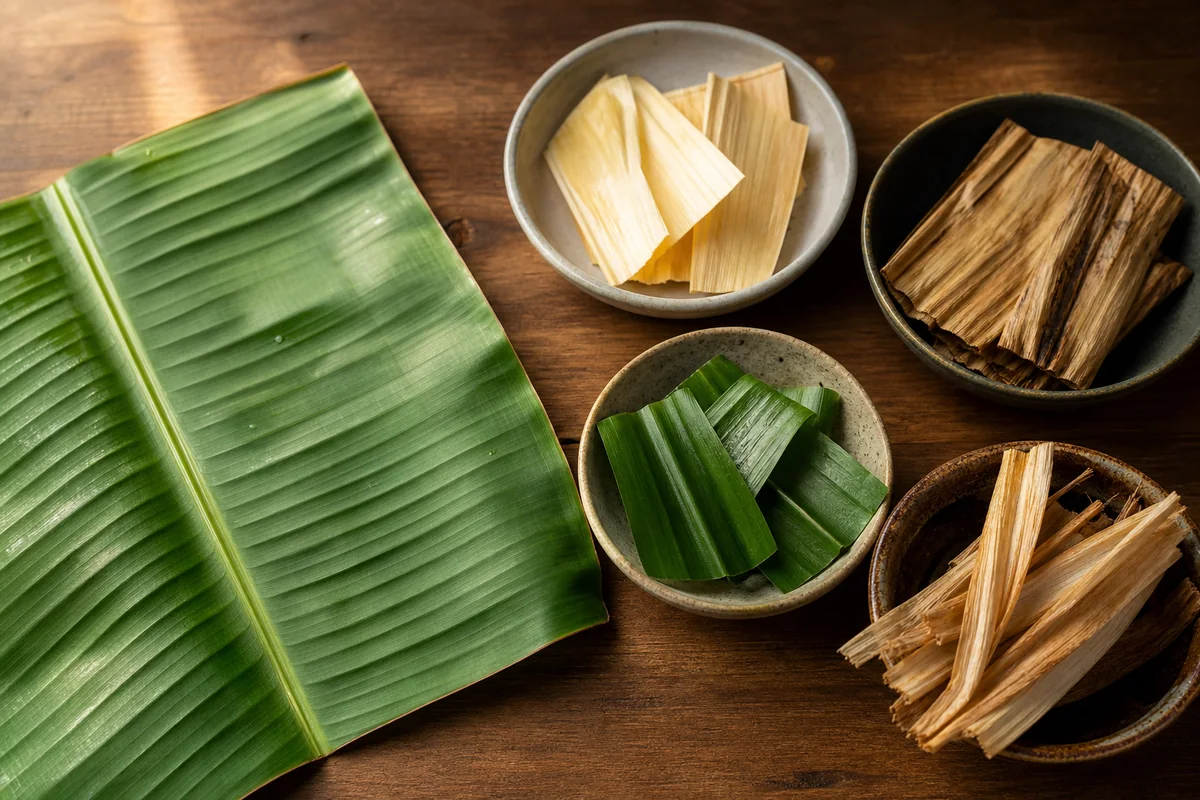
5 Best Banana Leaf Substitutes (Tested Swaps)
Ingredients
Equipment
Method
- Identify your banana-leaf job: nonstick steam barrier, strong wrap structure, or mild leafy aroma infusion.
- Choose the substitute that matches the job (parchment for release, foil for barrier/structure, cabbage/plantain for leaf feel).
- Size it: cut slightly larger than your food so you can fold edges without stretching or splitting.
- Prep for safety and texture: oil parchment lightly, blanch cabbage briefly, and avoid over-wetting rice paper.
- Wrap tightly but not crushing-then steam/bake until done, checking the seam stays sealed.
Notes
- Banana leaf adds aroma and helps manage moisture; substitutes usually trade aroma for barrier + release.
- If your recipe relies on banana-leaf flavor, prioritize leafy substitutes (plantain/cabbage) and use a tighter seal.
Tried this recipe?
Let us know how it was!
Carrie is a food writer and editor with more than 15 years of experience. She has worked for some of the biggest names in the food industry, including Bon Appétit, Food & Wine, and Martha Stewart Living.
As the Editor in Chief of EpicureDelight, Carrie oversees all of the content on the site. She also manages the team of contributing writers and editors, who help to create delicious recipes, helpful tips, and informative articles that you’ll find on the site.
A native of the Chicago area, Carrie is passionate about all things food. She loves trying new restaurants and experimenting with new recipes in her kitchen. She’s also a graduate of the Culinary Institute of America, so she knows a thing or two about food!



