
That dark, jammy burst when a blackberry hits heat is hard to fake. But it is absolutely doable with the right swap, and that is what this guide is for.
Whether you need a blackberries substitute for a cobbler, a smoothie, or a pan sauce, the fix depends on three things: how tart you need it, how thick the result should be, and whether you are using heat or keeping things cold.
Fresh blackberries hold a balance of deep sweetness and edge. Not every berry swap matches that exactly.
Knowing which substitute leans sweeter or wetter saves you from a runny filling or a too-mild dessert.
The best blackberries substitutes are frozen raspberries for tart baked fillings, blueberries for color and cobbler texture, grapes for jammy compotes, cherry filling for thick no-fuss layers, and mixed berry jam for instant swirls.
5 Best Blackberries Substitutes Ranked by Use
These five swaps cover every common recipe scenario. Use 1:1 ratios for raspberries and blueberries, then pull back slightly on sweeter, pre-thickened options like cherry filling or grape chunks.
| # | Substitute | Best For | Ratio | Key Note |
|---|---|---|---|---|
| 1 | Frozen Raspberries | Both | 1:1 | Drain before adding to batter |
| 2 | Blueberries | Both | 1:1 | Add lemon juice for brightness |
| 3 | Purple/Black Grapes | Baking | ¾:1 | Cook longer to reduce sweetness |
| 4 | Canned Cherry Filling | Baking | ¾:1 | Reduce added sugar in recipe |
| 5 | Mixed Berry Jam | Both | 1:1 | Thin with water if too stiff |
1. Frozen Raspberries
Frozen raspberries are the closest thing to a straight blackberry swap in most cooked applications. They carry real tartness, they break down quickly with heat, and the color stays deep enough for sauces and baked fillings.
- Best for: Fruit compotes, pie fillings, muffin batters, and pan sauces where tart fruitiness is key.
- Texture tip: Thaw first and drain excess liquid, or simmer 2-3 minutes before folding into batter to avoid a runny result.
- Flavor note: Raspberries read slightly more floral and tangy than blackberries, but most tasters won't notice the difference once the fruit is baked.
If you cook berry compotes often, keeping a bag of frozen raspberries on hand is a smart habit regardless.
Skip if: your recipe depends on a specifically deep, earthy blackberry note. Raspberries are brighter and more delicate in flavor.
2. Blueberries (Fresh or Frozen)
Blueberries are the quieter swap. They lack blackberry tartness, but they hold up in heat the same way and their color stays dark enough that most finished dishes look identical.
- Flavor fix: Add 1-2 teaspoons of lemon juice per cup to cut the mild sweetness and mimic blackberry brightness.
- Moisture fix: Thaw and drain frozen blueberries before adding to sauces. Simmer briefly if the mix looks thin.
- Best for: Cobblers, muffins, pancakes, and thick berry sauces where color and structure matter more than tang.
- No-bake use: Fresh blueberries work well in cold toppings and parfaits, though they are notably less punchy than fresh blackberries.
Skip if: your recipe calls for that distinct, slightly seedy blackberry bite. Blueberries are milder and won't replicate deep berry tang.
3. Purple or Black Grapes
Grapes are a less obvious choice, but they cook down into a genuinely thick, jammy texture that works well in compotes and filled pastries. The main issue is sweetness.
Grapes trend sweeter than blackberries, so a little lemon juice or a splash of red wine vinegar keeps the flavor from tasting like candy.
Grapes vs. Blackberries
Works for: thick fillings, jam swirls, and slow-cooked compotes where sweetness is welcome.
Skip if: your recipe depends on blackberry tartness or needs the fruitiness to stay forward and bright.
- Best for: Jam-style swirls, hand pie fillings, and compotes where a thick, glossy result is the goal.
- Prep tip: Halve and seed grapes before cooking. Simmer 8-10 minutes longer than you would blackberries to drive off extra moisture.
- Sugar control: Reduce added sugar by at least 1 tablespoon per cup, then taste before adding more.
4. Canned Black Cherry Filling
Cherry pie filling is pre-thickened, boldly colored, and ready to use straight from the can. That makes it one of the fastest swaps when you need a blackberry replacement for a layered dessert, hand pie, or turnover.
| Use | Ratio | Notes |
|---|---|---|
| Pie or cobbler filling | ¾:1 | Cherry filling; reduce recipe sugar by 2 tbsp |
| Hand pies / turnovers | ¾:1 | Use chilled; already set and thick |
| Glaze or drizzle | 1:1 | Warm and thin with 1 teaspoon water if needed |
- Sweetness control: Most canned fillings are pre-sweetened, so cut any added sugar in your recipe before tasting.
- Texture note: The result is smoother and thicker than fresh blackberries, so expect a more uniform filling rather than chunky fruit pockets.
- How to use it: Spoon directly into your pastry shell or layered dessert. No simmering needed. Check out the differences between cherry varieties if you're deciding between black cherry and regular cherry filling.
Skip if: you want whole-fruit texture or a lightly flavored compote. Cherry filling has a stronger, distinctly cherry flavor.
5. Mixed Berry Jam
Jam is the shortcut for any recipe that needs instant jammy thickness. A good seedless mixed berry jam gets you there without any cook time, and the flavor is already balanced between sweet and tart.
- Best for: Swirls in cheesecake or yogurt, pastry filling layers, quick glazes, and no-bake toppings.
- If too thick: Thin with 1-2 teaspoons of water per few tablespoons of jam. Warm gently over low heat and stir until smooth.
- Skip extra thickener: Jam is already set. If your recipe calls for cornstarch, skip it or reduce by half.
- Flavor balance: If the jam tastes too sweet, add a squeeze of lemon to pull it back toward tart.
Skip if: your recipe needs whole fruit texture or visible fruit pieces. Jam is smooth by definition.
Making Your Blackberries Substitute Taste Right
The biggest problems with fruit substitutes are moisture and sweetness, and both are fixable before you commit to a finished dish. Most texture issues come from using a swap straight from the bag or can without accounting for how much extra liquid or sugar it carries.
If you're adjusting how lemon juice behaves in a recipe, the same principle applies here: small additions matter more than large ones.
- Adjust tartness first: Add lemon juice in 1-teaspoon increments until the flavor sharpens. Taste between each addition.
- Control moisture early: Drain or simmer wet swaps before they go into batter. A 2-3 minute simmer removes enough liquid to prevent a soggy bake.
- Time the fold correctly: For baked goods, fold cold or room-temperature fruit in last. For sauces, cook the substitute down first, then assemble.
Frequently Asked Questions
Frozen raspberries are the closest match at a 1:1 ratio. They replicate tart-berry flavor and break down similarly in heat. Drain excess liquid after thawing before adding to batter.
Yes, especially for baked fillings and batters. Thaw and drain to remove excess water. For sauces, you can add them frozen and simmer off the liquid directly.
Reduce sugar in your recipe by 1-2 tablespoons, then add lemon juice in small amounts until the sweetness is balanced. Taste before baking.
Usually yes. Canned cherry filling is already thickened, so skip or reduce any cornstarch the recipe calls for. Check sweetness and reduce added sugar accordingly.
Seedless mixed berry jam is the best pick. It needs no cooking and is already the right consistency. Thin with a small amount of warm water if it's too stiff to swirl.
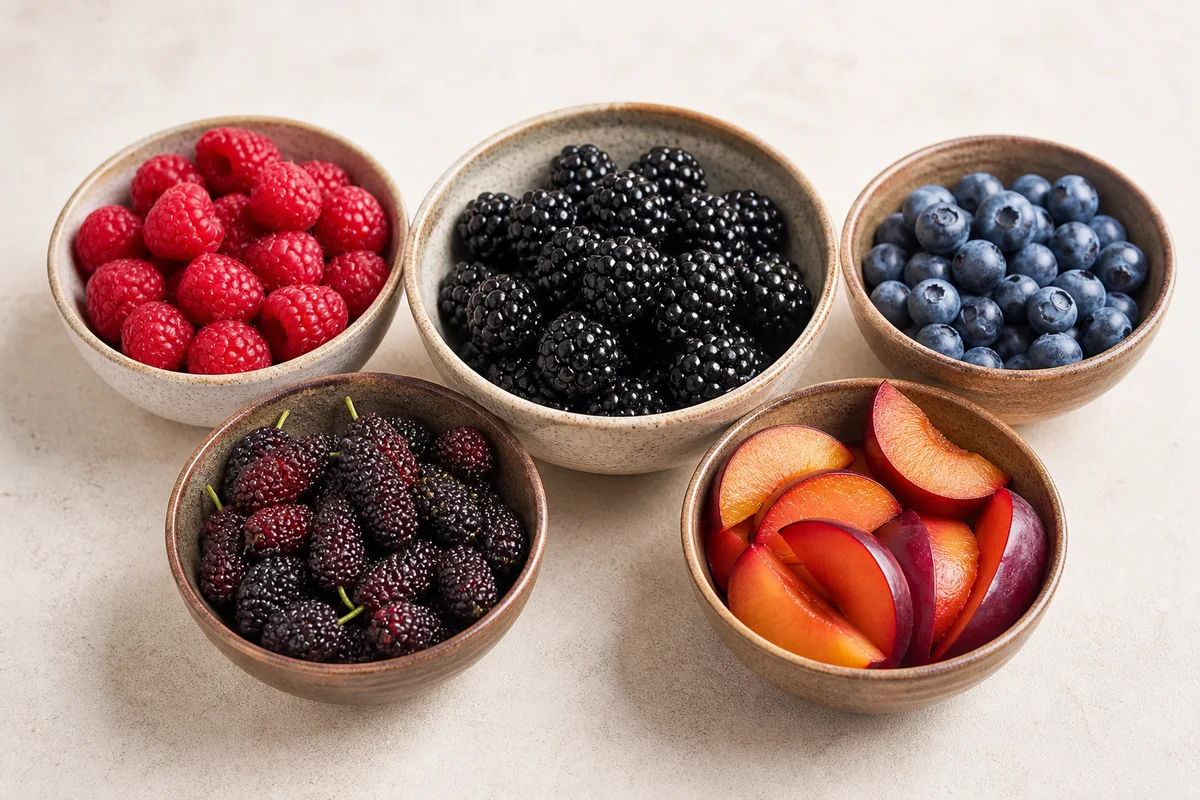
5 Best Blackberries Substitutes (Quick Swaps)
Ingredients
Equipment
Method
- Identify how you're using blackberries (fresh topping, baked filling, sauce, or jam-like swirl).
- Choose the closest substitute from the list: 1:1 for raspberries/blueberries, then adjust down for sweeter, wetter options.
- Apply the ratio and account for moisture: if the swap is frozen and your mixture looks thin, drain or simmer 2-3 minutes first.
- Taste for sweetness and tartness; brighten with lemon juice for blueberries or add a pinch of salt to reduce overly sweet swaps.
- For baked fillings, check thickness: simmer until it coats a spoon, then cool before assembling if your recipe requires set texture.
Notes
- Flavor gets closest with tart berries (like raspberries).
- Moisture drives the biggest texture differences-drain or simmer first when using frozen fruit or canned filling.
- For jam-like applications, jam-based swaps are easiest but often sweeter, so adjust added sugar.
Tried this recipe?
Let us know how it was!
Carrie is a food writer and editor with more than 15 years of experience. She has worked for some of the biggest names in the food industry, including Bon Appétit, Food & Wine, and Martha Stewart Living.
As the Editor in Chief of EpicureDelight, Carrie oversees all of the content on the site. She also manages the team of contributing writers and editors, who help to create delicious recipes, helpful tips, and informative articles that you’ll find on the site.
A native of the Chicago area, Carrie is passionate about all things food. She loves trying new restaurants and experimenting with new recipes in her kitchen. She’s also a graduate of the Culinary Institute of America, so she knows a thing or two about food!



