
That tender-crisp bite after a hot oven or a screaming-hot pan is what makes Brussels sprouts hard to replace. The outside caramelizes, the inside stays just soft enough, and there's that faint cabbage-family sharpness underneath.
Getting that from a different vegetable means matching cut size, moisture level, and cook time, not just swapping by weight.
A good brussels sprout substitute starts with knowing what you actually need from the sprout. Roasting needs something that browns without steaming.
Sautéing needs something that softens fast. Some dishes need that brassica bite; others just need the texture.
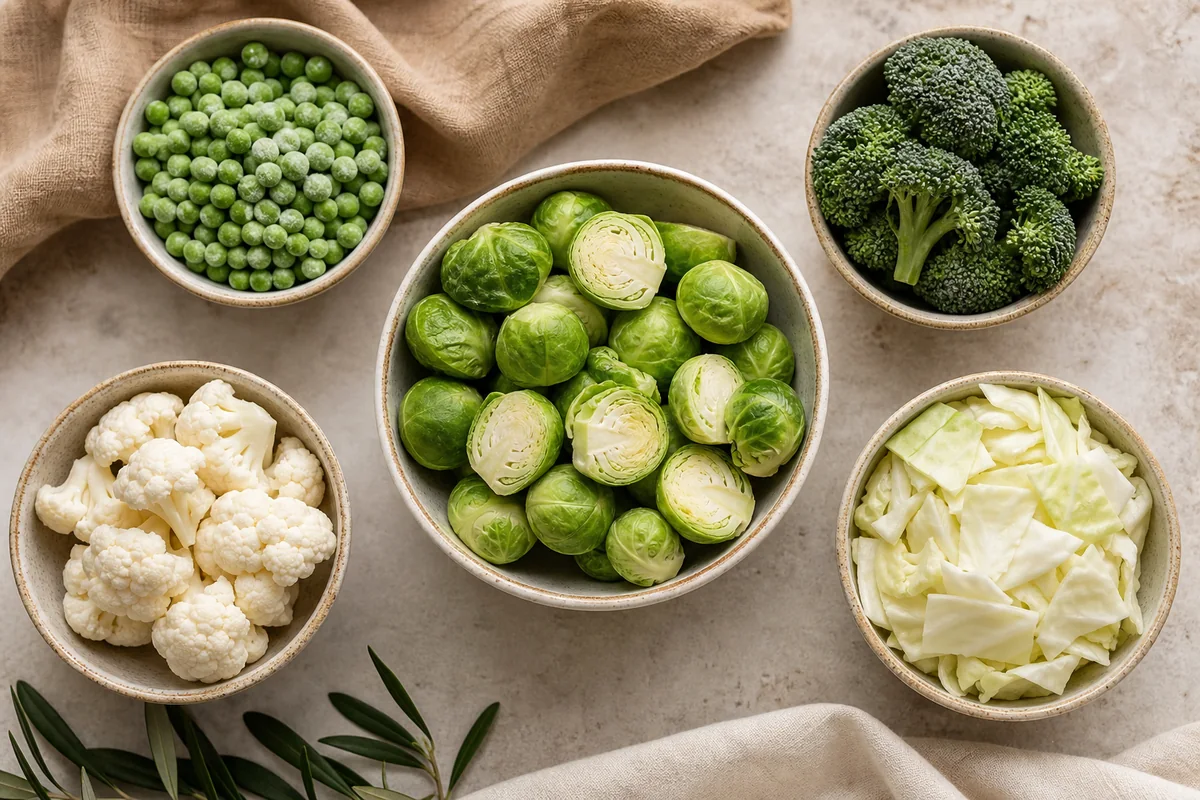
Broccoli florets are the closest roasting swap. Cabbage wins on flavor. Green beans are fastest for sautéing. Cauliflower browns beautifully at high heat. Zucchini works if you control moisture first. Use a 1:1 volume ratio and adjust cut size to match doneness.
5 Best Brussels Sprout Substitutes, Ranked by Use
The table below maps each substitute to its best use, flavor direction, and expected texture. Start here before reading the detail sections.
| # | Substitute | Best For | Ratio | Key Note |
|---|---|---|---|---|
| 1 | Broccoli Florets | Roast / Air-Fry | 1:1 | Cut small; browns well |
| 2 | Cauliflower Florets | Roast / Sauté | 1:1 | Pat dry; neutral flavor |
| 3 | Green Beans | Sauté / Quick Roast | 1:1 | Fast cook; mild taste |
| 4 | Zucchini | Roast / Sauté | 1:1 | Salt and dry first |
| 5 | Cabbage | Roast / Sauté | 1:1 | Thin slice; same family |
1. Broccoli Florets
Broccoli is the most direct replacement for roasting. Cut into small florets, it browns at the same oven temperature and finishes with charred edges that mimic the outer leaves of a Brussels sprout.
The flavor is milder, without the sharp brassica bite, but garlic and a splash of lemon at the end close much of that gap. If you want to go further, parmesan-crusted florets add enough savory depth to make you forget sprouts were the plan.
- Cut size: Aim for 1-inch florets so they match the doneness window of halved sprouts
- Seasoning: Garlic powder, olive oil, salt, and a finish of lemon juice or apple cider vinegar
- Finish step: Give them 2 extra minutes under the broiler for crisped tips
Skip if you need that sharp, cabbage-forward flavor. Broccoli is noticeably milder and won't replicate that edge.
2. Cauliflower Florets
Cauliflower is almost neutral in flavor, which is actually useful here. It takes on whatever seasoning you give it and browns well at high heat when cut properly.
The key is keeping florets small and dry. Large florets hold too much moisture and steam before they can caramelize.
Pat them with a paper towel before they go into the pan or oven.
- Cut size: No bigger than 1 inch; smaller pieces mimic Brussels sprouts doneness closely
- Drying step: Pat florets dry or let them air-dry 10 minutes after washing
- Prevent mushiness: Use a single layer on the pan with space between each piece, never pile them
Skip if cabbage-family flavor matters to your dish. Cauliflower is neutral and won't bring that brassica sharpness.
3. Green Beans
Green beans are the speed option. They hit tender-crisp faster than any other substitute on this list, and they hold their shape well under high heat.
The tradeoff is flavor. Green beans don't have the cabbage-family character that Brussels sprouts carry.
Shape is also different, so if presentation matters, this swap shows. For a weeknight sauté where you need something done in 8 minutes, that's an easy trade to make.
- Best method: Sauté over high heat or quick-roast at 425°F for 12 minutes
- Browning target: Look for light char on 2 or 3 sides before pulling them
- Timing rule: Start checking at 7 minutes; they go from crisp to soft quickly
Skip if you need round, bite-sized pieces with a cabbage-forward flavor. Green beans look and taste distinctly different.
4. Zucchini
Zucchini is mild and holds a lot of water, which is exactly why most people skip it as a substitute. But with one prep step, it works better than you'd expect.
Watery Zucchini
Works for: Quick sautés where you want soft, lightly browned pieces
Skip if: You don't have time to salt and dry first; it will steam, not roast
Salt the slices, let them sit for 10 minutes, then pat firmly dry before they hit the pan. They'll roast instead of steam.
If you regularly swap zucchini into recipes, roasting other soft vegetables follows the same moisture-control logic.
- Thickness: Cut half-moons at least ¾ inch thick; thinner slices disappear in the oven
- Salting window: Salt and rest for 10 minutes, then pat with a paper towel
- Best finish: Lemon juice or white wine vinegar with garlic added in the last 2 minutes
5. Cabbage
Cabbage is the closest flavor match on this list. It's the same plant family as Brussels sprouts, and it delivers that mild, slightly bitter edge that the others can't replicate.
Thin slices brown in about the same window as halved sprouts at 400°F. Shredded cabbage is even faster and works well in a hot pan with oil and garlic.
If you're storing a head before using it, keeping cabbage fresh longer is worth knowing.
- Slice target: ¼-inch strips for roasting, finer shreds for sautéing
- Method recommendation: Sauté for weeknight speed; roast for caramelized edges
- Seasoning: Garlic, olive oil, and a finish of apple cider vinegar for that brassica sharpness
Skip if you need a tender-crisp center bite with no chew. Thick-cut cabbage can stay chewy even when the edges brown.
Making Your Brussels Sprout Substitute Work
Cut size is the main lever for every swap here. Smaller pieces match Brussels sprouts' doneness window; larger ones need more time and risk uneven cooking.
Pair the right heat with the right moisture control, and then season everything the same way you'd season sprouts: oil, salt, garlic, and an acid finish. To understand why these compact greens have such a specific flavor profile, it helps to know what you're chasing before you season a substitute.
If you're prepping ahead, knowing how these small brassicas store also tells you whether fresh versus older sprouts would have changed your dish. For green beans specifically, more quick-cook veggie options follow similar timing rules.
- Control moisture first: Zucchini needs salting; cauliflower and cabbage need pat-drying; broccoli and green beans are ready as-is
- Use single-layer roasting: Crowding any substitute causes steaming, not browning, regardless of heat
- Finish with acid: A squeeze of lemon or a splash of apple cider vinegar in the last minute pulls most substitutes closer to Brussels sprouts' flavor
Frequently Asked Questions
Broccoli florets are the closest match for roasting. Cut them to 1 inch, roast at 425°F, and finish under the broiler for charred tips that mirror Brussels sprouts closely.
Yes, at a 1:1 volume ratio. Slice it thin (¼ inch) so it cooks at a similar pace and browns rather than steams.
Green beans are fastest and hold their tender-crisp texture well in a hot pan. Shredded cabbage is the better pick if you want the cabbage-family flavor.
Only if you salt it first. Rest for 10 minutes, pat firmly dry, then roast in a single layer at high heat.
Use garlic, olive oil, salt, and a finish of lemon juice or apple cider vinegar. The acid is what most closely mimics the sharpness Brussels sprouts carry naturally.
5 Best Brussels Sprout Substitutes (Closest Match)
Ingredients
Equipment
Method
- Match your method first: roast/air-fry for similar caramelization, sauté for tender-crisp, or raw/shaved for crunch.
- Use the listed substitute ratio (1:1) as your base, then scale down cooking time for smaller pieces (florets) or up for thicker slices.
- If your substitute releases extra moisture (zucchini/cabbage), salt lightly and pat dry before high-heat cooking.
- Taste at the final minute and finish with the same seasoning you’d use for Brussels sprouts (salt, pepper, garlic, lemon, or vinegar).
- If the texture feels off, adjust the cut size for the next batch rather than changing the entire dish.
Notes
- Cut size matters more than the ingredient: smaller pieces cook closer to Brussels sprouts.
- Brussels sprouts are cabbage-like—choose the cabbage-family swaps if you want the closest flavor.
Tried this recipe?
Let us know how it was!
Carrie is a food writer and editor with more than 15 years of experience. She has worked for some of the biggest names in the food industry, including Bon Appétit, Food & Wine, and Martha Stewart Living.
As the Editor in Chief of EpicureDelight, Carrie oversees all of the content on the site. She also manages the team of contributing writers and editors, who help to create delicious recipes, helpful tips, and informative articles that you’ll find on the site.
A native of the Chicago area, Carrie is passionate about all things food. She loves trying new restaurants and experimenting with new recipes in her kitchen. She’s also a graduate of the Culinary Institute of America, so she knows a thing or two about food!



