
No bundt pan in the cabinet? The good news is that several common pans can handle the same batter, get close to the same ring shape, and release cleanly if you prep them right.
The key variable is heat path. A bundt pan substitute has to manage the same center-to-edge heat flow that a ring pan provides naturally.
Material and depth change browning speed. A silicone mold browns slower than aluminum.
A deep tube pan holds heat longer than a shallow round. Knowing that up front saves you from pulling out a pale, underdone cake.
A tube pan is the closest swap for even rise and clean release. A springform with a parchment collar works when you want the center-hole look. A loaf pan handles the batter but drops the ring shape. Each swap requires a grease-and-flour step and a bake-time check about 5-10 minutes early.
5 Best Bundt Pan Substitutes for Ring Cakes
| # | Substitute | Best For | Ratio | Key Note |
|---|---|---|---|---|
| 1 | Tube Pan | Both | 1:1 | Check 5-10 min early |
| 2 | Springform + Collar | Baking | 1:1 | Parchment collar required |
| 3 | Silicone Bundt Mold | Baking | 1:1 | Lighter browning expected |
| 4 | Removable-Bottom Tube Pan | Both | 1:1 | Safest release method |
| 5 | Two 9-in Round Pans | Baking | 2:1 | Stack for ring effect |
1. Tube Pan
A tube pan is the straightest swap here. It shares the same center column that lets heat travel through the batter evenly, so your crumb bakes at nearly the same rate a bundt pan would give you.
The sides are straight rather than fluted, which means you lose the decorative ridges. But the rise, the crust, and the release behavior are all close.
If the tube-vs-bundt tradeoff matters for your specific recipe, capacity is the deciding factor: match it as closely as possible.
- Grease method: Brush softened butter into every angle, then dust with flour (or cocoa for chocolate cakes) and tap out the excess.
- Bake-time check: Start testing with a toothpick 5-10 minutes before your recipe's stated time, since tube pans can run slightly faster.
- Release: Invert onto a wire rack after 10-15 minutes of cooling in the pan, not immediately.
Skip if: your tube pan capacity is noticeably smaller than your bundt pan and you can't scale down the batter.
2. Springform Pan + Parchment Collar
The parchment ring collar is the whole trick here. You roll a strip of parchment into a tube, stand it upright in the center of the greased springform, and it keeps batter from flooding the middle during baking.
Without it, you just get a flat round cake.
- Collar setup: Roll parchment into a 3-inch-diameter cylinder, grease the outside, and press it into the pan center before adding batter.
- Pan grease: Butter and flour the springform base and sides thoroughly; the collar itself also needs a light grease coat.
- Bake time: Springform pans are often shallower, so check doneness 8-10 minutes earlier than the bundt recipe states.
- Release: Unlatch the ring after the cake cools 15 minutes, then gently pull the collar free.
Skip if: you don't have parchment paper on hand. Without the collar, batter fills the center and you lose the ring entirely.
3. Silicone Bundt Mold
Silicone molds that match a bundt's ring size are widely available and genuinely easy to release. The catch is browning.
Silicone insulates rather than conducts, so the outer crust stays lighter and softer than a metal pan gives you.
Always set a silicone mold on a rigid flat, oven-proof surface before filling it. Carrying a floppy mold full of batter from counter to oven is how spills happen.
- Doneness cues: Ignore color on the outside. Use a toothpick in the thickest section and check that the edges have fully set and pulled slightly from the mold wall.
- Cooling before release: Let the mold cool at least 20 minutes. Silicone holds heat longer and a warm cake tears more easily when you flex the mold to pop it out.
Skip if: your recipe depends on a dark caramelized crust or a crunchy exterior. Silicone won't build that.
4. Removable-Bottom Tube Pan
Removable-Bottom Tube Pan
Works for: cakes with fine crumb or glaze; lift the base plate to release without prying edges
Skip if: batter is very heavy or wet-support with a baking sheet underneath
Fixed-Bottom Tube Pan
Works for: sturdier batters like pound cake; single rigid piece means no leaking at the seam
Skip if: cake has delicate ridges or a fragile glaze crust-inversion risks tearing
The removable bottom is the practical advantage. Instead of inverting the whole pan and hoping the cake drops clean, you lift the base plate up through the outer ring.
That motion is gentler at the thinnest ridged sections.
- Inversion order: Run a thin knife around the center post first, then lift the base plate up and out before inverting onto a rack.
- Grease depth: Coat all the way to the seam where the base meets the tube wall; batter can lock into that joint if it's dry.
Skip if: your batter is thin or very wet. The base-plate seam is a potential leak point; use a baking sheet underneath as insurance.
5. Two 9-in Round Cake Pans
This one is about presentation, not pan science. You bake the batter in two rounds, then stack them with a center "crater" to mimic the hole.
The pan shape decision here really comes down to whether your occasion needs a single dramatic ring or a layered look is acceptable.
- Bake time: Two 9-inch rounds bake faster than a deep bundt. Check at 25-30 minutes for most batters.
- Stacking method: Level both layers, then place them on a board and cut or scoop a 3-inch circle from the center of the stack. Fill the hole with frosting or jam to define the ring look.
- Grease method: Standard butter-and-parchment-round prep works fine here.
Skip if: you need a single unbroken cake for clean slicing. The layer seam shows when cut, and the stacked structure is less stable than a true ring cake.
Making Your Bundt Pan Substitute Work
The decision comes down to three things: whether you need the actual ring shape, how the pan material conducts heat, and how forgiving the release method is. Tube pans and removable-bottom pans win on release safety.
Silicone wins on release ease but costs you browning. Stacked rounds and springform-collar setups win on ring presentation when you don't own any ring pan at all.
Knowing which of those matters most for your recipe steers the rest.
- Grease by material: Metal pans need butter plus flour (or cocoa); silicone needs only a light spray or nothing at all if it's quality nonstick; springform bases need parchment rounds plus buttered sides.
- Bake-time test: Set a timer 5-10 minutes before your recipe's finish time and insert a toothpick into the thickest section. Internal temperature of 200-210°F is the most reliable doneness signal for dense bundt-style batters.
- Cooling and release: Let any metal pan rest 10-20 minutes before inverting; flex a silicone mold only after 20 minutes of cooling; release a springform ring after 15 minutes and lift the collar last.
Frequently Asked Questions
A tube pan with the same capacity is the closest match. It replicates the center heat path and produces a similar crumb, even without decorative grooves.
Start checking 5-10 minutes before the recipe's stated time. Silicone runs slightly slower; a metal tube pan at matching capacity runs close to the same time.
Thin batters can seep through the springform seam. Place a foil-lined baking sheet underneath and make sure the base locks firmly before pouring.
For grooved metal pans, brush softened butter into every ridge, then dust with flour and tap out excess. Quality silicone molds typically need only a light spray.
Avoid substitutes when the recipe uses the center hole for structural cooling or when the batter is too wet for the substitute's seam or depth to contain safely.
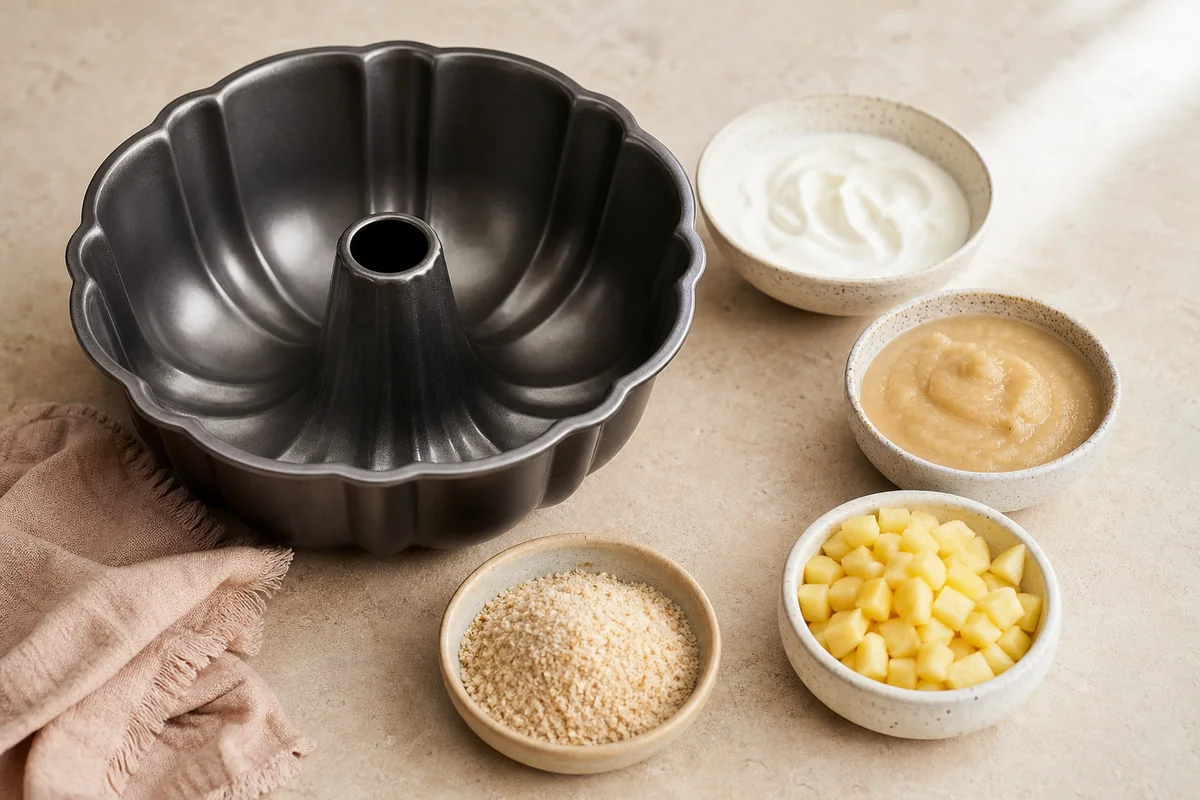
5 Best Bundt Pan Substitutes (Flavor-Matched)
Ingredients
Equipment
Method
- Identify what you need most: a true center hole, a bundt-like exterior pattern, or just a sliceable cake with similar bake behavior.
- Choose the closest match: tube pan for best rise/release; springform with a parchment collar for a ring look; loaf/two rounds for “Bundt vibe” when shape matters less.
- Grease based on the pan’s surface: deeper grease + flour (or cocoa) for light-colored pans; use a parchment collar/wedge where batter could escape.
- Adjust bake time: start checking early (about 5–10 minutes sooner than your Bundt-pan recipe) and use a toothpick/instant-read test.
- Cool correctly: invert/release only after the pan cools enough to let the cake set (typically 10–20 minutes), then continue cooling on a rack.
Notes
- Bundt pans are often cast aluminum with a heavy ring core; substitutes need similar heat behavior for even bake.
- Grooved surfaces demand extra grease/flooring (flour/cocoa) to prevent tearing at ridges.
Tried this recipe?
Let us know how it was!
Carrie is a food writer and editor with more than 15 years of experience. She has worked for some of the biggest names in the food industry, including Bon Appétit, Food & Wine, and Martha Stewart Living.
As the Editor in Chief of EpicureDelight, Carrie oversees all of the content on the site. She also manages the team of contributing writers and editors, who help to create delicious recipes, helpful tips, and informative articles that you’ll find on the site.
A native of the Chicago area, Carrie is passionate about all things food. She loves trying new restaurants and experimenting with new recipes in her kitchen. She’s also a graduate of the Culinary Institute of America, so she knows a thing or two about food!



