
Few ingredients are as quietly useful as a butter bean. That soft, yielding texture and mild flavor make them easy to love in soups, sides, and mashes.
When you're out of them, the wrong swap can leave a dish watery, gritty, or just flat.
The good news is that several white beans come close. The key is matching your dish's texture needs first, then adjusting liquid and seasoning.
For creamy dishes, you'll want a bean that softens well or one you can partially mash.
Butter bean substitute choices work best when used from a canned, drained state with a simple 1:1 ratio. The dried pale legume has a shelf life that differs from canned, so if you're working from dried, cook fully before swapping.
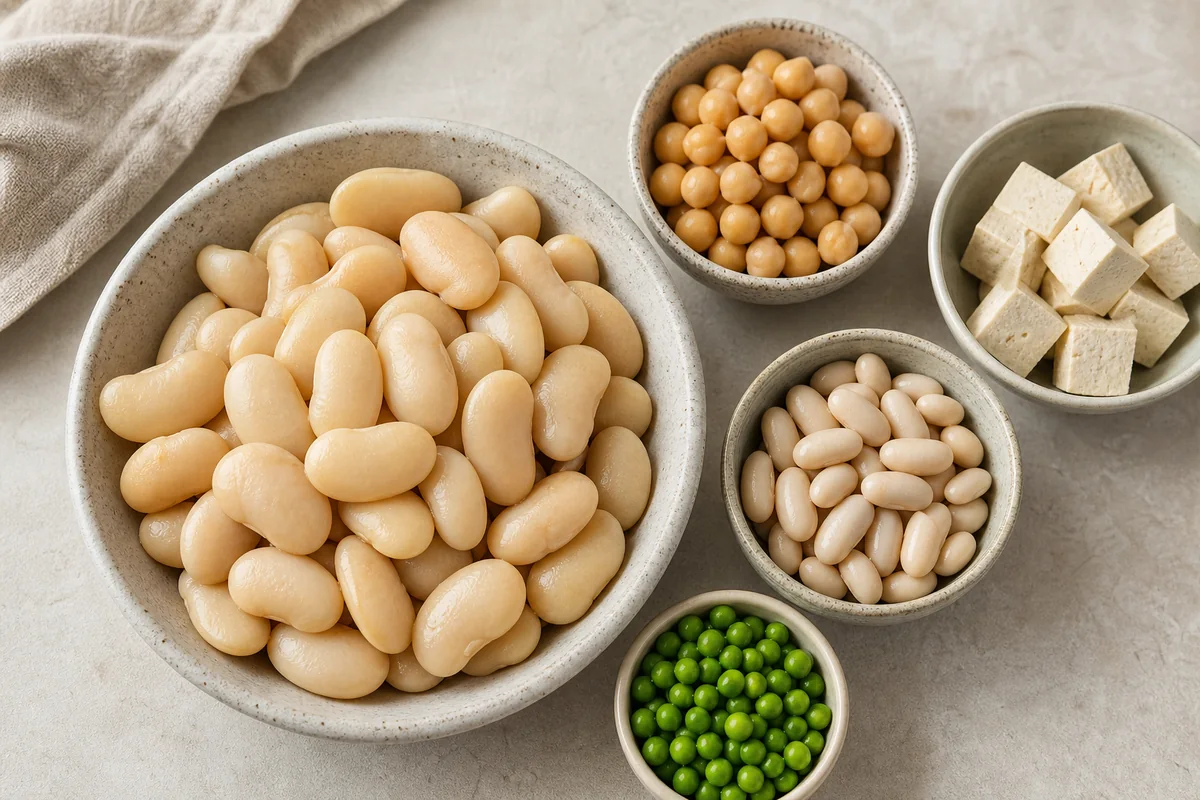
Butter beans are mild and creamy. Your best swaps are cannellini beans and great northern beans at a 1:1 ratio. For a sturdier bite, use white kidney beans. Mash or blend a portion of firmer beans to match the smooth texture butter beans bring to purees and soups.
5 Best Butter Bean Substitutes Ranked by Texture
The substitutes below are ordered by how closely they match butter beans in softness and flavor. Each one works from a canned, drained starting point.
| # | Substitute | Best For | Ratio | Key Note |
|---|---|---|---|---|
| 1 | Cannellini Beans | Both | 1:1 | Blend part for purees |
| 2 | Great Northern Beans | Both | 1:1 | Add liquid to loosen |
| 3 | Flageolet Beans | Both | 1:1 | Short simmer only |
| 4 | Chickpeas (mashed) | Cooking | ¾:1 | Mash half before using |
| 5 | White Kidney Beans | Cooking | 1:1 | Best for soups, stews |
1. Cannellini Beans
Cannellini beans are the easiest swap here. They are mild, soft when warmed, and blend into a smooth consistency that feels very close to what butter beans do in a puree or creamy side.
If you find the flavor a touch too neutral, a small pinch of salt and a squeeze of lemon pull it into focus.
Understanding that creamy, starchy profile of butter beans is what makes cannellini the obvious choice - they hit the same soft, absorbent note.
- Texture: Soft and smooth; blends without graininess
- Flavor: Very mild; absorbs seasoning quickly
- Best dishes: Purees, white bean dips, cream soups, and pasta e fagioli
- Tip: Blend half the batch for a creamier, more cohesive result
Skip if: you need whole beans that hold a firm shape in a bean salad. Cannellini soften fast and will lose their edge.
2. Great Northern Beans
Great northern beans sit just behind cannellini in softness. They are a touch firmer, but they warm into a creamy bite that works well in most of the same dishes.
Stir in 1-2 tablespoon of bean liquid or broth to get the right loose texture.
- Texture: Slightly firmer than cannellini; creamy once heated
- Flavor: Mild and clean; a little less starchy than butter beans
- Liquid tip: Add a small splash of cooking liquid - it closes the gap on thickness
- Best dishes: Soups, casseroles, mashed bean sides
Skip if: you want a distinctly buttery flavor note. Great northern beans are neutral - flageolet or lima beans will feel warmer in taste.
3. Flageolet Beans
Flageolet beans have a gentle, buttery quality that most white beans don't quite manage. They are best in shorter-cook dishes where you can control simmer time.
The starchy bean flavor profile between flageolet and lima beans is close, but flageolet stays a bit more delicate.
Flageolet Beans
Works for: Stews, lamb dishes, creamy sides, short simmers under 20 minutes
Skip if: Recipe calls for a long braise - flageolet turns mushy past 30 minutes
- Texture: Soft and tender; breaks down quickly with heat
- Flavor: Subtly buttery, more complex than cannellini
- Best dishes: Classic French cassoulet-style stews, white bean salads with short prep
- Tip: Add them in the final 10-15 minutes of cooking to preserve texture
4. Chickpeas (Mashed or Blended)
Chickpeas are firmer and grainier than butter beans, so they need one adjustment before they work in creamy dishes. Mash or blend about half the amount before stirring them in.
That simple step closes most of the texture gap. If you don't own a stick blender, pureeing without one using a fork or potato masher works for smaller batches.
Use a ¾:1 ratio - chickpeas are denser, and the full 1:1 can make a dish feel too heavy. A small hit of lemon juice or white wine vinegar after cooking sharpens the flavor and offsets any dull, beany taste.
Skip if: your dish calls for whole, tender beans in a salad. Chickpeas will always stay more distinct and firm, even after a long simmer.
5. White Kidney Beans
White kidney beans are the most structurally sound option on this list. They hold their shape through long simmers and don't turn to paste - which is exactly what you want in a thick soup or hearty casserole.
They are slightly meatier than butter beans.
| Use | Ratio | Notes |
|---|---|---|
| Soup / Stew | 1:1 | White kidney beans; add toward end to prevent over-softening |
| Casserole | 1:1 | White kidney beans; no blending needed, holds shape well |
| Puree | 1:1 | Blend fully; use cannellini instead if available |
- Texture: Firm, spoonable, holds shape after 45+ minutes of cooking
- Flavor: Mild but slightly earthier than butter beans
- Best dishes: Minestrone, bean and ham soups, slow-cooked stews
- Tip: Simmer for an extra 5 minutes to soften them toward butter bean territory
Skip if: you want an ultra-smooth puree. They resist full blending and leave a slightly grainy finish.
Making Butter Bean Substitutes Work Every Time
The biggest mistake cooks make is swapping a firmer bean without adjusting the texture first. If your substitute is firmer than butter beans, mash or blend one-third to one-half of it before adding the rest.
That small step makes the whole dish feel cohesive instead of chunky.
- Match texture first: For creamy dishes, choose cannellini or great northern and blend part of the batch. For hearty soups, white kidney beans need no adjustment.
- Adjust liquid gradually: Add bean cooking liquid or broth 1 tablespoon at a time. Too much liquid makes the swap feel watery fast.
- Season in stages: Butter beans feel mild and slightly sweet. If your swap tastes flat, add salt first, then a small pinch of acid - lemon or vinegar both work - and taste again before adding more.
Frequently Asked Questions
Cannellini beans are the closest match for smooth purees. They are soft, mild, and blend without any graininess at a straight 1:1 ratio.
Yes, canned and drained cannellini or great northern beans work at 1:1 with no extra prep. Rinse them first to remove excess starch and sodium.
Use a ¾:1 ratio - chickpeas are denser and heavier. Mash or blend half before adding to match butter beans' softer, creamier consistency.
Add liquid in small amounts - 1 tablespoon at a time. Mashing a portion of the beans directly into the soup also thickens the broth naturally.
White kidney beans are your best option for salads. They stay firm after draining and tossing with dressing, unlike softer swaps that break apart.
5 Best Butter Bean Substitutes (That Actually Work)
Ingredients
Equipment
Method
- Identify your dish style (puree/sauce vs. soup/stew vs. salad) and choose the substitute that matches the texture you want.
- Use the listed ratio; if the substitute is firmer, mash/blend ⅓ to ½ to mimic butter beans.
- Adjust texture with liquid: stir in a little bean cooking liquid, broth, or water until it looks like your target consistency.
- Taste and rebalance: butter beans feel mild, so add salt gradually and a small pinch of acid (lemon/vinegar) if the swap tastes flat.
- Warm through briefly (2–5 minutes) so the beans absorb seasoning without breaking down too much.
Notes
- For the closest butter-bean feel, choose the same “white bean” family and blend a portion.
- If using canned beans, rinse well and heat gently to prevent watery texture.
Tried this recipe?
Let us know how it was!
Carrie is a food writer and editor with more than 15 years of experience. She has worked for some of the biggest names in the food industry, including Bon Appétit, Food & Wine, and Martha Stewart Living.
As the Editor in Chief of EpicureDelight, Carrie oversees all of the content on the site. She also manages the team of contributing writers and editors, who help to create delicious recipes, helpful tips, and informative articles that you’ll find on the site.
A native of the Chicago area, Carrie is passionate about all things food. She loves trying new restaurants and experimenting with new recipes in her kitchen. She’s also a graduate of the Culinary Institute of America, so she knows a thing or two about food!



