
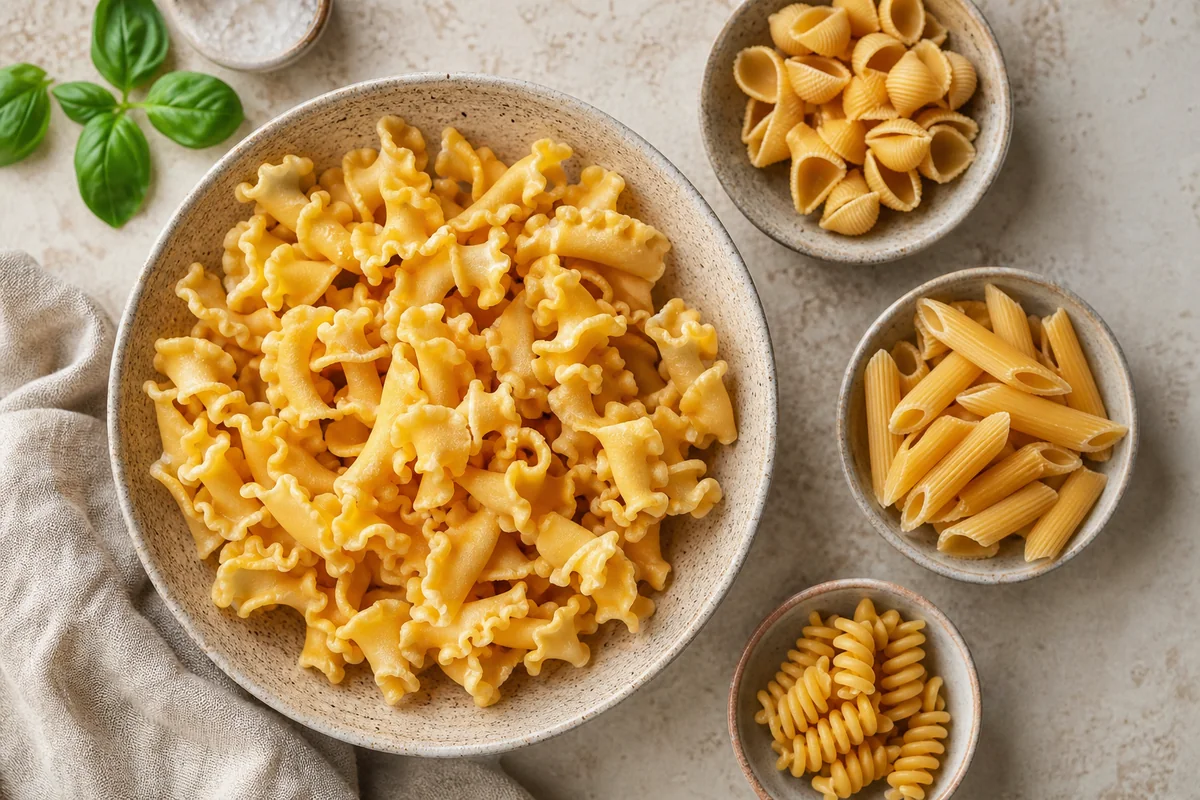
When you can't find campanelle at the store, the wrong swap can leave your sauce pooling at the bottom of the bowl. Campanelle's ruffled, bell-shaped spirals have ridges and open cups that grab onto sauce with every forkful.
A good campanelle substitute copies that sauce-catching surface. Smooth pasta like plain linguine just won't do the job the same way.
The five picks below range from near-perfect matches to honest emergency swaps. Some work better with chunky ragù, others with creamy cheese sauces.
We'll tell you which is which.
Campanelle has ruffled ridges and cup-like spirals that hold sauce. The best substitutes copy that surface grip. Fusilli and penne rigate are the closest everyday swaps. Gemelli wins for creamy sauces. Rigatoni handles thick meat sauces. Farfalle works for lighter sauces and salads.
5 Best Campanelle Substitutes Ranked by Sauce Grip
Each option below is measured at a 1:1 ratio. Match your sauce type to the right shape, and the difference is barely noticeable.
| # | Substitute | Best For | Ratio | Key Note |
|---|---|---|---|---|
| 1 | Fusilli | Both | 1:1 | Ridges grip sauce well |
| 2 | Penne Rigate | Both | 1:1 | Tubes catch chunky bits |
| 3 | Rigatoni | Thick Sauce | 1:1 | Bigger, chunkier chew |
| 4 | Gemelli | Creamy | 1:1 | Best for cheese sauces |
| 5 | Farfalle | Light/Salad | 1:1 | Toss longer to coat |
For twisted pasta comparisons, that breakdown helps you decide between shapes with overlapping textures.
1. Fusilli
Fusilli is the closest everyday swap for campanelle. Its corkscrew spiral creates grooves that trap tomato, cream, and oil-butter sauces almost as effectively as campanelle's ruffled cup shape does.
Ridged fusilli is better than smooth. If your store carries both, pick the ridged version every time.
Fusilli vs Campanelle
Works for: tomato-meat, creamy, and oil-butter sauces; similar bite size and chew; easy 1:1 swap with no timing adjustment
Skip if: your sauce is very chunky with large vegetable or meat pieces that need a wider tube opening to catch them
- Ridged over smooth: Buy fusilli rigate when you can. The extra texture adds grip.
- Toss time: 45 seconds in the pan with sauce over medium heat helps the grooves absorb flavor.
- Pasta water: Add 1-2 tablespoons of reserved pasta water while tossing to bind sauce to the twists.
2. Penne Rigate
Penne rigate is probably already in your pantry, and the ridged exterior ("rigate" means ridged) does much of the work that campanelle's ruffles would do. The hollow tube also captures chunky sauce ingredients, which campanelle's open cup handles differently but with similar results.
For a practical test of how a ridged tube pasta performs, cooking a skillet pasta shows exactly how ridge grip affects sauce coverage in a hot pan.
- Best sauces: Tomato-meat, arrabbiata, or anything with small vegetable chunks. The tube catches the pieces.
- Toss method: Finish penne in the pan with sauce for 30-45 seconds rather than just pouring sauce on top. This coats the ridges evenly.
- Delicate sauces: For a light garlic-butter or lemon-olive oil sauce, penne can feel a bit heavy. Try gemelli or fusilli for those.
Skip if your sauce is very thin and delicate. The tube shape can feel overpowering when the sauce has no body.
3. Rigatoni
Rigatoni works when your sauce is thick enough to need a bigger container. The wide ridged tubes hold braised meat, roasted vegetable chunks, and cream-based sauces with body.
It's chunkier than campanelle in the mouth, but it's honest about that trade-off.
The key move with rigatoni is finishing it in the sauce. Toss for 45-60 seconds over medium heat with a splash of reserved pasta water.
That starchy water helps the thicker sauce cling to the ridges instead of sliding off.
Skip if you want the lighter, ruffled mouthfeel campanelle gives. Rigatoni is a bigger pasta with a bolder chew, and that difference is noticeable in delicate dishes.
4. Gemelli
Gemelli is two strands twisted around each other, and that structure creates more contact points for sauce than a flat or smooth noodle. Creamy sauces cling to those twist grooves in a way that makes gemelli the strongest pick for Alfredo, ricotta-based pasta, or four-cheese dishes.
- Starch trick: Reserve at least ¼ cup of pasta water. Add it 1 tablespoon at a time while tossing to keep creamy sauce smooth and coating.
- Toss timing: Remove gemelli from the pot 1 minute before the package finish time and let it finish in the sauce pan. It absorbs the cream better that way.
- Avoid clumping: Keep the heat at medium-low when tossing. High heat breaks cream emulsions and the twists can stick together.
Skip if your sauce is very watery. Thin sauces slip right off the twists, and you'll end up with a wet bowl.
Penne rigate or fusilli handle thinner sauces more reliably.
5. Farfalle
Farfalle is the most forgiving swap when you just need something on the table fast. The bow-tie shape has a wide flat surface and a pinched center, so sauce coverage is uneven by nature.
You fix that with more sauce and a longer toss.
- Add more sauce: Increase your sauce volume by about 10-15% compared to what you'd use with campanelle. The flat wings need it.
- Toss longer: 60 seconds in the pan rather than 30. Turn the farfalle over so both flat sides get coated.
- Pasta water: Add 2-3 tablespoons to help the sauce distribute across the whole surface, including the thicker pinched center.
- Best uses: Lighter tomato sauces, pesto, and pasta salads. Farfalle holds its shape well after cooling.
Skip if your recipe depends on sauce catching inside ridges or tube openings. A thick ragù will slide right off farfalle's flat wings.
Making a Campanelle Substitute Taste Right
The shape is only half of the equation. How you cook and finish the pasta is what actually determines whether your dish works.
Pick your substitute based on sauce weight, cook it to al dente, and always reserve pasta water before you drain. The gluten-free alternative follows the same finish-in-sauce principle, which shows how broadly the technique applies. Taste the pasta 1-2 minutes before the package end time, because different shapes absorb water at slightly different rates.
- Pick by sauce weight: Heavy meat sauces go with rigatoni or penne rigate. Creamy sauces go with gemelli. Light sauces and salads go with fusilli or farfalle.
- Cook al dente: Pull the pasta 1 minute early and finish it in the sauce pan. The pasta absorbs flavor and the sauce coats the shape more evenly.
- Use pasta water: Add it 1 tablespoon at a time while tossing. The starch emulsifies the sauce onto the new shape's surface, which is how you replace campanelle's natural ridge grip.
Frequently Asked Questions
Penne rigate is the strongest pick. The ridged exterior grips sauce and the hollow tube catches vegetable or meat pieces the way campanelle's open cup does.
Use a 1:1 ratio and check the penne package. Cooking times vary by brand, so taste it 1-2 minutes early to avoid overcooking.
Gemelli is the top choice. Its twist grooves hold cream and cheese emulsions better than flat or smooth pasta shapes do.
Reserve at least ¼ cup. Add it 1 tablespoon at a time while tossing so the starch emulsifies the sauce evenly onto the new shape.
Farfalle works hot, but add 10-15% more sauce and toss for 60 seconds. It suits lighter sauces better than thick ragù.
5 Best Campanelle Substitutes for Any Recipe
Ingredients
Equipment
Method
- Identify your sauce type (chunky meat/vegetable, creamy, or light oil/butter) and pick a substitute that matches it (ridged tubes for chunky; twists for creamy; toss time for light sauces).
- Measure using the 1:1 ratio—then reserve a splash of pasta water before draining so the sauce emulsifies on the new shape.
- Cook to package al dente, tasting 1–2 minutes early because some shapes (like rigatoni) can finish slower.
- Toss the hot pasta with sauce for 30–60 seconds, adding pasta water 1–2 tablespoons at a time until it coats evenly.
- If the pasta feels under-coated, add more sauce or a little pasta water rather than overcooking.
Notes
- 1:1 ratio works for most recipes; adjust only if your recipe is pasta-water dependent (then toss longer).
- Ridges/twists improve sauce cling versus smooth shapes.
Tried this recipe?
Let us know how it was!
Carrie is a food writer and editor with more than 15 years of experience. She has worked for some of the biggest names in the food industry, including Bon Appétit, Food & Wine, and Martha Stewart Living.
As the Editor in Chief of EpicureDelight, Carrie oversees all of the content on the site. She also manages the team of contributing writers and editors, who help to create delicious recipes, helpful tips, and informative articles that you’ll find on the site.
A native of the Chicago area, Carrie is passionate about all things food. She loves trying new restaurants and experimenting with new recipes in her kitchen. She’s also a graduate of the Culinary Institute of America, so she knows a thing or two about food!



