
That tiny celery seed packs a concentrated, bitter-savory punch that's easy to underestimate until it's missing. Most cooks don't keep a big jar of it, so running out mid-recipe is common.
The good news is that your pantry probably has something that gets close.
Celery seed adds a specific flavor note: faintly bitter, aromatic, and unmistakably savory. It isn't the same as fresh celery crunch. It's a concentrated aroma that works as background seasoning in soups, brines, salads, and spice rubs.
The substitutes below are organized by how they behave in heat. Pick by flavor direction, not just by what you have.
The best celery seed substitute depends on your dish. Dried celery leaves stay closest to the original aroma. Celery salt works fast but requires cutting back on other salt. Ground fennel is a reliable pantry swap with a slightly sweeter, anise edge.
5 Best Celery Seed Substitutes Ranked by Flavor
| # | Substitute | Best For | Ratio | Key Note |
|---|---|---|---|---|
| 1 | Dried Celery Leaves | Both | 1:1 | Rub before using |
| 2 | Ground Celery / Celery Root Powder | Both | 1:1 | Reduce if too sweet |
| 3 | Celery Salt | Hot | ¾:1 | Cut other salt first |
| 4 | Ground Fennel Seed | Hot | 1:1 | May read sweeter |
| 5 | Celery Flakes | Both | 1:1 | Add early, needs time |
1. Dried Celery Leaves
Dried and finely rubbed celery leaves are the most direct stand-in for celery seed. They carry the same leafy-celery aroma with a similar savory, lightly bitter finish.
The key step is rubbing them between your fingers before adding. That breaks the cell structure and releases the oils that actually carry the flavor.
Without that, you're mostly adding color.
- Best for: Soups, stews, potato salads, and spice rubs where celery aroma is the goal
- Flavor behavior: Slightly greener and more herbal than seed, but very close in savory tone
- Ratio: Use 1:1, then taste after the first simmer
- Texture note: Finer particles dissolve better; coarser flakes may stay visible
Understanding this bitter aromatic helps you match it more accurately when you're swapping.
Skip if: You only have coarse, unrubbed dried leaves for a delicate broth. Grind or crush them first, or pick a different option.
2. Ground Celery / Celery Root Powder
Ground celery or celery root powder brings a sweeter, earthier take on the same flavor family. It works well as a celery seed alternative in cooked, savory dishes where the base notes matter more than the bitter edge.
Start at 1:1. If the dish tastes too soft or sweet after simmering, pull back by about 25% next time.
The root leans mellow; the seed leans sharp.
Ground Celery Seed Flavor
Works for: Dishes needing a sharp, bitter-savory punch (pickling, brining, spice rubs)
Skip if: You want a mellow, cooked-in background note
Ground Celery Root Powder
Works for: Casseroles, soups, mashed sides, anywhere the flavor needs to melt in
Skip if: Seasoning cold dishes - root powder doesn't hydrate well without heat
- Ratio: 1:1 to start, reduce by 25% if flavor turns too sweet or flat
- Best timing: Add with aromatics early in the cook, not at the end
- Avoid: Cold applications like chicken salad where it may clump or taste starchy
3. Celery Salt
Celery salt is a quick fix, but it demands respect. It is celery flavor and salt combined, so using it 1:1 against celery seed will almost certainly over-salt your dish.
The right approach is to start at ¾ of the celery seed amount, then taste before adding any additional salt. This gives you the celery note without blowing past the salt threshold.
For a deeper look at how celery salt flavor layers work, salt-forward seasoning options covers the nuances well.
- Ratio: Use ¾ teaspoon celery salt for every 1 teaspoon celery seed called for
- Best for: Potato salad, coleslaw dressing, rubs, and roasted vegetables
- Salt correction: Taste after adding, reduce broth or added salt by at least half
- Storage tip: If you're unsure your celery salt is still potent, storing spice blends properly affects how much flavor it actually delivers
Skip if: Your recipe is already salt-anchored, like a cured meat mixture or a heavily seasoned broth. Celery salt will push it too far.
4. Ground Fennel Seed
Ground fennel seed won't fool anyone into thinking they're tasting celery seed, but it does something useful: it fills the aromatic savory gap that opens up when celery seed goes missing. It has a sweet, anise-adjacent warmth that reads as depth rather than sweetness in soups and stews.
The risk is that fennel can dominate. Use it at 1:1 to start, then pull back by 25% if the dish starts tasting more like Italian sausage than vegetable soup.
For a clearer picture of what to expect, aromatic seed flavor notes breaks down how fennel behaves across dish types.
- Ratio: 1:1, then reduce by ¼ teaspoon if sweetness is too prominent
- Best for: Tomato-based soups, hearty stews, bean dishes, and spice rubs
- Toning it down: Add a pinch of black pepper alongside fennel to sharpen the edge
- Timing: Add early so the sweetness cooks off and the savory notes settle in
Skip if: You're making a light, neutral dish like chicken broth or cream sauce. Fennel's sweetness will be obvious.
5. Celery Flakes
Celery flakes are dehydrated celery pieces, not a concentrated extract like celery seed. That means they're milder.
They need time and moisture to bloom into flavor, so how and when you add them matters a lot.
In hot dishes, add them at the start of cooking. In cold dishes like salads, crush them fine and mix thoroughly, then let the dish rest before tasting.
For background on how dehydrated celery flavor differs from fresh or seed forms, that reference is useful before you adjust your ratio.
| Use | Ratio | Notes |
|---|---|---|
| Small batch (1-2 servings) | 1:1 | Crush flakes first; add early in hot dishes |
| Family batch (4-6 servings) | 1:1 + pinch extra | Flavor dilutes more in larger volume; taste at midpoint |
| Cold dishes (salads, slaws) | 1:1, crushed fine | Let dish rest 10 minutes before final taste |
- Best for: Soups, stews, casseroles, and cold salads with resting time
- Avoid: Last-minute seasoning; flakes need hydration time to release flavor
- Texture: Fine-crushed flakes disappear into sauces; coarser pieces stay visible
Skip if: You're seasoning right before serving. Unhydrated celery flakes taste woody and dull.
Making Celery Seed Substitutes Work
Timing is the biggest factor with any of these swaps. Seed-based replacements like fennel or ground celery release their flavor gradually, so adding them early in the cook gives the dish time to absorb and mellow.
Leaf-based options like dried celery leaves or flakes need heat and moisture to open up, which is why they stall in cold or last-minute applications. For dishes where a blend approach makes sense, combining dried celery leaves with a small amount of ground fennel covers both the leafy top note and the aromatic base.
Understanding what storing dried celery properly does to potency will also help you calibrate how much to use.
- Measure first: Start with the listed ratio, never eyeball a salty substitute like celery salt
- Taste after the simmer: Most celery-like flavors bloom as they hydrate, so wait 5 minutes before adjusting
- Adjust in small steps: Add ⅛ teaspoon at a time if flavor is weak; that prevents overcorrecting into bitterness or saltiness
Frequently Asked Questions
Not directly. Use ¾ teaspoon celery salt for every 1 teaspoon celery seed, then reduce other salt in the recipe. Taste before adding any extra seasoning.
Dried celery leaves, finely rubbed, are the closest match for hot liquid dishes. They track the same savory-bitter aroma and blend in well during a long simmer.
Use finely crushed celery flakes or dried celery leaves at a 1:1 ratio. Mix them in early and let the salad rest at least 10 minutes before tasting.
Add it early. Cooking mellows fennel's sweetness and lets the savory base notes develop. Added at the end, it tastes more aggressively anise-forward.
Too bitter: reduce by 25% and add a small pinch of sugar to balance. Too bland: add ⅛ teaspoon more of the substitute and let the dish rest before retasting.
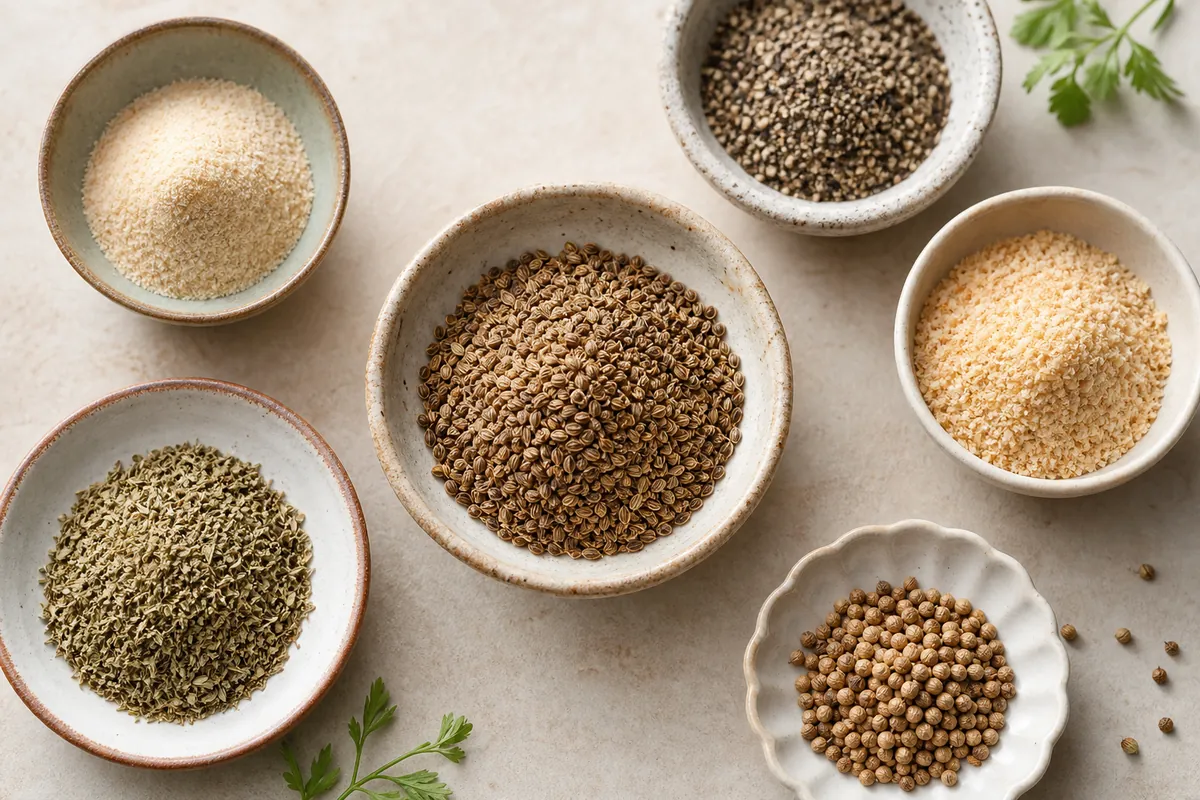
5 Best Celery Seed Substitutes That Taste Right
Ingredients
Equipment
Method
- Identify what you’re seasoning (soups, casseroles, chicken salad, pickling, or stuffing) so you choose a substitute that behaves similarly as it cooks.
- Start with the listed ratio and add early for sauces/soups or mix in after for cold dishes.
- Taste after the first simmer/softening step (or after mixing for cold dishes) and adjust in small pinches.
- If the substitute is salt-forward (like celery salt), correct overall salt in the recipe rather than adding more celery flavor.
- Let the dish sit 5 minutes before the final taste—celery-like flavors bloom as they hydrate.
Notes
- Celery seed is aromatic and slightly bitter; substitutes can skew herbal, sweet, or salty—adjust gradually.
Tried this recipe?
Let us know how it was!
Carrie is a food writer and editor with more than 15 years of experience. She has worked for some of the biggest names in the food industry, including Bon Appétit, Food & Wine, and Martha Stewart Living.
As the Editor in Chief of EpicureDelight, Carrie oversees all of the content on the site. She also manages the team of contributing writers and editors, who help to create delicious recipes, helpful tips, and informative articles that you’ll find on the site.
A native of the Chicago area, Carrie is passionate about all things food. She loves trying new restaurants and experimenting with new recipes in her kitchen. She’s also a graduate of the Culinary Institute of America, so she knows a thing or two about food!



