
Chambord has a very specific character: dark raspberry up front, a quiet vanilla note behind it, and just enough sweetness to tie both together. When you run out mid-recipe, a plain raspberry swap often falls flat because it misses that vanilla warmth.
A good chambord substitute covers both layers, then you adjust the viscosity and sweetness to fit your dish.
The swaps below are picked for baking and drizzling, not cocktails. Each one handles the berry-vanilla profile differently, so the right choice depends on what you're making and what you have on hand.
Chambord is a raspberry-vanilla liqueur. The best swaps prioritize that two-part flavor: berry first, vanilla lift second. Raspberry liqueur (crème de framboise) is the closest match. Raspberry preserves plus vanilla extract is the best baking option. All syrups may need thinning to behave properly in batter.
5 Best Chambord Substitutes That Actually Taste Like the Real Thing
| # | Substitute | Best For | Ratio | Key Note |
|---|---|---|---|---|
| 1 | Raspberry Liqueur (Crème de Framboise) | Both | 1:1 | Add vanilla if needed |
| 2 | Raspberry Preserves + Vanilla | Baking | ¾:1 | Simmer to thin first |
| 3 | Cranberry Liqueur or Syrup | Both | 1:1 | Sharper, add sugar |
| 4 | Cherry Liqueur or Maraschino Syrup | Both | 1:1 | Sweeter, less raspberry |
| 5 | Raspberry Jam + Vodka | Both | 1:1 | Strain before using |
When a substitute is thicker than Chambord, reduce the amount by 2 tablespoons per quarter cup and stir in a splash of water. Syrups and preserves behave differently from a pourable liqueur, and that difference matters most in batters where extra density can turn a crumb gummy.
1. Raspberry Liqueur
Crème de framboise is the straightforward swap. It holds the raspberry aroma and the alcohol presence, which makes baked goods read "liqueur-like" rather than just "fruity."
Most brands are slightly more tart than Chambord, but that's easy to correct.
When storing vanilla for later use, keep it alongside your liqueur bottles so you remember to add a few drops here if your recipe relies on Chambord's vanilla warmth.
- Taste match: Raspberry-forward with similar dark berry aroma; vanilla is lighter than Chambord
- Best uses: Glazes, cream fillings, cake syrups, and any recipe that calls for a drizzle
- Too tart: Stir in ½ teaspoon of sugar per 2 tablespoons before adding to the recipe
- Too sweet (some brands): Add a small squeeze of lemon juice to sharpen the edge
- Where it falls short: It won't carry Chambord's vanilla depth unless you supplement with a few drops of extract
Skip if: your recipe depends on vanilla flavor specifically and you have no way to add it.
2. Raspberry Preserves + Vanilla
Mix 3 tablespoons of raspberry preserves with 1 tablespoon of warm water and ½ teaspoon of vanilla extract to get a workable Chambord-style syrup. Simmering for 1 to 2 minutes loosens the preserves without cooking out the berry flavor.
- Mixing: Stir over low heat until the preserves loosen into a pourable consistency
- Thinning: Add water 1 teaspoon at a time until it pours like a light syrup, not a jam
- Vanilla amount: Use ½ teaspoon per 3 tablespoons of preserves; increase to ¾ teaspoon for a stronger vanilla note
- In glaze vs. batter: For glaze, keep it slightly thicker; for batter, thin until it flows freely off a spoon
- Sweet/tart balance: If preserves taste sharp, stir in ½ teaspoon of honey before thinning
Skip if: you want the alcohol effect in a sauce or cocktail-style drizzle.
3. Cranberry Liqueur
Cranberry liqueur is sharper and more tannic than Chambord. It reads as "red fruit" rather than "raspberry," which can work well but isn't identical.
The acidity is the main difference you'll notice.
In a glaze or cake soak, add ½ teaspoon of sugar per 2 tablespoons of cranberry liqueur to soften the edge. For cream fillings, the sweet syrup comparison between maraschino and grenadine gives useful context on balancing tart-sweet ratios in dessert applications.
Skip if: you need an unmistakable raspberry flavor. Cranberry works when the recipe just needs a red-fruit note, not a specific one.
4. Cherry Liqueur or Maraschino Syrup
Cherry liqueur sits close to Chambord in sweetness and color, but it reads "cherry-berry" rather than "raspberry." That distinction matters in some recipes and is barely noticeable in others.
In a rich chocolate cake or a layered trifle, it works very well.
Cherry Liqueur / Maraschino Syrup
Works for: chocolate cakes, cream-filled pastries, glazes, and any dessert where berry sweetness (not raspberry specifically) carries the flavor
Skip if: your recipe depends on raspberry-specific character, or if a side-by-side taste test would reveal the difference
If you want more background on choosing a maraschino swap, that guide covers both the syrup and the fruit in dessert contexts.
- Best recipe types: Chocolate cake, butter cream, mousse, fruit tarts, and glazed pastries
- Sweetness control: Maraschino syrup is sweeter than most liqueurs, so reduce by 1 teaspoon per 2 tablespoons used
- Vanilla compensation: Add ¼ teaspoon of vanilla extract to push the flavor closer to Chambord's profile
- Dilution: If using maraschino syrup, thin with 1 part water to 3 parts syrup before measuring for the recipe
5. Raspberry Jam + Vodka
This is your fastest DIY option when the pantry is nearly empty. The vodka thins the jam and adds an alcohol note that makes the mixture behave more like a real liqueur in glaze and frosting.
Without straining, the seeds can create an uneven texture.
For an alcohol-free version, skipping the spirits entirely works if you replace vodka with water plus an extra ½ teaspoon of vanilla extract.
- Mixing method: Stir 2 tablespoons of raspberry jam into 1 tablespoon of vodka until fully combined
- Straining: Press through a fine mesh strainer to remove seeds for smooth glaze or frosting use
- Alcohol-free option: Replace vodka with 1 tablespoon of warm water and add ½ teaspoon vanilla extract
- Vanilla boost: Add ¼ teaspoon vanilla either way to approximate Chambord's background note
- Dilution for thickness: If it still feels heavy, add water 1 teaspoon at a time until it pours like a thin syrup
Skip if: you have no way to thin the jam. A thick paste will sink in batter and create pockets instead of even flavor.
Making Chambord Substitutes Work in Any Recipe
Three variables control whether a Chambord swap works: berry flavor intensity, vanilla lift, and sweetness plus viscosity. Get all three roughly right and the dessert reads the way it should.
Miss one, and even a good substitute can make a cake taste flat or a glaze taste one-dimensional. Most swaps nail the berry note but drop the vanilla, which is why adding a small amount of vanilla extract is almost always the right call.
- Adjust sweetness: If your substitute tastes sharper than Chambord, stir in ½ teaspoon of sugar per 2 tablespoons. If it tastes heavy or syrupy, thin with water or a small splash of orange juice before measuring.
- Thin or thicken for texture: Preserves and syrups need thinning for batters. Target a consistency that pours off a spoon in a steady stream, not in slow drops. For glazes, a slightly thicker result is fine.
- Add vanilla to close the gap: Almost every fruit-only substitute benefits from ¼ to ½ teaspoon of vanilla extract. The extract versus powder tradeoff matters here since extract blends into liquid syrups faster and more evenly than powder does.
Frequently Asked Questions
Raspberry preserves thinned with water and vanilla extract is the closest match for baking. It gives you the raspberry-vanilla profile without alcohol, and simmering it for 1 to 2 minutes produces a syrup-like consistency.
Yes, but thin it first. Mix 2 tablespoons of jam with 1 tablespoon of warm water, then strain out seeds and add ½ teaspoon of vanilla extract to approximate Chambord's flavor.
Combine raspberry preserves, warm water, and vanilla extract, then simmer briefly until syrupy. This gives you raspberry-vanilla flavor with no alcohol and works well in glazes and batters.
Usually yes. Chambord has a noticeable vanilla note that most fruit substitutes lack. Adding ¼ to ½ teaspoon of vanilla extract closes that gap in almost every recipe.
Add water 1 teaspoon at a time until the substitute pours in a steady stream off a spoon. For batters, aim for the viscosity of a light corn syrup, not a thick preserve.
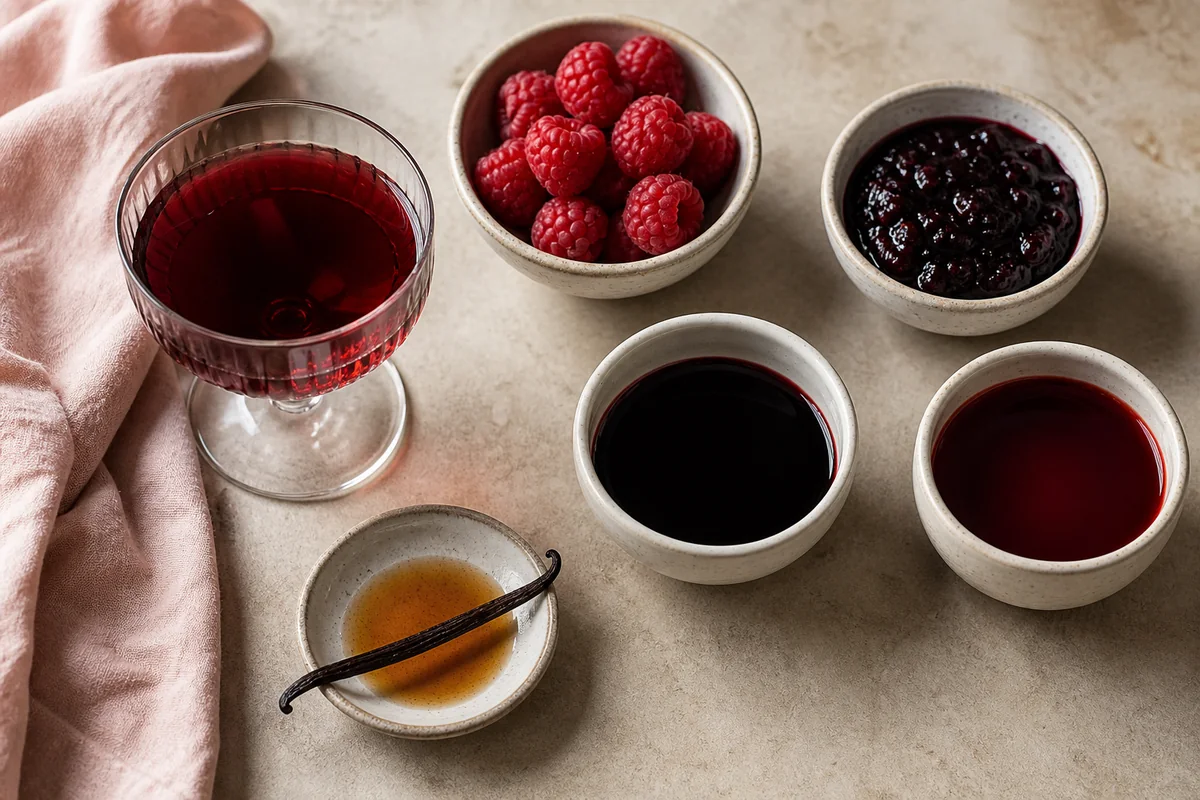
5 Best Chambord Substitutes (Honest Picks)
Ingredients
Equipment
Method
- Decide your goal: closest flavor (raspberry liqueur), closest vibe for baking (jam/preserves + vanilla), or closest red-fruit backup (cranberry/cherry).
- Match the Chambord amount using the ratio in the table; if your swap is syrupy, reduce slightly and add a tablespoon of water per ¼ cup.
- Adjust sweetness: if it tastes sharp, add a small pinch of sugar; if it tastes heavy, thin with water or orange juice.
- For baking/glazes, mix into the batter or syrup at the end so the flavor stays bright and you don’t over-reduce.
- Taste after mixing: the swap should read “raspberry + vanilla” more than “pure jam” or “pure fruit juice.”
Notes
- Chambord is a raspberry liqueur with vanilla notes; aim to recreate both the berry fruit and the vanilla lift.
- If your recipe relies on alcohol for extraction/brightness, avoid only-syrup swaps unless you compensate with sweetness and vanilla.
Tried this recipe?
Let us know how it was!
Carrie is a food writer and editor with more than 15 years of experience. She has worked for some of the biggest names in the food industry, including Bon Appétit, Food & Wine, and Martha Stewart Living.
As the Editor in Chief of EpicureDelight, Carrie oversees all of the content on the site. She also manages the team of contributing writers and editors, who help to create delicious recipes, helpful tips, and informative articles that you’ll find on the site.
A native of the Chicago area, Carrie is passionate about all things food. She loves trying new restaurants and experimenting with new recipes in her kitchen. She’s also a graduate of the Culinary Institute of America, so she knows a thing or two about food!



