
Chili sauce pulls triple duty in a recipe. It adds heat, tang, and a touch of sweetness all at once, which is why a direct one-ingredient swap rarely works perfectly.
The key is knowing which of those three qualities your dish leans on most.
A good chili sauce substitute should match the sauce's dominant job first. For a glaze or dip, sweetness and body matter most.
For a stir-fry marinade, heat and tang lead the way.
Chili sauce brings heat, tang, and sweetness together. For sweet-forward recipes, use sweet chili sauce 1:1. For savory-heat dishes, try sriracha or chili garlic sauce. For smoky depth, reach for harissa. In a pinch, ketchup plus chili flakes covers the tomato body and heat.
5 Best Chili Sauce Substitutes Ranked by Flavor Match
Each substitute below is ordered by how closely it matches chili sauce's heat, tang, and sweetness balance. The first two are the most versatile.
The last two are more specialized but still pull real weight in the right dish.
| # | Substitute | Best For | Ratio | Key Note |
|---|---|---|---|---|
| 1 | Sriracha | Both | 1:1 | Add pinch of sugar |
| 2 | Sweet Chili Sauce | Both | 1:1 | Closest for glazes |
| 3 | Chili Garlic Sauce | Both | 1:1 | Richer, more savory |
| 4 | Harissa | Cooked | ¾:1 | Smoky, add sweetener |
| 5 | Ketchup + Chili Flakes | Cooked | 1:1 | Simmer to meld |
1. Sriracha
Sriracha is the fastest swap when heat is the main thing your recipe needs. It is thinner than most chili sauces and slightly less sweet, but the chili-forward flavor holds up well in marinades and stir-fries.
If you want to know how long sriracha keeps before opening a new bottle, check that before you commit to a big batch.
- Use ratio: 1:1 in most recipes; start there and adjust up for more heat.
- Add sweetness: Stir in 1 small pinch of sugar or a few drops of honey to round out the flavor.
- Add tang: A few drops of vinegar or a squeeze of lime closes the gap if your chili sauce was tangy.
- Best for: Stir-fries, quick marinades, dipping sauces where clean chili heat is the goal.
Skip if your recipe calls for a thick, syrupy chili sauce texture. Sriracha thins out rather than coating in that glossy way.
2. Sweet Chili Sauce
This is the closest overall match when your original chili sauce was sweet and glossy. Sweet chili sauce shares the same sugar-vinegar-chili backbone, and it brings enough body to glaze or dip without adjusting much.
Understanding what makes sweet chili sauce tick helps you decide when a small vinegar bump is all you need.
- Too sweet? Add a small splash of rice vinegar or white vinegar to sharpen the flavor.
- Too thick for marinades: Thin with 1-2 teaspoons of water until it coats but flows easily.
- For stir-fries: Use the same amount as called for, but reduce other sweeteners in the recipe by half.
- Flavor note: The garlic level is usually mild, so this works in delicate dishes where a stronger garlic hit would dominate.
Skip if you need a garlic-forward or smoky flavor. In that case, chili garlic sauce or harissa is the better call.
For a wider look at sweet-forward swaps, the sweet chili swap options page covers more niche alternatives.
3. Chili Garlic Sauce
Chili garlic sauce brings real heat plus a savory, garlicky depth that standard chili sauce usually lacks. It is a great fit when your recipe is stir-fry territory or anything where umami matters more than sweetness.
When storing chili garlic sauce past its peak, flavor fades fast, so use a fresh jar for the best result.
Chili Garlic Sauce vs Standard Chili Sauce
Works for: stir-fries, fried rice, noodle dishes, and savory marinades where bold heat and garlic are welcome
Skip if: your original chili sauce was sweet and mild, or if the dish has a strict garlic limit
- Tangier needed? Add 1 teaspoon of vinegar or fresh lemon juice to bring the acidity closer to standard chili sauce.
- Too intense: Dilute with a teaspoon of water or a small pinch of sugar to calm the raw garlic edge.
- Best dishes: Fried rice, spicy noodles, dumpling dipping sauce, and bold protein marinades.
4. Harissa
Harissa is smokier and more aromatic than any other option here, which makes it a strong pick when your dish can handle a bit of complexity. The chili paste base is similar, but the cumin, coriander, and roasted pepper notes push it in a North African direction rather than an East Asian one.
If you need more alternatives beyond harissa, picking a harissa alternative covers that ground well.
- Start small: Use about ¾ the amount called for, since harissa is often hotter and more aromatic than chili sauce.
- Balance the flavor: Add a small pinch of sugar and a few drops of vinegar to mimic chili sauce's tang-sweetness balance.
- Best for: Glazing roasted vegetables, spreading on sandwiches, or stirring into tomato-based braises.
- Avoid in delicate recipes: Harissa will shift flavor noticeably in light, clean sauces.
Skip if you want the dish to stay mild and sweet. Harissa is the spiciest and most aromatic option on this list.
5. Ketchup + Chili Flakes
Ketchup already has tomato body, vinegar tang, and sweetness baked in. Add chili flakes and you have a passable chili sauce in under two minutes.
It reads tomato-forward, so it works best when the dish already has other bold flavors going on. For more ideas on building heat into a sauce from scratch, hot sauce swap ideas can fill in the gaps.
- Quick method: Combine 3 tablespoons ketchup with ¼ to ½ teaspoon chili flakes, then simmer for 30-60 seconds to meld.
- Add tang: Stir in a few drops of vinegar after simmering if the mix tastes flat or too sweet.
- Add depth: A small pinch of salt or a few drops of soy sauce sharpens the flavor away from pure ketchup.
- Best for: Weeknight sauces, baked dishes, and anything simmered long enough to absorb the tomato notes.
Skip if you need a clean chili flavor without tomato. Sriracha or sweet chili sauce will serve you better there.
Making Any Chili Sauce Substitute Taste Right
The fastest way to fine-tune any substitute is to taste in order: heat first, then tang, then sweetness, then body. You can also check what chili sauce actually tastes like as a reference point, which helps when you're calibrating from scratch.
If you are swapping garlic-heavy options like chili garlic sauce, swapping out chili garlic sauce mid-recipe is easier than it sounds.
- To thin: Add water in 1-teaspoon increments until the sauce coats a spoon without pooling. Too much water at once dulls the flavor.
- To balance: Add vinegar or lemon drops for tang, sugar or honey pinches for sweetness. Never add both at once. Taste between each addition.
- Cooking time: Give the substitute at least 2 minutes of heat in the pan before tasting. Raw vinegar and raw sugar taste sharper than cooked-in versions.
Frequently Asked Questions
Sriracha is the quickest heat-only fix and works at a 1:1 ratio. Add a pinch of sugar if your original sauce leaned sweet.
Yes, for most glazes and dips a 1:1 swap works fine. If the dish is savory, add a small splash of vinegar to cut the sweetness.
Stir in a small pinch of sugar or a few drops of honey. Sweetness rounds out sharp vinegar notes faster than any other fix.
Simmer it in the pan for 1-2 extra minutes without a lid. The water evaporates and the sauce thickens into a glaze-ready consistency.
Use chili garlic sauce or sriracha for stir-fries. For dipping, sweet chili sauce is the better choice since it has the right body and balance.
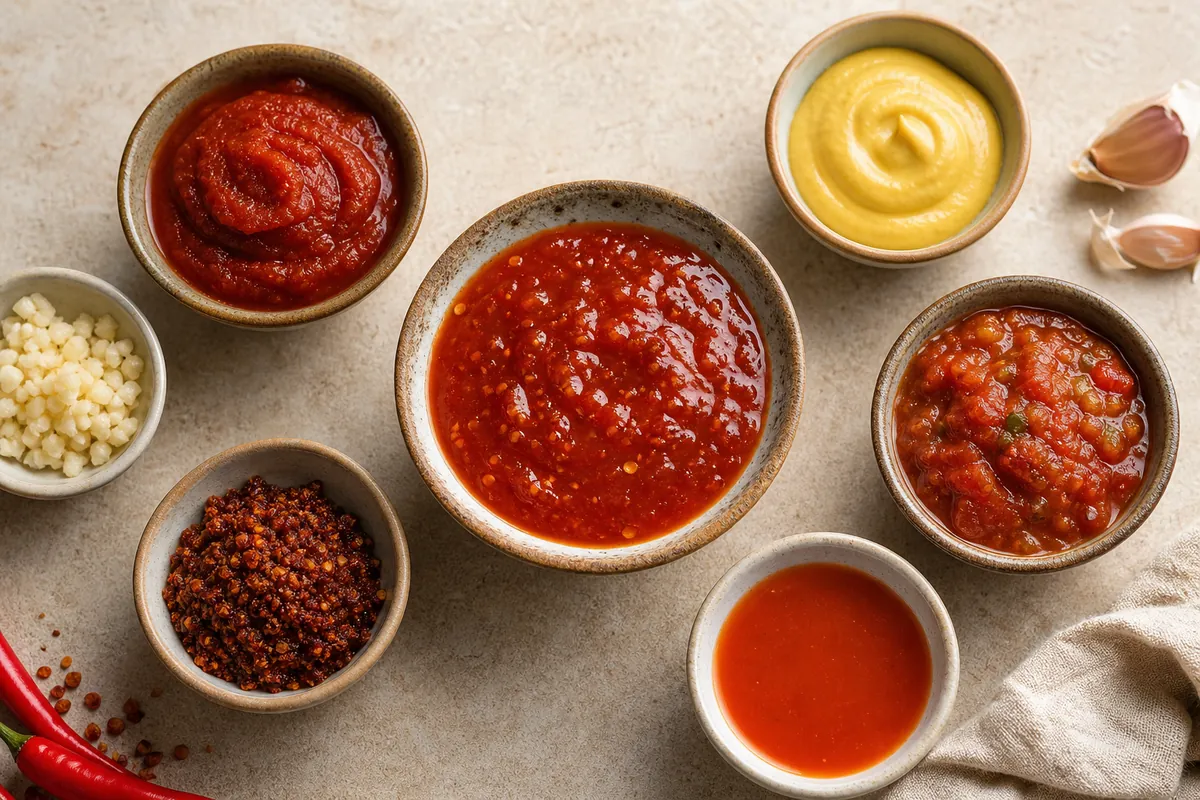
5 Best Chili Sauce Substitutes (Tested Swaps)
Ingredients
Equipment
Method
- Identify your chili sauce style: sweeter (sweet chili sauce), garlic-forward (chili garlic sauce), or smoky-spiced (harissa).
- Start with the listed ratio; in stir-fries/marinades, thin with 1–2 teaspoons water so it coats evenly.
- Adjust heat first (add chili flakes or extra chili paste in small pinches), then balance tang (vinegar/lemon) and sweetness (sugar/honey).
- If the substitute is grainy or very thick, simmer it with a splash of water for 30–60 seconds to smooth the texture.
- Taste after 2 minutes of cooking and fine-tune: add salt/soy for depth, or add a touch of sugar to reduce sharp vinegar notes.
Notes
- Chili sauce performance depends on sweetness + tang balance, not just heat level.
- Thick substitutes (harissa, chili garlic sauce) often need thinning for stir-fries and glazes.
Tried this recipe?
Let us know how it was!
Carrie is a food writer and editor with more than 15 years of experience. She has worked for some of the biggest names in the food industry, including Bon Appétit, Food & Wine, and Martha Stewart Living.
As the Editor in Chief of EpicureDelight, Carrie oversees all of the content on the site. She also manages the team of contributing writers and editors, who help to create delicious recipes, helpful tips, and informative articles that you’ll find on the site.
A native of the Chicago area, Carrie is passionate about all things food. She loves trying new restaurants and experimenting with new recipes in her kitchen. She’s also a graduate of the Culinary Institute of America, so she knows a thing or two about food!



