
Creamy, a little sweet, and thick enough to hold a curry together-coconut milk does a lot of heavy lifting. When the can is missing from your pantry, though, a good coconut milk substitute is easier to find than you might think.
The key is matching the job, not the flavor. Most recipes use coconut milk for body and fat.
For those, a handful of dairy and dairy-free options work well. For dishes where the coconut aroma matters, your options get narrower fast.
Match your substitute to what the recipe needs: richness, neutral creaminess, or coconut aroma. Coconut cream is the closest swap. Half-and-half, whole milk with butter, oat milk, and evaporated milk all work for texture. Use a 1:1 ratio and adjust thickness before adding to the pot.
5 Best Coconut Milk Substitutes That Taste Right
These five options cover the most common cooking situations. Each works at a 1:1 ratio by volume.
Reach for a coconut-based option when aroma matters. Pick dairy or oat when you just need the body.
| # | Substitute | Best For | Ratio | Key Note |
|---|---|---|---|---|
| 1 | Coconut cream (thinned) | Both | 1:1 | Whisk smooth, add water |
| 2 | Half-and-half | Savory | 1:1 | Simmer low, no boil |
| 3 | Whole milk + butter | Savory | 1:1 | Whisk before adding |
| 4 | Oat milk + coconut oil | Both | 1:1 | Use plain, unflavored oat |
| 5 | Evaporated or condensed milk | Both | 1:1 | Dilute condensed for sweet |
1. Coconut Cream
Coconut cream is the most direct swap you can make. It has the same base flavor and fat structure as coconut milk; it is just thicker and more concentrated.
If you want concentrated coconut flavor notes in a curry or rice dish, start here.
To use it properly, you need to thin it first. Skipping this step often means a dense, clumpy result halfway through cooking.
- Whisk first: Stir coconut cream until fully smooth before adding any liquid.
- Thin with water: Add 2-3 tablespoons of warm water per ½ cup of coconut cream, then check the consistency.
- Simmer briefly: Give it 2-3 minutes on gentle heat to let everything come together.
You can also check the fat content in older cream before using; stored coconut cream sometimes separates and needs extra whisking.
Skip if: your recipe needs a mild, dairy-like finish with no coconut note at all.
2. Half-and-Half
Half-and-half is smooth, pourable, and easy to find. It is not trying to mimic coconut flavor, but it matches coconut milk's fat level closely enough that sauces and soups stay creamy without any compromise on texture.
The one real watch-out is heat. A rolling boil will break it.
Half-and-Half vs. Coconut Milk
Works for: chowders, cream sauces, mild pasta dishes, and any recipe where coconut aroma would feel out of place
Skip if: the recipe is vegan, or if coconut flavor is central to the dish
If you want to explore other dairy options alongside this one, dairy-based cream swaps cover several closer-to-hand options that behave similarly.
- Add late: Stir half-and-half in during the final 5-7 minutes of cooking to prevent breaking.
- Balance the flavor: A small pinch of salt and a squeeze of lime can replace the faint sweetness coconut milk carries.
- Avoid hard boils: Keep heat at a gentle simmer and stir frequently once it is in the pan.
Skip if: you are cooking vegan or the recipe specifically calls for coconut aroma.
3. Whole Milk + Butter
Whole milk alone is too thin to stand in for coconut milk. Add 1-2 teaspoons of unsalted butter per cup and whisk until fully combined, and you get a fat level and body that holds its own in mild curries, pasta sauces, and cream-based soups.
If you are already thinking about swapping whole milk out of other recipes too, picking the right dairy option for the dish makes a real difference.
Add the mixture near the end of cooking, not at the start. Early addition means the butter can split away from the milk as the dish heats up.
Stir it in off the heat or at a low simmer, and the texture stays smooth all the way to the bowl.
Skip if: your dish depends on coconut aroma. This swap is fully flavor-neutral and will not signal coconut in any way.
4. Oat Milk
The mild, slightly sweet flavor of oat milk makes it a strong dairy-free base for curries and creamy sauces. It does not match coconut milk's fat level exactly, but it is thick enough to give soups and stews real body without tasting watery.
- Add coconut aroma: Stir a small amount of coconut-flavored oil into the oat milk before adding it to the pot if your dish needs that note.
- Watch for sweetness: Oat milk carries its own light sweetness; reduce any added sugar in the recipe by a small amount first.
- Avoid overcooking: Long, high-heat cooking can make oat milk taste slightly starchy; add it in the last 10 minutes of cook time.
Skip if: the dish has very delicate, light flavors. Oat's natural taste can show through in thin broths or pale sauces.
5. Evaporated Milk
Evaporated milk is shelf-stable, reliably thick, and a direct 1:1 swap for coconut milk in savory dishes. It has no added sugar, so it goes into soups, curries, and sauces without any sweetness concern.
Before storing opened cans, transfer any leftover evaporated milk to a sealed container and refrigerate immediately.
For desserts, sweetened condensed milk is the better fit, but it needs dilution. Add it in small amounts and taste as you go.
A ratio of 1 part condensed milk to 2 parts water is a reasonable starting point, but every recipe is different. Reduce any additional sugar in the recipe first, then adjust once you have tasted the result.
Skip if: you need coconut flavor. Both evaporated and condensed milk are purely about creaminess, not aroma.
Making a Coconut Milk Substitute Work
The biggest mistake people make is pouring a substitute straight in without checking its consistency first. Whether you are working through pantry staples or just improvising, the substitute needs to match coconut milk's texture before it hits the heat.
Thin anything too thick. If the mixture splits in the pan, drop the heat immediately and stir steadily until it comes back together.
- Check thickness first: Your substitute should pour like coconut milk; if it doesn't, thin with warm water in 1-tablespoon increments until it does.
- Simmer gently: Dairy and oat milk both perform best between 180-195°F; a hard boil breaks the texture and is hard to recover from.
- Taste and adjust: Most substitutes are flavor-neutral, so add a small pinch of salt and a tiny squeeze of citrus at the end to bring up the brightness coconut milk naturally carries.
Frequently Asked Questions
Yes, but thin it first. Whisk coconut cream smooth and add 2-3 tablespoons of water per ½ cup until it pours like coconut milk, then use it 1:1.
Oat milk is the most reliable option. Add a small amount of coconut-flavored oil if you want the aroma; it holds up well during simmering.
Oat milk can break at high heat, but it is more stable than dairy. Add it in the last 10 minutes and keep the simmer low to avoid separation.
Diluted condensed milk works well. Start with 1 part condensed milk to 2 parts water, taste, and reduce added sugar in the recipe accordingly.
Lower the heat right away and stir steadily. For a thin result, simmer uncovered for 3-5 minutes to reduce slightly; for separation, gentle heat and constant stirring usually bring it back.
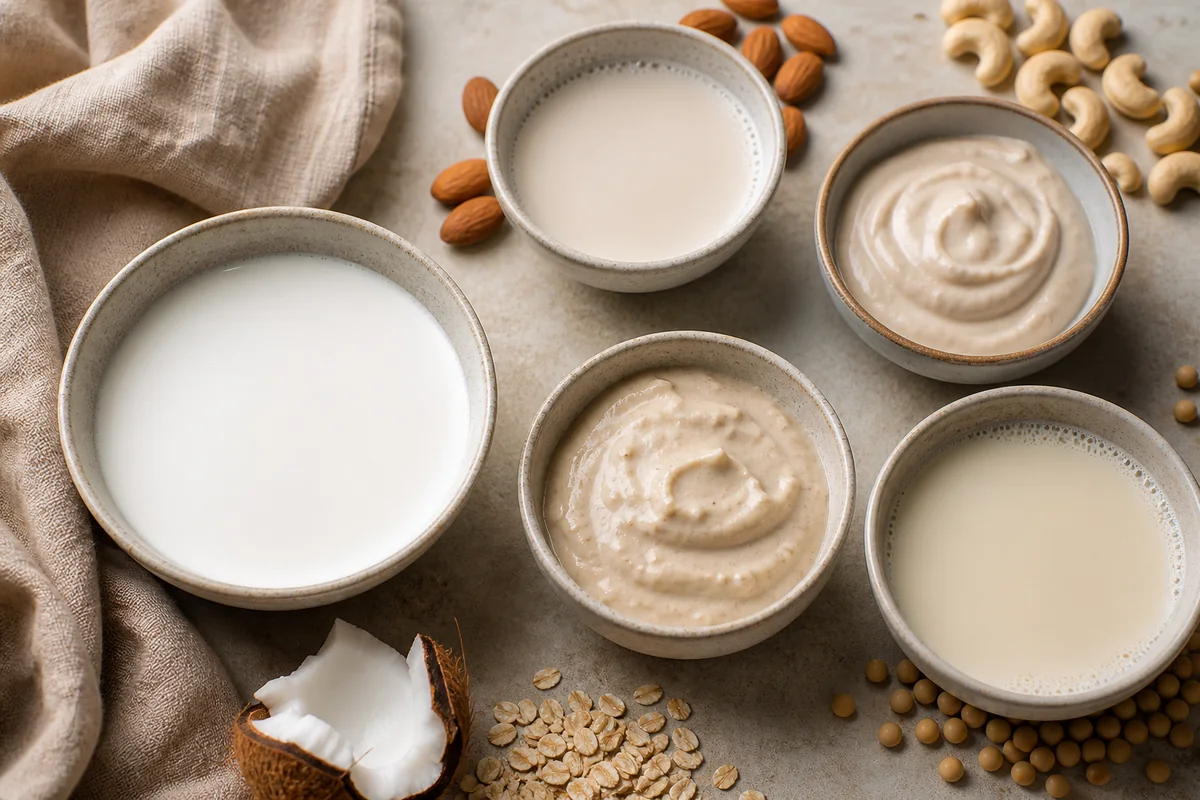
5 Best Coconut Milk Substitutes That Taste Right
Ingredients
Equipment
Method
- Identify what you’re making (curry, soup, rice, smoothie, or dessert) and whether you need coconut flavor or just creaminess.
- Match the substitute to your goal using the “Best pick / Watch out” notes for that item.
- Use the 1:1 ratio; for thicker substitutes (like coconut cream), thin with water until it pours like coconut milk.
- If the substitute looks split or too thin, simmer 2–4 minutes and stir; then taste and adjust salt/acid to balance.
- For sweet dishes, keep an eye on the substitute’s natural sweetness (evaporated vs condensed) before adding sugar.
Notes
- Coconut milk replacements work best when you match both texture and whether you need coconut aroma.
- Thickening behavior varies by brand and fat level—always simmer and taste at the end.
Tried this recipe?
Let us know how it was!
Carrie is a food writer and editor with more than 15 years of experience. She has worked for some of the biggest names in the food industry, including Bon Appétit, Food & Wine, and Martha Stewart Living.
As the Editor in Chief of EpicureDelight, Carrie oversees all of the content on the site. She also manages the team of contributing writers and editors, who help to create delicious recipes, helpful tips, and informative articles that you’ll find on the site.
A native of the Chicago area, Carrie is passionate about all things food. She loves trying new restaurants and experimenting with new recipes in her kitchen. She’s also a graduate of the Culinary Institute of America, so she knows a thing or two about food!



