
Coriander seed has a warm, citrusy edge that sits somewhere between floral and faintly nutty. It is mild enough to play background in a curry, but noticeable enough that swapping it wrong can shift the whole dish.
Finding the right coriander seed substitute means matching that seed-spice warmth first, then correcting for any flavor drift with acid or salt.
Whether you need ground spices for a quick sauce or whole seeds for a spice rub, the options below are ordered by how closely they land. The choice also depends on your cooking method: long-simmered dishes forgive more, but baking is less forgiving if the grind is coarse or the spice is too assertive.
Ground coriander is the closest 1:1 swap for coriander seed in most recipes. Toasted fresh coriander seeds beat bottled powder when you want full aroma. For seed-style warmth without the citrus, cumin or caraway seeds (at ¾:1) work well with a squeeze of acid to restore brightness.
5 Best Coriander Seed Substitutes for Home Cooks
Seed substitutes work best when you match intensity first, then adjust. If your recipe uses whole seeds for garnish and you only have ground spices, none of these will replicate the texture, but they will save the flavor.
Think about stored seed freshness too, since stale whole spices perform worse than fresh ground powder.
| # | Substitute | Best For | Ratio | Key Note |
|---|---|---|---|---|
| 1 | Ground Coriander | Both | 1:1 | Add later; can turn bitter |
| 2 | Coriander Seeds (toasted) | Both | 1:1 | Crush finely for baking |
| 3 | Cumin Seeds | Cooking | ¾:1 | Add acid to lift brightness |
| 4 | Caraway Seeds | Cooking | ¾:1 | Watch for anise drift |
| 5 | Fennel Seeds | Both | ½:1 | Pair with lemon or vinegar |
1. Ground Coriander
Ground coriander is simply pre-milled coriander seed, so the flavor match is as close as you will get. The difference is that powder disperses faster and can turn slightly bitter if cooked at high heat for too long. Add it a minute or two later than you would whole seeds, and the flavor stays clean.
For baking, the 1:1 swap is seamless. The coriander-cumin flavor difference is worth knowing here, because ground coriander reads warmer and less earthy than cumin powder.
- Swap ratio: 1 teaspoon ground coriander for every 1 teaspoon coriander seed called for
- For cooking: Add to the pan 1-2 minutes later than you would whole seeds to limit bitterness
- For baking: Mix directly into dry ingredients; no adjustment needed
- Best in: Curries, spice rubs, marinades, spiced breads, and cookies
Ground Coriander
Works for: most recipes at a 1:1 ratio, both cooking and baking, with consistent results
Skip if: your recipe needs whole-seed texture or visible seed specks in the final dish
2. Toasted Coriander Seeds (Crushed Fresh)
If you have whole coriander seeds on hand, toasting them fresh before crushing is the highest-fidelity option. The heat opens up the volatile oils and produces an aroma that store-bought powder simply cannot match.
It is the same ingredient, but toasting changes what you taste.
- Swap ratio: 1:1 by volume, using toasted and freshly crushed seeds
- Toast time: 30-60 seconds in a dry pan over medium heat; stop when fragrant, before any darkening
- For baking: Use a spice grinder or mortar and pestle to crush finely, so there are no gritty pockets
- For cooking: A rough crush works fine for sauces and braises
The fresher the seeds, the better this works. If your seeds have been sitting in the cupboard for over a year, that citrusy seed warmth fades and you may as well use fresh ground powder.
Skip if: you cannot control toast time or risk burning the seeds, which turns them sharp and acrid.
3. Cumin Seeds (Toasted + Crushed)
Cumin seeds are warmer and earthier than coriander, without the citrus lift. They work when you need seed-spice depth in a dish but cannot source coriander.
Expect the result to read slightly smokier and more intense.
- Swap ratio: ¾ teaspoon cumin seeds for every 1 teaspoon coriander seed
- Toast time: 30-45 seconds in a dry pan until the aroma sharpens; do not let them pop and scatter
- Balance: Add a small squeeze of lemon or a splash of vinegar, or use bright acidic swaps to restore coriander-like lift
- Best in: Beans, sauces, roasted vegetables, and savory baking where extra warmth is welcome
Skip if: your dish relies on coriander's floral brightness. A light herb-forward recipe will read too heavy with cumin.
4. Caraway Seeds (Toasted + Crushed)
Caraway is a seed-style substitute that shares some of coriander's herbal, aromatic quality. The difference is a faint anise-like edge that can dominate if you use too much.
Start lower than your recipe calls for, then taste.
When caraway works, it is genuinely good: the seed texture is similar to coriander, and it handles toasting well. If you are making a hearty braise, a dark rye-style bread, or a spice blend, anise-adjacent seed options like caraway earn their place.
- Swap ratio: ¾ teaspoon caraway for every 1 teaspoon coriander seed
- Toast time: 30-40 seconds; caraway becomes more pungent quickly, so keep the heat moderate
- Fix for anise drift: Reduce by an extra ¼ teaspoon and add acid (lemon or apple cider vinegar) to bring brightness back
Skip if: you are making a delicate, coriander-forward dish where the anise note will stand out awkwardly.
5. Fennel Seeds (Toasted + Crushed)
Fennel seeds have a sweet-anise character that leans away from coriander's citrus. Because they are more aromatic by volume, start at half the amount your recipe specifies.
That lower ratio prevents the sweetness from taking over the dish.
Fennel Seeds
Works for: spice blends, pork dishes, savory bakes, and braises where mild sweetness is acceptable
Skip if: you need coriander's citrus-floral note and have no acid available to balance fennel's sweetness
- Swap ratio: ½ teaspoon fennel seeds for every 1 teaspoon coriander seed
- Toast time: 20-40 seconds only; fennel becomes more prominent fast, so pull early
- Balance: Pair with lemon zest, white wine vinegar, or a pinch more salt; the sweet anise profile needs a sharp counterpoint to mimic coriander's lift
- Best in: Sausage-style spice blends, tomato sauces, and savory pastry doughs
Making Coriander Seed Substitutes Taste Right
Getting the ratio right is only half the work. Once the substitute is in the pot, a quick taste and a small correction can pull the flavor back toward coriander's warm citrusy note.
Understanding earthy seed spice character helps you recognize when a substitute has gone too heavy and needs an acidic counterpoint.
- Acid is your fastest fix: If a cumin or caraway swap tastes flat or too earthy, add lemon juice or white wine vinegar in ¼ teaspoon increments until brightness returns
- Grind whole seeds finely for baking: A rough crush that works in a sauce will create gritty pockets in a cake or bread; use a spice grinder and go fine
- Control heat for ground spices: Ground coriander and other powders release their flavor faster than whole seeds and can turn bitter after 8-10 minutes of high heat; add them in the last few minutes of cooking when possible
Frequently Asked Questions
Ground coriander is the closest match at a 1:1 ratio. For sauces and curries, add it slightly later in the cooking process to avoid bitterness.
Yes, at a 1:1 ratio. Ground coriander mixes evenly into dry ingredients and performs well in spiced breads, cookies, and pastry doughs.
Use a smaller amount: ½:1 for fennel, ¾:1 for caraway. Then add lemon juice or vinegar to cut sweetness and restore a brighter note.
Yes, toasting boosts aroma significantly. Use a dry pan over medium heat for 30-60 seconds, stopping as soon as the seeds smell fragrant.
Add acid first: a small squeeze of lemon juice or a splash of vinegar often restores brightness. Then add a pinch more of the substitute spice if warmth is still missing.
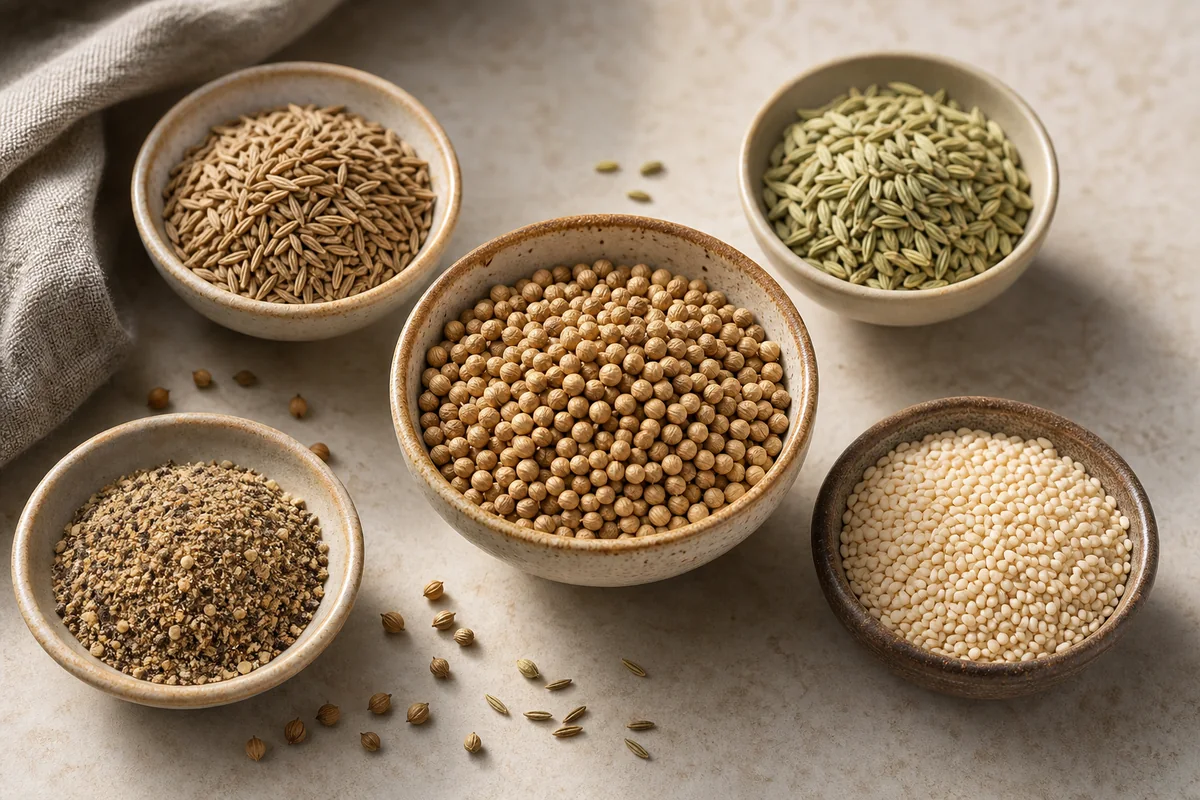
5 Best Coriander Seed Substitutes for Home Cooks
Ingredients
Equipment
Method
- Identify whether your recipe uses coriander seed for flavor in a sauce/spice rub, or for a dry baking profile; this changes how long you should toast or cook the substitute.
- Start with the swap ratio from the list, then toast seeds briefly (30–60 seconds) if your recipe allows it to deepen aroma.
- Add the substitute, mix thoroughly, and simmer or bake according to your recipe; avoid long high-heat time if you’re using ground coriander.
- Taste at the halfway point (or before baking finishes) and adjust: add a small pinch more for warmth, or balance with acid (lemon/vinegar) if it tastes flat.
- For baking, grind any whole-seed substitute finely so it doesn’t create gritty pockets.
Notes
- Toasting improves aroma for whole seeds; ground spice can turn bitter if cooked too long.
- If the substitute tastes too sweet/anise-like, counter with a small amount of acid or salt.
Tried this recipe?
Let us know how it was!
Carrie is a food writer and editor with more than 15 years of experience. She has worked for some of the biggest names in the food industry, including Bon Appétit, Food & Wine, and Martha Stewart Living.
As the Editor in Chief of EpicureDelight, Carrie oversees all of the content on the site. She also manages the team of contributing writers and editors, who help to create delicious recipes, helpful tips, and informative articles that you’ll find on the site.
A native of the Chicago area, Carrie is passionate about all things food. She loves trying new restaurants and experimenting with new recipes in her kitchen. She’s also a graduate of the Culinary Institute of America, so she knows a thing or two about food!



