
Tiny tubes make a difference. Ditalini sits in broth like a grid of little cups, catching liquid in every bite, and that geometry is harder to fake than it looks.
Still, knowing what a good ditalini pasta substitute actually needs to do makes the swap almost painless.
The two things that matter most are bite size and cook time. Shapes too large swallow broth ratios whole.
Shapes too small turn to mush before your soup finishes. If you want to understand what ditalini brings to a dish at a flavor and texture level, the ditalini flavor notes page covers that in detail.
Small pasta shapes overcook quickly, so start testing one minute early and always finish the pasta in the dish rather than draining and walking away.
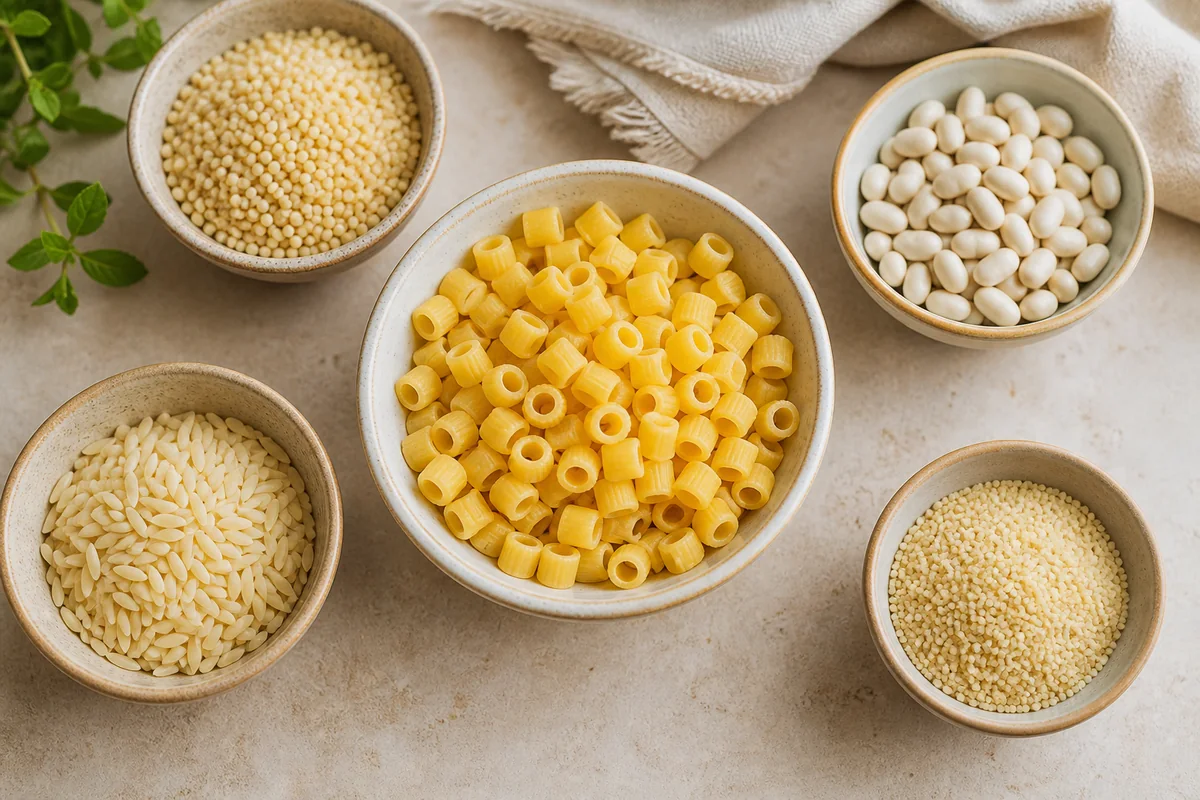
The best ditalini substitutes are acini di pepe, pastina, orzo, small elbow macaroni, and mini shells. All swap 1:1 by volume for soups. Under-cook each by 1 minute and finish in the broth or sauce. Adjust liquid if using orzo, which absorbs more than ditalini does.
5 Best Ditalini Pasta Substitutes for Home Cooks
Each swap below works at a 1:1 volume ratio unless noted. Use the table to scan quickly, then read each H3 section for finishing details.
| # | Substitute | Best For | Ratio | Key Note |
|---|---|---|---|---|
| 1 | Pastina / small cut pasta | Soup | 1:1 | Very quick cook, watch closely |
| 2 | Acini di pepe | Soup | 1:1 | Strong sauce cling, time carefully |
| 3 | Orzo | Both | 1:1 | Absorbs more liquid than ditalini |
| 4 | Small elbow macaroni | Both | 1:1 | Under-cook for baked dishes |
| 5 | Mini shells | Saucy dishes | 1:1 | Traps sauce, heavier in thin broth |
1. Pastina or Small Cut Pasta
Pastina is the easiest pantry swap for ditalini in soup. The tiny shapes spread evenly through broth and every spoonful gets pasta in it, which is exactly what ditalini does.
If you have small star shape options at home, any of them will work here.
Cook time is shorter than ditalini, so watch the pot. Pull pastina about 90 seconds before you think it's done, then let it finish in the simmering broth.
- Best dish: Minestrone, chicken noodle soup, or any brothy pasta soup
- What it matches: Bite size and broth distribution more than tube texture
- Cook-time tip: Start tasting at 4 minutes-these shapes cook fast
- Seasoning tip: Add a pinch of extra salt to the boiling liquid since tiny pasta surfaces absorb more seasoning
Skip if: You need the exact tube shape for a thick, chunky baked pasta where structure matters more than even distribution.
2. Acini di Pepe
These tiny pearl-shaped beads are one of the strongest ditalini alternatives in brothy dishes. They cling to liquid and seasoning well, giving you a similar "every bite has pasta and sauce" payoff.
If you want to know how to pick the best version in the store, choosing pearl pasta options covers the key differences.
- Best dish: Italian wedding soup, lentil soup, light tomato broth
- Ratio start: 1:1 by volume, no adjustment needed
- Finishing method: Add directly to simmering broth for the last 5 minutes, stir once
- Texture tip: Pull from heat as soon as pearls are just tender-they soften fast off the boil
Acini di pepe works less well in thick baked pasta. The pearls are small enough that they can lose their distinct bite when surrounded by heavy sauce and oven heat.
3. Orzo
Orzo looks like large rice and it behaves more like rice than most people expect. It absorbs broth quickly, so if you swap it into a soup recipe straight, you may find the liquid level drops more than with ditalini.
This firm, starchy shape has a chew that works well in both soups and baked pasta when you account for the extra absorption.
Reduce your initial liquid by about 2 tablespoons per cup of orzo used, then add pasta water back if the dish looks dry.
- Best dish: Baked pasta, thick vegetable soup, stuffed pepper filling
- Liquid warning: Orzo absorbs roughly 20% more than ditalini in a simmered dish
- Finishing time: Cook 2 minutes under package time, finish 3 minutes in sauce
- Texture fix: If it tightens too much, stir in a splash of reserved pasta water before serving
Skip if: Your recipe uses a long simmer without liquid adjustment-orzo will drink the broth and turn starchy before the dish is done.
4. Small Elbow Macaroni
Small elbows are the most widely available swap and they hold up well across soup and baked dishes. They have a curve instead of a straight tube, but the size and wall thickness is close enough that most recipes won't suffer.
Choosing smaller elbows matters. Larger ones feel out of proportion in a soup spoon.
| Use | Ratio | Notes |
|---|---|---|
| Soup | 1:1 | Small elbow, finish in broth last 3 min |
| Baked pasta | 1:1 | Under-cook by 2 min before baking |
| Pasta salad | 1:1 | Cook fully, rinse and toss immediately |
- Cook time: Elbow macaroni runs 7-9 minutes; pull at 6 for baked dishes
- Sauce cling: The curve traps sauce on the inside, similar to how ditalini's tube does
- Baked caution: Do not fully cook before baking or they turn soft and lose bite
Skip if: Your recipe needs consistent tubes so every piece holds the same amount of broth-elbows vary more than straight tubes.
5. Mini Shells
Mini shells are the best swap when a recipe leans saucy rather than brothy. The cup shape traps sauce inside and on the outside at the same time, so every piece is loaded.
That makes them excellent for thick ragù pasta, pasta e fagioli, or creamy baked dishes.
- Sauce cling: Exceptional-shells cup and hold chunky sauce better than any tube shape
- Best use: Thick pasta sauces, pasta bakes, hearty bean soups
- Boil and finish: Cook 1 minute under package time, finish in sauce for 2-3 minutes
- Soup note: In thin broth, shells feel heavier and can dominate the spoon
Skip if: You need broth to move through the pasta easily. The cupped shape traps liquid inside, which changes the balance of thin soups.
Making a Ditalini Pasta Substitute Taste and Texture Right
The method matters as much as the shape you choose. Every small pasta substitute benefits from the same core approach: under-cook by one minute, then finish in the sauce or broth.
If you want deeper context on how small pastas behave compared to each other, the tiny bead texture breakdown explains the differences clearly. The finishing step lets the pasta absorb seasoned liquid instead of plain boiling water, which is how ditalini gets its flavor all the way through.
- Timing and finishing: Pull the substitute 60-90 seconds early and transfer it directly into simmering broth or sauce; let it finish for 2-3 minutes before serving
- Liquid adjustment: If using orzo or mini shells, reduce the recipe's liquid by 2-3 tablespoons and keep a cup of pasta water nearby to loosen the dish if needed
- Seasoning check: Small pasta surfaces absorb salt differently-taste after finishing in the sauce and adjust before plating, not before
Finish in Broth / Sauce
Works for: all five substitutes, soups, baked pasta, saucy dishes
Skip if: the pasta is already fully cooked and sitting in water-drain and add immediately instead
Frequently Asked Questions
Acini di pepe is the closest match in thin soups because the tiny pearls distribute evenly and cling to broth. Pastina works nearly as well and is usually easier to find in grocery stores.
Start with 2-3 tablespoons less liquid than the recipe calls for, then add reserved pasta water after simmering if the dish looks too thick.
Yes, but under-cook it by 2 full minutes before it goes into the baking dish. The oven time finishes the pasta inside the sauce so it holds its bite.
Yes. Start testing about 1 minute before the package time and pull the pasta early. Small shapes continue cooking after you remove them from boiling water.
Break spaghetti into 1-inch pieces and under-cook by 90 seconds. Use ¾ cup broken spaghetti for every 1 cup of ditalini the recipe needs.
5 Best Ditalini Pasta Substitutes for Home Cooks
Ingredients
Method
- Choose based on the dish: soups need similar bite and boil time, while baked dishes need similar ability to hold sauce without turning mushy.
- Use the listed ratio to start (for emergency swaps, measure carefully because texture differs).
- Cook the substitute slightly less than you expect (about 1 minute under) and finish in the sauce or broth to match ditalini’s final texture.
- If your dish is very saucy or watery, reduce final liquid or add a spoon of starch (like pasta water) after simmering for 1–2 minutes.
- Taste and adjust: add a pinch of salt to the cooking liquid for soups, or increase sauce seasoning for baked pasta so the smaller shapes don’t taste flat.
Notes
- For any small-pasta swap, stop early and finish in the sauce/broth—tiny shapes overcook quickly.
Tried this recipe?
Let us know how it was!
Carrie is a food writer and editor with more than 15 years of experience. She has worked for some of the biggest names in the food industry, including Bon Appétit, Food & Wine, and Martha Stewart Living.
As the Editor in Chief of EpicureDelight, Carrie oversees all of the content on the site. She also manages the team of contributing writers and editors, who help to create delicious recipes, helpful tips, and informative articles that you’ll find on the site.
A native of the Chicago area, Carrie is passionate about all things food. She loves trying new restaurants and experimenting with new recipes in her kitchen. She’s also a graduate of the Culinary Institute of America, so she knows a thing or two about food!



