
Figs are quiet workhorses in a recipe. They bring sticky chew, concentrated sweetness, and just enough moisture to hold a batter or filling together without tasting like any one obvious fruit.
The right fig substitute depends entirely on what figs are doing in your recipe. A chewy date behaves very differently from a spoonful of warmed jam, even if both taste sweet.
Start here: ask whether your recipe needs fruit pieces, a jammy layer, or just moisture. That answer narrows the list fast.
The best fig substitute depends on the role figs play. For chewy texture, use dates or prunes. For fruit moisture, try rehydrated apricots or raisins. For jammy filling, warmed fig jam or thick preserves cover the gap cleanly at a reduced ratio.
Fig Substitute Swaps: 5 Best Picks Ranked by Role
Before choosing, confirm what form of fig your recipe uses. Fresh, dried, and jam forms behave differently, and the table below maps each substitute to its best-fit role.
| # | Substitute | Best For | Ratio | Key Note |
|---|---|---|---|---|
| 1 | Dried Dates | Baking + Cooking | 1:1 | Chop fine; plump if dry |
| 2 | Dried Apricots | Baking | 1:1 | Soak 10 min, drain well |
| 3 | Prunes | Baking + Cooking | 1:1 | Dark flavor; works in spiced bakes |
| 4 | Raisins | Baking | ¾:1 | Plump first for best texture |
| 5 | Fig Jam / Preserves | Fillings + Glazes | ½:1 | Warm before stirring in |
1. Dried Dates
Dates are the closest thing to fig behavior in a baked good. They share the same sticky, caramel-like sweetness and hold a chewy density that dried figs bring to cakes, cookies, and fruit breads.
When comparing fresh vs. dried options, dried Medjool dates are the stronger choice here. They're moist enough to need minimal prep and dense enough to hold up through baking.
- When to use: Any recipe where figs add chewy fruit pieces, especially in oat bars, fruit loaves, and sticky puddings
- Prep: Chop finely; if the dates feel stiff, plump in hot water for 5-10 minutes, then drain thoroughly
- Ratio: 1:1 by weight or volume
- Sweetness watch: Dates run slightly sweeter than figs, so reduce added sugar by 1 tablespoon per cup of dates used
Skip if: your recipe needs a lighter fruit flavor. Apricots (pick #2) are the better call in that case.
2. Dried Apricots
Apricots bring soft chew and fruit moisture with a profile that's noticeably lighter and brighter than figs. They work well when you want fruit texture without the deep, jammy intensity that figs carry.
One tip for fig substitute in baking: apricots distribute more evenly in batter when they're soaked and chopped into similar-sized pieces. For a recipe that calls for lemon brightness, bright citrus swaps can supplement the flavor gap apricots leave behind.
- Best for: Muffins, scones, fruit cakes, and any bake where figs add fruity moisture rather than dark sweetness
- Prep: Soak, drain, chop to roughly ½-inch pieces for even baking distribution
- Ratio: 1:1 by weight
- Flavor adjustment: Add a small pinch of cinnamon to push the flavor closer to fig's warmth
Skip if: your recipe depends on dark, complex fruit notes. Prunes (pick #3) handle that job better.
3. Prunes
Prunes carry a dark, plum-like depth that makes them the natural stand-in when figs are doing serious flavor work, not just adding fruit texture. They're especially strong in spiced cakes, braised meats, or chocolate-adjacent bakes.
Understanding earthy dried-fruit flavors helps you decide when prunes fit and when they'll dominate. In bold, dark recipes they disappear into the background.
In a delicate vanilla cake, they won't.
Prunes vs. Figs
Works for: Dark spiced bakes, braised meat sauces, chocolate desserts, and autumn fruit cakes
Skip if: Your recipe is pale or vanilla-forward and you want minimal earthiness in the finished dish
- Ratio: 1:1 by weight or volume
- Prep: Chop into small pieces; no soaking needed unless the prunes feel very firm
- Flavor tip: A tiny squeeze of orange juice lifts prunes slightly and reduces the heaviness
4. Raisins
Raisins are a solid emergency swap, though they're smaller and less aromatic than figs. Plumping them first is the step that separates a good result from a dry, uneven one.
Use picking the right raisin swap as a guide if you're unsure whether golden or regular raisins suit your recipe better. Golden raisins are milder and slightly more fig-adjacent in flavor.
| Use | Ratio | Notes |
|---|---|---|
| Baked goods (muffins, bars) | ¾:1 | Plumped golden raisins; chop if pieces feel too small |
| Cooked sauces or grain dishes | ¾:1 | Add directly to warm liquid; they'll plump during cooking |
| Stuffings or savory dishes | 1:1 | Regular raisins work; no pre-plumping needed in wet mixtures |
- How to plump: Cover raisins with hot water, soak 10 minutes, then drain and pat dry
- Batter check: If batter looks dry after adding raisins, stir in 1-2 teaspoons of the soaking liquid
Skip if: your recipe needs a jammy, spreadable texture. Dates or preserves are the better fit there.
5. Fig Jam or Thick Preserves
When figs are used as a jammy layer, glaze, or filling, warmed fig jam is the most direct replacement. The challenge is sugar concentration.
Jam is sweeter than whole figs, so you need less of it.
The sticky, dark spread flavor is already close to whole figs, which makes this the easiest swap for pastries, tarts, and stuffed bakes. Start conservative and taste before adding more.
- How to warm: Microwave in 15-second bursts or heat gently in a small saucepan until pourable
- Ratio: Use ½ the volume of figs listed in the recipe, then adjust upward if the filling tastes thin
- Texture tip: Stir warmed jam directly into batter or filling so it distributes without pooling
- If using non-fig preserves: Add a pinch of cinnamon and a squeeze of lemon to add depth that plain fruit preserves lack
Skip if: your recipe needs visible fruit pieces or chewy pockets. Jam won't provide that texture.
Making Any Fig Substitute Work
The single most useful rule is this: match the substitute to the function, not the flavor. If figs are in your recipe for chew, pick dates or prunes.
If they're there for moisture, apricots or raisins do the job. If they're a filling or glaze, jam is your answer.
When you're adjusting sweetness, swapping for lower-sugar moisture offers a useful reference for keeping baked goods balanced after a dried-fruit swap.
- Adjust liquid: Dried fruit absorbs moisture during baking, so add 1-2 tablespoons of liquid if your batter looks stiff after mixing
- Adjust sweetness: Dates and jam both run sweeter than fresh figs, so reduce other sugar by 1-2 tablespoons per cup of substitute used
- Add brightness: A squeeze of lemon or a splash of orange juice lifts any dried-fruit substitute and prevents a flat, heavy finish
Frequently Asked Questions
Dried Medjool dates are the closest match. They share fig's sticky, dense chew and hold together in baked goods the same way. Chop finely and use 1:1 by weight.
Start at half the volume of figs the recipe lists. Jam is more concentrated in sugar, so using less prevents over-sweetening the final dish.
For dates and apricots, plumping is recommended if they feel stiff. For raisins, plumping is almost always worth the 10 minutes, since it prevents dry spots in baked goods.
Yes, if figs are adding moisture rather than fruit pieces. Use thick, unsweetened applesauce at a ¾:1 ratio and reduce other liquid in the recipe by 1-2 tablespoons.
Prunes are the strongest choice for savory recipes like braised meats or grain dishes. Their dark, plummy depth holds up well against salt, spice, and fat.
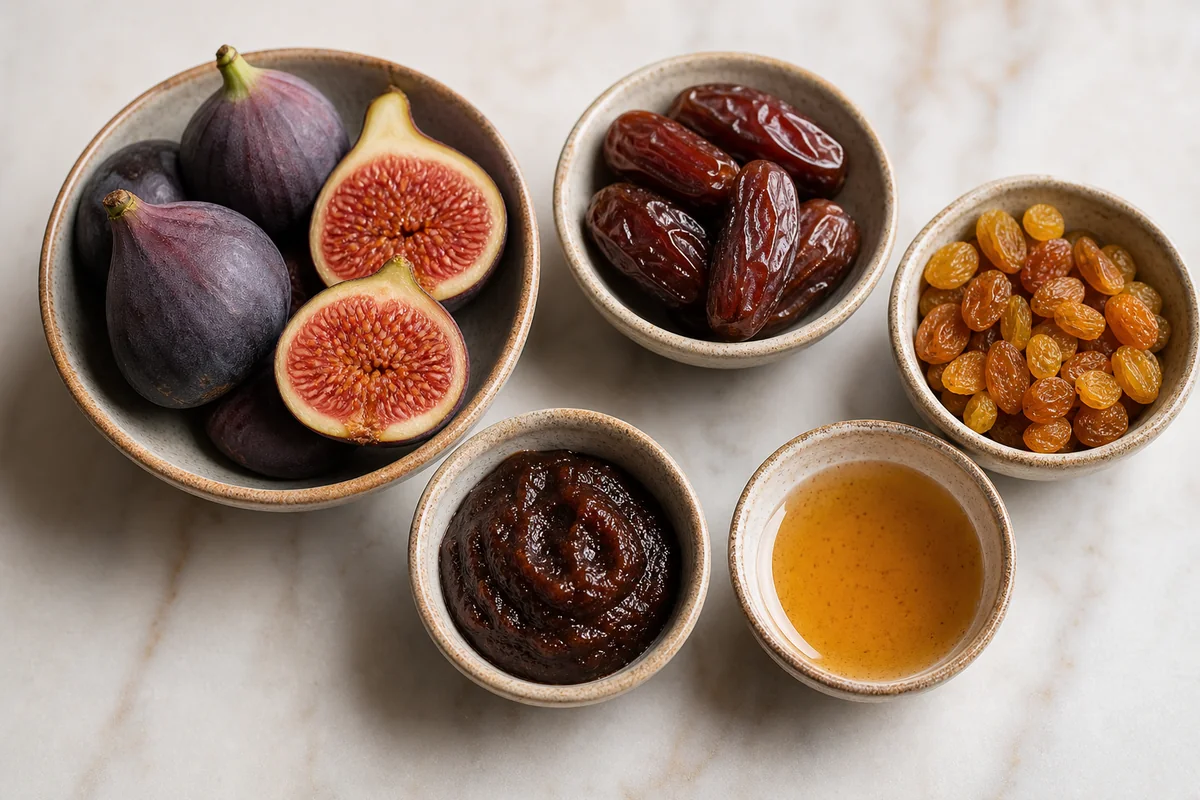
5 Best Fig Substitutes (Quick Swaps)
Ingredients
Equipment
Method
- Identify how figs are used: chewy fruit pieces, jammy topping, or just fruit moisture.
- Choose the closest substitute from the list and use the listed ratio as your starting point.
- If the substitute is dried fruit, chop and (when needed) plump it so it behaves like soft fig fruit in baking.
- If the substitute is jam/preserves, warm it and start with a smaller ratio to avoid over-sweetening.
- Taste the batter/sauce: add a pinch of salt to deepen flavor or a squeeze of lemon to brighten.
Notes
- Dried fruit swaps are best when you need chew and fruit pieces.
- Jam/preserves swaps are best when fig is acting like a sweet fruit layer or glaze.
Tried this recipe?
Let us know how it was!
Carrie is a food writer and editor with more than 15 years of experience. She has worked for some of the biggest names in the food industry, including Bon Appétit, Food & Wine, and Martha Stewart Living.
As the Editor in Chief of EpicureDelight, Carrie oversees all of the content on the site. She also manages the team of contributing writers and editors, who help to create delicious recipes, helpful tips, and informative articles that you’ll find on the site.
A native of the Chicago area, Carrie is passionate about all things food. She loves trying new restaurants and experimenting with new recipes in her kitchen. She’s also a graduate of the Culinary Institute of America, so she knows a thing or two about food!



