Hazelnut, vanilla, and a quiet sweetness that coats the back of the throat. That's what Frangelico brings to a recipe, and it's harder to replace than most liqueurs because the flavor is specific.
A good frangelico substitute has to deliver nut depth and sugar balance, not just one or the other.
The right swap depends heavily on context. Drinks and glazes can handle a 1:1 liqueur switch.
Baking is different, where alcohol can thin a batter and sweetness stacks fast.
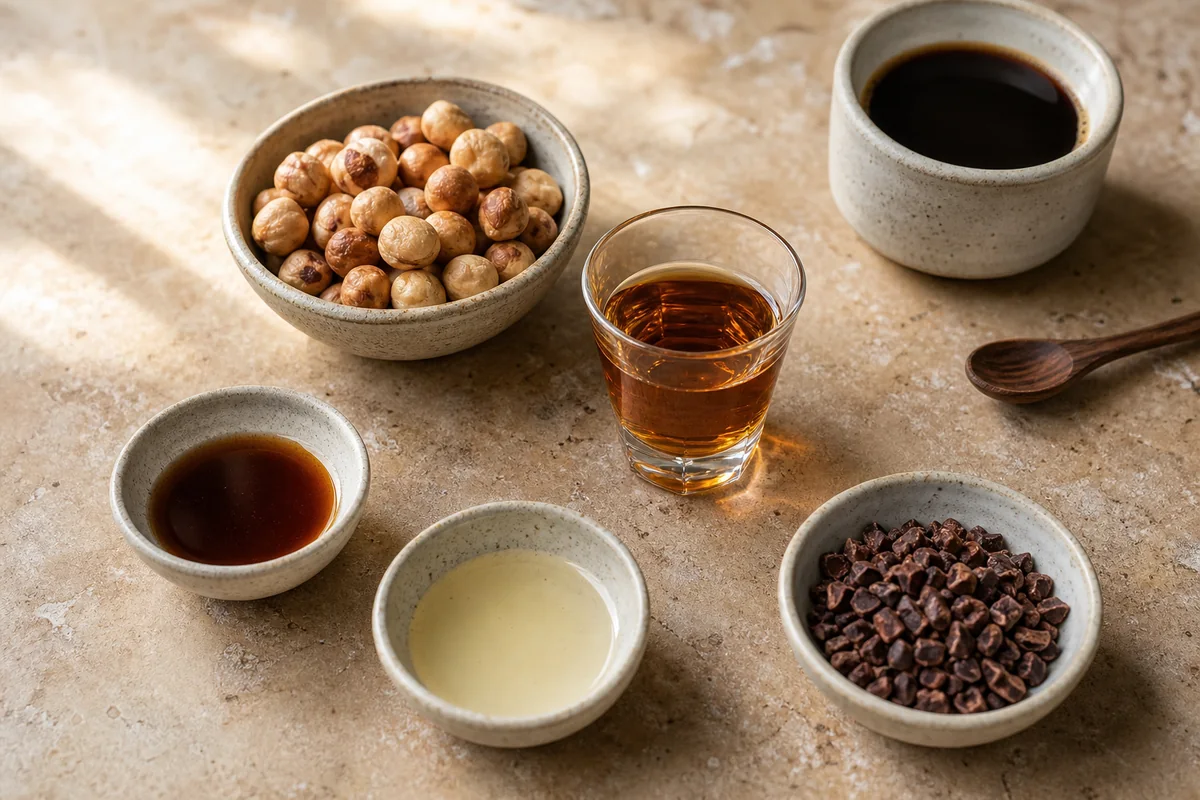
For drinks and glazes, generic hazelnut liqueur is the cleanest 1:1 swap. For baking, hazelnut syrup plus vanilla holds up better. Amaretto and coffee liqueur cover nutty sweetness when hazelnut isn't available. Hazelnut extract is the alcohol-free emergency option.
5 Best Frangelico Substitutes Ranked by Use
Each of these works, but not in the same situations. The table below shows the fastest decision path, and the H3 sections that follow explain when to skip each one.
| # | Substitute | Best For | Ratio | Key Note |
|---|---|---|---|---|
| 1 | Hazelnut Liqueur (generic) | Both | 1:1 | Closest flavor match |
| 2 | Hazelnut Syrup + Vanilla | Baking | ¾:1 | Reduce for sweetness |
| 3 | Amaretto | Both | 1:1 | Almond, not hazelnut |
| 4 | Coffee Liqueur | Baking | 1:1 | Best for chocolate |
| 5 | Hazelnut Extract + Sweetener | Baking | 1:4 | No alcohol, aroma only |
1. Hazelnut Liqueur (Generic)
Any generic hazelnut liqueur with 20-30% ABV lands in the same flavor zone as Frangelico. It has the same base profile: roasted nut sweetness, a gentle vanilla undercurrent, and enough sugar to work in glazes without adjusting the recipe.
For drinks, pour it directly at 1:1. For warm glazes, the vanilla flavor notes in most generic hazelnut liqueurs bloom well under heat, so you rarely need to add anything.
- Drinks and cocktails: Direct 1:1 swap, no additional sweetener needed.
- Glazes and drizzles: Use same volume; taste before adding extra sugar since sweetness levels vary by brand.
- Baking: Works well in brownies or chocolate cakes; alcohol evaporates and nut flavor stays.
Generic Hazelnut Liqueur
Works for: cocktails, glazes, chocolate-based bakes, hazelnut mousse
Skip if: you need an alcohol-free option or are making a delicate emulsion where alcohol thins the mixture
2. Hazelnut Syrup + Vanilla
Syrup behaves more predictably in baked goods because it doesn't carry alcohol that can thin a batter or interfere with emulsification. Start at ¾ of the original Frangelico amount to prevent the bake from going overly sweet, then adjust up only if the hazelnut aroma feels weak after the first test batch.
- Mixing method: Stir the syrup into your wet ingredients first, before folding in dry components, so it disperses evenly.
- Sweetness check: Taste the batter (where safe) or the baked result before adding more. Syrup sweetness concentrates during baking.
- Vanilla addition: Add a small splash, around ¼ teaspoon per 2 tablespoon of syrup, to replicate Frangelico's background warmth.
- Aroma boost: If hazelnut aroma still reads light, stir in 1-2 drops of hazelnut extract alongside the syrup.
Skip this if your recipe depends on alcohol's flavor volatility, like some no-bake truffle fillings where the liqueur's kick is part of the profile.
3. Amaretto
Amaretto is nutty and sweet at 1:1, which makes it an easy pour-in replacement. The shift is that sweet almond liqueur reads differently from hazelnut on the palate.
The sweetness level is similar, but the top note changes.
- Chocolate desserts: Almond and chocolate are a natural pair; the flavor shift is barely noticeable here.
- Cocktails: Works well in creamy or coffee-based drinks where hazelnut isn't the star.
- Nut-specific recipes: In hazelnut praline or hazelnut mousse, almond notes are obvious and may clash.
- Sweetness: Amaretto can be slightly sweeter than Frangelico; reduce by 1 teaspoon per 2 tablespoon if the recipe is already dessert-sweet.
For almond liqueur swaps when you're also out of amaretto, there are a few other nut-adjacent options worth knowing.
Skip this if the recipe is specifically hazelnut-forward and the almond note would be obvious, like a hazelnut cream tart filling.
4. Coffee Liqueur
Coffee liqueur pulls its weight in chocolate desserts where the point isn't hazelnut specifically, it's that lush, sweet-bitter depth that a liqueur adds to a bake. A medium-roast or creamy style, like Kahlúa, works better than a very dark espresso liqueur here.
Use it 1:1. It won't replicate hazelnut, but it keeps the same "liqueur body" that stops a ganache or frosting from feeling thin.
- Best for: Chocolate cakes, mocha frostings, tiramisu-style desserts, and brownie batters.
- Bitter edge risk: If your recipe already has espresso powder, reduce it by ½ teaspoon to prevent the bake from going bitter.
- Drinks: Works in White Russian-style cocktails or creamy after-dinner drinks; expect a coffee-forward result.
- Not ideal for: Light vanilla creams, hazelnut-specific mousses, or any pale batter where coffee color shows.
Skip this if your recipe is a light vanilla or hazelnut cream where coffee flavor would overpower the whole thing.
5. Hazelnut Extract + Sweetener
Extract is concentrated, and that's the main thing to respect here. You're using it for aroma only since there's no alcohol, no body, and no liquid volume.
Start at ¼ teaspoon extract per 1 tablespoon of Frangelico called for, then build from there.
Pair it with syrup sweetness options to add the missing body. Simple syrup or honey both work, but keep the total liquid close to the original Frangelico volume.
- Dilution step: Mix the extract into 1 tablespoon of simple syrup or honey first, then add that mixture to your recipe.
- Start small: Extract turns harsh if overdone; add, taste, add again rather than measuring by guess.
- Sweetener pick: Simple syrup blends cleanly in batters. This floral sweetener adds a slight extra note that works in nut-forward or spiced recipes.
| Frangelico Called For | Extract | Sweetener to Add |
|---|---|---|
| 1 tbsp | ¼ tsp | 2 teaspoon simple syrup or honey |
| 2 tbsp | ½ tsp | 1 tablespoon + 1 teaspoon simple syrup |
| ¼ cup (4 tbsp) | ¾ tsp | 3 tablespoon simple syrup or honey |
Skip this if the recipe is a mixed drink or any preparation where alcohol plays a textural or flavor-volatile role.
Making Frangelico Substitutes Work
Once you've picked your substitute, the adjustment is usually small. Sweetness and nut intensity are the two dials to watch, and most fixes take under a minute.
- Alcohol-free swaps: Add a small sweetness boost, around 1 teaspoon of simple syrup per 2 tablespoon of substitute, to keep the same finishing impression the liqueur would have left.
- Syrup-based substitutes: Mix into the wet ingredients before the dry components go in. This prevents uneven pockets of sweetness in the finished bake.
- Different nut flavor swaps: Balance with a small pinch of salt and a ¼ teaspoon of vanilla to round out the nut notes and reduce any flat or artificial edge.
Drinks Goal
Works for: hazelnut liqueur or amaretto at 1:1 - both carry the sweetness and alcohol body needed for sipping
Skip if: using extract or syrup alone - neither gives the mouthfeel or volatility a cocktail needs
Baking Goal
Works for: hazelnut syrup, extract blend, coffee liqueur - all disperse cleanly and survive oven heat
Skip if: using a high-proof generic liqueur in excess - too much alcohol can thin a delicate batter
Frequently Asked Questions
Generic hazelnut liqueur and amaretto work at 1:1 in most bakes. Syrup-based swaps should start at ¾ of the original amount to avoid over-sweetening the batter.
Hazelnut extract mixed with simple syrup is the most reliable alcohol-free option. Use ¼ teaspoon extract plus 2 teaspoon simple syrup per 1 tablespoon of Frangelico.
It works in chocolate or coffee-based recipes where the almond note blends in. Avoid it in hazelnut praline or hazelnut mousse, where the flavor difference is obvious.
Start at ¾ of the listed Frangelico amount, then taste after baking before adding more. Syrup sweetness concentrates in the oven, so less is safer at the start.
They can if you use too much. Keep to ¼ teaspoon per tablespoon of Frangelico and always pair the extract with a sweetener so the aroma isn't sitting alone.
5 Best Frangelico Substitutes (Quick Swaps)
Ingredients
Method
- Identify your use: sipping/mockingtail (needs liqueur-style sweetness) or baking (needs nut aroma without breaking the recipe).
- Choose the closest match from the list (hazelnut liqueur for most recipes; syrup+vanilla if you need lower alcohol).
- Use the listed ratio; for syrup/extract swaps, start with slightly less than the original amount and add up after the first taste.
- For baking, dissolve syrup/extract fully in the wet ingredients before mixing the dry ingredients.
- Taste-check: if the result tastes flat, add a small pinch of salt or a tiny splash of vanilla to round nut notes.
Notes
- If your recipe already contains strong sweetness (chocolate ganache, frosting), favor extract/syrup over additional liqueur-heavy sweetness.
- If the recipe includes whipped cream or delicate batter, consider hazelnut syrup + vanilla to avoid alcohol separation.
Tried this recipe?
Let us know how it was!
Carrie is a food writer and editor with more than 15 years of experience. She has worked for some of the biggest names in the food industry, including Bon Appétit, Food & Wine, and Martha Stewart Living.
As the Editor in Chief of EpicureDelight, Carrie oversees all of the content on the site. She also manages the team of contributing writers and editors, who help to create delicious recipes, helpful tips, and informative articles that you’ll find on the site.
A native of the Chicago area, Carrie is passionate about all things food. She loves trying new restaurants and experimenting with new recipes in her kitchen. She’s also a graduate of the Culinary Institute of America, so she knows a thing or two about food!