
Gouda melts into a creamy, faintly nutty pool that's hard to replace exactly. The right gouda cheese substitute depends on whether you need that smooth melt, the mild caramel-nut flavor, or simply a similar sliceable texture on a board.
Most swaps below nail one or two of those qualities well. A few hit all three.
The best gouda cheese substitutes are cheddar, colby-jack, edam, fontina, and Monterey Jack. Cheddar melts reliably and browns well. Colby-jack is the smoothest swap for sandwiches. Edam slices clean. Fontina gives the richest melt. Monterey Jack is the easiest budget swap.
5 Best Gouda Cheese Swaps for Melting and Flavor
These five options cover the most common cooking situations. Pick based on how your recipe uses cheese, not just what's in the fridge.
| # | Substitute | Best For | Ratio | Key Note |
|---|---|---|---|---|
| 1 | Cheddar | Both | 1:1 | More tang than gouda |
| 2 | Colby-Jack | Both | 1:1 | Smooth, mild sandwich melt |
| 3 | Edam | Cooking | 1:1 | Slice thin to prevent drying |
| 4 | Fontina | Cooking | 1:1 | Richest melt, browns evenly |
| 5 | Monterey Jack | Both | 1:1 | Mild; add seasoning support |
For the full breakdown of hot sandwich melt options, that comparison covers browning behavior across several cheese types.
1. Cheddar
Cheddar is the most available gouda stand-in and melts well in most cooked dishes. It browns reliably in the oven and holds together in sauces without breaking, which earns it the top spot here.
Cheddar
Works for: grilled sandwiches, mac and cheese, baked casseroles, cheese sauces
Skip if: you need gouda's mild, caramel-nutty flavor for a snack board or cold application
Sharp cheddar adds noticeable tang. If you want to stay closer to this firm, tangy cheese's milder side, medium cheddar is the better choice.
- Sharp cheddar: Use in sauces and baked dishes where the bolder flavor blends in
- Medium cheddar: Use in sandwiches and casseroles where you want mild, clean melt
- Slice thickness: Cut to ⅛ inch or grate fine so it melts at the same speed gouda would
- Browning: Cheddar browns a shade faster than gouda, so watch it 2 minutes early under the broiler
Skip if your recipe calls for stretchy, elastic melt, cheddar pulls less than gouda and can taste sharper in delicate dishes.
2. Colby-Jack
Colby-jack sits between mild cheddar and Monterey Jack in flavor. It melts into a smooth, creamy layer with almost no graininess, making it the most natural gouda swap for hot sandwiches.
The flavor is mild with faint buttery sweetness. That matches young gouda more closely than any other single cheese on this list.
For a deeper look at how this cheese behaves when heated, the mild marbled profile covers its melt and flavor range in detail.
- Slice thickness: Use ⅛-inch slices for grilled cheese so it melts fully before the bread over-browns
- Browning: Colby-jack browns lightly but won't get the deep golden crust that aged gouda produces
- Flavor note: It tastes milder than gouda, so add a thin smear of Dijon mustard if you want more depth
- When to add it: In baked dishes, add it in the last 8 to 10 minutes to prevent drying out
Skip if you need the caramel-nut depth of aged gouda, colby-jack is too mild to replicate that.
3. Edam
Edam is gouda's closest cousin in Dutch cheesemaking. The flavor is slightly less nutty and a touch firmer, but it swaps in cleanly for most slicing and light baking uses.
| Use | Ratio | Notes |
|---|---|---|
| Sliced on a board | 1:1 | Edam slices cleanly; texture is close to young gouda |
| Layered in a bake | 1:1 | Use thin slices; cover dish with foil to prevent drying |
| Shredded for topping | 1:1 | Grate fine and add in the last 6 minutes of bake time |
Edam has a mild, clean dairy flavor. It won't match gouda's deeper nuttiness, but it holds its texture well in the oven.
If you want to know more about how this firm Dutch cheese compares in flavor before swapping, that profile is worth a quick read.
- Preventing dryness: Cover your dish with foil for the first two-thirds of bake time, then uncover to finish
- Best applications: Quiches, open-faced sandwiches, and cheese boards where sliceability matters
- Where it shines: Any recipe calling for mild, non-stretchy cheese that holds a shape
Skip if you need maximum stretch or are doing high-heat broiling for more than 5 minutes, edam dries out faster than gouda in those conditions.
4. Fontina
Fontina is the richest melting cheese on this list. It goes glossy and smooth fast, which is exactly what you want in baked pasta, French onion soup, or anything that needs a creamy browned top.
The flavor is buttery with a faint earthiness. It doesn't have gouda's nutty sweetness, but the melt behavior is arguably better.
For storage and quality tips on this cheese, the notes on proper soft-cheese storage apply directly.
- Temperature: Fontina melts fully at 350°F in about 8 minutes; no need to push the oven higher
- Visual cue: Pull it when the surface is glossy and just starting to bubble, not brown-spotted
- Graininess warning: High heat above 425°F can make it grainy; keep temperature moderate
- Thickness: Slice no thicker than ¼ inch, or grate for faster, more even coverage
Fontina
Works for: baked pasta, French onion soup, flatbreads, anything needing creamy browning
Skip if: you're building a cold cheese board or need gouda's firmer, sliceable bite
5. Monterey Jack
Monterey Jack is the emergency swap that almost everyone has in their fridge. It melts smoothly, doesn't break in sauces, and is neutral enough to work in nearly any recipe that calls for gouda.
The flavor is soft and milky with almost no nuttiness. In a casserole or quesadilla, that's fine.
In a recipe where gouda's caramel notes are part of the point, you'll feel the gap. A seasoning boost helps bridge it.
- Flavor boost: Add a pinch of smoked paprika or dry mustard powder to the dish to compensate for the missing nuttiness
- Blending option: Mix half Monterey Jack with half medium cheddar to get closer to gouda's flavor
- Best uses: Quesadillas, nachos, casseroles, and creamy cheese sauces where mild melt matters
- Ratio: Use 1:1 by weight; no adjustment needed for most recipes
If you want stronger-flavored cheese options when Monterey Jack feels too bland, that list covers bolder alternatives worth trying.
Skip if your recipe depends on gouda's sharpness or nutty depth, Monterey Jack will taste flat without seasoning help.
Making a Gouda Substitute Taste Like Gouda
The biggest decision is melt versus flavor. If the cheese is going into a hot dish, prioritize melt behavior and adjust seasoning to compensate for flavor loss.
If the cheese is the centerpiece, like on a board or in a simple melt, pick by flavor closeness and slice it to match gouda's texture.
Three steps make any swap work better:
- Size your cheese correctly: Grate or slice thin for fast, even melt; thicker cuts work for boards but slow down oven bakes by a few minutes
- Season to close the gap: A pinch of dry mustard or smoked paprika pushes mild cheeses closer to gouda's nutty warmth
- Time your addition: Add shredded cheese in the last 6 to 10 minutes of baking so it melts without drying out
Understanding the waxy, mild profile of gouda helps you judge how far off your substitute is before you start cooking. For dishes built around a layered melt, fontina or colby-jack will get you there faster than any seasoning trick.
Frequently Asked Questions
Colby-jack is the top pick for grilled sandwiches because it melts smoothly without graining or separating. Slice it to ⅛ inch so it melts fully before the bread overbrowns.
Yes, cheddar swaps at a 1:1 ratio in most cooked recipes. Medium cheddar stays closest to gouda's mild flavor; sharp cheddar adds more tang.
Fontina browns most evenly and gives a glossy, creamy top layer. Keep oven temperature at or below 400°F to prevent graininess.
Monterey Jack or medium cheddar both work well in cheese sauces at a 1:1 swap. Add a pinch of dry mustard to push the flavor closer to gouda's mild nuttiness.
Cream cheese works for spreads and dips but not as a true baking substitute. It stays creamy rather than melting and can split under high heat or long bake times.
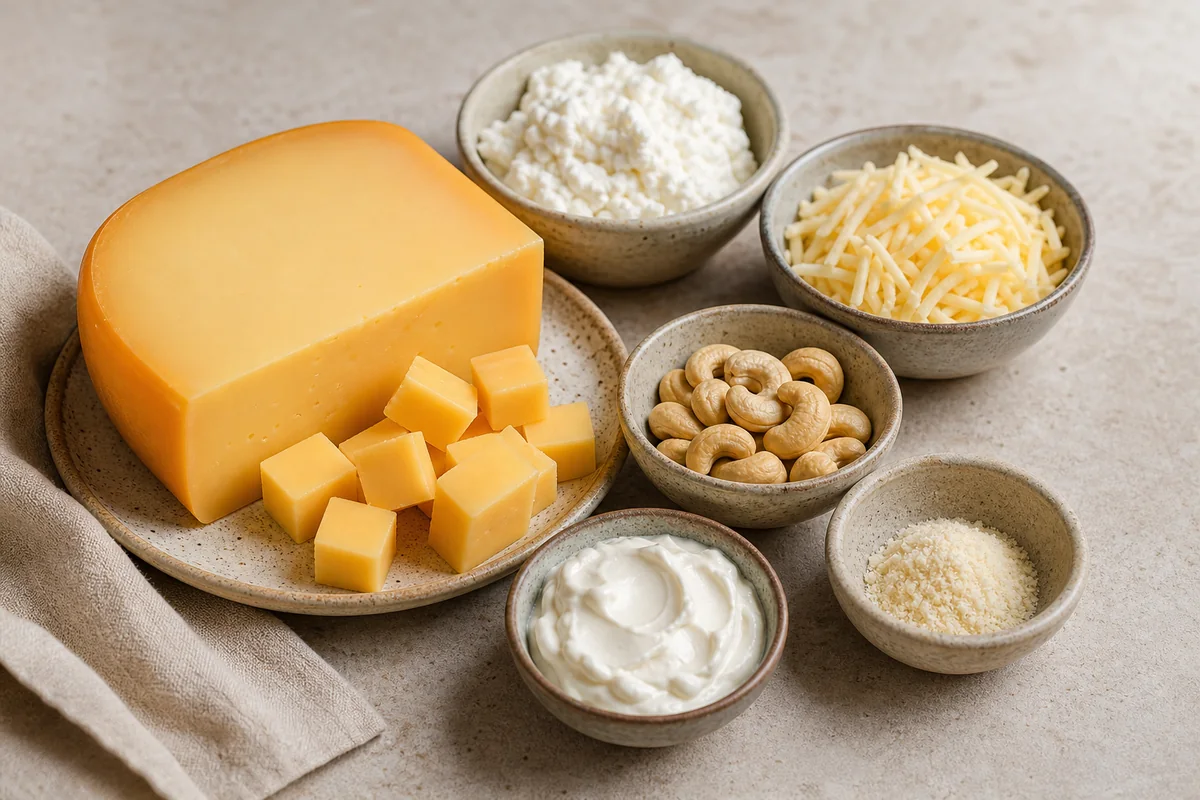
5 Best Gouda Cheese Substitutes (That Actually Work)
Ingredients
Equipment
Method
- Choose your goal: closest flavor, best melting, or fastest emergency swap—then pick the matching substitute from the ingredient list.
- Use the listed ratio to replace gouda 1:1 (or ¾:1 for cream cheese) and measure by weight for best results.
- For cooking/melting: grate or slice thin to match gouda’s melting speed; for spreads, soften first to prevent graininess.
- Adjust if needed: if the swap tastes sharper, mix with a milder cheese; if it’s too mild, add a pinch of salt or mustard powder.
- Taste at the end and fine-tune seasoning—cheese substitutions vary by brand and age.
Notes
- For the smoothest melt, use shredded or thin-sliced cheese rather than thick cubes.
- If your recipe relies on browning, prioritize cheddar (sharp/medium), fontina, or colby-jack over mild cheeses.
Tried this recipe?
Let us know how it was!
Carrie is a food writer and editor with more than 15 years of experience. She has worked for some of the biggest names in the food industry, including Bon Appétit, Food & Wine, and Martha Stewart Living.
As the Editor in Chief of EpicureDelight, Carrie oversees all of the content on the site. She also manages the team of contributing writers and editors, who help to create delicious recipes, helpful tips, and informative articles that you’ll find on the site.
A native of the Chicago area, Carrie is passionate about all things food. She loves trying new restaurants and experimenting with new recipes in her kitchen. She’s also a graduate of the Culinary Institute of America, so she knows a thing or two about food!



