
That crunch-then-bind thing graham crackers do in a crust is harder to replicate than it looks. The crumb has to be fine enough to pack, sweet enough to taste like something, and dry enough to soak up butter without turning to paste.
Finding the right graham cracker substitute means matching all three of those at once, not just grabbing whatever's in the pantry.
The good news is that several common biscuits and cookies hit that target almost exactly. A few others need a small tweak, like less butter or a sugar pinch, but still work well.
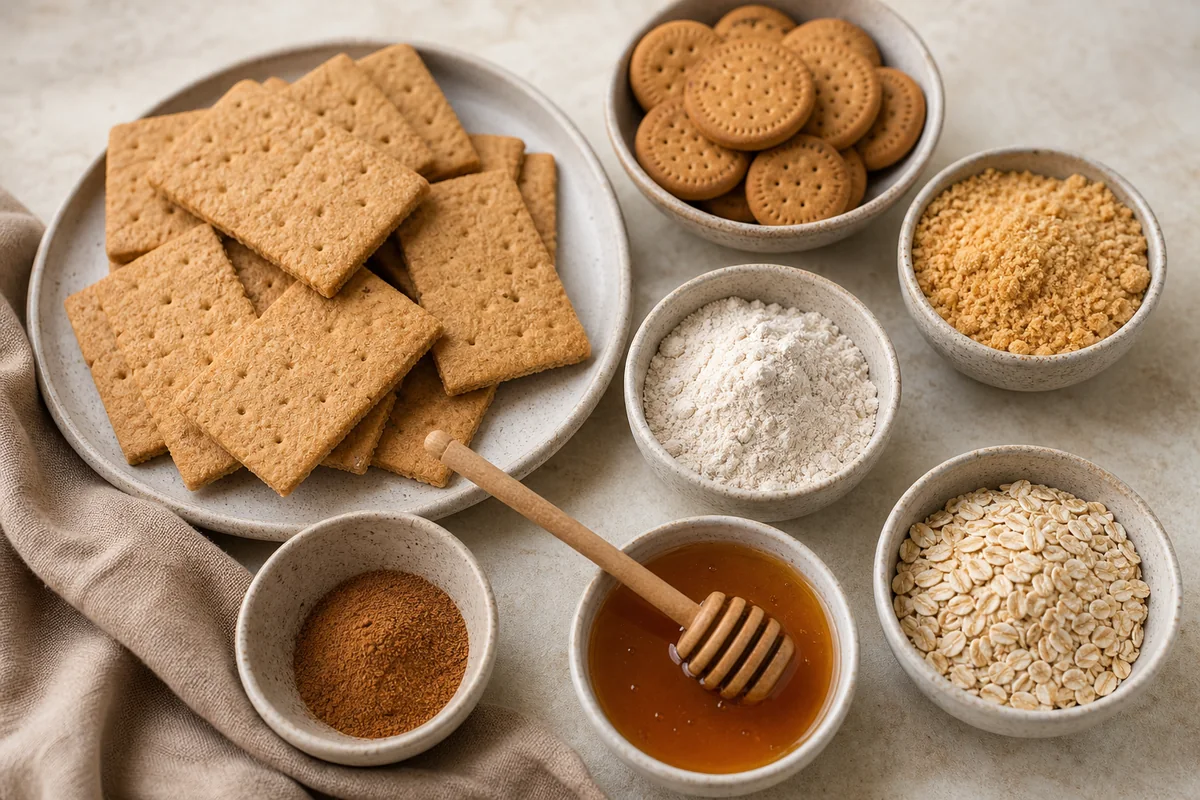
Digestive biscuits are the closest overall match, behaving almost identically in no-bake and baked crusts. Vanilla wafers and shortbread are strong second choices. Oat flour and cereal crumbs are solid pantry backups when the others aren't available. Match crumb fineness first, then adjust fat.
5 Best Graham Cracker Substitutes Ranked by Texture and Taste
Before picking your swap, it helps to see all five at a glance. Crumb fineness and sweetness level are the two variables that matter most for crusts.
| # | Substitute | Best For | Ratio | Key Note |
|---|---|---|---|---|
| 1 | Digestive Biscuits | Both | 1:1 | Closest flavor and bind |
| 2 | Vanilla Wafers | Both | 1:1 | Sweeter; watch sugar level |
| 3 | Shortbread Cookies | Both | 1:1 | Buttery; reduce added fat |
| 4 | Toasted Cracker Crumbs | Both | 1:1 | Toast first for stability |
| 5 | Oat Flour | Crust | ¾:1 | Milder; needs binder fat |
1. Digestive Biscuits
Digestive biscuits are the most direct swap you'll find. They have a fine, sandy crumb and a lightly sweet wheat flavor that sits very close to the honey-wheat base of graham crackers.
Crush them in a zip-lock bag with a rolling pin or blitz in a food processor until the texture looks like coarse sand.
- Ratio: Use 1:1 crumbs by volume, no adjustment needed
- Binding: Mix with the same butter amount your recipe specifies; crumbs absorb similarly
- No-bake crust: Works well, sets firmly after 30-60 minutes of chilling
- Baked crust: Press firmly, bake at 350°F for 8-10 minutes until edges look dry
Skip if: your digestive biscuits are very thin or unusually dry. Add an extra teaspoon of melted butter per cup of crumbs to prevent a sandy, crumbly result.
2. Vanilla Wafers or Sandwich Cookies
Nilla wafers crush down to a fine, pale crumb that holds together cleanly in both baked and no-bake crusts. The texture is right.
The main difference is sweetness: vanilla wafers run slightly sweeter than graham crackers, so your finished crust may taste noticeably more sugary.
- Ratio: 1:1 crumbs; no fat adjustment needed in most recipes
- Crumb toppings: Excellent for crumbles and streusel-style toppings on pies
- Sandwich cookies: Scrape out the filling before crushing to avoid a greasy crust
- Binding check: Mixture should hold when you squeeze a small fistful; add fat in 1-teaspoon increments if it won't
Skip if: the recipe specifically needs that hint of honey-wheat warmth. Vanilla wafers taste clean and sweet, not toasty.
3. Shortbread Cookies
Shortbread crumbs behave a bit differently because they already carry a high butter content. The resulting crust is richer and slightly more tender.
That's good in some contexts, like a buttery base for lemon bars, and less ideal if you need a crust that slices into sharp, clean edges.
Two things to watch. First, reduce your added melted butter by about 1 tablespoon per cup of crumbs or the crust can turn greasy.
Second, shortbread softens faster than graham crumbs in a no-bake setting, so keep the finished dish cold right up until serving.
- Ratio: 1:1 crumbs, but reduce butter by 1 tablespoon per cup
- Best for: Baked crusts for tarts, bars, and rich cheesecakes
- Flavor note: Neutral and buttery; add a pinch of cinnamon to mimic graham warmth
- Chilling tip: No-bake crusts need at least 2 hours; shortbread crumbs soften more readily
Skip if: you need a very crisp, clean-slicing crust. Shortbread crumbs tend to soften at the edges faster than drier cracker-style crumbs.
For a deeper look at choosing the right flour base, that page covers the grain options worth knowing if you're building from scratch.
4. Toasted Cracker Crumbs
This one is a technique as much as a substitute. When you only have neutral crackers on hand, like saltines or plain table crackers, a quick toast before crushing makes a real difference in crust stability.
Raw cracker crumbs can be too moist and dense. Toasting drives off that extra humidity.
Fine Crumbs (fully processed)
Works for: sliceable no-bake and baked crusts; packs tightly against the pan
Skip if: you want visible texture in a crumble topping
Slightly Chunky Crumbs
Works for: rustic crumb toppings and baked crusts where a coarser bite is welcome
Skip if: you're making a no-bake crust that needs to hold a clean slice
- Toast time: Spread crumbs on a baking sheet; toast at 325°F for 3-5 minutes until they smell nutty
- Cool first: Let crumbs cool completely before mixing with butter or they'll clump unevenly
- Ratio: 1:1 once crumbs are at graham-cracker particle size
- Sweetness fix: Stir in 1-2 teaspoons of sugar per cup of crumbs to replace graham's natural sweetness
Skip if: you're pressed for time. The toast step is only 5 minutes, but skipping it can leave your no-bake crust looser than expected.
5. Oat Flour
Blended quick oats are a surprisingly effective pantry swap, especially for baked crusts. Oat flour binds well with fat and holds a press-in crust without crumbling.
The flavor is plainer than graham crackers, more grain-forward than toasty-sweet, so a small flavor adjustment helps.
| Use | Ratio | Notes |
|---|---|---|
| Thin baked crust | ¾ cup oat flour : 1 cup graham crumbs | Add 1 teaspoon sugar + pinch cinnamon |
| Thick press-in crust | ¾ cup oat flour : 1 cup graham crumbs | Increase butter by 1 tablespoon for better bind |
| Crumb topping | ¾ cup oat flour : 1 cup graham crumbs | Mix with brown sugar and cold butter in chunks |
- Blend time: Process quick oats 20-30 seconds until powdery; sift out any large flakes
- Fat adjustment: Oat flour absorbs slightly more fat; add 1 extra teaspoon of butter if the mixture looks dry
- Flavor boost: A half-teaspoon of vanilla and 1 teaspoon of honey brings it closer to graham character
Skip if: the recipe depends on a true honey-wheat flavor. Oat flour tastes plainly oaty unless you doctor it.
Making Graham Cracker Substitutes Work
Getting the swap right is mostly about two decisions: crumb size and fat ratio. Fine crumbs pack tightly and give you a crust that slices cleanly.
Coarser crumbs stay crumbly. Whichever substitute you choose, press the crumb mixture hard against the pan base with the flat bottom of a measuring cup before baking or chilling.
- Match particle size first: Crush your substitute to the same fineness your recipe expects; loose large crumbs won't bind properly regardless of fat content
- Add fat in steps: Start with the recipe's butter amount, then add more in 1-teaspoon increments if the mixture won't hold when squeezed
- Bake or chill promptly: No-bake crusts need at least 1 hour refrigerated before filling; baked crusts should cool fully before you add any wet filling or the crust softens from the bottom up
Frequently Asked Questions
Digestive biscuits are the best match. They crush to a similar fineness, have a comparable sweetness level, and bind with butter in almost exactly the same way graham cracker crumbs do.
Yes, a straight 1:1 swap by volume works in nearly every recipe. If your biscuits are unusually dry, add one extra teaspoon of melted butter per cup of crumbs.
Yes. Shortbread already has a high butter content, so reduce added melted butter by about 1 tablespoon per cup of crumbs to avoid a greasy or overly soft crust.
Oat flour or toasted neutral cracker crumbs are the least sweet options. Add sweetness back in small amounts, like 1 teaspoon of sugar per cup, so you control the level precisely.
Aim for a texture like coarse sand, with no visible chunks larger than a grain of rice. Larger crumbs leave gaps that cause the crust to crack when sliced.
5 Best Graham Cracker Substitutes for Any Recipe
Ingredients
Equipment
Method
- Identify your use: no-bake crust (needs strong binding) vs. baked crust vs. “cookie crumb” topping.
- Choose the closest flavor/texture match from the table (digestive biscuits and vanilla cookies work in most crusts 1:1).
- Crush to the same particle size your recipe expects: fine crumbs for tighter crust; chunkier crumbs for topping texture.
- Apply the listed ratio, then check consistency: if it looks loose, add 1–2 teaspoons extra fat per cup of crumbs.
- Taste and adjust: graham crackers are sweet; add a pinch of salt or a tiny splash of vanilla/lemon to rebalance if needed.
Notes
- For best results, match crumb size—not just ingredient type.
- Ratios are for cookie/crumb swaps; oat flour and some cereals may need slight fat adjustment.
Tried this recipe?
Let us know how it was!
Carrie is a food writer and editor with more than 15 years of experience. She has worked for some of the biggest names in the food industry, including Bon Appétit, Food & Wine, and Martha Stewart Living.
As the Editor in Chief of EpicureDelight, Carrie oversees all of the content on the site. She also manages the team of contributing writers and editors, who help to create delicious recipes, helpful tips, and informative articles that you’ll find on the site.
A native of the Chicago area, Carrie is passionate about all things food. She loves trying new restaurants and experimenting with new recipes in her kitchen. She’s also a graduate of the Culinary Institute of America, so she knows a thing or two about food!



