Grapeseed oil earns its place in most kitchens for one main reason: it gets out of the way. It is mild, handles medium-high heat without complaint, and won't push any flavor into your baked goods or sautéed vegetables.
When the bottle is empty, though, a handful of other oils can cover the job - you just need to match the right one to your cooking method.
The best grapeseed oil substitute depends on two things: how neutral the flavor needs to be, and how much heat the oil will see. A delicate cake batter needs something close to tasteless.
A screaming-hot sear needs an oil that holds its smoke point. These are different jobs, and a different answer fits each one.
Use a 1:1 ratio by volume for every swap listed here. That's the easiest part.
The harder choice is which oil to reach for first - and the quick summary below maps that out.
Grapeseed oil is neutral-tasting and moderately heat-stable, making it useful for baking, sautéing, and light frying. The closest swaps are canola, high-oleic sunflower, and high-oleic safflower oils - all mild and easy to find. For higher heat, avocado oil leads. All swap at a 1:1 ratio.
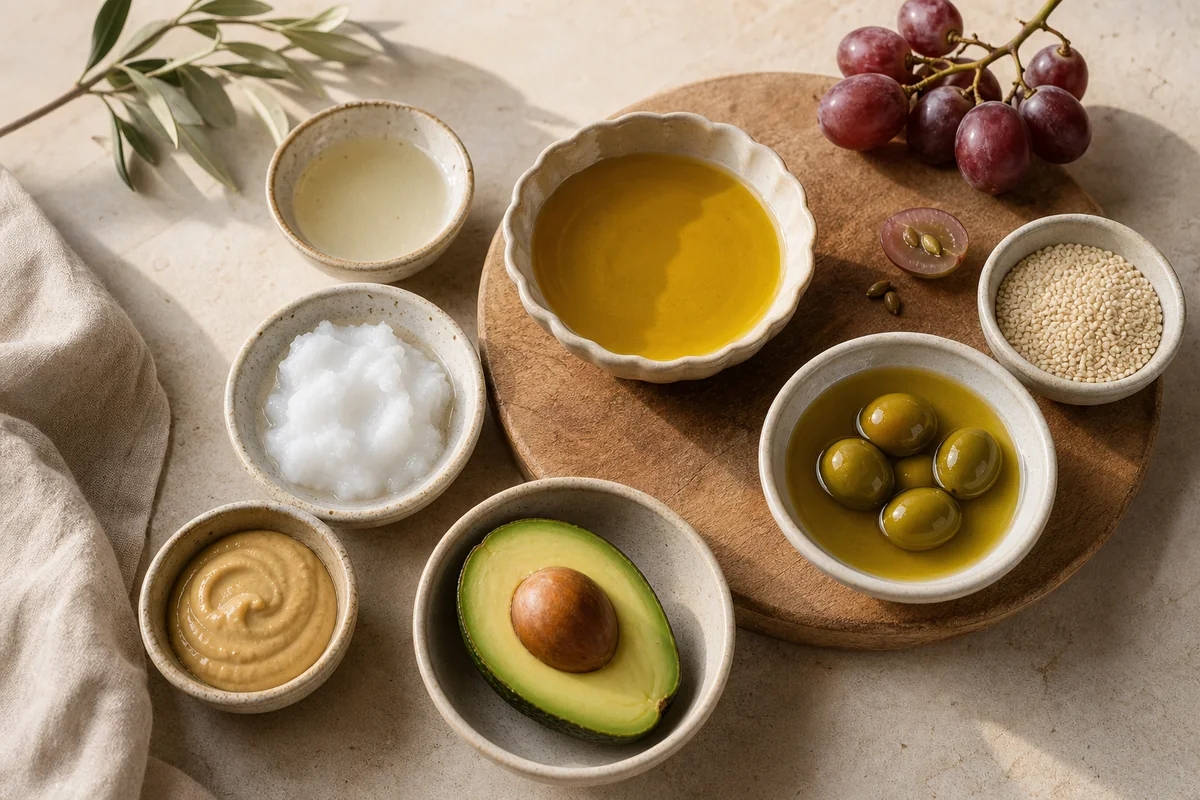
5 Best Grapeseed Oil Substitutes Worth Trying
| # | Substitute | Best For | Ratio | Key Note |
|---|---|---|---|---|
| 1 | Canola oil | Both | 1:1 | Mildest everyday swap |
| 2 | High-oleic sunflower oil | Both | 1:1 | Stable under medium-high heat |
| 3 | High-oleic safflower oil | Both | 1:1 | Best neutral baking oil |
| 4 | Avocado oil | Cooking | 1:1 | Top pick for high heat |
| 5 | Light olive oil | Cooking | 1:1 | Watch flavor in sweet bakes |
Each substitute below explains exactly where it shines and where to skip it, so you can match the swap to your actual recipe rather than guessing.
1. Canola Oil
Canola is the easiest grapeseed oil replacement to find and the one that causes the fewest surprises. It is genuinely mild, with a smoke point around 400°F, which puts it in the same working range as grapeseed for most stovetop and oven tasks.
When swapping in canola, use it at the same step and in the same quantity - no adjustments needed.
Flavor neutrality is canola's main strength. It won't add anything detectable to muffins, vinaigrettes, or stir-fries.
- Use for: Sautéing, roasting at medium heat, quick breads, cakes, and salad dressings
- Ratio: 1:1 by volume; whisk or stir at the same wet-ingredient step as grapeseed
- Handling tip: Store away from heat and light - canola can go rancid faster than grapeseed if stored poorly
- Skip if: You need an oil for very high-heat searing above 425°F; choose avocado oil instead
2. High-Oleic Sunflower Oil
High-oleic sunflower oil is the version worth buying. Standard sunflower oil is more heat-sensitive, but the high-oleic type is reformulated to hold up at temperatures closer to 440-450°F.
It is one of the most reliable swaps when your recipe involves roasting or a longer sauté.
For a deeper look at how sunflower-based swaps compare in different recipes, that page covers the full range.
- Flavor: Almost completely neutral; won't compete with spices, herbs, or sweet aromatics
- Best uses: Roasting vegetables, sautéing proteins, frying at medium-high heat, and most baked goods
- Storage note: Keep sealed and cool; high-oleic varieties last longer than regular sunflower oil once opened
- Skip if: You want a very light vinaigrette and can't tolerate any faint sunflower aftertaste - safflower is slightly lighter in that context
3. High-Oleic Safflower Oil
If a completely tasteless oil matters to your recipe, safflower is the answer. It is one of the most flavorless cooking oils available, and the high-oleic version handles heat well - smoke point around 440°F.
If you're choosing a safer swap for a delicate birthday cake or a pale emulsified sauce, this is it.
Use it 1:1 at the exact step grapeseed would go in. The emulsion behavior is nearly identical in most batters.
- Best for baking: Pound cakes, chiffon cakes, and muffins where any oil flavor would be obvious
- Also works in: Roasting and medium-heat sautéing
- Skip if: Your recipe is built around olive oil flavor - choose olive oil and don't fight it
4. Avocado Oil
Avocado oil is the right call when heat is the main concern. Its smoke point sits around 480-520°F depending on refinement, which is meaningfully higher than grapeseed's 420°F.
For searing a steak or roasting vegetables at 450°F, it is the stronger performer of the two.
Avocado Oil vs. Grapeseed Oil
Works for: High-heat searing, oven roasting above 425°F, and any dish where heat performance matters more than price
Skip if: Your batter is flavor-sensitive and you want zero richness - canola or safflower are cleaner choices there
Avocado oil has a mild but slightly buttery quality. Most people won't notice it in a savory dish.
You can also check choosing between richer oils if you're deciding between avocado and olive options for a specific recipe.
- Ratio: 1:1 by volume; expect a marginally richer mouthfeel than grapeseed
- Best uses: Searing, stir-frying, high-temp roasting, and grilling marinades
- Price note: Avocado oil costs more than canola or sunflower - save it for the recipes where high heat actually matters
5. Light Olive Oil (Extra-Light)
Light olive oil is not the same as extra-virgin. It is refined, much milder in flavor, and far more heat-tolerant than the robust stuff.
It still has a faint olive character that is completely fine in savory cooking. In baked goods, though, the flavor can show through, especially in simple vanilla or citrus-forward recipes.
- Use for: Sautéing, roasting, savory marinades, and flatbreads where a hint of olive is acceptable
- In baking: Works in banana bread, olive oil cakes, and carrot cake - less well in white or yellow cakes
- Balance tip: Add a small amount of vanilla or lemon zest in sweet bakes if the olive note feels present
- Ratio: 1:1 by volume; no other adjustment needed
- Skip if: Your recipe needs complete flavor neutrality - reach for canola or safflower instead
For a broader look at the canola vs. olive tradeoff, that comparison covers exactly when each one earns its place.
Making a Grapeseed Oil Substitute Work (Quick Fit-Checks)
Choosing the right swap is mostly about two questions: how sensitive is the flavor, and how hot will the pan get. For flavor-neutral baking, canola and safflower are the safest answers.
For high-heat cooking, avocado oil is the most dependable. When you're somewhere in the middle - a 375°F roast or a medium sauté - any of the five oils here will perform without issue.
Thinking through these neutral oil picks side by side can help if you're still unsure which to stock. And if you're curious about storing oils properly, keeping them away from heat and light is the single biggest factor in preventing off-flavors from any substitute.
- Check your smoke point first: If you're cooking above 400°F, eliminate canola and light olive oil from the list and go with avocado or high-oleic sunflower
- Swap at the same recipe step: Add the substitute oil exactly where grapeseed would go in the wet-ingredient stage to preserve emulsion in batters
- Taste before committing: Dip a fingertip in the oil before it goes into a delicate recipe - a quick taste check catches any rancidity or off-flavors before they ruin the dish
Frequently Asked Questions
Yes, canola works well in most baked goods as a 1:1 swap. Its mild flavor is close enough to grapeseed that most recipes won't show any difference in taste or texture.
High-oleic safflower oil is the most flavor-neutral option available. It is virtually tasteless and works at a 1:1 ratio in both baking and cooking.
Yes, and it actually outperforms grapeseed at high heat. Avocado oil's smoke point is around 480-520°F, giving you more headroom before the oil breaks down.
Light olive oil may leave a faint olive note in simple bakes. Extra-virgin will definitely change the flavor - stick to canola or safflower for sweet, neutral baked goods.
Buy a fresh bottle and smell it before using - rancid vegetable blends are the main off-flavor source. Use the same 1:1 ratio and don't overheat the oil.
5 Best Grapeseed Oil Substitutes Worth Trying
Ingredients
Equipment
Method
- Decide whether your recipe needs neutral flavor (baking/quick sauces) or high-heat performance (searing/roasting).
- Select the closest match from the WPRM list; use a 1:1 ratio for most recipes.
- If using an oil with flavor (like light olive or avocado), taste or check the batter/sauce—add salt or a balancing ingredient if needed.
- For high-heat cooking, preheat fully and avoid overheating to reduce smoking and off-flavors.
- For baking, swap oils at the same step you would use grapeseed (don’t change the order of wet ingredients).
Notes
- Best 1:1 swaps are neutral, light oils with similar heat tolerance.
- When a recipe is sensitive to flavor (cakes, muffins, light vinaigrettes), prioritize canola/sunflower/safflower.
Tried this recipe?
Let us know how it was!
Carrie is a food writer and editor with more than 15 years of experience. She has worked for some of the biggest names in the food industry, including Bon Appétit, Food & Wine, and Martha Stewart Living.
As the Editor in Chief of EpicureDelight, Carrie oversees all of the content on the site. She also manages the team of contributing writers and editors, who help to create delicious recipes, helpful tips, and informative articles that you’ll find on the site.
A native of the Chicago area, Carrie is passionate about all things food. She loves trying new restaurants and experimenting with new recipes in her kitchen. She’s also a graduate of the Culinary Institute of America, so she knows a thing or two about food!