
Kirby cucumbers have a specific kind of snap to them. It's not just crispness-it's that dense, barely-seeded bite that holds up in dressings without turning limp.
Finding a good kirby cucumber substitute means matching that texture first, then worrying about flavor.
Most swaps work fine if you pick them for the right job. Some shine in raw salads, others handle heat or pickling better.
This list covers all five uses so you can match the swap to your actual recipe.
The best kirby cucumber substitute depends on texture and use. English cucumber and Persian cucumber are the closest for raw crunch. Mini seedless cucumber handles uniform slicing. Zucchini works when salt-drained. Jicama delivers crispness without extra moisture.
5 Kirby Cucumber Substitutes Ranked by Crunch
| # | Substitute | Best For | Ratio | Key Note |
|---|---|---|---|---|
| 1 | English Cucumber | Both | 1:1 | Slice thicker, salt-drain |
| 2 | Persian Cucumber | Raw | 1:1 | Crisp, low bitterness |
| 3 | Mini Seedless Cucumber | Raw | 1:1 | Pat dry after slicing |
| 4 | Zucchini | Cooked | ¾:1 | Salt 10 min, pat dry |
| 5 | Jicama | Both | 1:1 | Crisp, less watery |
Pick based on your dish. Raw applications do best with English or Persian cucumber, while cooked or moisture-sensitive recipes call for zucchini or jicama.
1. English Cucumber
English cucumber is the most available swap for Kirby, and it holds up well in salads and sandwiches. Its skin is thinner and its seed core is wetter than Kirby's, so a quick salt-drain keeps it from pooling water in your bowl.
It brings a clean, mild flavor close to what you get from that firm, cool bite Kirby is known for. Add it at the last minute for raw dishes so the dressing doesn't soften it.
- Cut thickness: Slice slightly thicker than you would Kirby-about ¼ inch-to reduce collapse from the seed center
- Salt-drain step: Toss with a pinch of salt, rest 8-10 minutes, then pat dry before adding to the bowl
- Timing: Dress raw salads right before serving to keep the slices from going limp
- Best uses: Raw slicing, sandwich layers, quick cucumber relishes, and side salads
Skip if: your recipe needs Kirby's thicker, firmer skin bite. Choose Persian or mini seedless instead.
2. Persian Cucumber
Persian cucumber is the crispest raw substitute on this list. It has almost no seeds, very little bitterness, and a dense flesh that stays firm long after dressing hits it.
For swapping in a crisper variety, Persian cucumber needs almost no prep beyond rinsing and slicing. It's also narrower than Kirby, so cut it on a slight bias to get wider slices if your recipe needs surface area.
- Slicing tip: Cut on a slight bias for wider rounds that mimic Kirby's diameter
- Seed check: Seeds are minimal-no need to scoop them out
- Dressing timing: Add dressing no more than 5 minutes before serving for the cleanest crunch
- Best uses: Raw salads, grain bowls, cucumber-forward sandwiches, quick tzatziki-style sauces
Skip if: your recipe is pickle-forward. Persian cucumber is best fresh and doesn't absorb tangy brine the way Kirby does.
3. Mini Seedless Cucumber
Mini seedless cucumbers are almost identical to Kirby in diameter. That makes them easy to swap in any recipe that calls for thin, uniform rounds.
The lack of seeds means less bitterness and less weeping, which is a real advantage when you're adding them to tangy stored dressings that already have some acid. Pat slices dry if they feel damp after cutting.
- When to pat dry: If slices look glossy or wet, press briefly with a paper towel before using
- Best cuts: Thin rounds for garnish, slightly thicker for salads and sandwich toppings
- Good for: Dip platters, Greek salad, mezze boards, and any topping where uniformity matters
Skip if: your recipe depends on Kirby's seeded center for a stronger cucumber flavor. Mini seedless will taste noticeably milder.
4. Zucchini (Salt-Drained)
Zucchini is not the first thing most people think of, but it works when you need a cucumber substitute for cooked dishes or when no cucumber is available. Raw zucchini is denser and earthier than Kirby, and it holds more moisture.
You have to manage that moisture before it dilutes your dish.
Salt-draining is the fix. It takes 10 minutes and it makes zucchini usable in most recipes where Kirby would appear.
For more ideas about working with this vegetable, similar vegetable swaps cover the full range of cooked applications.
- Salt-drain method: Slice thin, toss with ½ teaspoon salt per cup, rest 10 minutes, then squeeze and pat dry
- Thickness for crunch: Cut ¼-inch rounds; thinner slices go soft quickly
- Thickness for tenderness: Cut ⅛-inch for cooked dishes where you want give, not snap
- Best uses: Stir-fries, cooked grain dishes, warm salads, and savory bakes where cucumber is a supporting texture
Skip if: you want true cucumber crunch without moisture control steps. Persian cucumber is faster and cleaner.
5. Jicama
Jicama brings a satisfying crunch that is different from cucumber but still very usable. It's less watery than Kirby, mildly sweet, and completely neutral in flavor-which means it absorbs bold herbs and acids without fighting them.
This starchy root is worth understanding before you sub it in: it won't weep, won't soften under dressing, and stays crisp for hours. That can be an advantage or a disadvantage depending on your recipe.
Jicama vs. Kirby Cucumber
Works for: crunch-focused salads, wraps, slaws, and any dish where extra moisture would cause problems
Skip if: you want the watery, cool snap that fresh cucumber delivers-jicama is crisp but dry by comparison
- Prep: Peel completely (the skin is inedible), then cut into matchsticks or thin rounds
- Optional chill: A 10-minute rest in cold water sharpens its crispness before serving
- Pairing tip: Works especially well with citrus dressings, chili, and herb-heavy vinaigrettes
- Best uses: Wraps, tacos, cold noodle salads, and sandwiches where you want crunch without moisture
Making Kirby Cucumber Substitutes Work
The core principle is simple: pick crisper substitutes for raw dishes and plan your moisture management for wetter ones. Persian and English cucumber replace Kirby almost directly.
Zucchini needs salt-draining. Jicama skips the moisture problem entirely but trades the juiciness.
Pickles add tang, which requires adjusting the rest of the recipe.
- Match thickness and add late: Cut your substitute as close to Kirby's thickness as possible, then add it right before serving so dressing contact time stays short
- Salt-drain wetter swaps: Toss English cucumber or zucchini with a pinch of salt, rest 10 minutes, squeeze gently, and pat dry before mixing-this removes the excess water that would otherwise pool at the bottom of a bowl
- Adjust seasoning after substituting: If you use pickles, taste the dish before adding any vinegar or extra salt; if you use jicama, the dressing may need a small acid boost since jicama absorbs flavor more slowly than cucumber
Frequently Asked Questions
Persian cucumber is the strongest option. It stays crisp after dressing and has almost no seeds, so it holds up well without any extra prep.
Yes, if you salt-drain it first. Toss sliced zucchini with salt, rest 10 minutes, then pat dry before adding to your dish.
Add the substitute right before serving and keep dressing contact time under 5 minutes. Salt-draining wetter swaps beforehand also reduces the weeping that causes limpness.
English cucumber is your best bet. It has a firm structure close to Kirby's and holds brine without going mushy after a short pickle.
Yes. Jicama is crisp and neutral, so it adds crunch without making the wrap wet. Cut it into thin matchsticks for the closest texture match.
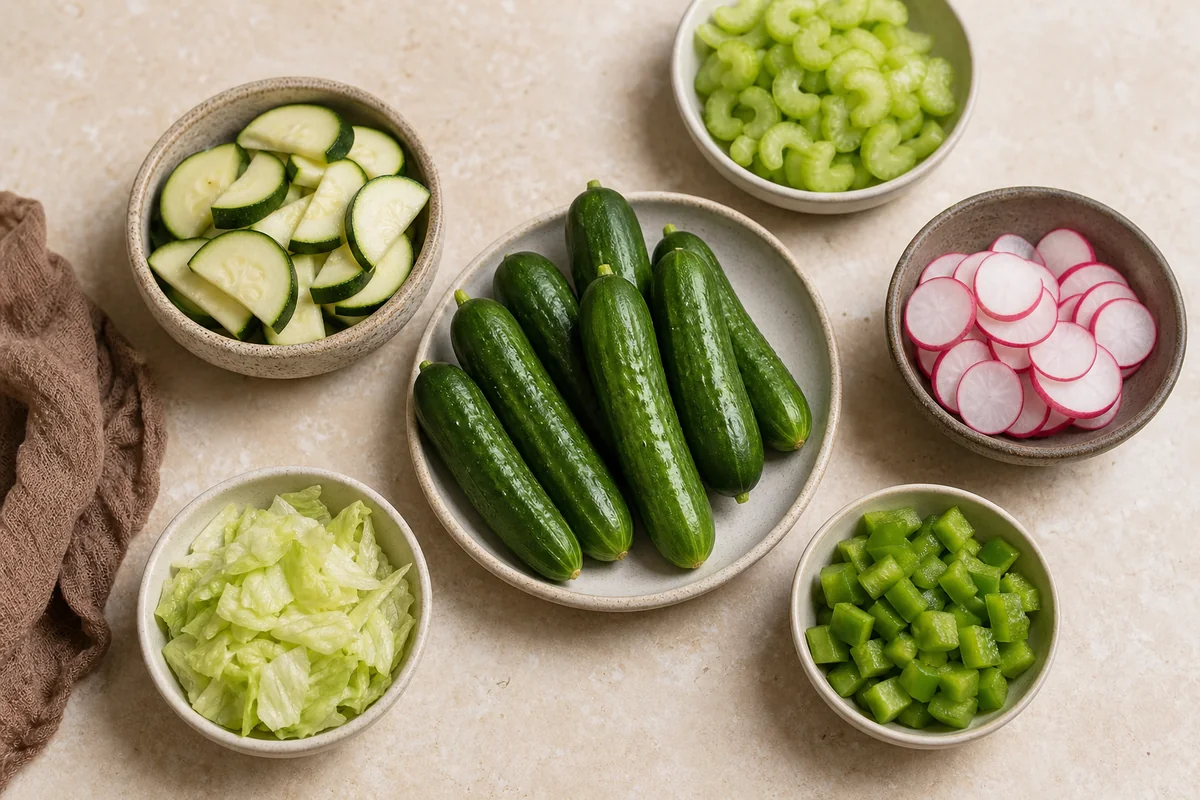
5 Best Kirby Cucumber Substitutes Worth Trying
Ingredients
Equipment
Method
- Decide how you’re using Kirby (raw crunch, cooked use, or pickling), then pick the closest option from the table.
- Match thickness: slice your substitute as close as possible to Kirby’s cut size to keep bite consistent.
- If the substitute is wetter (zucchini or English cucumber), salt it for 10 minutes and pat dry before mixing or serving.
- Taste after dressing/seasoning: adjust acidity (if using pickles) or salt (if the swap tastes flat).
- For best texture, add raw substitutes at the last minute rather than letting them soak in dressing.
Notes
- Kirby’s best trait is crisp, juicy bite—avoid swaps that soften quickly unless your recipe benefits from that texture.
Tried this recipe?
Let us know how it was!
Carrie is a food writer and editor with more than 15 years of experience. She has worked for some of the biggest names in the food industry, including Bon Appétit, Food & Wine, and Martha Stewart Living.
As the Editor in Chief of EpicureDelight, Carrie oversees all of the content on the site. She also manages the team of contributing writers and editors, who help to create delicious recipes, helpful tips, and informative articles that you’ll find on the site.
A native of the Chicago area, Carrie is passionate about all things food. She loves trying new restaurants and experimenting with new recipes in her kitchen. She’s also a graduate of the Culinary Institute of America, so she knows a thing or two about food!



