
That dark, almost-mahogany color in a good gravy doesn't happen by accident. Kitchen bouquet is the little bottle behind it, adding a deep brown tone and a whisper of savory flavor without thickening or overpowering the dish.
Finding a kitchen bouquet substitute that does the same job is easier than most cooks expect.
The goal with any swap is to match two things: color depth and mild savory flavor. Kitchen bouquet doesn't add salt aggressively or change sauce texture.
It just darkens and rounds. Keep that in mind when you pick from the options below.
Kitchen bouquet adds deep brown color and a mild savory note without thickening sauces. The best swaps are Worcestershire sauce and dark soy sauce for color plus flavor. For color-only emergencies, reduced balsamic or a light caramel-water mix works fast.
5 Best Kitchen Bouquet Substitutes Ranked by Color and Flavor
| # | Substitute | Best For | Ratio | Key Note |
|---|---|---|---|---|
| 1 | Worcestershire Sauce | Both | 1:1 | Rich savory depth |
| 2 | Dark Soy Sauce | Both | 1:2 | Reduce salt elsewhere |
| 3 | Beef Stock / Demi-Glace | Cooking | 1:1 | Needs simmering time |
| 4 | Balsamic Vinegar (reduced) | Both | 1:3 | Mild tang, reduce first |
| 5 | Mushroom Sauce / Broth | Cooking | 1:1 | Earthy, no vinegar edge |
Choosing the right swap comes down to three questions. First, how dark does the sauce need to be?
Dark soy and Worcestershire get you there fastest. Second, can your recipe handle soy or Worcestershire?
If yes, those are your strongest options. Third, do you want tang or pure savory depth?
The sweet-tart profile of balsamic vinegar is very different from the rounded weight of a good demi-glace, and knowing which direction your dish leans will keep the swap invisible.
1. Worcestershire Sauce
Worcestershire is the most flexible all-in-one swap here. It brings a darker tone to sauces and adds a savory, slightly tangy depth that lands very close to what kitchen bouquet does in braises and pan gravies.
Start at a 1:1 ratio, then simmer for 1 to 3 minutes so the color has time to fully develop.
- Best for: Pan gravies, braised short ribs, and simmered meat sauces where savory flavor is as important as color
- Taste change: Adds a mild tang and depth; the flavor is barely noticeable once the sauce reduces
- How to apply: Stir in at the start of sauce-building, not at the end, so it cooks into the base
If your dish already uses a lot of Worcestershire, the savory sauce swaps page has extra options. Skip if you need a fully vinegar-free result.
2. Dark Soy Sauce
Dark soy is the fastest color-first swap in this list. It turns a pale sauce deep brown almost instantly, and the umami punch it adds is real.
The trade-off is salt, so cut your added salt by about half before you taste-check.
Color-First Result
Works for: deep brown sauces, glazes, braised meats, and anything where visual browning is the main goal
Skip if: you need to avoid soy, or the dish has delicate flavor that soy would overpower
- Starting ratio: Use half the amount of kitchen bouquet called for first; add more only after tasting
- Salt control: Remove or reduce any other salty ingredient before adding dark soy
- When to choose it: Any braised beef, dark gravy, or stew where strong browning matters most
When picking a lower-sodium dark soy option, low-sodium dark soy gives the same color with more room to season later. Skip if you're cooking for anyone avoiding soy.
3. Beef Stock or Demi-Glace
This swap leans into richness and body rather than instant darkening. Concentrated beef stock and demi-glace deepen in color as they reduce, and the flavor they add is rounded and savory rather than sharp.
They work best when the sauce is already simmering and you have a few extra minutes.
| Use | Ratio | Notes |
|---|---|---|
| Thin pan sauce | 1:1 | Simmer 2-3 min to deepen color |
| Braise liquid | 1:1 | Add early; color builds over full cook time |
| Demi-glace only | 1:2 | More concentrated; use half, taste, then add |
- Best uses: Beef stews, pot roast braising liquid, and French onion-style pan sauces
- Simmer time: At least 2 minutes for thin sauces; longer if the sauce is still reducing anyway
The demi-glace flavor profile is more complex than plain stock, so use it when you want full savory body, not just color. Skip if you need instant browning with no extra cook time.
4. Balsamic Vinegar (Reduced)
Balsamic earns its place here because of color, not tang. Reduced properly, it gives sauces a deep brown tone without the sharp vinegar bite you'd expect.
The key is to reduce it before it hits the dish, not pour it in raw.
- Reduction method: Simmer 1 part balsamic with 3 parts water until it thickens slightly, about 4 to 5 minutes
- Dosing: Start with 1 teaspoon of reduced balsamic per cup of sauce, then adjust
- Flavor balancing: If tang is still noticeable, add a pinch of sugar or a small spoonful of stock to round it out
When swapping acids, swapping out vinegar entirely is sometimes cleaner than trying to balance it. Skip if your dish can't handle any hint of acid, or if you're avoiding vinegar.
5. Mushroom Sauce or Broth
Mushroom-based swaps bring a quiet savory depth that works well in brown sauces. The color they add is more subtle than soy or Worcestershire, but the umami foundation is strong.
Concentrated mushroom broth is especially useful when you want browning flavor without any vinegar edge or heavy salt load.
- When it works: Gravies for roast chicken or turkey, vegetable-forward braises, and lighter stews
- Avoid overpowering: Add it in small additions, taste after each, and simmer 1 to 2 minutes before adding more
- When to stop: The moment the sauce smells more like mushroom soup than gravy, pull back
Skip if your recipe needs a clean flavor with no earthy notes, or if the other ingredients are already assertive enough that mushroom would clash.
Making a Kitchen Bouquet Substitute Taste Right
Getting the color right is only half the job. The other half is keeping the sauce tasting balanced after the swap goes in.
The single most common mistake is adding the substitute too late and not giving it time to cook into the sauce. Aged savory sauces like Worcestershire mellow when simmered, but they stay sharp if you stir them in at the very end.
- Dosing and timing: Add your substitute early, within the first few minutes of sauce-building, so the flavor cooks in rather than sitting on top
- Simmer and rest: Give the sauce at least 2 to 3 minutes of active simmering after adding the swap before you taste or adjust
- Taste-balancing: Adjust salt, sugar, or acid only after simmering. If the sauce is too sharp, add a pinch of sugar. If it's flat, a small pinch of salt usually fixes it.
Frequently Asked Questions
Dark soy sauce gives the deepest color fastest. Use half the amount called for, simmer briefly, and the browning effect is very close to kitchen bouquet's.
Yes. Start with half the amount of kitchen bouquet your recipe calls for, reduce added salt elsewhere, then taste and add more if needed.
Slightly, but once it simmers for 2 to 3 minutes the tang mellows significantly. Most tasters won't detect it in a finished gravy or braise.
Add a small pinch of salt and a splash of stock, then simmer another minute. Salt counteracts sweetness without adding more liquid volume.
Not always. Braises have longer cook times so any substitute blends in more completely. Gravies are faster, so choose a swap that doesn't need much simmering.
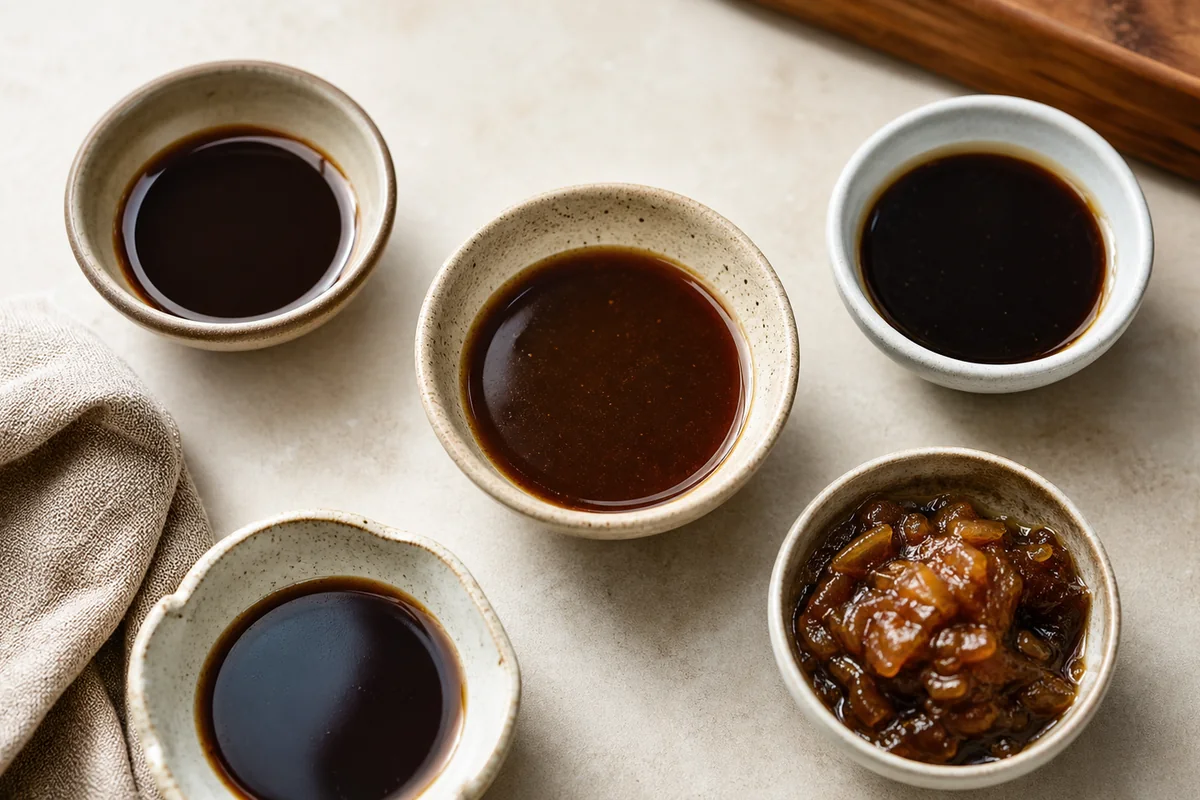
5 Best Kitchen Bouquet Substitutes (Easy Swaps)
Ingredients
Method
- Identify what you need: darker color, richer savory taste, or both (color + flavor).
- Start with the substitute ratio, then simmer 1–3 minutes to let the sauce develop color.
- Adjust: if it tastes sharp, add a pinch of sugar or a small splash of stock; if it tastes flat, add a tiny pinch of salt.
- Taste again after simmering—kitchen bouquet-style swaps deepen as the sauce heats.
Notes
- Kitchen bouquet is mainly used for color and mild savory depth; the best swaps either provide browned color directly (dark soy) or act like a savory browning sauce (Worcestershire).
Tried this recipe?
Let us know how it was!
Carrie is a food writer and editor with more than 15 years of experience. She has worked for some of the biggest names in the food industry, including Bon Appétit, Food & Wine, and Martha Stewart Living.
As the Editor in Chief of EpicureDelight, Carrie oversees all of the content on the site. She also manages the team of contributing writers and editors, who help to create delicious recipes, helpful tips, and informative articles that you’ll find on the site.
A native of the Chicago area, Carrie is passionate about all things food. She loves trying new restaurants and experimenting with new recipes in her kitchen. She’s also a graduate of the Culinary Institute of America, so she knows a thing or two about food!



