
Labneh has a specific job in a dish. It's thick enough to hold shape on a plate, tangy enough to cut through olive oil, and smooth enough to scoop with a piece of bread.
Most dairy swaps fail at one of those three things. Knowing which one matters most for your recipe is the fastest way to pick the right labneh cheese substitute.
Texture and tang are the two real decision points. If your dish needs a spreadable base, you need to drain your substitute.
If you just need a tangy dollop, you have more options.
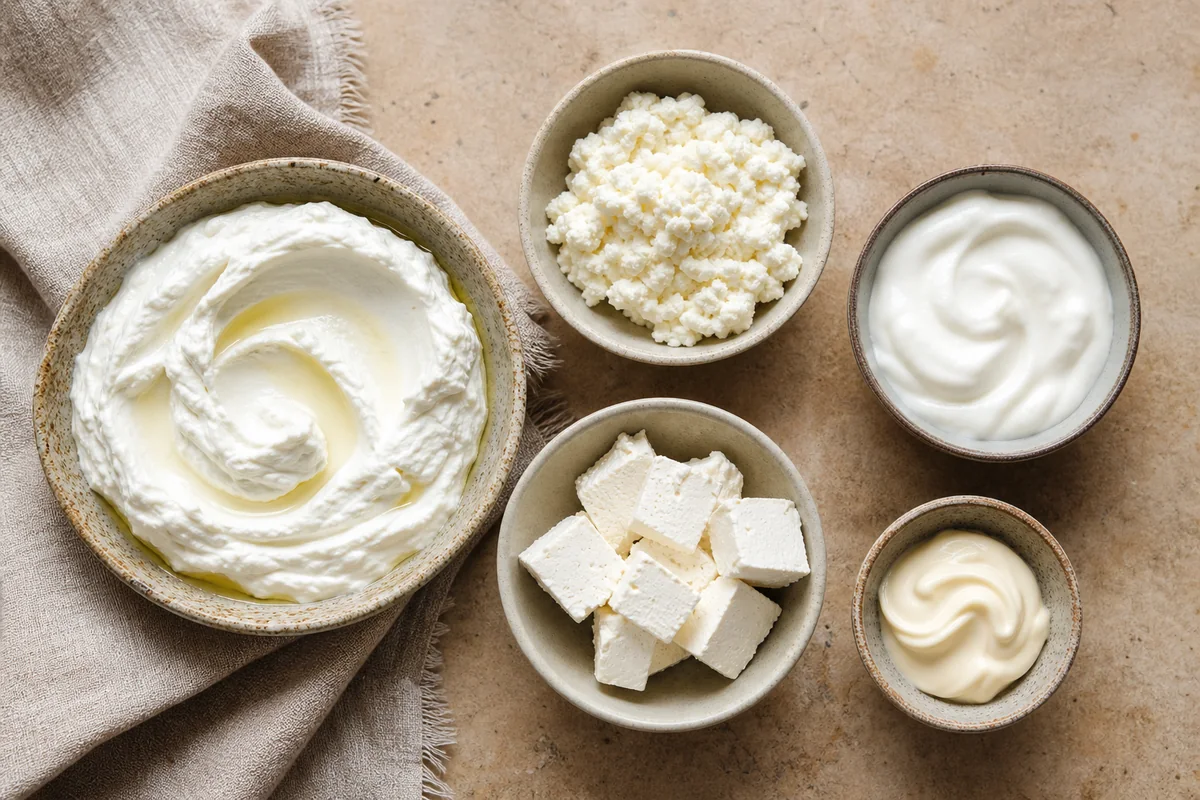
Greek yogurt (full-fat, strained) is the closest match for labneh in both tang and texture. Skyr is a strong second for thick dips. For richer or milder profiles, cream cheese blended with yogurt, drained ricotta, or blended cottage cheese all work depending on how much tang you need.
5 Best Labneh Cheese Substitutes Ranked by Texture
| # | Substitute | Best For | Ratio | Key Note |
|---|---|---|---|---|
| 1 | Greek Yogurt (strained) | Both | 1:1 | Strain 30-60 min |
| 2 | Skyr (plain) | Both | 1:1 | Add pinch of salt |
| 3 | Cream Cheese + Yogurt | Spread | ¾:1 | Whisk with lemon |
| 4 | Ricotta (drained) | Spread | 1:1 | Blend until smooth |
| 5 | Cottage Cheese (blended) | Dip | 1:1 | Blend silky-smooth |
The substitutes above split into two camps: closest-match fermented dairy (yogurt, skyr) and texture-forward non-fermented options (cream cheese, ricotta, cottage cheese) that need a tang boost. Pick from the first group when flavor is the priority.
Pick from the second when texture or availability is the constraint.
1. Greek Yogurt (Full-Fat, Strained)
Full-fat Greek yogurt is the most reliable starting point. Its natural tang is close to labneh, and straining it for 30-60 minutes in a fine-mesh strainer or cheesecloth closes the texture gap considerably.
The result holds a clean spoon track and spreads without running. It's a genuinely interchangeable option for most spreads and dips, and the strained fermented base already carries enough acidity that you rarely need lemon to correct the flavor.
- Strain time: 30 min for dip thickness; 60 min for scoopable labneh-style body
- Ratio: 1:1 replacement once strained to target consistency
- Flavor fix: A small pinch of sea salt is usually enough; skip lemon unless your yogurt is mild
- Skip if: You need a non-dairy or shelf-stable substitute-this is a dairy product that must be refrigerated and used fresh
2. Skyr (Plain, Strained)
Plain skyr is naturally thick and high in protein, which means it already sits closer to labneh's density than most yogurts before straining. A 20-30 minute drain is usually all it takes.
Skyr can taste sharper than labneh. If the flavor feels too aggressive, a brief strain and a small lemon squeeze actually mellow it out rather than amp it up.
Finish with a pinch of fine salt before serving.
- Strain time: 20-40 min is usually enough to reach labneh-like thickness
- Tang fix: Squeeze of lemon softens the sharpness; don't overdo it
- Protein note: Skyr runs 15-17g protein per serving, so it's a useful swap in high-protein meal prep
- Skip if: Your skyr is sweetened or flavored-those versions will throw off the neutral tang you need
3. Cream Cheese + Plain Yogurt
Cream cheese alone is too dense and too mild to stand in for labneh. But whisked together with plain yogurt in a roughly 2:1 ratio, it hits a workable middle ground between richness and acidity.
The yogurt loosens the texture and adds the fermented edge cream cheese lacks. When using softened dairy cheese this way, bring it to room temperature first so it blends without lumps.
Cream Cheese + Yogurt
Works for: spreads, flatbread toppings, creamy dips where a richer body is welcome
Skip if: you need a strictly fermented-tang profile or a lighter, less calorie-dense option
- Ratio: 2 parts softened cream cheese to 1 part plain full-fat yogurt
- Tang fix: Add 1 teaspoon lemon juice and a pinch of salt; taste before adding more
- Texture tip: Whisk until completely smooth-any lumps mean the cream cheese was too cold
- Skip if: You want the light, airy mouth feel of strained yogurt; this blend runs denser
4. Ricotta (Drained, Blended)
Ricotta is mild. That's its main limitation as a labneh stand-in, and it's also why the blending and seasoning steps matter more here than with any other substitute. This soft fresh cheese carries a pleasant creaminess, but without lemon and salt it will taste flat.
Drain first in a fine-mesh strainer for at least 20 minutes, then blend until the graininess disappears completely.
- Drain time: 20-30 min to remove excess moisture before blending
- Blend step: 30-45 seconds in a blender or food processor until silky
- Flavor fix: 1-2 teaspoon lemon juice plus fine salt, added after blending
- Best use: Flatbread spreads, mild dips, or anywhere you want a creamier, less punchy version of labneh
- Skip if: Your ricotta is pre-seasoned with herbs or garlic-those flavors won't play well with labneh-style dishes
5. Cottage Cheese (Blended) + Salt
The curdy texture of cottage cheese is the obstacle. Skip the blending step and this substitute won't read as labneh at all.
Blend it properly and this mild soft curd becomes a genuinely usable spoonable spread.
Drain first, then blend for at least 60 seconds until the texture is completely smooth with no visible curds.
- Drain time: 15-20 min in a fine-mesh strainer to remove liquid
- Blend time: 60+ seconds; check and blend again if any curd remains
- Flavor fix: A pinch of fine salt plus a small splash of lemon juice-start with ½ teaspoon and taste
- Texture tip: Chill for 10-15 min after blending; it firms up slightly and scoops more cleanly
- Skip if: You don't have a blender or food processor-the curd texture is too distinct to correct by hand
Making Labneh Substitutes Work (Texture + Tang Rules)
Every substitute on this list behaves better with two adjustments: drain longer than you think you need to, and season at the end. Most people under-drain and then wonder why their swap runs on the plate.
Straining also concentrates flavor, so the dairy fermentation comparison matters less once you've properly thickened your base.
- Drain until it holds shape: Run a spoon through your strained dairy-if the track fills back in, strain for another 10-15 minutes before using
- Add tang at the end: Lemon juice and fine salt are your correction tools; add them after straining, not before, so you don't over-season a watery base
- Match the dish: Loose substitutes work for dollops and dressings; only fully strained, blended options hold up for flatbread spreads or plated mezze
Frequently Asked Questions
Full-fat Greek yogurt strained for 60 minutes is the closest match in both texture and tang. Skyr is a strong second if you want higher protein with similar thickness.
Yes, always strain. Unstrained yogurt or sour cream is too loose to replicate labneh's scoopable body and will run on the plate.
Whisk softened cream cheese with plain full-fat yogurt in a 2:1 ratio, then add 1 teaspoon lemon juice and a pinch of salt. Taste and adjust before serving.
No. Both are too grainy or curdy straight from the container. Blending is the step that makes either one usable as a labneh stand-in.
Transfer to an airtight container and refrigerate immediately. Most strained dairy substitutes keep well for 3-5 days, though texture may loosen slightly after day two.
5 Best Labneh Cheese Substitutes Worth Trying
Ingredients
Equipment
Method
- Decide your texture goal: scoopable-spread (thick) vs dip-able (slightly looser).
- Choose the closest substitute from the list, then measure using the listed ratio.
- For thicker swaps (yogurt, sour cream), strain in a fine mesh for 10–60 minutes until it matches labneh’s density.
- For smoother swaps (ricotta, cottage cheese), blend briefly until you eliminate grainy bits.
- Taste and adjust: add a squeeze of lemon (tang) and salt (flavor balance) before serving.
Notes
- If your dish is cooked or baked, start with a thicker swap (strain a bit more) because some dairy loosens with heat.
- For best flavor mimicry, finish with lemon and a small pinch of salt—most substitutes are less acidic than labneh.
Tried this recipe?
Let us know how it was!
Carrie is a food writer and editor with more than 15 years of experience. She has worked for some of the biggest names in the food industry, including Bon Appétit, Food & Wine, and Martha Stewart Living.
As the Editor in Chief of EpicureDelight, Carrie oversees all of the content on the site. She also manages the team of contributing writers and editors, who help to create delicious recipes, helpful tips, and informative articles that you’ll find on the site.
A native of the Chicago area, Carrie is passionate about all things food. She loves trying new restaurants and experimenting with new recipes in her kitchen. She’s also a graduate of the Culinary Institute of America, so she knows a thing or two about food!



