Mache's leaves are so soft they almost dissolve under a dressing. That mild, faintly nutty flavor is the whole point, and most grocery stores carry it only seasonally.
Finding the right mache lettuce substitute means matching that tenderness before worrying about anything else.
Mache works raw almost exclusively. It wilts the moment heat touches it, and its flavor disappears fast under heavy dressings.
For salads, sandwiches, and light warm platings, you need a leaf that stays gentle, not sharp or watery.
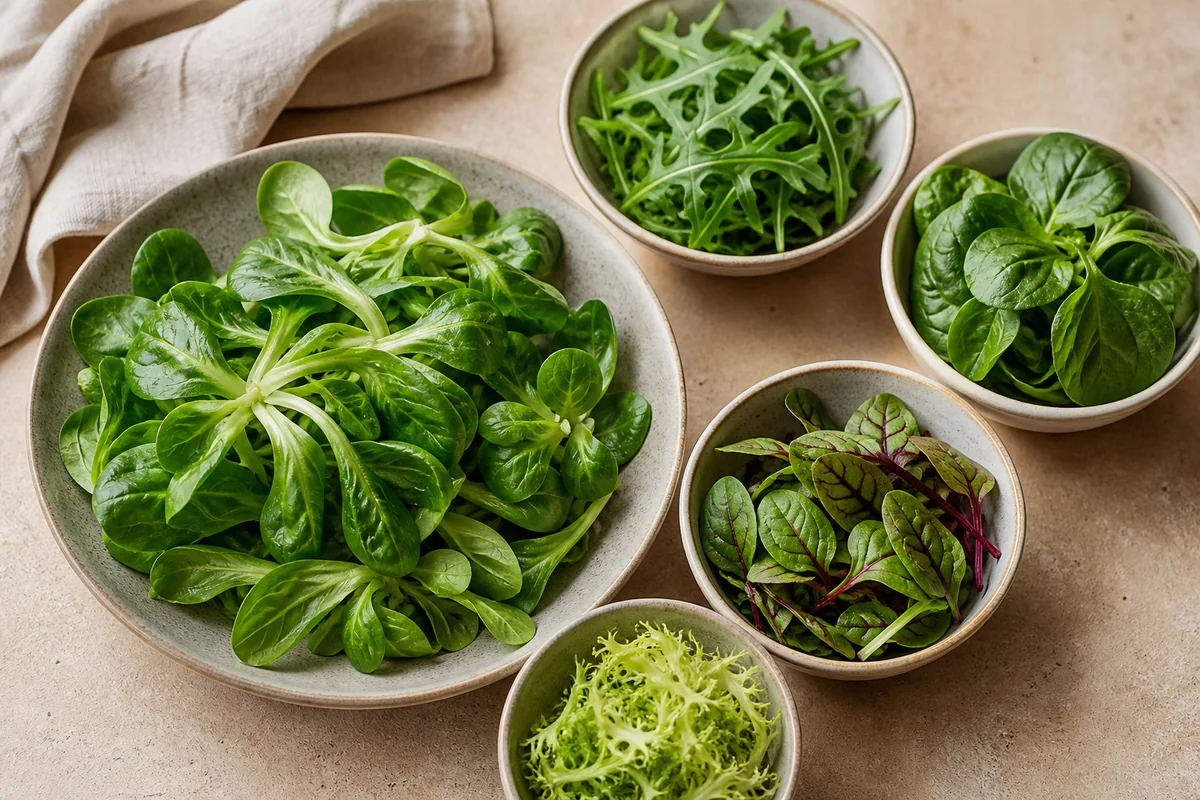
The best mache replacements share its tender bite and mild flavor. Baby arugula leads for peppery depth. Baby spinach is the mildest, safest swap. Butter lettuce matches the mouthfeel most closely. Frisée adds crunch with some bitterness. Romaine inner leaves work as a last-resort fix.
5 Best Mache Lettuce Substitutes for Any Recipe
A good swap matches mache's tenderness first, then chases the mild nutty flavor. The table below ranks all five by closeness to the original.
| # | Substitute | Best For | Ratio | Key Note |
|---|---|---|---|---|
| 1 | Baby Arugula | Both | 1:1 | Reduce 25% if sharp |
| 2 | Baby Spinach | Both | 1:1 | Keep raw, dry well |
| 3 | Butter Lettuce | Raw | 1:1 | Add lemon for lift |
| 4 | Frisée | Raw | ¾:1 | Mix with spinach |
| 5 | Romaine Inner Leaves | Raw | ¾:1 | Shred thin, dress fast |
1. Baby Arugula
Baby arugula is the closest structural match to mache. The leaves are small, thin, and tender, and if you can find a mild bunch, the peppery edge actually improves a simple vinaigrette salad.
Check the size and age differences between arugula types before buying, because mature arugula is too sharp and too thick.
- Ratio: 1:1 with thin-leaf baby arugula; reduce to ¾ if the leaves are sharp
- Dressing choice: Use a light lemon vinaigrette; skip creamy dressings that mask the leaf's character
- Prep note: Rinse and spin dry; wet arugula turns limp in seconds under dressing
Skip if: your arugula leaves are thick or very peppery. The salad will taste harsher than mache ever does.
2. Baby Spinach
Baby spinach is the mildest option on this list. It lacks mache's faint nuttiness, but the tenderness and neutral flavor make it the safest choice for dishes where you need the green to support other ingredients rather than compete with them.
The milder leaf choice between spinach sizes matters here: baby leaves stay more delicate than full-grown spinach.
- Ratio: 1:1, raw only
- Texture fix: Dry the leaves completely; extra moisture makes spinach limp under dressing within minutes
- Flavor tip: Add a small pinch of toasted walnut or sesame to replace mache's subtle nuttiness
Skip if: you're using pre-bagged spinach that already feels soft. It won't hold mache's light chew.
3. Butter Lettuce
Butter lettuce, especially Boston bibb, is the mouthfeel champion among these swaps. The leaves are silky, almost papery-soft, and they tear into pieces that look and behave remarkably like mache in a bowl.
The difference is flavor: butter lettuce is blander, and it needs a dressing with some acid to pull its weight. Using fresh lemon in the vinaigrette is the fastest way to add the brightness mache carries naturally.
Butter Lettuce
Works for: salads needing tender, low-bitterness leaves; delicate composed plates
Skip if: you want any peppery note - butter lettuce is mild and won't mimic mache's gentle bite without help from the dressing
- Ratio: 1:1, torn into small pieces by hand
- Dressing balance: Use 2 teaspoon lemon juice or white wine vinegar per tablespoon of oil to compensate for butter lettuce's flatness
- Avoid: Heavy oils or creamy dressings that make the soft leaves soggy fast
4. Frisée
Frisée is a bolder move. It brings a curly, lacy texture and a bittersweet edge that mache never has, but at ¾ the volume of the original mache, it works well when mixed with something softer.
We prefer pairing it with baby spinach or torn butter lettuce to round off the bitterness. If you need ideas for handling this leaf differently, the options for swapping bitter curly greens cover a few useful techniques.
- Ratio: ¾:1; always mix with a milder green unless the recipe specifically wants bitterness
- Bitterness fix: Dress frisée 5 minutes before serving and let it sit; acid softens the sharp edges
Skip if: the dish is supposed to feel delicate. Frisée can take over a plate quickly.
5. Romaine Inner Leaves
Romaine is an emergency swap, and we say that with affection. The outer leaves are too stiff and watery, but the pale inner leaves are genuinely tender if you shred them thin.
Think of this as a texture project: you're engineering the leaf into mache-like pieces rather than finding a natural match. For broader swapping sturdy lettuces in other dishes, the same shredding approach applies.
| Use | Ratio | Notes |
|---|---|---|
| Salad (immediate) | ¾:1 | Shred 1-2mm thin; dress and serve within 5 min |
| Sandwich layering | ¾:1 | Cut into narrow strips; place above the protein, not below |
| Warm plating | ½:1 | Place next to warm elements; don't mix them or leaves wilt |
- Prep: Use only the inner 3-4 leaves of the head; discard any leaf with a thick white rib
- Timing: Dress immediately before serving; romaine turns soft and watery after 10 minutes in dressing
Skip if: you're making the dish ahead. Shredded romaine won't stay mache-tender after it sits.
Making Mache Lettuce Substitutes Work
The biggest mistake is treating the substitute like a direct drop-in and forgetting about balance. Mache's nutty flavor and the delicate leaf texture it carries are what make a simple vinaigrette salad feel complete.
When you swap in something else, the dressing has to carry more of that flavor work. A lighter pour of oil, a sharper hit of acid, or a sprinkle of toasted nuts can close most of the gap.
For dishes where you're building layered spinach-based plates, the same dressing logic applies: lean on acid, not fat.
- Adjust acid up: Add an extra teaspoon of lemon juice or white wine vinegar to any dressing when using a milder substitute like butter lettuce or spinach; it replaces mache's natural brightness
- Dry the leaves completely: Every substitute on this list gets soggy faster than mache; a salad spinner followed by a clean towel blot is not optional
- Dress at the last second: Tender substitutes collapse in dressing within minutes; always toss right before the dish hits the table
Frequently Asked Questions
Baby arugula is the closest match when leaves are thin and mild. Butter lettuce is the better pick if you want tenderness without any peppery edge at all.
Yes, if you use baby arugula and reduce the volume by 25% when the leaves taste sharp. A lighter dressing also keeps the pepper from dominating.
Frisée holds the longest after dressing because its curly texture resists wilting. All the other substitutes should be dressed right before serving.
Mix frisée with baby spinach or butter lettuce at roughly half and half. Dressing the mix 5 minutes early lets the acid soften the bitter edge.
Baby spinach works well in sandwiches because it stays flat and doesn't slide. Dry the leaves thoroughly so they don't make the bread soggy.
5 Best Mache Lettuce Substitutes in Every Recipe
Ingredients
Method
- Decide the dish style: salad (raw), sandwich (raw), or warm topping (slightly wilted).
- Choose the substitute by texture: tender leafy greens (spinach/butter lettuce) for mache-style softness.
- Use the ratio from the table; if the substitute is stronger or more bitter, reduce the amount by 25%.
- Adjust dressing balance: add lemon/vinegar for lift, and reduce oil for peppery greens (like arugula).
- Serve immediately (or assemble just before eating) to keep tender leaves from wilting too far.
Notes
- Mache is tender and slightly nutty with a mild bite—your goal is to preserve tenderness and keep bitterness from running too high.
Tried this recipe?
Let us know how it was!
Carrie is a food writer and editor with more than 15 years of experience. She has worked for some of the biggest names in the food industry, including Bon Appétit, Food & Wine, and Martha Stewart Living.
As the Editor in Chief of EpicureDelight, Carrie oversees all of the content on the site. She also manages the team of contributing writers and editors, who help to create delicious recipes, helpful tips, and informative articles that you’ll find on the site.
A native of the Chicago area, Carrie is passionate about all things food. She loves trying new restaurants and experimenting with new recipes in her kitchen. She’s also a graduate of the Culinary Institute of America, so she knows a thing or two about food!