
Madras curry powder has a signature that's hard to fake: warm, earthy heat with a bright edge that sits somewhere between robust and sharp. When a jar runs out mid-recipe, the dish doesn't have to suffer.
A good madras curry powder substitute gets you most of that profile back, as long as you know which component you're replacing and how much to use.
The key is thinking in layers. Madras blends bring warmth (cumin, coriander), heat (chili, cayenne), and a faint citrusy or earthy brightness (turmeric, fenugreek).
Swap intelligently by deciding which of those three elements matters most in your dish.
The closest pantry swaps for madras curry powder are garam masala or a standard curry powder. Add cayenne to boost missing heat and a splash of lemon juice to restore brightness. For emergencies, a blend of turmeric, cumin, and cayenne rebuilds the core profile reliably.
5 Best Madras Curry Powder Substitutes (Pantry Swaps)
Every substitute below fills a different role. Garam masala covers warmth; curry powder covers overall profile; tandoori masala adds tang and smoke; Thai red curry paste delivers fast heat; a DIY blend gives you full control.
Blooming any of these briefly in oil before adding liquid makes a noticeable difference in final flavor.
| # | Substitute | Best For | Ratio | Key Note |
|---|---|---|---|---|
| 1 | Garam Masala | Curries, stews | 1:1 | Add cayenne for heat |
| 2 | Curry Powder | Any dish | 1:1 | Check for sweetness |
| 3 | Tandoori Masala | Marinades, grills | ¾:1 | Tangy, reduce acid |
| 4 | Thai Red Curry Paste | Sauces, soups | ½:1 | Wetter, saltier blend |
| 5 | DIY Turmeric + Cumin + Cayenne | Any dish | 1:1 | Full flavor control |
1. Garam Masala
Garam masala shares about 60% of madras curry powder's DNA. Both rely on warm spices like cumin, coriander, and cardamom.
The gap is heat: garam masala is rarely spicy on its own, and it skips the chili-forward punch that defines madras.
For dishes where depth and warmth matter more than fire, this is a solid 1:1 swap. You can find out exactly how this warm blend sits on the palate before committing to a full batch.
Add a pinch of cayenne or chili flakes to close the heat gap.
- Bloom method: Cook in oil over medium heat for 30-45 seconds before adding onions or liquid.
- Heat adjustment: Add ¼-½ teaspoon cayenne per tablespoon of garam masala to reach madras-level heat.
- Flavor tweak: A squeeze of lemon at the end restores the citrusy edge garam masala lacks.
Skip if: your dish needs a dry, citrusy madras edge and you're unwilling to add extra acid or heat boosters.
2. Curry Powder
This is the most direct swap available. A standard curry powder already contains turmeric, coriander, cumin, and often chili.
When you can find one labeled Madras-style, the earthy-heat flavor notes are almost identical. Use it at 1:1 without hesitation.
Some generic curry powders lean sweet or mild. Taste a pinch before adding the full amount.
- Starting ratio: 1 teaspoon curry powder for every 1 teaspoon madras powder called for.
- Reduce sweetness: If the blend tastes sweet, add ¼ teaspoon cumin and a pinch of chili powder to sharpen it.
- Control heat: For a hotter result, mix in cayenne at ⅛ teaspoon per teaspoon of curry powder.
Skip if: your curry powder is more than a year old or smells flat. Old spice blends underperform and the swap will taste dull.
3. Tandoori Masala
Tandoori masala leans tangy and slightly smoky, which makes it taste quite different from madras at first. The heat can be similar, but the flavor direction shifts toward red chili and dried citrus rather than earthy warmth.
If you want to swap using a tangier spice blend in marinades, tandoori masala is genuinely good. It works especially well on proteins before grilling or roasting.
The smoky-red spice character does need a small ratio reduction though. Use ¾ teaspoon tandoori masala for every 1 teaspoon of madras powder.
Tandoori Masala
Works for: marinades, grilled chicken, robust tomato-based sauces where tang is welcome
Skip if: making a coconut-based curry or a mild dish where smoky notes would dominate
- Bloom first: 30 seconds in hot oil reduces the raw chili edge before liquid goes in.
- Acid check: If the dish already has tomatoes or tamarind, hold off on extra acid; the blend adds its own.
4. Thai Red Curry Paste
Paste is a different format entirely. It's wet, salty, and carries aromatics like lemongrass and galangal that dry powder doesn't.
But the heat and depth it delivers are real, and it moves fast. Understanding the paste-to-powder tradeoffs helps you adjust the amount confidently.
Use half the volume compared to powder. For 1 teaspoon madras powder, start with ½ teaspoon paste.
Always check how this paste-based option holds up before using a half-open jar from the back of the fridge.
- Starting amount: ½ teaspoon paste replaces 1 teaspoon dry madras powder; scale up carefully after tasting.
- Simmer time: Give it 3-4 minutes in the pot before tasting; the herbal sharpness mellows with heat.
- Balance salt and acid: Paste adds both; reduce any added fish sauce or salt in the recipe by half, and skip extra lemon unless the dish tastes flat.
Skip if: the recipe needs a fully dry spice application, such as a dry rub or a blend mixed into dough.
5. DIY Turmeric + Cumin + Cayenne
When no blends are available, you can rebuild the madras profile from the ground up. Turmeric brings color and earthy bitterness.
Cumin adds warmth. Cayenne handles heat.
Together, they cover the core three layers of madras curry powder without any extras getting in the way. If you're also running low on cumin, a look at checking your spice freshness first is worth 30 seconds.
| Use | Ratio | Notes |
|---|---|---|
| Standard curry (per 1 teaspoon madras) | ½ teaspoon cumin + ¼ teaspoon turmeric + ¼ teaspoon cayenne | Adjust cayenne for heat tolerance |
| Mild version | ½ teaspoon cumin + ¼ teaspoon turmeric + ⅛ teaspoon cayenne | Add ¼ teaspoon coriander if available |
| Hot version | ½ teaspoon cumin + ¼ teaspoon turmeric + ½ teaspoon cayenne | Taste before adding more cayenne |
- Bloom method: Combine and bloom for 30-45 seconds in oil; turmeric burns fast, so keep heat at medium.
- Heat tuning: Add cayenne in ⅛ teaspoon increments after simmering 2 minutes, not all at once.
- Brightness tuning: A pinch of ground coriander or a drop of lemon juice at the end adds the citrusy edge the blend otherwise misses.
Skip if: you're out of both cumin and cayenne. Those two are the backbone of this blend, and without them the result tastes flat.
Making Madras Curry Powder Substitutes Work
The method matters as much as the choice. Any dry substitute benefits from blooming, and any paste substitute needs a controlled simmer.
Once you know the basic technique, the spice's original potency profile helps you calibrate how much substitute to use when your blend is fresh vs. older.
- Bloom dry blends: Add to hot oil and stir for 30-45 seconds before any liquid. This wakes up aroma compounds and removes the raw-powder edge.
- Simmer before tasting: Give the dish 2-3 minutes of simmering after adding the substitute. Flavors integrate; heat levels settle. Taste only after this point.
- Adjust in order: First check heat (add cayenne if flat), then check brightness (lemon juice or a splash of tamarind if dull), then check salt. Do not stack all three adjustments at once.
Frequently Asked Questions
A Madras-labeled curry powder is the nearest match. If unavailable, standard curry powder at a 1:1 ratio with a pinch of cayenne added is the next best option.
Yes, at a 1:1 ratio. Garam masala is milder, so add ¼-½ teaspoon cayenne per tablespoon to match madras heat levels.
Use ½ teaspoon paste for every 1 teaspoon of dry madras powder. Paste is saltier and wetter, so reduce other added salt in the dish accordingly.
Add cayenne in ⅛ teaspoon increments and simmer 2 more minutes. Avoid adding more of the base blend, which can make the dish taste muddy.
We'd skip it. Tandoori masala's smoky and tangy notes clash with coconut milk's sweetness. Use garam masala or the DIY turmeric-cumin blend instead.
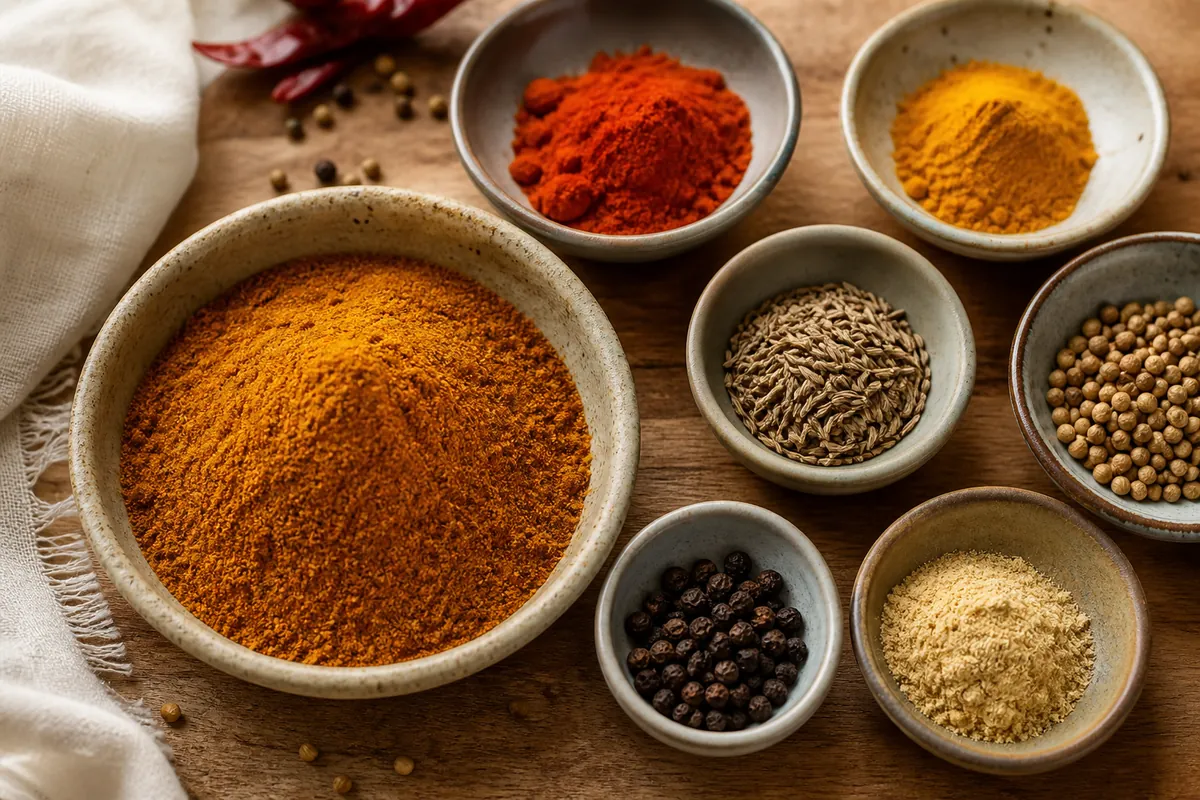
5 Best Madras Curry Powder Substitutes (Pantry Swaps)
Ingredients
Equipment
Method
- Match the job: for curry-style depth use garam masala or curry powder; for a sharper, tangier profile use tandoori masala; for fast heat use Thai red curry paste.
- Start with the listed ratio, then bloom it in hot oil (30–45 seconds) before adding liquids.
- If your swap tastes flat, brighten with a small amount of lemon juice or vinegar; if it’s too sharp/salty, balance with a pinch of sugar.
- Simmer 2–3 minutes and do a final taste—adjust heat with cayenne/chili flakes rather than adding more whole-spice blends.
Notes
- Madras curry powder typically delivers warm spice + noticeable heat; use acid/sweetness to mimic the blend’s brightness.
- Blooming the powder in oil improves aroma and makes the substitute taste more cohesive.
Tried this recipe?
Let us know how it was!
Carrie is a food writer and editor with more than 15 years of experience. She has worked for some of the biggest names in the food industry, including Bon Appétit, Food & Wine, and Martha Stewart Living.
As the Editor in Chief of EpicureDelight, Carrie oversees all of the content on the site. She also manages the team of contributing writers and editors, who help to create delicious recipes, helpful tips, and informative articles that you’ll find on the site.
A native of the Chicago area, Carrie is passionate about all things food. She loves trying new restaurants and experimenting with new recipes in her kitchen. She’s also a graduate of the Culinary Institute of America, so she knows a thing or two about food!



