
Mizithra sits in a strange spot among Greek cheeses. It's dry and salty in its aged form, almost powdery when grated, yet mild and fresh when young.
Most recipes that call for it want the aged version: a crumbly, salty topping that browns under heat and adds a sharp, grainy finish to pasta or baked dishes. Finding the right mizithra cheese substitute means matching that texture and salt level first, then worrying about flavor second.
The choice also depends on how you're using it. A hard, fine-grated cheese works for browning on top.
A softer crumble works for mixing through layers.
Pecorino Romano is the closest match for salty, aged mizithra. Parmesan is the best everyday baking swap. For crumbly toppings, try Cotija or drained Feta. Use a 1:1 ratio for most hard cheeses and drain soft cheeses before adding.
5 Best Mizithra Cheese Substitutes for Home Cooks
Every substitute below maps to a specific use: browning on top, mixing into baked layers, or sprinkling as a finish. The table below gives a fast reference before you read the detail.
| # | Substitute | Best For | Ratio | Key Note |
|---|---|---|---|---|
| 1 | Pecorino Romano | Both | 1:1 | Saltiest, closest flavor |
| 2 | Parmesan | Both | 1:1 | Milder, browns reliably |
| 3 | Grana Padano | Both | 1:1 | Gentler, baked layers |
| 4 | Cotija | Topping | 1:1 | Crumbly, watch sodium |
| 5 | Feta (drained) | Topping | ¾:1 | Drain well, tangier |
1. Pecorino Romano
Pecorino Romano is the strongest all-around swap for aged mizithra. Both cheeses share a sharp, salty profile and a dry, granular texture when finely grated.
The key is the grating size. Use a microplane or the finest side of a box grater so the cheese distributes evenly and browns without clumping.
If you want to understand more about the aged Greek profile you're trying to replicate, that context helps you calibrate how much pecorino to use.
Pecorino Romano
Works for: salty baked toppings, pasta finishes, browned gratins, anywhere aged mizithra is grated on top
Skip if: your dish is already heavily salted - pecorino can push the total sodium over the edge
- Grating: Use a microplane for a powder-fine result that melts and browns uniformly
- Ratio: 1:1 by weight or volume, then taste before adding more
- Salt check: Reduce any added salt in the recipe by at least half a teaspoon when using pecorino
- Timing: Add as a topping before the final 8-10 minutes of baking for best browning
Skip if: your recipe is already well-salted with olives, capers, or cured meat. Pecorino on top of a salt-heavy base gets aggressive fast.
2. Parmesan
Parmesan is the substitute most home cooks already have. It browns predictably, blends into baked mixtures without clumping, and carries a nutty aged flavor that works well under heat.
It's a touch milder than mizithra, so it won't deliver the same sharp bite. If you're choosing parmesan and want to compare it against other aged options, picking aged hard alternatives is worth a look for recipes where sharpness matters.
- Grate fine: Coarse parmesan sits on top rather than blending; fine grating gives a uniform crust
- When to add: For toppings, add in the last 10 minutes; for mixed-in bakes, stir in before assembly
- Flavor gap: If you miss mizithra's sharpness, add a small pinch of sea salt or a squeeze of lemon after baking
- Storage: Pre-grated bags brown unevenly; buy a wedge and grate fresh for best results
Skip if: you need the same sharp, almost briny edge as mizithra. Parmesan is usually noticeably milder, and the flavor difference shows in simple pasta dishes.
3. Grana Padano
Grana Padano sits between parmesan and mizithra on the intensity scale. It's aged, granular, and grates cleanly, but it's gentler in flavor than either.
It works best when you're swapping into layered bakes like casseroles or pasta gratins, where the cheese is mixed through rather than starred on top. The milder profile means it won't dominate other flavors.
- Salt adjustment: Grana is less salty than mizithra, so add an extra pinch of salt to the dish if needed
- Browning tip: Extend baking by 3-5 minutes for a better golden crust since grana browns more slowly
- Ratio: 1:1 by weight; taste after mixing and adjust seasoning before the final bake
- Best use: Mixed into baked pasta layers, not as a primary standalone topping
Skip if: your recipe depends on mizithra's sharp, salty punch as the dominant flavor. Grana is gentle enough that the dish can taste flat without an additional seasoning adjustment.
4. Cotija
Cotija is the best texture match for aged mizithra's crumbly, sprinkle-on finish. It breaks apart into small, dry pieces that scatter evenly and hold their shape when added as a topping.
Before using, compare how it behaves against feta by reading about crumbly topping options side by side. Cotija can be quite salty, so crumble it small and taste as you go.
| Use | Ratio | Notes |
|---|---|---|
| Pasta topping | 1:1 | Cotija; crumble fine, add after plating |
| Baked gratin top | ¾:1 | Cotija; reduce salt elsewhere in the dish |
| Mixed into filling | ½:1 | Cotija; very salty in large amounts, use sparingly |
- Crumble size: Small, fine crumbles spread evenly; large chunks clump and over-salt bites
- No draining needed: Cotija is already dry, so it goes straight from the block to the dish
- Timing: For toppings, add after cooking rather than before baking to preserve the crumbly texture
Skip if: you're cooking for anyone on a low-sodium diet. Cotija is one of the saltier cheeses on this list, and the combined salt load with other ingredients can get high quickly.
5. Feta
Feta is tangier than mizithra and holds moisture, but it can work in rustic baked dishes when you prepare it correctly. The key step is draining.
Pat blocks dry with a paper towel, then let the cheese sit on a clean cloth for 10-15 minutes before crumbling. Compared to harder aged options, the softer cheese choice behaves very differently under heat.
Feta softens rather than crisps, so it suits dishes where a slightly melted, creamy crumble is acceptable.
Feta vs Hard Aged Cheeses
Works for: rustic baked dishes, warm grain bowls, casseroles where a soft crumble is fine
Skip if: you need a dry, browned, granular crust - feta softens and can taste noticeably tangy
- Drain first: 10-15 minutes on a paper towel removes enough moisture to prevent wet pockets in baked dishes
- Crumble small: Smaller pieces distribute evenly and reduce concentrated tangy spots
- Ratio: Use ¾ the amount of mizithra called for, since feta releases some liquid even after draining
- Flavor note: Pair with ingredients that support acidity (tomatoes, lemon, herbs) to make the tang feel intentional
Skip if: you need the sharp, dry, browned finish of aged mizithra. Feta softens under heat and adds a tangy, almost briny note that moves the dish in a different direction.
Making Mizithra Cheese Substitutes Work
Getting the swap right is mostly about matching texture before you think about flavor. Hard cheeses like pecorino and parmesan need fine grating on a microplane so they distribute without lumps.
Soft cheeses like feta need moisture removed before they go near heat. If you're still deciding between options, understanding the aged Greek flavor you're working toward keeps you from over-correcting on salt or sharpness.
- Measure by weight, not volume: Finely grated hard cheese packs differently than crumbled soft cheese. Use 1:1 by weight as your starting point, then adjust by taste.
- Drain or dry first: For any soft or semi-soft cheese, remove surface moisture before adding. Pat dry, let rest 10 minutes, then crumble small.
- Time your addition: Hard grated cheeses go on top before the last 8-10 minutes of baking. Crumbly soft cheeses go on after baking or in the final 5 minutes to prevent them from turning rubbery.
Frequently Asked Questions
Pecorino Romano is the closest flavor match. It shares mizithra's sharp, salty, aged profile and grates to a similar dry, granular texture.
Yes, but drain it first and crumble small. Feta adds moisture and a tangier flavor, so it works better in rustic baked dishes than in anything needing a crisp browned topping.
Grate hard cheeses like pecorino or parmesan fine for toppings and mixed bakes. Crumble soft cheeses like feta or cotija small to avoid clumping.
Reduce added salt in the recipe by at least half a teaspoon. Both cheeses are saltier than most base recipes expect, so taste before seasoning further.
Finely grated Pecorino Romano or Parmesan both brown well. Add either in the last 8-10 minutes of baking for a golden, lightly crisped crust.
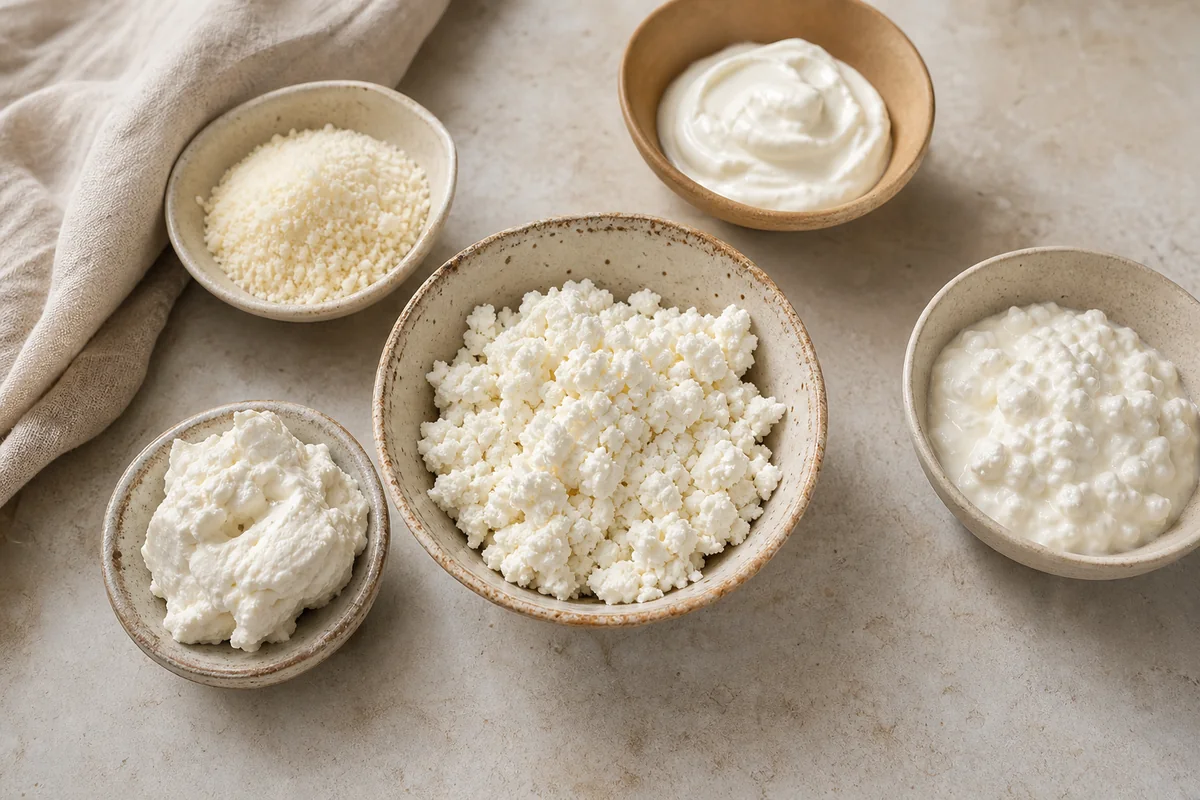
5 Best Mizithra Cheese Substitutes for Home Cooks
Ingredients
Equipment
Method
- Identify your use: sprinkle/brown on top vs mix into batter or sauce for baking.
- Start with the listed ratio (typically 1:1; use ¾:1 for feta to control salt and moisture).
- Adjust texture: grate hard cheeses fine for smoother melting; crumble feta very small and drain 10–15 minutes.
- Adjust flavor: if the substitute is sharper (pecorino/cotija), reduce salt in the recipe; if milder (parmesan/grana), add a touch more for punch.
- Bake or cook as the recipe directs so the substitute can brown and develop a nutty, aged finish.
Notes
- For best results, choose a hard aged cheese for even browning.
- Use finer grating to reduce graininess when mixing into baked batters.
- Control salt when using pecorino or cotija.
Tried this recipe?
Let us know how it was!
Carrie is a food writer and editor with more than 15 years of experience. She has worked for some of the biggest names in the food industry, including Bon Appétit, Food & Wine, and Martha Stewart Living.
As the Editor in Chief of EpicureDelight, Carrie oversees all of the content on the site. She also manages the team of contributing writers and editors, who help to create delicious recipes, helpful tips, and informative articles that you’ll find on the site.
A native of the Chicago area, Carrie is passionate about all things food. She loves trying new restaurants and experimenting with new recipes in her kitchen. She’s also a graduate of the Culinary Institute of America, so she knows a thing or two about food!



