
Parrano sits in a genuinely awkward spot on the cheese shelf. It has the dry-grain texture of an aged Gouda, the nuttiness of a young Parmigiano, and just enough salt to anchor a pasta topping without overwhelming the dish.
Finding a parrano cheese substitute in cooking that covers all three qualities at once is tricky, so the smarter move is to match the one quality your recipe actually needs most.
If you're grating over pasta or browning in a gratin, go hard and aged. If you need melt and creamy binding, go softer.
Saltiness is the other variable: parrano sits at moderate levels, lower than Pecorino but higher than young Gouda.
The best parrano cheese substitutes are Parmigiano-Reggiano and Grana Padano for grating, Asiago for sharpness, Pecorino Romano for salty punch, and Fontina for melt. Choose by use case: hard cheeses for topping and browning, Fontina when your dish needs creamy binding. Adjust salt when using Pecorino.
5 Best Parrano Cheese Substitutes You Can Trust
Each swap below is matched to a specific use case, so scan the short reference table first, then read the section that fits your dish.
| # | Substitute | Best For | Ratio | Key Note |
|---|---|---|---|---|
| 1 | Parmigiano-Reggiano | Grate / Top | 1:1 | Closest nutty, salty profile |
| 2 | Grana Padano | Grate / Top | 1:1 | Milder, add a pinch more |
| 3 | Asiago (aged) | Bake / Gratin | 1:1 | Sharper bite than parrano |
| 4 | Pecorino Romano | Top / Sauce | ¾:1 | Very salty, reduce amount |
| 5 | Fontina | Melt / Bind | 1:1 | Creamy, not a hard grater |
1. Parmigiano-Reggiano
Parmigiano-Reggiano is the most direct match for parrano's nutty, moderately salty bite. It grates finely, browns evenly in the oven, and holds its structure on hot pasta without turning gummy.
You can read about the parm alternative to understand how the two differ before you shop.
- Ratio: Use 1:1 by volume, grated as fine as possible.
- Application: Add in the final 2-3 minutes of heat so it sets without clumping.
- Browning: Works well under a broiler for 60-90 seconds to form a golden crust.
- Flavor note: Slightly saltier than parrano, so hold back any added salt until after tasting.
Parmigiano-Reggiano
Works for: pasta toppings, salads, gratins, and any dish where cheese browns at high heat
Skip if: you need a stretchy, gooey melt-this cheese sets firm rather than pulling into strings
2. Grana Padano
Grana Padano behaves almost identically to Parmigiano on the grater, but it carries a softer, less assertive flavor. That makes it a low-risk swap for recipes where parrano is one of several flavors rather than the lead.
For broader hard-cheese swap options, it's worth checking what else fits your dish before committing.
- Taste shift: Expect about 15-20% less sharpness compared to parrano; add a small pinch more if the dish tastes flat after baking.
- Salt level: Lower than Pecorino, close to parrano, so no reduction needed.
- Timing: Like Parmigiano, add near the end of cooking to avoid grainy texture.
- Skip if: You want a bold, sharp bite-reach for Asiago or Pecorino instead.
3. Asiago (aged, grated)
Aged Asiago is the pick when you want more assertive flavor than parrano delivers. It has a dry, granular texture that grates cleanly and browns well on gratin surfaces.
Those who enjoy this firm, nutty cheese know it punches harder than most parm-style swaps.
- Best recipes: Baked gratins, French onion-style soups, and roasted vegetable toppings.
- Ratio: 1:1, but start tasting early because the flavor is stronger.
- Heat behavior: Melts on the surface rather than pulling, so it gives a crust, not a stretch.
- Skip if: Your recipe depends on mild, slightly sweet parm-style flavor-Asiago will shift the whole dish toward sharp and tangy.
If you're considering running Asiago as a standalone cheese in your dish, switching to an Asiago replacement is covered in full elsewhere on the site.
4. Pecorino Romano
Pecorino Romano is a strong swap, but it needs a salt adjustment almost every time. It is made from sheep's milk, which gives it a sharper, tangier edge than parrano's more restrained profile.
If your recipe already has salty components like bacon, anchovy, or salted broth, Pecorino can easily tip the whole dish into oversalted territory.
| Use | Ratio | Notes |
|---|---|---|
| Pasta topping | 1:1 | Fine on low-salt pasta; taste before adding table salt |
| Robust sauce | ¾:1 | Simmer briefly to integrate; don't dump at end |
| Salty-ingredient dish | ½:1 | Bacon, anchovies, brined olives present; reduce sharply |
- Flavor profile: Tangier and saltier than parrano; excellent for punchy tomato sauces.
- How to apply: Stir into sauces over low heat to avoid graininess, rather than adding off-heat.
- Skip if: The recipe is already salt-forward-Pecorino will overpower everything else on the plate.
5. Fontina
Fontina is the only melt-first option on this list. It won't replicate parrano's dry, granular finish, but it fills the gap when your dish needs creamy binding rather than a crisp topping.
If you want to understand how it behaves before buying, melty cheese flavor profiles are covered in detail.
- Cut size: Use small cubes or thin slices, not a grate, for the smoothest melt.
- Timing: Add in the last 5-8 minutes of baking so it melts evenly without splitting.
- Flavor note: More creamy and mild than parrano, with less salt and almost no sharp bite.
- Best for: Baked sandwiches, casseroles, and any dish where stretch or binding matters more than topping crunch.
- Skip if: You only need a hard-grating finish over pasta or salad-Fontina will pool rather than dust.
Making Parrano Cheese Substitutes Work
The main decision is simple: are you grating or melting? Hard swaps like Parmigiano, Grana Padano, and Asiago all behave like this granular aged cheese when added near the end of heat.
Fontina is the outlier, and it belongs in completely different dishes. Salt adjustment is the second variable, especially when Pecorino is involved.
- Step 1 - Match the texture need: Choose a hard, aged cheese for grating and browning; choose Fontina only when your dish depends on creamy melt or binding.
- Step 2 - Apply at the right moment: Add hard-cheese substitutes in the final 2-5 minutes of cooking to prevent clumping and improve surface browning. Fontina goes in 5-8 minutes before the dish is done.
- Step 3 - Taste and adjust salt: After the first heat pass, taste before adding any salt. If using Pecorino, start at ¾ of the stated amount and work up only if needed.
Note: none of the substitutes above are dairy-free. If you need a plant-based swap, this list won't help.
Frequently Asked Questions
Parmigiano-Reggiano is the closest match for parrano's nutty, moderately salty profile. Use it at a 1:1 ratio and grate it finely for the best texture.
You can, but Pecorino is saltier and tangier than parrano. Start at about ¾ of the amount and taste before adding any extra salt.
Fontina melts most smoothly and gives a creamy, binding result. Use small pieces and add it in the final 5-8 minutes of baking.
Grate finely and add near the end of cooking rather than at the start. High heat for too long causes proteins to seize and clump together.
Yes, both work well grated over cold salads. Parmigiano has a slightly stronger flavor, while Grana Padano is milder and may need a pinch more for the same impact.
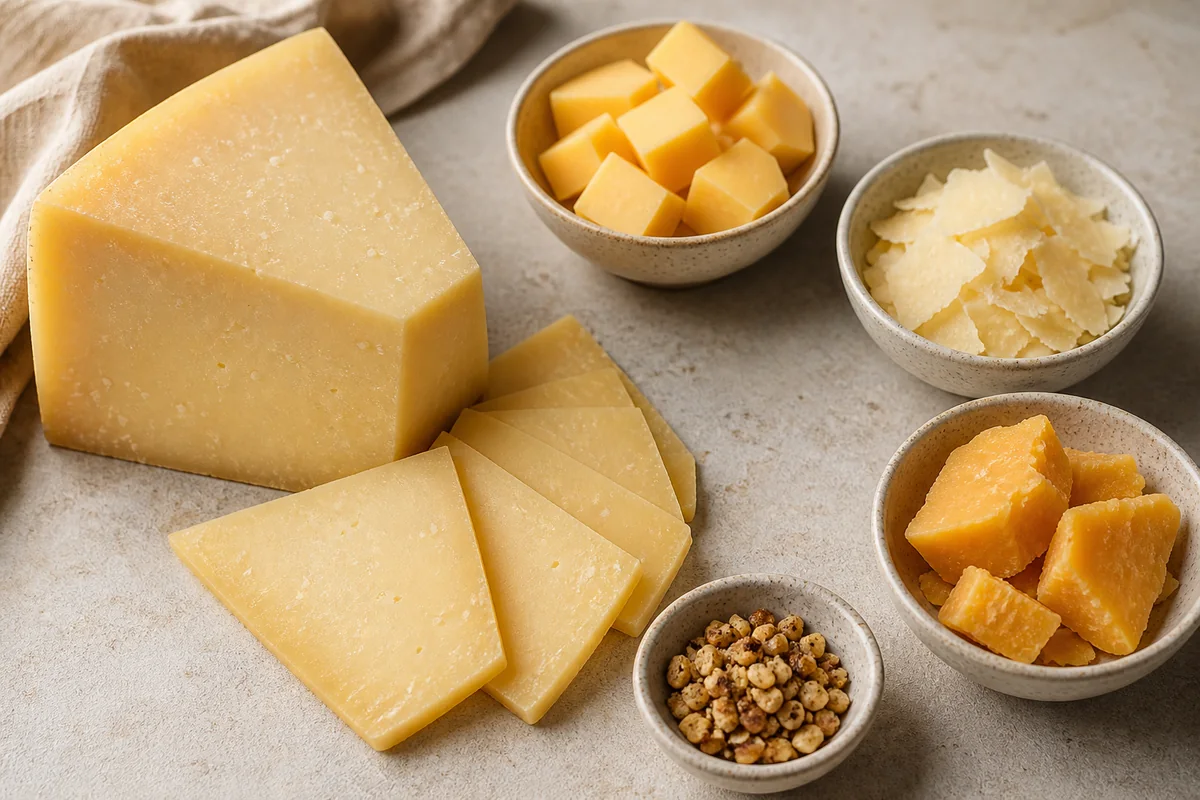
5 Best Parrano Cheese Substitutes You Can Trust
Ingredients
Equipment
Method
- Identify how you’re using the cheese: topping/grating vs. melting/binding.
- Match the swap: pick a hard/grate-style substitute for sprinkling, or Fontina for melt-heavy dishes.
- Use the listed ratio; if the substitute is saltier (like Pecorino), start with ~¾ of the amount.
- If the cheese needs to behave like a hard grater, shred finely and add near the end of cooking so it doesn’t clump.
- Taste after the first bake/heat pass and adjust with a small pinch of salt (or none if using Pecorino) for balance.
Notes
- Hard, salty substitutes work best for sprinkling and browning; melt performance improves when you use smaller pieces and add later.
- Parrano is typically used like a parm-style hard cheese—so flavor match usually matters as much as texture.
Tried this recipe?
Let us know how it was!
Carrie is a food writer and editor with more than 15 years of experience. She has worked for some of the biggest names in the food industry, including Bon Appétit, Food & Wine, and Martha Stewart Living.
As the Editor in Chief of EpicureDelight, Carrie oversees all of the content on the site. She also manages the team of contributing writers and editors, who help to create delicious recipes, helpful tips, and informative articles that you’ll find on the site.
A native of the Chicago area, Carrie is passionate about all things food. She loves trying new restaurants and experimenting with new recipes in her kitchen. She’s also a graduate of the Culinary Institute of America, so she knows a thing or two about food!



