
That flaky, tender bite pollock delivers in a fish taco or a simple baked dinner is harder to replicate than it looks. The fish is mild enough that seasoning does most of the flavor work, and it holds moisture well without becoming rubbery.
Finding a good pollock substitute means matching those two things: neutral flavor and an easy, clean flake.
Pollock cooks fast. Both baking and pan-cooking reward a fish that stays moist at the center without falling apart at the edges.
This list focuses on fish-for-fish swaps only. Skip this if you need a plant-based or non-fish replacement.
The best pollock substitutes are other mild, white, flaky fish. Cod is the closest match for both baking and pan-cooking. Haddock follows closely. Tilapia, halibut, and catfish all work with small adjustments to ratio or seasoning.
5 Best Pollock Substitutes, Ranked by Flake and Flavor
The substitutes below are ordered by how closely they mimic pollock's texture and neutral taste. Cod sits at the top because it behaves almost identically in the oven or skillet.
The list moves toward fish with more flavor or denser flesh as it goes down. If you're swapping for a briny recipe, add extra seasoning regardless of which fish you choose.
| # | Substitute | Best For | Ratio | Key Note |
|---|---|---|---|---|
| 1 | Cod | Both | 1:1 | Closest flake and flavor |
| 2 | Haddock | Both | 1:1 | Nearly seamless swap |
| 3 | Tilapia | Pan | 1:1 | Softer; pull earlier |
| 4 | Halibut | Baking | ¾:1 | Denser; reduce portion |
| 5 | Catfish | Both | 1:1 | Add acid to balance |
1. Cod
Cod is the most reliable swap on this list. It has the same mild, clean flavor as pollock and flakes in long, clean strips when cooked through.
For baking and skillet work, use a 1:1 ratio and watch the thickest part, not the clock.
Thick-cut fillets are the key detail here. Thin cod dries faster than pollock because there's less moisture to carry through the heat. Pull it the moment the flesh at the center turns opaque and releases a flake under a fork.
Cod
Works for: baking, pan-searing, fish tacos, breaded preparations, any recipe calling for mild white fish
Skip if: you only have thin cod fillets, which dry out faster than pollock in the same bake time
- Ratio: 1:1 in all methods
- Cook cue: Fork-flake test at the thickest point; stop immediately
- Seasoning: No changes needed, though a squeeze of lemon sharpens the flavor
- Texture note: Thick cod can hold up to a longer bake; thin cod cannot
If you're keeping a steady rotation of white fish, check your chilled fillet freshness window so your cod doesn't sit past peak quality before you cook it.
2. Haddock
Haddock is so close to pollock in both texture and flavor that most people won't notice the difference in a finished dish. It's mild, it flakes cleanly, and it browns well in a skillet without releasing too much water.
The swap is 1:1 and your seasoning stays exactly the same.
The one thing to check before you swap is whether your haddock is pre-salted or smoked. If you're curious about how haddock's flavor profile compares to other white fish, that context helps you decide whether to dial the salt back.
- Ratio: 1:1 for baking and pan-cooking
- Texture: Flakier than firmer white fish; behaves almost identically to pollock
- Browning: Works well in a hot skillet with butter or oil
- Seasoning: No changes unless the fillet is pre-seasoned
Skip if: your haddock fillets are smoked or pre-salted, the flavor will shift the dish noticeably.
3. Tilapia
Tilapia is mild enough that it reads as a pollock-like fish on the plate, but its texture is softer. It can turn mushy if the heat is too high or the cook runs too long.
The key is gentle heat and an early pull.
For more context on this pale, lean fish's flavor before you decide whether it fits your recipe, the differences from pollock are small but worth knowing.
- Ratio: 1:1
- Heat: Medium, not medium-high; high heat breaks the fillet down quickly
- Rest time: 2 minutes off the heat lets carryover cooking finish the center
- Best uses: Quick pan dinners, fish tacos, simple lemon-butter preparations
Skip if: you're baking at a high temperature. Tilapia dries and crumbles faster than pollock under sustained high heat.
4. Halibut
Halibut holds together more firmly than pollock, which is good for presentation but changes how the bite feels. It's also denser, so a full 1:1 swap can make the finished dish feel heavier than intended.
Drop to ¾ of the pollock amount and keep the cook time tight.
The dense texture also means halibut benefits from moisture in the pan. If you're curious about firm white fish flavor notes, that comparison helps you decide whether extra seasoning is worth adding.
| Use | Ratio | Notes |
|---|---|---|
| Baking | ¾:1 | Halibut; keep covered for first half of bake to retain moisture |
| Pan-sear | ¾:1 | Halibut; medium-high heat, 3-4 min per side max for 1-inch fillet |
| Fish tacos | ¾:1 | Halibut; flake by hand after cooking for the right taco texture |
- Ratio: ¾ halibut for every 1 part pollock
- Texture: Denser and firmer; it won't break apart, which is ideal for plating
- Moisture tip: A butter baste or light sauce prevents dryness
Skip if: your recipe calls for a long bake or a braise. Halibut dries out quickly past the 15-minute mark.
5. Catfish
Catfish is an emergency swap, not a first choice. It has more flavor than pollock.
A plain fillet will taste earthier and slightly stronger, so acid is your tool for neutralizing that difference. Add lemon juice or a small splash of white wine vinegar to your sauce before serving, and the gap narrows considerably.
Use a 1:1 ratio. If you need other similar firm fish options in that same flavor range, that comparison is worth a look before you commit to catfish as your only fallback.
- Ratio: 1:1
- Acid fix: 1 teaspoon lemon juice per fillet in the sauce or marinade
- Texture: Holds together well; doesn't flake as delicately as pollock
- Best uses: Pan-frying, breaded preparations, dishes with bold sauces
Skip if: your recipe depends on a strictly neutral fish flavor. Catfish will read noticeably stronger than pollock even with acid added.
Making Pollock Substitutes Work (Baking and Pan-Cooking)
The most common mistake when swapping white fish is trusting the clock instead of the fillet. When storing fresh fish before you cook, keep it on ice and use it within two days for best results.
Once you're at the stove, focus on the fork-flake test at the thickest point, not the timer, because thickness varies between species and between individual fillets. For softer fish like tilapia, pull the fillet 30 seconds before you think it's done and let carryover heat finish the center.
- Choose by method: For baking, cod and haddock are safest. For pan-searing, tilapia and cod both work well if you keep the heat moderate.
- Match the ratio: Use 1:1 for most swaps, and drop to ¾ for halibut to avoid a dense, dry result.
- Adjust seasoning last: Taste the sauce before plating and add acid (lemon, vinegar) if the substitute reads stronger or sweeter than pollock.
Frequently Asked Questions
Cod is the closest match for baking. Use thick-cut fillets at a 1:1 ratio and pull them the moment the center flakes cleanly under a fork.
Yes, cod pan-sears well at a 1:1 ratio. Keep the heat at medium-high and stop cooking as soon as the thickest part turns opaque.
Tilapia has a softer structure than pollock, so overcooking breaks it down quickly. Use medium heat, pull it just before it looks fully done, and rest it 2 minutes off the heat.
Add 2-3 minutes and rely on the flake test, not the clock. Denser fish like halibut need a little more time but dry out fast if you overshoot.
Yes, but thaw completely and pat dry first. Excess water from frozen fillets causes steaming instead of browning in the pan.
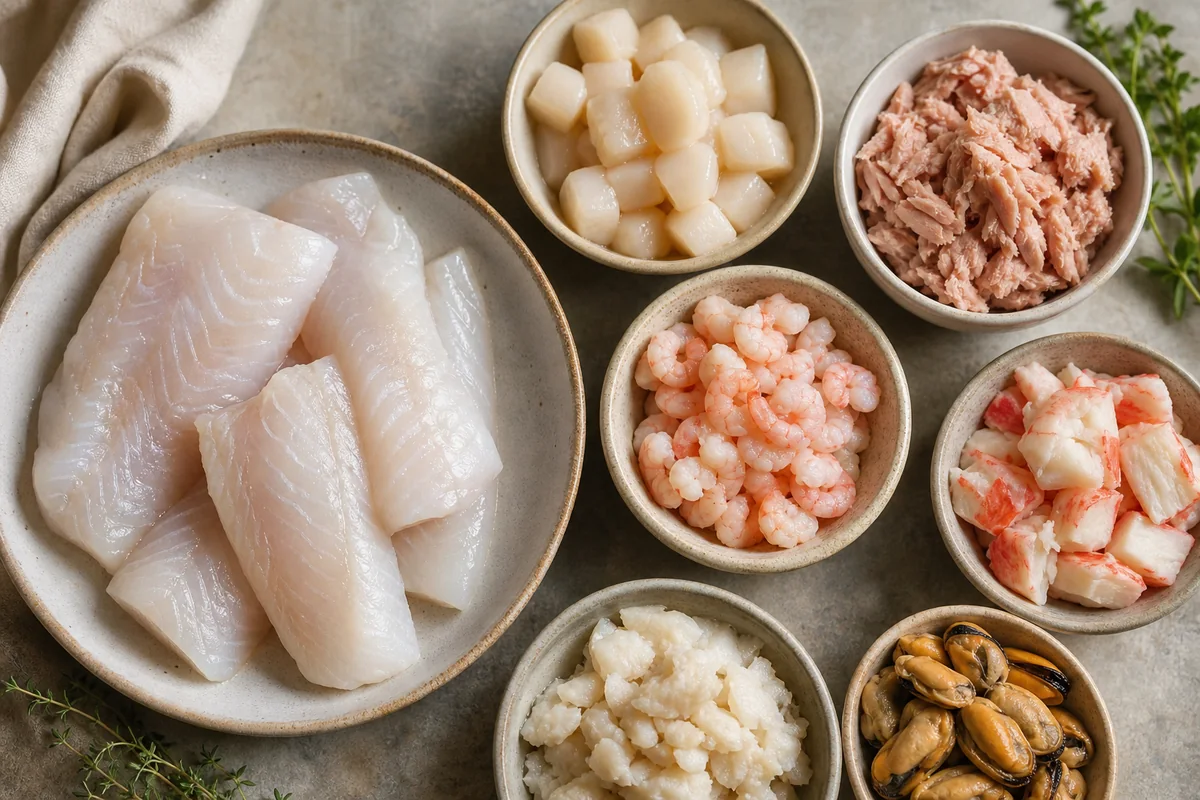
5 Best Pollock Substitutes (Ranked)
Ingredients
Equipment
Method
- Choose a substitute by method: for baking, prioritize cod/haddock; for pan-searing, prioritize cod/tilapia but cook gently.
- Use the listed ratio: aim for 1:1, and drop to ¾ for halibut to avoid dryness.
- Season after pairing: add salt plus a small lemon/acid boost if your substitute tastes sweeter or stronger than pollock.
- Cook until it flakes easily with a fork; stop as soon as the thickest part turns opaque.
- Rest 2 minutes before serving so the fish finishes setting and stays tender.
Notes
- Pollock is mild and flaky; avoid fattier fish if you want the same light bite.
- If using softer fish (like tilapia), reduce cooking time by 10–20% to prevent drying.
Tried this recipe?
Let us know how it was!
Carrie is a food writer and editor with more than 15 years of experience. She has worked for some of the biggest names in the food industry, including Bon Appétit, Food & Wine, and Martha Stewart Living.
As the Editor in Chief of EpicureDelight, Carrie oversees all of the content on the site. She also manages the team of contributing writers and editors, who help to create delicious recipes, helpful tips, and informative articles that you’ll find on the site.
A native of the Chicago area, Carrie is passionate about all things food. She loves trying new restaurants and experimenting with new recipes in her kitchen. She’s also a graduate of the Culinary Institute of America, so she knows a thing or two about food!



