
That briny, fermented-rind punch is hard to fake. Preserved lemons bring something no other single ingredient does: salted citrus oils cooked soft over weeks, merging sour, salt, and a low bitter hum all at once.
Knowing which part your recipe actually needs, the rind or the brine, makes every preserved lemon substitute work far better.
Most swaps fall short on depth, not on brightness. You can get the tang back quickly.
The softened, aromatic rind is harder to replace. Salt level is the other variable: most substitutes run saltier per gram than you expect, so always taste before finishing.
Quick-preserved lemon (salted rind) is the closest match for rind-forward dishes. Lemon zest + salt covers pantry emergencies. For pure tang, a sour citrus brine works best in sauces and marinades. Always add salt cautiously-most swaps are saltier than you think.
5 Best Preserved Lemon Substitutes Ranked for Rind and Brine
The table below shows which substitute covers which role. Use it to match your recipe's need before reading the full breakdown.
| # | Substitute | Best For | Ratio | Key Note |
|---|---|---|---|---|
| 1 | Quick-Preserved Lemon | ★ Best Overall | 1:1 | Closest rind aroma |
| 2 | Lemon Zest + Salt | ★ Pantry Swap | 1:1 | Bloom before adding |
| 3 | Pickled Lemon | ★ Jarred Option | 1:1 | Drain brine first |
| 4 | Olives + Lemon | ★ Savory Dishes | 1:1 | Add zest for citrus |
| 5 | Sour Citrus Brine | ★ Sauces & Brines | 1:1 | Pair with zest |
1. Quick-Preserved Lemon
This is the closest thing to the real jar. You salt fresh lemon peel heavily and let it rest for 30 to 60 minutes, which releases the briny fermented rind oils in a compressed version of the full cure.
- Chop size: Mince finely, just as you would packaged preserved lemon peel.
- When to add: Early in cooking so the oils integrate into the dish.
- Salt adjustment: Skip added salt until you taste; the cured peel is already well-seasoned.
- Ratio: Use 1:1 by volume, then adjust up slightly for brightness.
Skip if: you need a store-bought option right now and have no time for even a short cure.
2. Lemon Zest + Salt
Zest carries the citrus oils. Salt pulls them out fast.
Together they give you a preserved-lemon-like aromatic hit that works in nearly any cooked dish where the fine outer peel does most of the flavor work.
- Mix: Combine 1 teaspoon zest with ¼ teaspoon fine salt per teaspoon of preserved lemon peel called for.
- Starting amount: Use slightly less than the recipe's preserved lemon quantity; add more after tasting.
- Timing: Add mid-cook rather than at the very end so the oils mellow into the dish.
- Texture note: The zest won't soften the way preserved rind does; expect a slightly firmer bite.
Skip if: your dish depends on the soft, yielding chew of a long-brined rind.
3. Pickled Lemon
A jar of pickled lemons with the rind still attached is the best store-bought stand-in. The rind has been sitting in brine, so the texture is closer than anything zest-based can offer.
Look for a version packed in salt brine rather than straight vinegar. When comparing zest versus juice options, neither matches a pickled rind's body.
- Drain: Shake off excess brine before chopping; too much liquid shifts the balance sharply.
- Chop: Mince the rind finely and discard extra pith if it tastes very bitter.
- When to add: Mid-cook works best; late addition can read too sharp.
- Brine use: Reserve a few drops of the brine to add at the end if the dish needs more acid.
Skip if: your jar is vinegar-heavy. That sharpness pulls the dish away from preserved lemon's mellow tang.
4. Olives + Lemon
Preserved lemon in a savory dish delivers salty umami and citrus oil aroma. Olives cover the first part well.
They bring brine, salt, and a meaty depth that mirrors preserved lemon's savory role. Pair them with fresh zest and you get closer to the full effect.
Stock up properly by storing olives well so they're always on hand.
Olives + Lemon Zest
Works for: briny savory dishes, tagines, grain salads, roasted chicken
Skip if: you need a clean lemon-only flavor with zero olive undertone
- Chop olives: Use green olives (Castelvetrano or similar) and mince finely.
- Add zest: Combine with ½ teaspoon lemon zest per tablespoon of olives for the citrus note.
- Salt check: Olives are already salty; hold back on any added salt until the dish is nearly done.
- Ratio: Start with ¾ of the preserved lemon volume called for, then adjust to taste.
Skip if: the recipe relies on rind texture or a bright clean lemon flavor without any savory olive depth.
5. Sour Citrus Brine
A sour brine, whether from a fermented citrus product or a lemon-forward pickling liquid, handles the tang side of the equation well. It won't give you rind texture or aromatic oil depth on its own, but it works in liquid-based brine uses like marinades and pan sauces where the citrus acid is the main job.
Sour Citrus Brine
Works for: finishing sauces, marinades, braising liquids, dressings
Not ideal for: dishes that call for chopped peel or rind as a textural garnish
- Starting dose: Use 1 teaspoon brine per teaspoon of preserved lemon called for, then taste.
- Add zest: Stir in ½ teaspoon lemon zest alongside the brine to recover some oil aroma.
- Salt control: Brine salt levels vary widely; always taste before salting the rest of the dish.
- Best moment: Add to the pan off heat or in the last 2 minutes to preserve acidity.
Skip if: your recipe specifically calls for chopped preserved lemon peel as a garnish or stirred-through ingredient.
Making the Substitute Taste Like Preserved Lemon
The most common mistake is treating preserved lemon as just "lemon flavor." It plays two roles: rind-forward aroma in slow-cooked dishes and briny tang in finishing situations.
Decide which role it has in your recipe first. For rind-forward dishes, use quick-preserved lemon or salted zest and add it early.
For tang-forward uses, a citrus brine or pickled lemon brine added near the end is enough. Understanding how long this jarred ingredient keeps also helps you plan ahead and avoid last-minute scrambles.
- Taste mid-cook: Salt from any substitute integrates during simmering, so the dish reads less salty at the end than mid-way through.
- Hold back added salt: Don't season the dish fully until after the substitute has cooked in for at least 5 minutes.
- Layer aroma: If your substitute lacks rind oils, add a small strip of fresh zest at the same time to compensate.
Frequently Asked Questions
Yes, but bloom it first. Combine 1 teaspoon zest with ¼ teaspoon salt and rest for 2-3 minutes to release oils before adding to the pan. It won't have the same soft texture.
Add the substitute first, then taste after a 5-minute simmer before salting anything else. Most pickled and salted options contribute more sodium than a standard preserved lemon quarter.
Pickled lemons with rind included are the best jarred option. Drain the excess brine, mince the rind finely, and use a 1:1 ratio as a starting point.
Only for tang, not rind flavor. Lemon juice lacks the aromatic oils and salted depth of preserved peel, so pair it with zest and a pinch of salt for a closer result.
Rind-based swaps go in early so the oils integrate. Brine or juice-based swaps are better added in the last 2 minutes to keep the acidity bright.
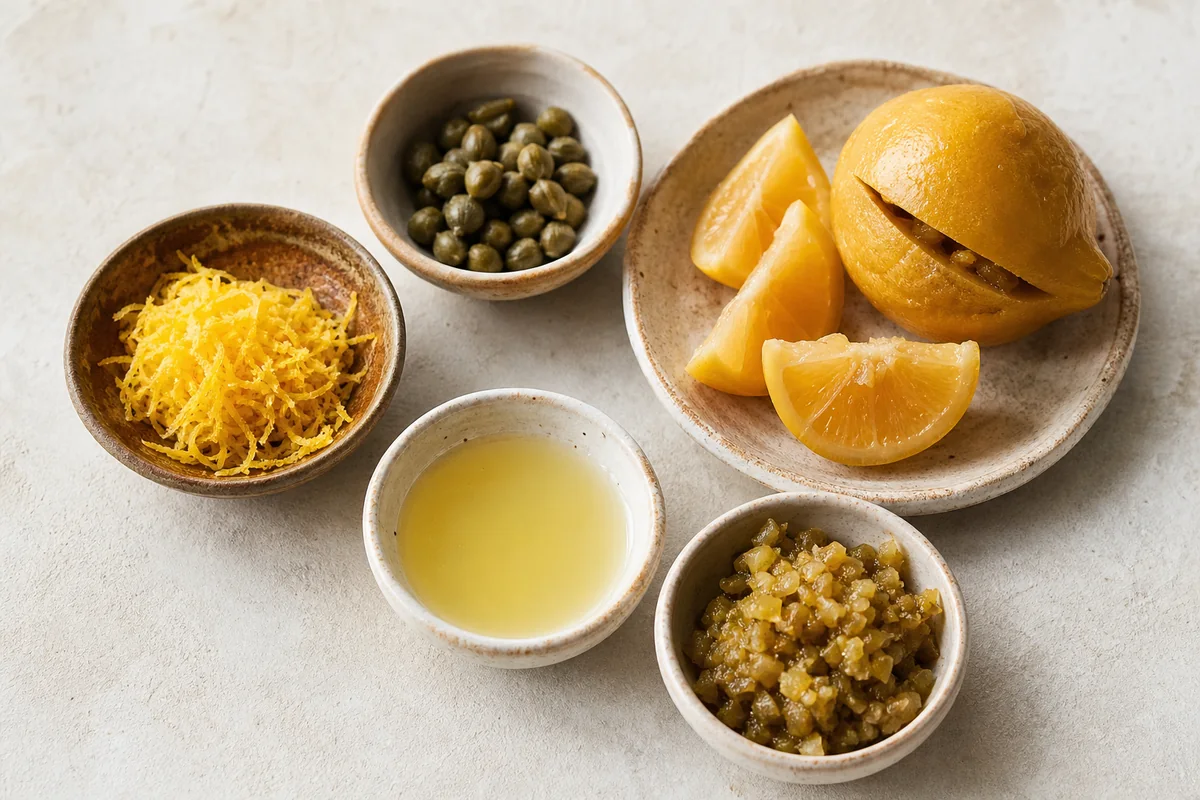
5 Best Preserved Lemon Substitutes (Tested)
Ingredients
Equipment
Method
- Identify whether your recipe uses preserved lemon mainly for the rind (chopped peel) or for the tang (juice/brine).
- Choose a substitute from the list below that matches that need: rind-forward swaps for savory depth, juice-forward swaps for bright tang.
- Use the 1:1 ratio as a starting point, then adjust salt after tasting because many substitutes are saltier or less complex.
- For zest-based swaps, let the zest sit with a pinch of salt for 2–3 minutes to bloom flavor before adding to the pot.
- Stir in near-simmer (not at the very end) for cooked dishes so the citrus oils integrate.
Notes
- Taste-and-adjust is required because saltiness varies widely by brand and prep method.
Tried this recipe?
Let us know how it was!
Carrie is a food writer and editor with more than 15 years of experience. She has worked for some of the biggest names in the food industry, including Bon Appétit, Food & Wine, and Martha Stewart Living.
As the Editor in Chief of EpicureDelight, Carrie oversees all of the content on the site. She also manages the team of contributing writers and editors, who help to create delicious recipes, helpful tips, and informative articles that you’ll find on the site.
A native of the Chicago area, Carrie is passionate about all things food. She loves trying new restaurants and experimenting with new recipes in her kitchen. She’s also a graduate of the Culinary Institute of America, so she knows a thing or two about food!



