Ricotta is one of those ingredients that shows up everywhere and does slightly different jobs in each place. It adds body to lasagna fillings, keeps cheesecake light, and spreads onto toast without effort.
The "best" swap depends entirely on what ricotta is doing in your specific dish.
Texture and moisture are the two factors that matter most when choosing a substitute. A watery stand-in will give you a soggy baked filling. A too-dense one will turn a delicate spread into something stiff.
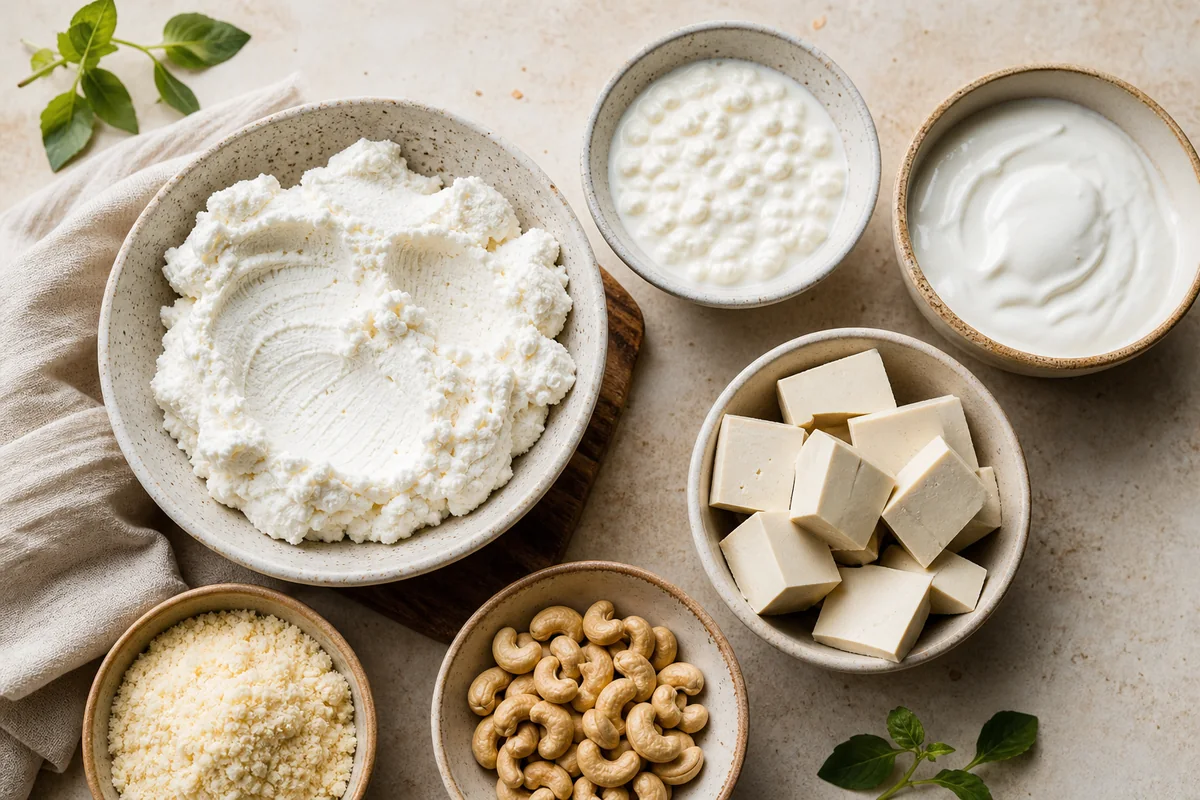
The best ricotta cheese substitute depends on your dish. Greek yogurt (strained) and blended cottage cheese are the closest matches for baked fillings. Mascarpone suits desserts. Cream cheese works for dense spreads. Silken tofu is the top dairy-free pick. Match texture first, then adjust moisture before mixing.
5 Best Ricotta Cheese Substitutes Ranked by Texture
Not every ricotta swap handles every job. The table below gives you a fast reference before you read into each option.
| # | Substitute | Best For | Ratio | Key Note |
|---|---|---|---|---|
| 1 | Greek Yogurt (strained) | Both | 1:1 | Strain 20-30 min first |
| 2 | Cottage Cheese (blended) | Both | 1:1 | Blend until fully smooth |
| 3 | Mascarpone | Sweet | 1:1 | Reduce added sugar |
| 4 | Cream Cheese (softened) | Savory | ¾:1 | Thin with splash of milk |
| 5 | Silken Tofu (blended) | Both | 1:1 | Add lemon for brightness |
Each option below covers ratio, prep adjustments, and where it falls flat so you can pick with confidence.
1. Greek Yogurt
Full-fat, strained Greek yogurt is the closest match ricotta has in most refrigerators. It shares the same soft spoonability and a mild tang that works in both sweet and savory contexts.
Straining it for 20-30 minutes over a fine-mesh strainer or cheesecloth brings the texture much closer to ricotta's body. Without that step, the extra liquid will weep into your filling during baking.
- Ratio: Use 1:1. Start there and thin only if your batter looks stiff.
- Moisture control: Always strain before using in baked dishes. Skip straining only for sauces.
- Best uses: Lasagna filling, stuffed shells, cannoli cream, lemony pound cake.
- Taste note: The tang is noticeable. It reads as brightness in sweet dishes, but can overpower mild savory ones.
Greek yogurt's yogurt flavor profile is worth understanding before you commit it to a delicate dish. Skip if your recipe needs neutral sweetness and zero tang, like a simple cheese-only filling.
2. Cottage Cheese (Blended)
Cottage cheese has a similar mild tang and comparable fat content to ricotta. The curd texture is the only barrier, and a blender removes it completely in under a minute.
Blend on high for at least 45 seconds. If it still looks grainy, go another 30.
A little this mildly tangy curd blended smooth is indistinguishable from ricotta in a baked ziti.
- Ratio: 1:1. Drain for 5 minutes first if it looks very wet in the container.
- Blending time: At least 45 seconds on high. Check texture and continue if needed.
- Best uses: Ravioli stuffing, baked pasta fillings, savory dips, layered casseroles.
- Texture result: Silky and thick once properly blended. Holds structure in a baked dish.
Skip if you cannot blend it smooth or need a completely dairy-smooth mouthfeel without any faint curd memory.
3. Mascarpone
Mascarpone is richer and slightly sweeter than ricotta, with almost no tang. It is a strong swap for dessert fillings but a poor one for savory dishes that need that gentle acid note.
Use it at a 1:1 ratio. Because it is denser and sweeter, you may want to reduce added sugar in your recipe by about 1-2 tbsp.
Mascarpone vs. Ricotta
Works for: cheesecake-style fillings, tiramisu layers, sweet crepes, pastry cream blends, any dessert where creaminess matters more than tang
Skip if: your dish relies on ricotta's slight sourness, like savory stuffed pasta or a lemony savory dip
Understanding rich Italian cream cheese notes helps you decide how much sweetness to pull back before baking.
- Ratio: 1:1 for most dessert applications.
- Sweetness adjustment: Reduce added sugar by 1-2 tablespoon in very sweet recipes.
- Acidity fix: Add a tiny squeeze of lemon juice if your dish needs a hint of tang.
- Best uses: Cheesecake filling, cannoli, baked tart centers, layered pastry cream.
4. Cream Cheese
Cream cheese is denser than ricotta and carries almost no tang. You need to soften it fully before mixing, or it will leave lumps in your filling that baking won't fix.
Use a ¾:1 ratio to keep the filling from feeling heavy. If you need a softer, more spoonable consistency, stir in a small splash of milk, about 1 tablespoon at a time, until it reaches a ricotta-like dollop texture.
The result is smooth and holds well in stored spreadable cheese applications like baked dips or quick no-cook mixes.
Cream cheese performs best in dense, baked dips, spread-style fillings, and layered cold applications where you want creaminess without any graininess. It is also forgiving in recipes that use eggs, since the fat content stays stable under heat. Skip if you want the lighter, airier texture that ricotta gives a delicate baked good like a soufflé or a fluffy cheesecake.
5. Silken Tofu
Silken tofu blended smooth is the most reliable dairy-free ricotta substitute for texture. It has almost no flavor on its own, which means you control the result entirely.
Blend it on high until completely smooth, which takes about 60 seconds. Then add a squeeze of lemon juice, roughly 1 teaspoon per cup, and a small pinch of salt to mimic ricotta's mild brightness.
You can find more on storing soft fresh cheeses for context on how quickly blended substitutes should be used.
- Ratio: 1:1. No draining needed. Blend longer to tighten texture rather than straining.
- Acidity: Add 1 teaspoon lemon juice per cup of tofu. Taste and adjust before mixing into your recipe.
- Salt balance: A small pinch of salt sharpens the flavor and reduces the neutral "blank" quality.
- Best uses: Dairy-free spreads, cream-style pasta sauces, dessert fillings, layered dips.
Skip if you need a strong dairy flavor for savory dishes. Tofu simply cannot replicate the milky depth that ricotta carries in a slow-cooked sauce.
Making Ricotta Substitutes Work Every Time
The biggest reason a ricotta substitute fails is moisture, not flavor. Baked fillings need a substitute that holds its structure, and any extra liquid will pool at the bottom or make a soggy center.
Before you mix anything in, check whether your chosen substitute looks wetter than standard ricotta and handling fresh soft cheese properly is part of that discipline. Drain, strain, or blend longer as your first fix.
- Texture: If your substitute is grainy, blend longer rather than adding more liquid. Extra liquid compounds the problem.
- Moisture: Strain yogurt or blended cottage cheese for at least 5-20 minutes before using in any baked dish. A wet filling stays wet.
- Tang balance: Add lemon juice in small increments, starting with ½ tsp. Ricotta's tang is subtle. You want brightness, not sourness.
For a fast side-by-side check on how two common options compare, the soft cheese comparison guide breaks down the differences in fat, texture, and taste that affect substitution decisions.
Frequently Asked Questions
Strained full-fat Greek yogurt and blended cottage cheese are the two best options for baked fillings. Both hold structure at 1:1 when properly drained or blended smooth before mixing.
Yes, but strain it first for 20-30 minutes. Unstrained Greek yogurt releases liquid during baking and makes the layers watery.
Blend it on high for 45-60 seconds until completely smooth, then add a small pinch of salt. The curd texture disappears and the flavor reads nearly identical to ricotta.
Generally no. Mascarpone is sweeter and lacks ricotta's tang, so savory dishes can taste off. Add a small squeeze of lemon juice if you have no other option.
Silken tofu blended smooth with lemon juice and a pinch of salt is the best dairy-free option. It matches ricotta's creamy, spoonable texture at a 1:1 ratio.
5 Best Ricotta Cheese Substitutes for Better Results
Ingredients
Equipment
Method
- Identify your use: baked filling (needs structure), stirred sauce (needs smoothness), or spread (needs spoonable creaminess).
- Choose the substitute by texture: strain yogurt or blend cottage cheese until smooth; use mascarpone for rich dessert fillings.
- Measure by the listed ratio. If the substitute is looser (yogurt/tofu), drain/strain or blend longer so it holds in your dish.
- Taste and adjust: add a small pinch of salt for tang balance, or a tiny squeeze of lemon if you need brightness.
- Proceed with your recipe. For baking, press out extra moisture from any wetter substitute to prevent a watery center.
Notes
- Ricotta varies by brand—if yours is watery, your substitute may need straining to perform similarly.
- For pasta fillings and lasagna, prioritize moisture control to avoid a runny bake.
Tried this recipe?
Let us know how it was!
Carrie is a food writer and editor with more than 15 years of experience. She has worked for some of the biggest names in the food industry, including Bon Appétit, Food & Wine, and Martha Stewart Living.
As the Editor in Chief of EpicureDelight, Carrie oversees all of the content on the site. She also manages the team of contributing writers and editors, who help to create delicious recipes, helpful tips, and informative articles that you’ll find on the site.
A native of the Chicago area, Carrie is passionate about all things food. She loves trying new restaurants and experimenting with new recipes in her kitchen. She’s also a graduate of the Culinary Institute of America, so she knows a thing or two about food!