Skim milk's job in most recipes is quiet but specific: liquid volume, a little protein, and almost no fat to interfere with structure. Choosing the right skim milk substitute matters more than people expect, because the wrong swap can add sweetness, change browning, or make a sauce break.
The best choice really does depend on the recipe's role. For cooking (soups, sauces, reductions), you mainly need a neutral liquid that won't turn the pot sweet.
For baking (muffins, pancakes, cakes), you need something with enough protein and body to help structure set.
Skip any substitute here if you're tracking the exact calorie or fat count. Most swaps are nutritionally close but not identical.
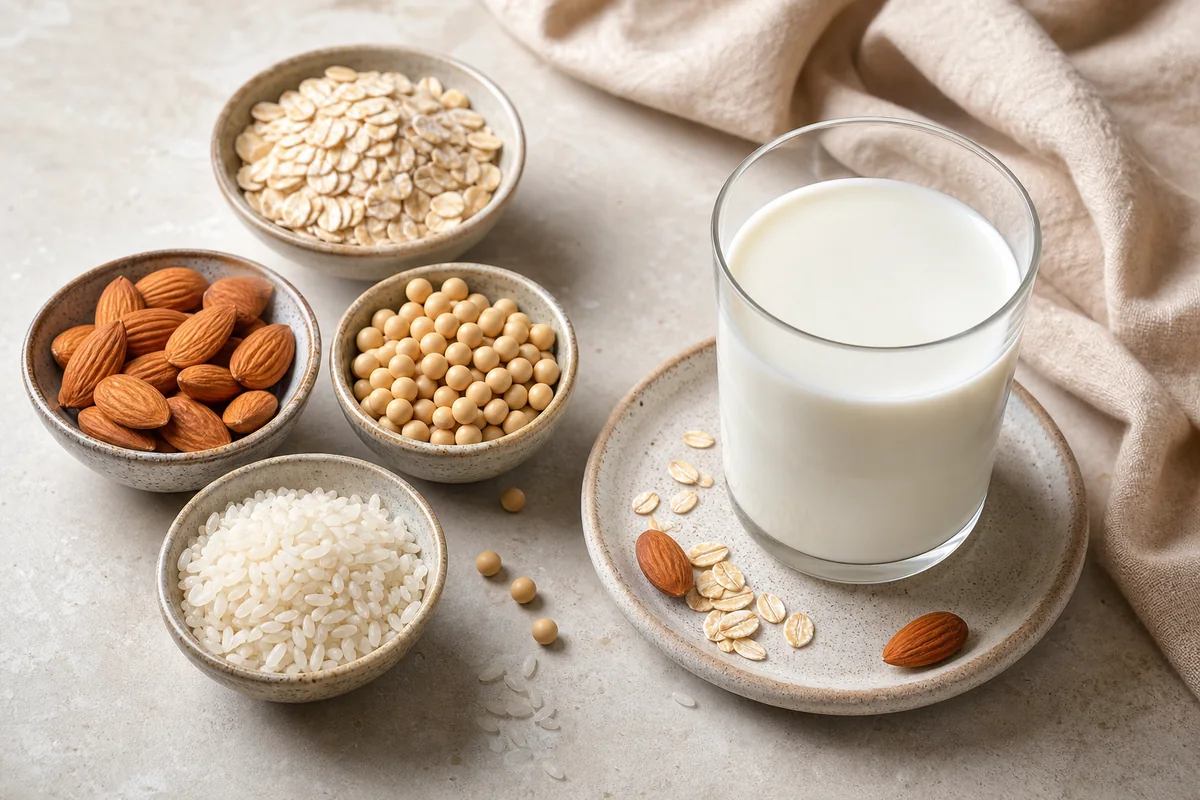
The closest dairy swap is diluted 2% milk. For plant-based baking, unsweetened soy milk holds structure best. Oat milk and cashew milk work with thinning. Thinned Greek yogurt adds tang and protein. Milk powder mixed with water is the most reliable emergency option.
Best Skim Milk Substitutes by Use (Baking + Cooking)
The table below gives you a fast reference for all five swaps. Scan the "Best For" column first, then read the matching H3 section for thinning ratios and any caveats.
Skip this table if your recipe specifically needs buttermilk. That's a different swap entirely, and these substitutes won't replicate buttermilk's acid or rise reaction.
| # | Substitute | Best For | Ratio | Key Note |
|---|---|---|---|---|
| 1 | 2% Milk (diluted) | Both | 1:1 | Thin with water first |
| 2 | Soy Milk (unsweetened) | Both | 1:1 | Best plant protein match |
| 3 | Oat Milk (unsweetened) | Baking | 1:1 | Dilute to cut thickness |
| 4 | Greek Yogurt (thinned) | Baking | ¾:1 | Whisk smooth before adding |
| 5 | Milk Powder Slurry | Both | 1:1 | Whisk until fully dissolved |
5 Skim Milk Swaps Ranked by Result
1. 2% Milk (Diluted)
Diluting 2% milk is the easiest route to skim-milk behavior. The extra fat in 2% milk is real but small; adding water pulls the body back down to skim's leaner texture, which matters in pancake batters and light cream sauces where fat-richness can shift the mouthfeel.
For anyone curious about this lean dairy profile, dilution gets you the closest match without buying a separate carton.
- Ratio: Mix ¾ cup 2% milk with ¼ cup water to approximate 1 cup of skim milk
- Best uses: Pancakes, béchamel, quick breads, and any recipe calling for milk as the primary liquid
- Browning: Almost identical to skim; expect the same golden color in baked goods
2% Milk (Diluted)
Works for: pancake batter, muffins, light sauces, and any dairy-friendly recipe needing mild flavor and predictable rise
Skip if: you're lactose-intolerant or avoiding dairy entirely
2. Unsweetened Soy Milk
Soy milk is the most structurally reliable plant-based option here. Its protein content is close enough to cow's milk that cakes and muffins set without issue, and the flavor of unsweetened soy is mild enough that most baked goods won't taste different.
If you're weighing other plant-based options against soy, note that soy wins on protein and baking lift.
- Ratio: Use 1:1 with skim milk; if it pours thicker than water, add 1-2 tablespoon water per cup
- Flavor note: Some brands have a faint beany edge; heat reduces it, but taste before adding to delicate recipes
- Curdling: Soy milk can curdle in acidic batters; add it at room temperature and mix gently
- Skip if: Your recipe is sensitive to soy flavor or you have a soy allergy
3. Oat Milk (Unsweetened, Diluted)
Oat milk is naturally thicker than skim. The starch in oats that makes it creamy can also make baked goods slightly gummy if you use it straight at a 1:1 ratio.
Knowing how to store opened oat milk properly is worth checking before you thin a fresh carton, since oxidized oat milk can taste off-flat in batter.
- Thinning ratio: Mix ¾ cup oat milk with ¼ cup water per cup of skim milk called for
- Best uses: Muffins, quick breads, and sauces where a slightly creamy note is acceptable
- Avoid in: Very delicate crêpe batters or neutral soups where sweetness would be noticeable
- Skip if: You need very low sweetness in a savory sauce or a strictly neutral batter
4. Thinned Plain Greek Yogurt
Greek yogurt carries more protein than skim milk and a real tang, which actually helps quick breads and muffins. The problem is thickness and temperature: add cold, un-thinned yogurt to hot batter and it splits.
Thin it first with water to a pourable consistency, closer to the sharp, cool tang of plain kefir, then bring it to room temperature before mixing.
Use ¾ cup of plain Greek yogurt whisked with ¼ cup water to replace 1 cup skim milk. The tang is noticeable in mild recipes like vanilla cake but pleasant in banana bread or cornbread.
- Mixing method: Whisk yogurt and water together first, then fold into batter last
- Temperature rule: Always use room-temperature yogurt to reduce curdling risk
- Best uses: Muffins, quick breads, pancakes, and cold dressings
- Skip if: The dish is cooked at very high heat or held hot for a long time
5. Milk Powder Slurry
Mixing powdered milk with water gives you something genuinely close to reconstituted skim milk. The protein structure, the mild dairy flavor, and the liquid volume all behave the way skim does in batters and sauces.
Before you mix your slurry, it's worth checking how long powdered milk stays fresh, because old powder can taste slightly stale.
The key to a good slurry is full dissolution. Any clumps left in the mix will create grainy spots in your final bake.
- Ratio: Whisk 3 tablespoon powdered milk into 1 cup warm water to replace 1 cup skim milk
- Mixing tip: Use warm (not hot) water and whisk for 30 seconds, then let sit 1 minute before adding to batter
- Storage: Use the slurry immediately; mixed slurry doesn't keep well
Milk Powder Slurry
Works for: any recipe needing skim milk when fresh milk isn't available; reliable in baking and sauces
Skip if: you don't have powdered milk on hand or the powder is past its best-by date
Making a Skim Milk Substitute Work (No Surprises)
The biggest variable across all these swaps is consistency. Skim milk pours thin; most substitutes don't, and a thicker liquid changes how a batter hydrates and how a sauce reduces.
Getting the texture right before the liquid hits the bowl saves you from guessing mid-recipe. If you're unsure how a plant-based option behaves across different recipe types, checking flavor notes for plant milk can help you decide before you commit a whole batch.
- Thin before you measure: Adjust consistency to match skim's pourability first, then measure the thinned amount your recipe calls for
- Check sweetness: Oat and some cashew milks are lightly sweet; reduce added sugar by 1 teaspoon per cup if the recipe is delicate
- Test temperature: Add any cold substitute to room-temp batter; sudden cold can seize a butter-based batter or curdle a yogurt swap
Frequently Asked Questions
Yes, and it's the easiest dairy swap. Thin it by mixing ¾ cup 2% with ¼ cup water per cup of skim to keep fat and body closer to what skim delivers.
Unsweetened soy milk is the strongest choice because its protein level supports baking structure. Use it 1:1 and thin slightly if the brand pours thick.
It can, especially if added cold or to a very hot mixture. Always thin it with water, bring it to room temperature, and whisk it in gently.
Mix ¾ cup unsweetened oat milk with ¼ cup water. Stir and pour a little to check consistency; it should run almost as thin as water.
Yes. Whisk 3 tablespoons of powdered milk into 1 cup of warm water until fully dissolved. It behaves nearly identically to skim in baking and sauces.
5 Best Skim Milk Substitutes Worth Trying
Ingredients
Equipment
Method
- Identify your recipe role for skim milk: main liquid (baking batter), acid + tenderness (quick breads), or smoothing (sauces).
- Choose the closest match from the table (dairy low-fat diluted first; then unsweetened soy/oat; then yogurt if you can thin).
- Use the listed ratio. If your substitute is thicker than skim, thin with water in small splashes until it pours similarly.
- For yogurt-based swaps, add to room-temp batter and mix well to reduce curdling; bake per your recipe timing.
- Taste-check once baked or simmered: if it tastes flat, add a pinch of salt; if it seems too heavy, thin slightly next time.
Notes
- Baking: aim for a pourable, watery consistency like skim milk.
- Sauces: heat gently and stir continuously to avoid curdling with dairy-tang substitutions.
Tried this recipe?
Let us know how it was!
Carrie is a food writer and editor with more than 15 years of experience. She has worked for some of the biggest names in the food industry, including Bon Appétit, Food & Wine, and Martha Stewart Living.
As the Editor in Chief of EpicureDelight, Carrie oversees all of the content on the site. She also manages the team of contributing writers and editors, who help to create delicious recipes, helpful tips, and informative articles that you’ll find on the site.
A native of the Chicago area, Carrie is passionate about all things food. She loves trying new restaurants and experimenting with new recipes in her kitchen. She’s also a graduate of the Culinary Institute of America, so she knows a thing or two about food!