
That specific crunch snow peas bring to a fast stir-fry is hard to fake. The pod stays whole, snaps cleanly, and keeps a mild sweetness that doesn't compete with the sauce.
A good snow pea substitute matches that behavior: it holds its shape under high heat, adds brightness, and doesn't turn limp in 30 seconds. The right choice depends on three things.
Crunch first, then sweetness, then how quickly each vegetable cooks.
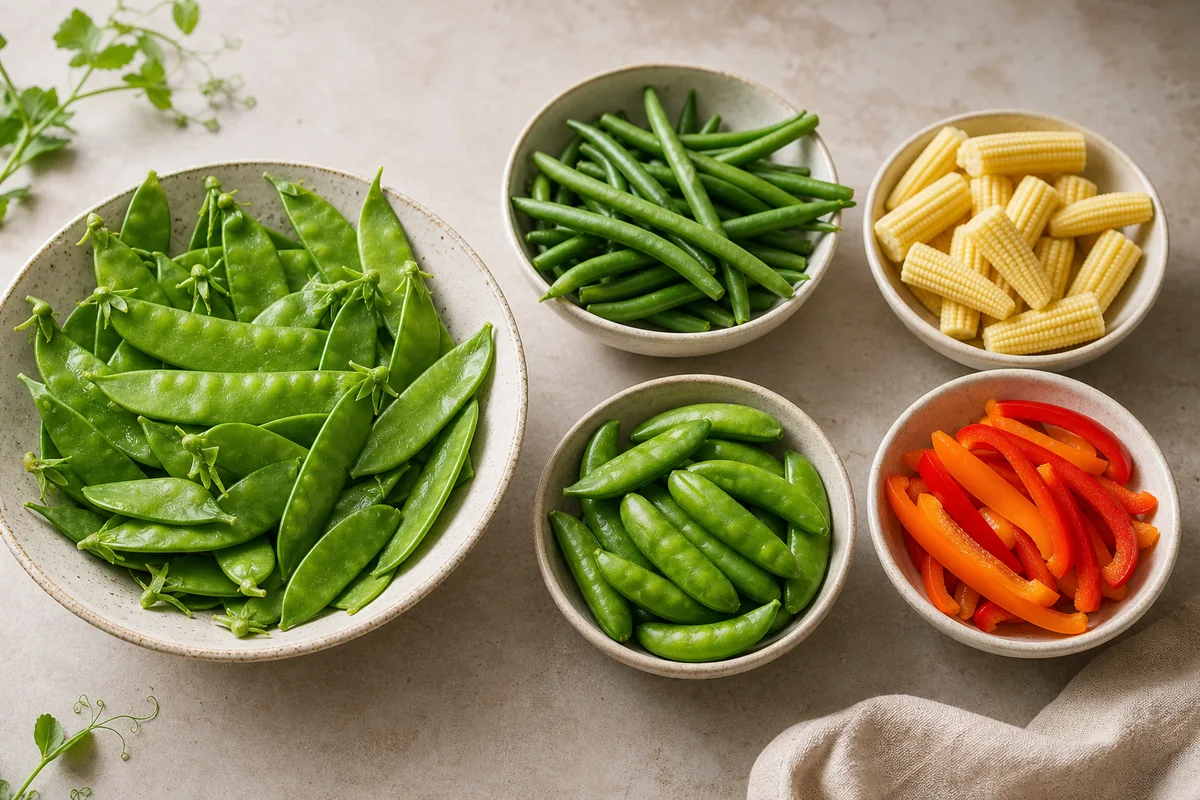
For the closest snow pea swap, reach for snap peas or sugar snap peas first. Both keep their pod structure and mild sweetness under fast heat. For a crunchier, less sweet option, blanched thin green beans work well. Broccolini and baby corn round out your options when nothing else is available.
5 Best Snow Pea Swaps for Stir-Fries and Sautés
The table below ranks each substitute by texture first, then sweetness, then cook-time behavior. That order matters because a stir-fry moves fast.
You can always adjust seasoning at the end, but you can't rescue a mushy vegetable.
In fast stir-fries, snow peas go in during the final 1-2 minutes. Keep that timing rule for every swap below.
If you're curious how crisp Asian greens behave differently by variety, that page breaks it down in detail.
| # | Substitute | Best For | Ratio | Key Note |
|---|---|---|---|---|
| 1 | Snap Peas | Both | 1:1 | Closest crunch and pod bite |
| 2 | Sugar Snap Peas | Both | 1:1 | Slightly sweeter, add late |
| 3 | Thin Green Beans | Cooked | ¾:1 | Blanch first for best bite |
| 4 | Broccolini | Cooked | 1:1 | Cook until just bright green |
| 5 | Baby Corn | Cooked | 1:1 | Neutral; season well |
1. Snap Peas
Snap peas are the single closest swap to snow peas. Both are whole edible pods, both have that satisfying pop, and both keep mild sweetness without dominating the sauce.
The key difference is thickness. Snap peas are plumper, so they take about 15% longer to cook through at the same temperature.
Add them a minute earlier than you would snow peas, or slice them on a sharp diagonal to thin the cross-section.
Snap Peas
Works for: stir-fries, quick sautés, noodle dishes, fried rice
Skip if: your recipe needs a very delicate, flat pea flavor-snap peas taste slightly more pronounced when overcooked
- Prep: Trim the stem end and pull the string if present
- Cut: Leave whole for max crunch, or slice on the diagonal for faster cooking
- Timing: Add 1 minute earlier than snow peas would go in
- Heat: High, fast-30 to 60 seconds toss time in a hot wok or skillet
2. Sugar Snap Peas
Sugar snap peas look almost identical to regular snap peas but carry a noticeably higher natural sweetness. That sweetness is an asset in soy-ginger or hoisin-based sauces, where it rounds out salty notes.
If you want to read more about leftover stir-fry storage, that guide also covers how quickly pod vegetables degrade after cooking.
- Prep: Same as snap peas-trim and de-string
- Timing: Add in the last 90 seconds; they soften faster than snap peas
- Raw option: Toss in off-heat for a cool crunch contrast
- Ratio: 1:1 by weight or volume
Skip if: your dish relies on a neutral green-vegetable profile. Sugar snap peas push sweetness forward, which can feel out of place in ginger-scallion or garlic-only sauces.
3. Thin Green Beans
Green beans are a different structure than pea pods. They're solid, not hollow, which means they need a little help to reach that crisp-tender bite snow peas have naturally.
A quick 45-second blanch in boiling salted water, followed by an ice bath, closes that gap significantly. When you're swapping green vegetables in fast-cook dishes, blanching is the step most people skip and later regret.
Thin Green Beans (Blanched)
Works for: stir-fries with thick sauces, noodle dishes, anything where you want vegetable texture without pod sweetness
Skip if: you don't have time to blanch-raw green beans take too long in a hot pan and can turn chewy before the rest of the dish finishes
- Cut: Slice diagonally into 2-inch pieces to mimic snow pea shape
- Blanch: 45 seconds in boiling salted water, then immediately into ice water
- Pan timing: Add in the last 60 seconds-they're already par-cooked
- Ratio: Start at ¾ the amount and add more to taste; green beans are denser
4. Broccolini
Broccolini brings a bright green color and a satisfying stem bite that works well in stir-fries. The flavor is more assertive than snow peas-it has broccoli notes, a slight bitterness-but it plays well with garlic, sesame, and oyster sauce.
If you're already considering other substitutes, choosing a leafy green swap may open up more options depending on your dish.
- Stems first: Add stems to the pan 1-2 minutes before the florets
- Florets last: They cook in 60-90 seconds and go limp fast if overdone
- Cut: Split thicker stems lengthwise so they cook evenly with the florets
- Best sauces: Garlic-based, oyster sauce, black bean-bold flavors that complement the broccoli note
Skip if: your recipe depends on the specific pea-pod flavor. Broccolini won't fake that. It's a good vegetable on its own terms, not a neutral stand-in.
5. Baby Corn
Baby corn is the most neutral option here. It has a firm, snappy texture and almost no sweetness of its own, which makes it a blank canvas.
That's useful when the sauce is doing all the flavor work. For more on how earthy bean flavor compares to corn-based swaps, that page covers the contrast well.
| Use | Ratio | Notes |
|---|---|---|
| Stir-fry (whole) | 1:1 | Add last 90 seconds; toss off-heat |
| Stir-fry (halved) | 1:1 | Cut lengthwise for more surface contact with sauce |
| Noodle dish | ¾:1 | Slice into coins; less dominant than whole cobs |
- Drain well: Canned baby corn holds water; pat dry before it hits the pan
- Season up: Add a splash of soy or a pinch of salt directly on the corn before tossing
- Timing: Last 90 seconds maximum-it only needs to warm through and pick up color
Skip if: the dish is delicate and sauce-light. Baby corn without seasoning can taste flat, and it won't bring the sweetness or freshness that snow peas add to simpler preparations.
Making Snow Pea Substitutes Work Every Time
The single rule that covers every swap on this list: match the crunch, then add it late. Every substitute above loses texture if it sits in a hot pan too long.
The goal is crisp-tender, not soft-cooked. Start with the substitute that best fits your sauce weight-pod vegetables for lighter sauces, green beans or broccolini for heavier ones.
- For pod swaps (snap peas, sugar snap peas): No prep needed beyond trimming. Add in the last 60-90 seconds and toss off-heat.
- For denser swaps (green beans, broccolini stems): Either blanch briefly before the pan or add 1-2 minutes earlier than you would snow peas.
- For neutral swaps (baby corn): Pat dry, season directly, and add last. A small splash of rice vinegar or lime at the finish can brighten a flat swap fast.
Frequently Asked Questions
Yes, but blanch them first for 45 seconds in salted water and shock in ice water. Without that step, raw green beans take too long in the pan and turn chewy before the dish is done.
Snap peas are the closest match in both texture and pod structure. They have the same clean snap and hold up well under high-heat stir-fry conditions at a 1:1 ratio.
Only if you're using a denser vegetable like green beans or thick broccolini stems. Pod swaps like snap peas go straight into the pan without any pre-cooking.
Add them in the last 60-90 seconds of cooking, then toss off-heat. Excess time in a sauce-heavy pan is the main reason vegetable substitutes lose their bite.
Yes, noticeably so. Sugar snap peas have more natural sugar than snow peas, so pair them with bold savory sauces-soy, hoisin, or oyster-to keep the dish balanced.
5 Best Snow Pea Substitutes Worth Trying
Ingredients
Equipment
Method
- Choose your target texture: for the classic snow pea bite, pick a pea pod (snap peas or sugar snap peas).
- If using a tougher vegetable (green beans), cut thinner and blanch 30–60 seconds before stir-frying for a closer crunch.
- Use the ratio in the table: if your substitute is less sweet or less delicate, start with ¾ amount and adjust seasoning.
- Finish by cooking time: add softer substitutes in the last 1–2 minutes, then toss off-heat so they stay crisp.
- Taste and balance: brighten with a small splash of acid (like rice vinegar or lime) if the swap tastes flat.
Notes
- Most snow pea recipes rely on pod crispness—short cooking is the key to keeping bite.
- If your substitute is wetter (like broccolini), cook slightly less and finish with quick tossing off-heat.
Tried this recipe?
Let us know how it was!
Carrie is a food writer and editor with more than 15 years of experience. She has worked for some of the biggest names in the food industry, including Bon Appétit, Food & Wine, and Martha Stewart Living.
As the Editor in Chief of EpicureDelight, Carrie oversees all of the content on the site. She also manages the team of contributing writers and editors, who help to create delicious recipes, helpful tips, and informative articles that you’ll find on the site.
A native of the Chicago area, Carrie is passionate about all things food. She loves trying new restaurants and experimenting with new recipes in her kitchen. She’s also a graduate of the Culinary Institute of America, so she knows a thing or two about food!



