
That thick, sweet pour of condensed milk does a lot of heavy lifting. It sweetens, it thickens, and it gives desserts that dense, creamy body that nothing else quite matches without a little planning.
The good news is that a solid sweetened condensed milk substitute is easier to pull off than most people expect.
A good swap must cover three jobs at once: sweetness, creaminess, and thickness. Homemade reduced milk and evaporated milk plus sugar come closest for baking. Dulce de leche works 1:1 with a caramel note. Greek yogurt and coconut cream handle chilled and no-bake desserts well.
Sweetened Condensed Milk Substitutes (Pick the Closest Swap)
The right swap depends on texture and function, not just sweetness. Use this table to match your recipe type before choosing.
| # | Substitute | Best For | Ratio | Key Note |
|---|---|---|---|---|
| 1 | Homemade Reduced Milk | Baking | 1:1 | Simmer to spoon-coat |
| 2 | Evaporated Milk + Sugar | No-Bake | 1:1 | Dissolve sugar fully |
| 3 | Dulce de Leche | Both | 1:1 | Adds caramel flavor |
| 4 | Greek Yogurt + Sugar | Chilled | ¾:1 | Chill for best set |
| 5 | Heavy Cream + Powdered Sugar | Filling | 1:1 | Whip for thickness |
| 6 | Coconut Cream + Sugar | Dairy-Free | 1:1 | Light coconut note |
1. Homemade Reduced Milk
This is the substitute that behaves most like the real thing in a hot oven. You simmer whole milk with sugar until it thickens to a sticky, spoon-coating consistency, and the result handles baked cheesecakes, fudge, and key lime pie without any surprises.
- Base ratio: Combine 1 cup whole milk with ⅓ cup granulated sugar in a saucepan.
- Simmer time: Cook on low heat for 35 to 45 minutes, stirring every few minutes to prevent scorching.
- Yield check: You should end up with roughly ½ cup of thick syrup, which equals one standard can.
- Flavor adjustment: Add ½ teaspoon vanilla extract once off the heat for a closer match.
If you need something for a homemade flan, check out this approach to making caramel flan before committing to your cooking method.
Skip if: You're short on time. This substitute takes nearly an hour and can't be rushed without burning.
2. Evaporated Milk + Sugar
Evaporated milk is already reduced and concentrated, which gives it a head start on the thickness you need. Stir in sugar and you get something close enough for most no-bake fillings and icebox desserts.
For anyone curious about using evaporated milk from a can you've had in the pantry a while, check the date first since older cans can affect the final flavor.
- Starting ratio: Use 1 cup evaporated milk with 1 ¼ cups granulated sugar, stirred over low heat until fully dissolved.
- Sweetness note: Taste before using. Some recipes call for less sugar if other sweet components are present.
- Too thin fix: Simmer the mixture for 5 to 8 more minutes until it thickens slightly before chilling.
- Best in: No-bake cheesecakes, icebox pies, caramel sauces, and cold puddings.
Skip if: Your recipe bakes at high heat and needs a thick set. This mixture stays looser than the homemade reduced version.
3. Dulce de Leche
Dulce de leche is essentially sweetened condensed milk that has been cooked until it caramelizes. The texture is nearly identical, thick, pourable, and dense.
The difference is that it carries a caramel flavor that will show up in whatever you make.
That caramel note is wonderful in chocolate desserts, coffee-based recipes, and anything with toffee or butterscotch. In vanilla or citrus recipes, though, it can muddy the flavor.
Use the 1:1 ratio but cut any added sugar in the recipe by about 2 tablespoons per cup, since dulce de leche is already sweeter than plain condensed milk.
Skip if: Your recipe needs a clean, milky sweetness without any caramel undertone, like a classic vanilla tres leches.
4. Greek Yogurt + Sugar
Full-fat Greek yogurt is thick and tangy, which makes it a decent stand-in when you need body and creaminess in a chilled dessert. The tang fades once sugar and a pinch of salt are mixed in.
It won't behave like condensed milk in a hot oven, but for cheesecake fillings, cold mousses, and no-bake bars, it holds up well.
Greek Yogurt + Sugar
Works for: Chilled cheesecakes, cold fillings, no-bake bars, and parfait layers
Skip if: Recipe bakes above 325°F or requires a firm, sliceable set without overnight chilling
When you need to swap the yogurt itself too, these tangy dairy swaps give you several backup options.
- Ratio: Use ¾ cup full-fat Greek yogurt per 1 cup condensed milk called for.
- Sweeten it: Stir in ½ cup powdered sugar and a pinch of salt until completely smooth.
- Chill time: Always refrigerate the finished mixture for at least 2 hours before using in a no-bake crust.
Avoid adding this mixture to anything above low heat. It will curdle and separate once the temperature climbs past about 160°F.
5. Heavy Cream + Powdered Sugar
Heavy cream whipped with powdered sugar gives you an airy, sweet thickness that works well in frostings and chilled fillings. It is not a match for baked recipes that need to set, but for icebox cakes, tart toppings, and cream-based fillings, it delivers both sweetness and body.
For even more options if you're out of cream too, rich cream alternatives covers the best swaps.
- Ratio: Whip 1 cup heavy cream with ½ cup powdered sugar to soft peaks for a pourable filling texture.
- Thicker version: Whip to stiff peaks and fold into your recipe for a denser, scoopable consistency.
- Chill before using: Refrigerate the whipped mixture for 30 minutes before assembling no-bake desserts.
- Baking warning: Do not use this in any recipe that bakes longer than 20 minutes. It breaks down under sustained heat.
Skip if: You need the substitute to behave like a liquid binder in a baked custard or fudge. This won't hold.
Making the Substitute Work (Ratios + Texture Fixes)
Most substitutes fail not because they taste wrong but because the texture is off before the recipe even comes together. A thin swap in a no-bake cheesecake means a soupy slice.
The fix is usually simple: chill longer, simmer a few extra minutes, or adjust the ratio by 2 tablespoons. Understanding evaporated milk comparisons can also help you decide how far to push a dairy-based swap when thickness really matters.
- Thickness check: Dip a spoon into your substitute. If it coats the back and a line holds when you drag a finger across it, the consistency is close enough for most recipes.
- Sweetness balance: Taste your substitute before adding it. If it tastes sweeter than expected, reduce any other sugar in the recipe by 1 to 2 tablespoons per cup used.
- Bake vs. no-bake: For baked desserts, use only the homemade reduced milk or dulce de leche. For no-bake, any substitute on the list works as long as you allow full chill time before cutting or serving.
Frequently Asked Questions
Homemade reduced milk (whole milk simmered with sugar until thick) is the closest match. It sets properly in baked cheesecakes, fudge, and key lime pie at a 1:1 ratio.
Not directly. Evaporated milk needs sugar stirred in and a short simmer to reach the right sweetness and thickness. Straight from the can, it is too thin and not sweet enough.
Simmer the mixture over low heat for 5 to 10 more minutes, stirring constantly. For no-bake recipes, extended refrigeration (4 to 6 hours) also thickens the texture noticeably.
Yes. Greek yogurt separates above roughly 160°F. Keep it in cold or room-temperature applications only, and never stir it into a hot custard or sauce.
Full-fat coconut cream plus sugar comes closest in texture and sweetness. Expect a mild coconut note; choose a refined coconut cream brand to keep that flavor as neutral as possible.
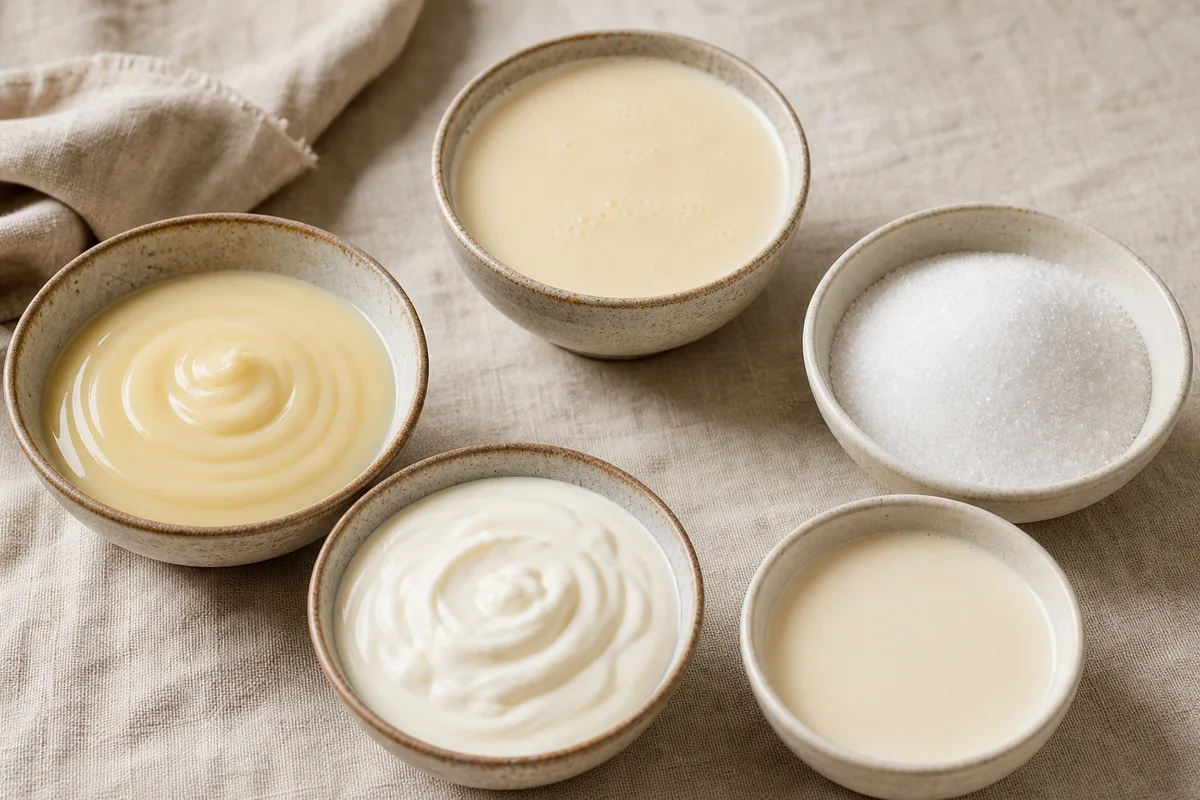
5 Best Sweetened Condensed Milk Substitutes (Quick Swaps)
Ingredients
Equipment
Method
- Identify how your recipe uses sweetened condensed milk (baking set, no-bake thickness, or frosting/filling texture).
- Choose the closest function match from the table below, then start with the listed ratio.
- If your substitute is thinner than expected (common with evaporated milk), simmer briefly or chill to thicken before using.
- Taste and adjust: add a small pinch of salt for balance or a bit more sugar if the final dessert needs more sweetness.
- For baked desserts, aim for a thick, spoon-coating consistency; for no-bake, prioritize chill time for proper set.
Notes
- Ratios are starting points; texture varies by brand and how thick your recipe needs the mixture to be.
- For recipes that must bake and set, prioritize thickened or reduction-based substitutes over thin syrups.
Tried this recipe?
Let us know how it was!
Carrie is a food writer and editor with more than 15 years of experience. She has worked for some of the biggest names in the food industry, including Bon Appétit, Food & Wine, and Martha Stewart Living.
As the Editor in Chief of EpicureDelight, Carrie oversees all of the content on the site. She also manages the team of contributing writers and editors, who help to create delicious recipes, helpful tips, and informative articles that you’ll find on the site.
A native of the Chicago area, Carrie is passionate about all things food. She loves trying new restaurants and experimenting with new recipes in her kitchen. She’s also a graduate of the Culinary Institute of America, so she knows a thing or two about food!



