
Yellow Chartreuse has a flavor that is genuinely hard to replicate. It is sweet but herbal, bright but rounded, and it finishes with a warmth that reads almost like honey filtered through a spice cabinet.
When your recipe calls for it and you do not have a bottle, choosing the right yellow chartreuse substitute depends less on alcohol content and more on matching that herbal-sweet balance.
The liqueur lands around 40% ABV and uses 130 plants, so no single substitute nails every note. But several get close enough that your cocktail or baked good will still taste intentional.
Yellow Chartreuse is a sweet, herb-forward liqueur with a bright golden warmth. The best substitutes match its herbal-sweet balance: use Green Chartreuse (1:1) for the closest spirit match, Benedictine (1:1) for baking, or Domaine de Canton (¾) for a honeyed softness in cocktails.
5 Best Yellow Chartreuse Substitutes Ranked by Use Case
| # | Substitute | Best For | Ratio | Key Note |
|---|---|---|---|---|
| 1 | Green Chartreuse | Both | 1:1 | Add pinch of sugar if bitter |
| 2 | Benedictine | Both | 1:1 | Warmer, less citrus-bright |
| 3 | Domaine de Canton | Cocktails | ¾ | Ginger-forward; use less |
| 4 | Dry Sherry + Honey | Baking | 2:1 mix | No botanical top notes |
| 5 | Bitters + Simple Syrup | Both | 1:1 | Taste and adjust always |
If you want to understand what makes the original so distinctive before choosing, the proper storage window for this aged spirit also affects how bright or muted your bottle tastes. For cocktails, lean toward spirit-based substitutes (rows 1 and 3).
For baking, rows 2 and 4 handle the heat better without turning harsh.
1. Green Chartreuse
Green Chartreuse is the closest swap you will find. It comes from the same monastery recipe with similar plant-forward construction, just dialed up in intensity and bitterness.
Use it at 1:1. If the result tastes darker or sharper than expected, pull back by 1 teaspoon next batch and stir in a small pinch of sugar or a few drops of honey to nudge the sweetness back up.
Green Chartreuse (1:1)
Works for: cocktails needing herbal backbone, baked goods where alcohol depth is welcome, any recipe where botanical complexity matters more than brightness
Skip if: your recipe depends on yellow Chartreuse's lighter golden sweetness and you have no citrus or honey to add back brightness
- Bitterness: Green runs more bitter, so cut the amount by 1 teaspoon if your cocktail already has a bitter base
- Color: It adds green hue, which affects presentation in pale cocktails or light batters
- ABV: Green Chartreuse is 55% vs yellow at 40%; dilute slightly in baking if you want less alcohol impact
If you are weighing whether green is the better base spirit to stock, choosing a full herbal swap for green Chartreuse itself covers situations where you run out of both.
2. Benedictine
Benedictine is widely available and brings a warm botanical sweetness that reads closer to yellow Chartreuse than most people expect. It is made from 27 plants and aged in oak, so it has real complexity without being harsh.
For baking, start at 1:1 and taste the batter before it goes in the oven. If the herbal note feels flat, stir in a small pinch of salt.
That often lifts the botanical character enough without changing the recipe.
- Sweetness level: Benedictine is slightly sweeter; reduce any added sugar in your recipe by about 1 teaspoon per 2 tablespoon used
- Best uses: Cake batters, glazes, warm cocktails, and anything with citrus or honey as a co-ingredient
- Herbal profile: More anise-leaning than yellow Chartreuse; if your recipe is fennel-heavy, taste before adding the full amount
*Skip if:* your recipe depends on yellow Chartreuse's distinctive bright citrus finish. Benedictine reads warmer and deeper, not bright.
3. Domaine de Canton
Domaine de Canton is a ginger-honey liqueur, and it works surprisingly well as a soft stand-in for yellow Chartreuse's sweeter side. It does not replicate the full herbal spectrum, but it covers the honeyed warmth convincingly.
The ginger reads as warmth rather than sharp spice at lower doses. Think of it as a gentler substitute that trades herbal precision for sweetness accessibility.
- Ratio: Use ¾ of whatever the recipe calls for, then taste before adding more
- Cocktail use: Works well in drinks with citrus, elderflower, or gin as a base spirit
- Baking use: Pairs well in spice cakes and citrus glazes; avoid it in recipes with already-strong ginger
*Skip if:* your recipe is ginger-heavy already or the original dish needs a strictly botanical, non-ginger herbal profile.
4. Dry Sherry + Honey
Dry sherry gives you the fortified spirit structure that yellow Chartreuse provides. Honey handles the sweetness.
Neither alone is enough, but the combination creates a usable sweet-fortified base.
The ratio that works best as a starting point is 2 parts dry sherry to 1 part honey. If other fortified wine swaps are also on your shortlist, the same 2:1 mixing logic often applies there too.
Stir the mix well before measuring it into your recipe.
| Use | Ratio | Notes |
|---|---|---|
| Cocktails | 2:1 sherry-to-honey | Add small lemon squeeze; stir before pouring |
| Baking (batters) | 2:1 sherry-to-honey | Reduce additional sweetener by 1 tsp |
| Glazes | 3:1 sherry-to-honey | Honey dominates glazes; use less to avoid cloying finish |
- Too sweet: Pull back the honey by half a teaspoon and add a tiny squeeze of lemon to restore balance
- Too boozy: Use a drier, lower-ABV sherry or reduce the total mix by 1 tablespoon and compensate with a splash of water
*Skip if:* the dish is meant to taste distinctly herbal. Sherry and honey recreate the sweet-fortified body but none of the botanical top notes.
5. Herbal Bitters + Simple Syrup
This is the emergency swap for when your bar cart has nothing else. Herbal bitters handle the bitter-botanical finish, and liquid sweetener options like simple syrup restore the sweetness that keeps the finish from turning sharp.
Mix them 1:1 as your starting point. The result is not identical to yellow Chartreuse, but it is herbal, sweet, and adjustable in real time.
- Too bitter: Add simple syrup one teaspoon at a time, tasting between additions
- Too sweet: Add bitters one or two drops at a time; bitters are concentrated, so go slowly
- Volume note: This mix is non-alcoholic in character, so in cocktails you may want to slightly increase another spirit to keep proof balanced
- Baking note: Works in glazes and marinades; less reliable in batters where you need that fortified spirit warmth to carry through baking
*Skip if:* you cannot taste and adjust before serving. This substitute requires iterative tweaking and does not work on a set-and-forget basis.
Making Yellow Chartreuse Substitutes Work
Getting the substitute right is about knowing which direction to push after your first taste. The bright herbal sweetness of the original comes from a balance of botanical bitterness and honeyed body, and most substitutes will land slightly off on one of those two axes.
For cocktails, mix the drink, taste it, then adjust. For baking, the adjustment window closes once it goes in the oven, so taste before baking.
- Cocktails: If the drink tastes flat or missing an herbal edge, add 1 to 2 dashes of bitters rather than pouring more sweetener; sweetness blunts herbal notes instead of lifting them
- Baking: If the herbal character disappears after baking, stir in a small amount of lemon zest or a pinch of citrus salt next time rather than increasing the substitute; alcohol notes fade in heat but citrus holds
- Both: If a substitute tastes dominant (strong ginger, heavy anise, sharp bitterness), use ¾ of the stated ratio first and build up rather than dialing back later
Frequently Asked Questions
Green Chartreuse is the closest 1:1 replacement. It shares the same herbal spirit family, though it runs more bitter and higher in ABV, so add a small pinch of sugar if the result tastes sharp.
Yes, but reduce it by about 1 teaspoon per 2 tablespoons called for, since green Chartreuse is higher in ABV and more bitter. Taste the batter and adjust sweetness before baking.
Mix herbal bitters and simple syrup at a 1:1 ratio as your starting point. Taste after mixing and nudge bitterness or sweetness one small increment at a time.
At ¾ of the called-for amount, Domaine de Canton reads as warm sweetness rather than sharp ginger. It works well alongside citrus or gin but skews noticeably in simpler drinks.
For too bitter, stir in simple syrup or honey a teaspoon at a time. For too sweet, add herbal bitters by the drop or add a small squeeze of fresh lemon juice.
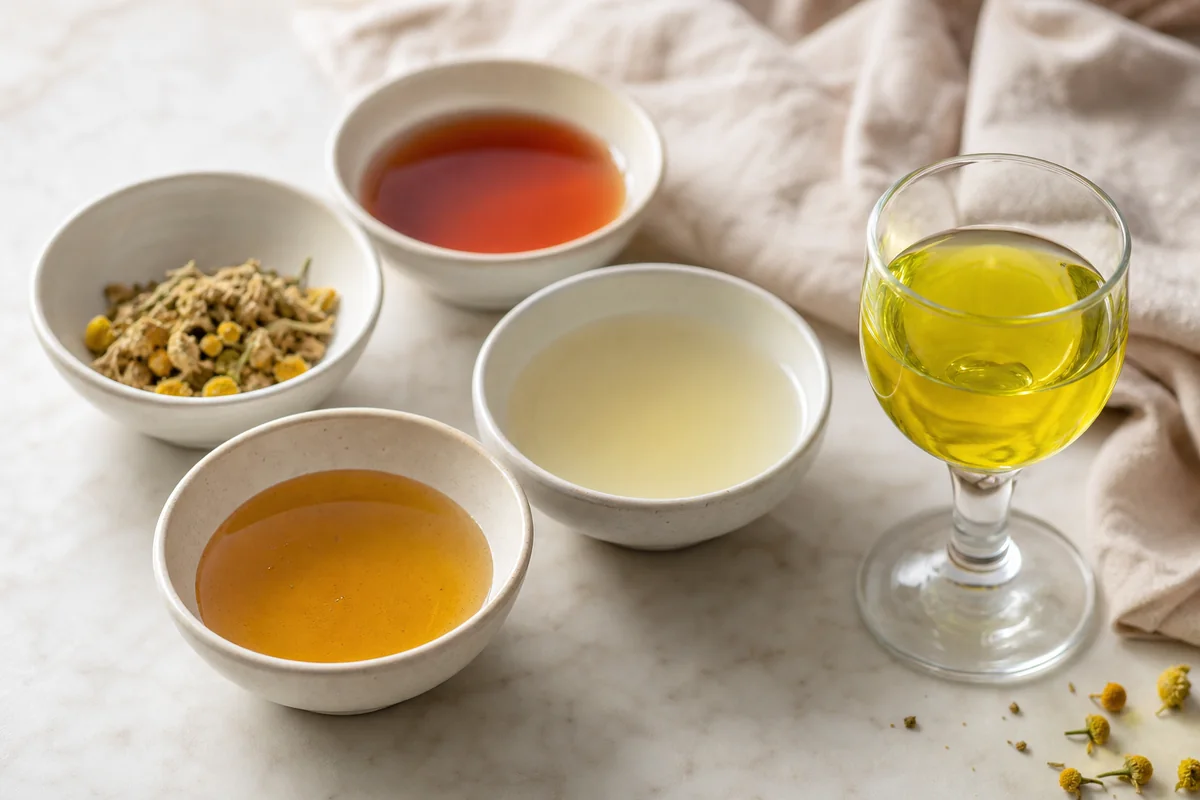
5 Best Yellow Chartreuse Substitutes That Taste Right
Ingredients
Method
- Identify your use case: cocktails need a bright herbal finish, while baking needs balanced sweetness without turning bitter.
- Choose the substitute closest in flavor direction from the list: spirit-forward (chartreuse family), honeyed herbal (ginger/honey), or fortified sweet (sherry + honey).
- Apply the listed ratio first; if your batter/dough becomes too wet or the drink tastes too sweet, reduce the substitute slightly and compensate with a small pinch of salt or a tiny splash of citrus.
- For baking, test after baking: if you miss the herbal brightness, add a small amount of lemon zest or a few drops of bitters next time rather than doubling the liqueur.
- Taste before serving for cocktails; if the finish isn’t herbal enough, add 1–2 dashes of bitters rather than more syrupy sweetener.
Notes
- Yellow Chartreuse is an herbal-sweet spirit; the substitute should preserve both herbal notes and a bright sweet finish.
- Ratios assume you’re substituting the liqueur itself; do not double-count other sweeteners in the recipe.
Tried this recipe?
Let us know how it was!
Carrie is a food writer and editor with more than 15 years of experience. She has worked for some of the biggest names in the food industry, including Bon Appétit, Food & Wine, and Martha Stewart Living.
As the Editor in Chief of EpicureDelight, Carrie oversees all of the content on the site. She also manages the team of contributing writers and editors, who help to create delicious recipes, helpful tips, and informative articles that you’ll find on the site.
A native of the Chicago area, Carrie is passionate about all things food. She loves trying new restaurants and experimenting with new recipes in her kitchen. She’s also a graduate of the Culinary Institute of America, so she knows a thing or two about food!



