
Coconut aminos has a flavor that's hard to pin down until it's missing. It's sweet and salty at once, mellower than soy sauce, with none of the sharp edge that makes some condiments dominate a dish.
Lose it mid-recipe and your stir-fry or marinade can taste flat fast.
The good news is that a solid coconut aminos substitute is usually sitting in your pantry already. You just need to know which one fits your dish and how to balance the sweet-salt ratio so the swap is invisible on the plate.
Most replacements work for both savory and sweet-savory applications. A few need a small adjustment, like a half-teaspoon of sweetener or a quick simmer to mellow sharpness.
This guide keeps it short and specific so you spend less time reading and more time cooking.
The best coconut aminos substitute matches its sweet-salty balance. Soy sauce or tamari plus a small sweetener is the closest flavor match. For soy-free needs, try a homemade water-salt-maple blend. Vinegar-based swaps work in glazes and marinades but need thinning and a brief simmer to lose their edge.
5 Best Coconut Aminos Substitutes by Flavor Match
The table below is your fastest decision tool. Scan ratios and best-use notes, then read the item detail for any tweaks you need.
| # | Substitute | Best For | Ratio | Key Note |
|---|---|---|---|---|
| 1 | Soy sauce + maple syrup | Both | 1:1 | Start with half the sweetener |
| 2 | Tamari + honey | Both | 1:1 | Honey can caramelize quickly |
| 3 | Balsamic + soy/tamari | Savory | 1:1 | Thin with water, add slowly |
| 4 | Red wine vinegar + brown sugar | Savory | 1:1 | Simmer briefly to meld |
| 5 | Teriyaki sauce | Both | ¾:1 | Often sweeter and thicker |
Vinegar-based swaps need thinning and a brief simmer to reduce sharpness. The best choice depends on whether you need a savory-sweet coating, glaze depth, or baking balance.
1. Soy Sauce + Maple Syrup
This is the closest flavor match most home cooks can put together in under a minute. The salty base of this fermented condiment pairs with maple's gentle caramel note to recreate the sweet-salty coating that coconut aminos provide.
Maple adds mild sweetness without pushing any sharp fruit or acid flavor into the dish.
Start with a 1:1 swap, but cut the maple to half the amount first. You can always add more sweetness; you can't take it back once it's in the pan.
- Best for: Stir-fries, marinades, and dipping sauces where sweet-salty coating matters
- Starting ratio: 1 tablespoon soy sauce or tamari + ½ teaspoon maple syrup per 1 tablespoon coconut aminos
- Too salty: Add ¼ teaspoon more maple and a small splash of water to dilute
- Too sweet: Reduce maple by half and add a tiny pinch of salt
Skip if: your diet is strictly soy-free, since even tamari contains soy and won't fit every restriction.
2. Tamari + Honey
Tamari is naturally gluten-free and has a slightly smoother, less sharp flavor than standard soy sauce. Pairing it with honey gives you a warm sweetness that glosses food much like coconut aminos does, and the combination handles stir-fries and quick marinades well.
If you want guidance on choosing a tamari alternative when tamari itself is unavailable, that's a separate but useful call to make before you start.
- Best for: Gluten-free stir-fries, roasted vegetables, and noodle sauces
- Starting ratio: 1 tablespoon tamari + ½ teaspoon honey per 1 tablespoon coconut aminos
- Too sweet: Cut honey to ¼ teaspoon and let the sauce simmer 30 seconds to set the gloss
- Caramelizing too fast: Add the honey off-heat after cooking rather than during high-heat frying
Skip if: honey is off limits for dietary or allergy reasons. Use maple syrup at the same amount instead.
3. Balsamic Vinegar + Soy Sauce
This combination works best when you want depth in a glaze or marinade, not when you need a light sauce. Balsamic is dark and naturally sweet, so it adds body and richness that plain vinegar can't.
Adding a small amount of soy sauce or tamari gives it a savory anchor, so the result tastes like a glaze rather than a salad dressing.
For the sweeter vs. saltier choice in glazes, balsamic leans sweeter, so keep the soy portion small.
More Balsamic
Works for: dark glazes, roasted vegetables, beef marinades where sweetness leads
Skip if: you need a neutral-flavored coating or the recipe has acidic ingredients already
More Soy/Tamari
Works for: stir-fry sauces, dipping blends, anywhere the savory base matters more
Skip if: you want a thick, glossy glaze finish, since soy alone won't coat the same way
- Starting mix: 2 teaspoon balsamic + 1 teaspoon soy sauce or tamari per 1 tablespoon coconut aminos
- Too sharp: Thin with 1 teaspoon water and simmer 1 minute to round the vinegar edge
- Best for: Glazed proteins, roasted vegetables, and thick marinade-style coatings
Skip if: you're using this in baking. Vinegar acidity can shift leavening and change texture in ways that are hard to correct.
4. Red Wine Vinegar + Brown Sugar
Red wine vinegar brings a brighter, fruitier tang than balsamic, and brown sugar keeps it from tasting purely acidic. Together they make a fast, sharp-sweet swap that works best in quick marinades or drizzles rather than long braises.
The key is keeping the sugar restrained so the result reads as balanced, not sweet-forward.
When you're working with choosing a different sweetener instead of brown sugar, date syrup or maple are the cleanest options here.
- Starting ratio: 1 tablespoon red wine vinegar + 1 teaspoon brown sugar (or date syrup) per 1 tablespoon coconut aminos
- Too sharp: Thin with 1-2 teaspoon water and simmer 2 minutes to meld and soften the edge
- Too sweet: Reduce sugar to ½ teaspoon and add a small pinch of salt
- Best for: Quick drizzles, fast weeknight marinades, and bright-flavored dressings
Skip if: refined sugar isn't allowed in your diet. Date syrup is the smoothest swap and stays close in body.
5. Teriyaki Sauce
Teriyaki is the grab-and-go option when you need a swap in under 30 seconds. It already has sweet-salty balance built in, which makes it the most convenient coconut aminos replacement on this list.
The catch is that most teriyaki sauces are noticeably sweeter and thicker, so using the same volume overshoots the flavor quickly.
Start at ¾ of the amount the recipe calls for. If you want to know how tamari's flavor profile compares to the soy base most teriyaki uses, that helps explain the difference in finish.
- Starting ratio: ¾ tablespoon teriyaki sauce per 1 tablespoon coconut aminos
- Too thick for stir-fry: Thin with 1-2 teaspoon water before adding to the pan
- Too sweet: Add a small splash of plain rice vinegar to sharpen the balance
- Best for: Glazes, weeknight sauces, and any recipe where you need speed over precision
Skip if: you need strictly soy-free ingredients. Most commercial teriyaki sauces contain soy as a primary ingredient.
Making Your Coconut Aminos Substitute Taste Right
Getting any swap to work is mostly about tuning two variables: sweetness and salt. Start with the ratio from the table above, taste the sauce before it hits the protein or vegetables, then make one small adjustment at a time.
For dishes where you're storing leftovers, understanding how long your finished stir-fry stays fresh matters as much as the swap itself, since vinegar-based sauces can sharpen overnight. If you're using a soy-based substitute and want to know how long it stays usable in your pantry, checking storing your soy sauce correctly is worth a quick read before you open a new bottle.
- Sweetness correction: Add maple syrup or honey in ¼ teaspoon increments until the caramel-like background of coconut aminos returns
- Salt correction and thinning: If the swap tastes flat, add a small pinch of salt; if it tastes sharp or concentrated, thin with 1-2 teaspoon water before using
- Baking vs. stovetop: For stovetop, adjust in the pan and taste again after 2 minutes of heat; for baking, mix and rest the substitute 5 minutes before adding to the batter so flavors settle
Frequently Asked Questions
Soy sauce or tamari mixed with a small amount of maple syrup is the closest match. It replicates the sweet-salty balance that coconut aminos provide in stir-fries and marinades.
Use a 1:1 swap with tamari plus a small amount of maple syrup and avoid vinegar-based options. Acid can interfere with leavening and change the final crumb.
Yes, tamari is a strong gluten-free option. Add a small sweetener like honey or maple syrup to match coconut aminos' mild sweetness.
A homemade blend of water, salt, and maple syrup is fully soy-free and adjustable. Dissolve salt first, then sweeten to taste before using.
Teriyaki is sweeter and thicker than coconut aminos. Start at ¾ of the called-for amount and thin with water if the sauce feels too heavy.
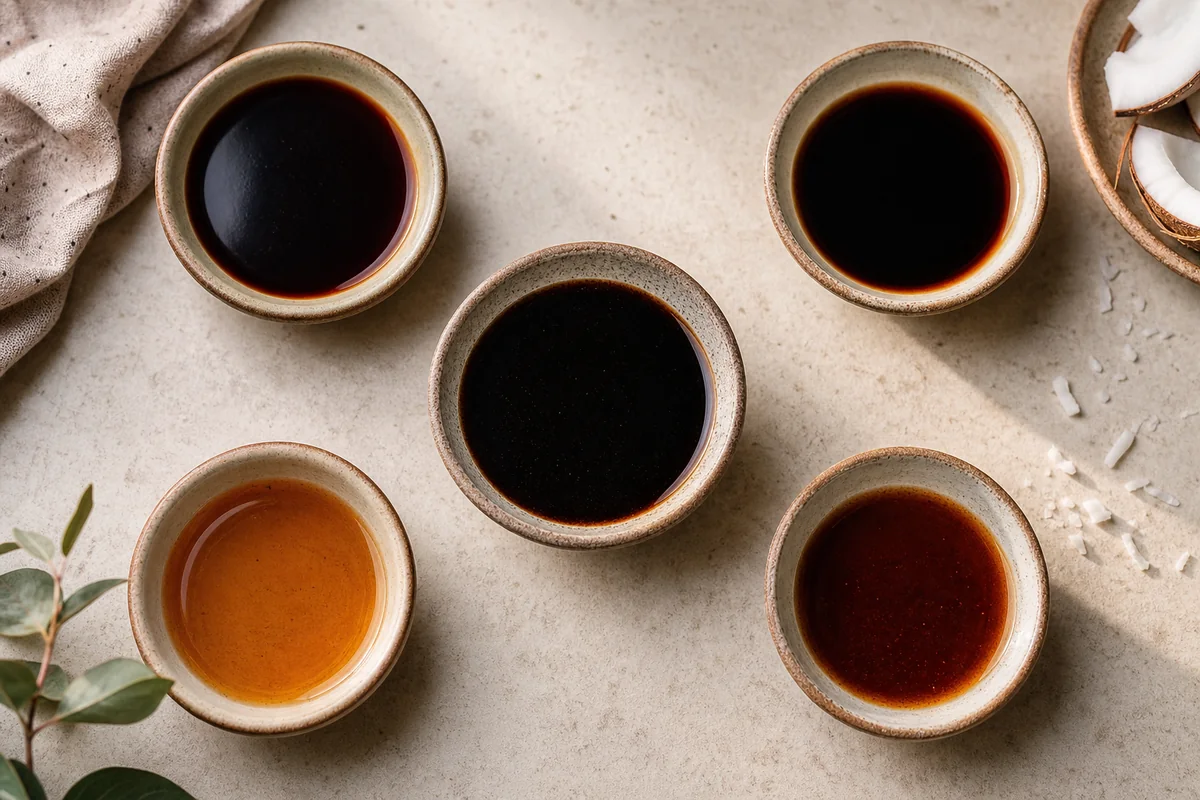
5 Best Coconut Aminos Substitutes You Can Trust
Ingredients
Equipment
Method
- Decide your goal: closest flavor (match sweet-salty balance) vs. strict dietary needs (soy-free/gluten-free).
- Swap by the table ratio (use less of thicker/sweeter sauces like teriyaki: start at ¾).
- Adjust sweetness and salt: add a small pinch of salt for blandness or ½ teaspoon sweetener per serving for missing caramel notes.
- If using vinegar-based swaps, thin with a splash of water and simmer briefly so the sauce coats food instead of tasting sharp.
- Taste at two points: first while simmering, then after 5 minutes of coating/standing before serving or finishing baking.
Notes
- Coconut aminos are typically sweet-salty and mild; most swaps need a small sweetness adjustment.
- For baking, choose a substitute that stays salty and not overly acidic.
Tried this recipe?
Let us know how it was!
Carrie is a food writer and editor with more than 15 years of experience. She has worked for some of the biggest names in the food industry, including Bon Appétit, Food & Wine, and Martha Stewart Living.
As the Editor in Chief of EpicureDelight, Carrie oversees all of the content on the site. She also manages the team of contributing writers and editors, who help to create delicious recipes, helpful tips, and informative articles that you’ll find on the site.
A native of the Chicago area, Carrie is passionate about all things food. She loves trying new restaurants and experimenting with new recipes in her kitchen. She’s also a graduate of the Culinary Institute of America, so she knows a thing or two about food!



