Most of us reach for the hot sauce bottle without thinking about what it actually does in a dish. Sometimes it adds bright vinegar tang.
Sometimes it carries chili depth. Knowing which job it's doing makes choosing a hot sauce substitute much easier.
Thick pastes need thinning. Smoky swaps need a tang adjustment.
Match the flavor role first, then fix the texture. That's the whole framework.
The best swap depends on what your hot sauce is doing. Sriracha handles most everyday cooking jobs at a 1:1 ratio. Harissa or chipotle cover smoky depth. Cayenne + vinegar + salt is the most controllable DIY option. Thin paste-based subs with warm water before adding them.
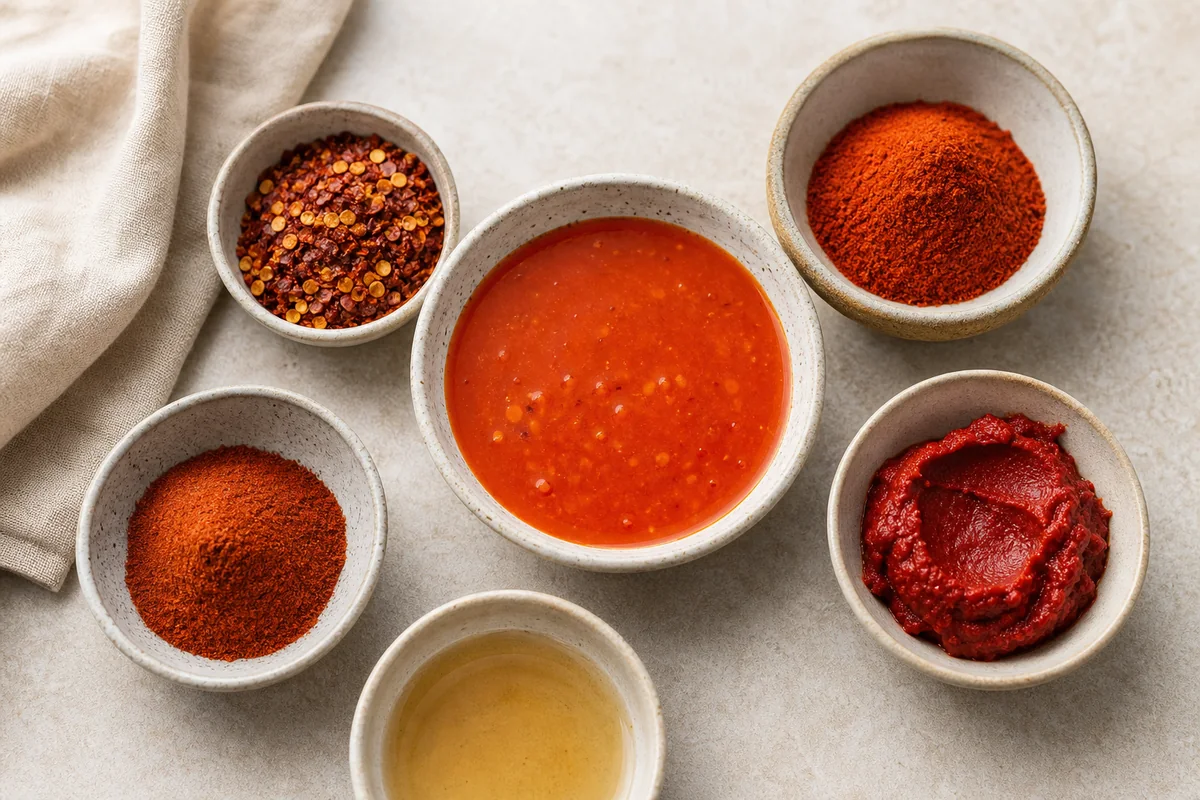
Hot Sauce Substitutes: Pick Your Closest Match
Scan the table below to choose by heat profile and flavor direction. Start at the listed ratio, then adjust tang or smoke after your first taste.
| # | Substitute | Best For | Ratio | Key Note |
|---|---|---|---|---|
| 1 | Sriracha | Both | 1:1 | Add splash vinegar for tang |
| 2 | Chili Garlic Sauce | Savory | 1:1 | Thin with vinegar or water |
| 3 | Harissa Paste | Savory | ¾:1 | Smoky; thin before using |
| 4 | Chipotle in Adobo | Savory | ¾:1 | Puree first, then thin |
| 5 | Cayenne + Vinegar + Salt | Both | 1:1 | Most adjustable option |
1. Sriracha
Sriracha is the easiest all-purpose hot sauce swap, and most home cooks already have it. It has a smooth, pourable texture, mild garlic sweetness, and steady chili heat.
For dishes where that peppery punch is background flavor rather than the star, it slots in cleanly at a 1:1 ratio.
- Heat and taste: Milder than cayenne-forward hot sauces; expect a gentle garlic note in the finish
- When to thin: Add 1-2 teaspoon water if your recipe needs a loose, pourable consistency
- Tang fix: Stir in a few drops of white vinegar or lime juice to sharpen the acidity
- Skip if: Your original hot sauce is strongly vinegar-forward or deeply smoky; Sriracha's sweetness will shift the flavor
2. Chili Garlic Sauce
Chili garlic sauce is coarser and more intensely garlicky than most bottled hot sauces. It works best in cooked applications like stir-fries, noodles, and dipping sauces, where that garlic-forward depth reads as a feature rather than an intrusion.
If you're picking between garlic options, this is the boldest of the bunch.
- Starting ratio: Use 1:1, then pull back if the garlic tastes heavy in your dish
- Thinning tip: Stir in 1 teaspoon of white vinegar per tablespoon to loosen and add tang
- Best uses: Stir-fries, dumpling dipping sauce, noodle bowls, fried rice
- Tang correction: A squeeze of lemon or rice vinegar brings it closer to a classic hot sauce profile
- Skip if: You're making a light vinaigrette or dressing; the garlic is too heavy for delicate applications
3. Harissa Paste
Harissa is earthy, smoky, and spiced with cumin and coriander. That's what separates it from a standard chili-vinegar hot sauce.
It is thick, which means it needs thinning before you add it. Thin it with warm water or olive oil, 1 teaspoon at a time, until it pours like a loose sauce.
If you want to understand its spiced North African character better before using it, that's worth a quick look.
Harissa Paste
Works for: roasted meats, grain bowls, braised dishes, any recipe wanting smoky spiced heat
Skip if: your recipe depends on clean vinegar-cayenne tang without extra spice notes
- Thinning technique: Mix 1 tablespoon harissa with 2 teaspoon warm water until it reaches a hot sauce consistency
- Acidity fix: Add 1 teaspoon of red wine vinegar or lemon juice to replace the tang harissa lacks
- Salt check: Harissa varies widely in salt level by brand; taste before seasoning your dish
- Ratio: Start at ¾:1 and increase once thinned and tasted
4. Chipotle in Adobo
Chipotle in adobo brings smoky, brick-red chile heat with a faint sweetness from the adobo sauce. It is thicker than any pourable hot sauce, so the first step is always pureeing the peppers with their sauce until fully smooth.
One or two chipotles with 1 tablespoon of adobo sauce will get you close to 2 tablespoons of hot sauce behavior once blended.
Thin the puree with warm water, 1 teaspoon at a time, until it coats a spoon and pours easily. Start at ¾ of your hot sauce amount, taste for smokiness, and add more only if the dish can handle it.
If it needs brightness, a few drops of apple cider vinegar cut through the smoke cleanly. You can find heat-forward pepper swaps if the smokiness is too much and you want a sharper, drier chili instead.
Skip if: your dish relies on vinegar-forward brightness. Chipotle pulls flavor toward smoke and sweetness, not tang.
5. Cayenne + Vinegar + Salt
A DIY hot sauce blend is the most precise substitute, because you control every variable. The base is simple: combine ½ teaspoon cayenne with 1 tablespoon white vinegar and a pinch of salt.
That produces roughly 1 tablespoon of hot sauce equivalent. It won't have the complexity of a fermented sauce, but it matches the core jobs of heat and tang without adding unwanted garlic or smoke.
If cayenne is what you're short on too, pepper-based heat options can fill that gap.
- Base ratio: ½ teaspoon cayenne + 1 tablespoon white vinegar + small pinch of salt = ~1 tablespoon hot sauce
- Thinning: Already pourable; add water only if you need to stretch the volume
- Heat adjustment: Swap up to half the cayenne for smoked paprika if you want mild smoky depth
- Tang adjustment: Use apple cider vinegar instead of white for a slightly rounder acidity
- Skip if: You'd rather not measure and taste-test; this swap rewards quick adjustments
Making Hot Sauce Substitutes Work in Any Recipe
The biggest mistake is adding a substitute without checking consistency first. A paste-based swap that hasn't been thinned will sit in clumps rather than blend into a sauce.
Most paste subs need diluting with warm water, 1 teaspoon at a time, until they pour and coat like the original. This also applies to gochujang, which has a distinctly fermented sweetness that needs thinning before it integrates.
Once the texture matches, timing and balance are your other two dials.
- Consistency first: Thin paste or condiment swaps to a loose, pourable consistency before measuring for your recipe; otherwise you're adding more volume and more intensity than intended
- Timing matters: Add vinegar-forward or thin subs near the end of cooking to preserve tang; add smoky paste-based subs earlier so they mellow and integrate with the other flavors
- Final balance check: Taste before serving and adjust with a few drops of vinegar for tang, a pinch of salt if it tastes flat, or a small splash of water if smoke or spice is too dominant
Frequently Asked Questions
Pourable sauces like Sriracha work at a 1:1 ratio in most recipes. Paste-based subs like harissa or gochujang should start at ¾:1 and be thinned to match the original's consistency before measuring.
The DIY cayenne-vinegar-salt blend is the closest match. Start with ½ teaspoon cayenne, 1 tablespoon white vinegar, and a pinch of salt per tablespoon of hot sauce needed.
Add warm water 1 teaspoon at a time, stirring after each addition, until the paste pours and coats a spoon. For harissa, olive oil also works and softens the spice.
It can if you use too much. Start at half the amount your recipe calls for, taste, and build up slowly. Adding a few drops of vinegar helps balance the smoke.
Use the DIY cayenne-vinegar blend and reduce cayenne by half to start; baking concentrates heat. Avoid smoky or garlic-heavy pastes, which clash with sweet baked goods.
5 Best Hot Sauce Substitutes (Easy Swaps)
Ingredients
Equipment
Method
- Identify what you need hot sauce to do in your recipe: tang-forward heat, smoky depth, or chili-garlic punch.
- Choose the closest option from the list and match the ratio: start at ¾:1 for paste-based swaps and 1:1 for pourable sauces.
- Thin paste/condiment swaps with warm water 1 teaspoon at a time until the mixture pours and coats a spoon like your original hot sauce.
- Add most of it first, then adjust heat at the end so you don’t overshoot the spice level.
- Taste for balance: if it’s missing tang, add a few drops of vinegar or lemon; if it’s too sweet, add salt.
Notes
- For baking (e.g., buffalo-style flavors), use thinner swaps so batter stays smooth.
- For glazes and sauces, add your substitute early enough to blend, but finish-taste at the end.
Tried this recipe?
Let us know how it was!
Carrie is a food writer and editor with more than 15 years of experience. She has worked for some of the biggest names in the food industry, including Bon Appétit, Food & Wine, and Martha Stewart Living.
As the Editor in Chief of EpicureDelight, Carrie oversees all of the content on the site. She also manages the team of contributing writers and editors, who help to create delicious recipes, helpful tips, and informative articles that you’ll find on the site.
A native of the Chicago area, Carrie is passionate about all things food. She loves trying new restaurants and experimenting with new recipes in her kitchen. She’s also a graduate of the Culinary Institute of America, so she knows a thing or two about food!