
Kewpie mayo isn't just "mayo with a squeeze bottle." It has a specific flavor profile: a mild, umami-edged tang built from rice vinegar and egg yolks, with a slightly sweeter, richer body than regular Western mayo.
That gap matters when you're swapping it in a sauce or dressing.
The best kewpie mayo substitute doesn't just add fat. It matches the acid balance and emulsified texture that make Kewpie so easy to use.
Get those two things right, and most dishes won't notice the difference.
Kewpie mayo has a tangy-sweet, umami-forward flavor and a thick, emulsified body. The best swaps either match that profile directly (Japanese mayo, full-fat mayo + rice vinegar) or approximate it with adjusted tang and texture (aioli, Greek yogurt, sour cream). Each swap needs acid and thickness tuning to stay on-target.
5 Best Kewpie Mayo Substitutes Ranked by Flavor Match
These five options cover the full range of pantry situations, from a near-identical bottled swap to a blended DIY version. The sub-table below gives you a fast reference.
Each section that follows includes skip-if guidance and notes for dressings versus baking.
| # | Substitute | Best For | Ratio | Key Note |
|---|---|---|---|---|
| 1 | Japanese Mayonnaise | Both | 1:1 | Closest flavor, no tweaks |
| 2 | Full-fat Mayo + Rice Vinegar | Both | 1:1 | Add 1-2 teaspoon per cup |
| 3 | Aioli | Cold | 1:1 | Bold garlic, lemon-forward |
| 4 | Greek Yogurt (thinned) | Cold | ¾:1 | Thin first, blend smooth |
| 5 | Sour Cream (thinned) | Cold | ¾:1 | Best for dips and spreads |
Each option below covers flavor match, texture expectations, and exactly when to skip it.
1. Japanese Mayonnaise
Japanese mayonnaise is the most direct swap. It uses rice vinegar and a higher egg yolk ratio, which gives it the same mild tang and slightly sweet finish as Kewpie.
You use it 1:1 with no adjustments.
Brands like Kenko or Q.P. (Kewpie's own label variation) are available at Asian grocery stores.
If you've wondered about the flavor profile of this mayo style, those two brands land in the same range.
- Flavor match: Nearly identical tang, sweetness, and umami depth
- Texture: Thick, spoonable, same emulsified body as Kewpie
- Best use: Any recipe that calls for Kewpie, cold or baked
- Ratio: 1:1, no acid or sweetener adjustments needed
Skip if: You can't find Japanese mayo locally or you need an egg-free option.
2. Full-Fat Mayo + Rice Vinegar
Standard full-fat mayo is a solid base, but it reads flatter than Kewpie on its own. Adding rice vinegar brings the tang up without thinning the texture much.
Start at 1 teaspoon per cup, then taste.
| Use | Ratio | Notes |
|---|---|---|
| Cold dressing / dip | 1 cup mayo + 2 teaspoon rice vinegar | Stir well; tangy and pourable |
| Baking (e.g. moist cakes) | 1 cup mayo + 1 teaspoon rice vinegar | Less acid keeps baked texture stable |
| Sandwich spread | 1 cup mayo + 1½ teaspoon rice vinegar | Middle ground for most savory uses |
If you run low on rice vinegar itself, check mild acid alternatives to keep the same gentle tang without sharpness.
- When it works: Most savory dressings, baked goods, and dipping sauces
- Flavor tuning: A tiny pinch of sugar brings back Kewpie's subtle sweetness
- Stability: Stir rather than whisk to avoid over-thinning the emulsion
Skip if: Your dish needs a very mild flavor. Start at 1 teaspoon and taste before adding more.
3. Aioli
Aioli has the same emulsified fat base as mayo, so the texture transfer is smooth. The flavor, though, runs brighter: more lemon-forward and noticeably garlicky.
That works well in sandwiches, grain bowls, and cold dips where a bold finish reads as a feature, not a flaw.
The main thing to know is that storing leftover aioli follows different rules than mayo, especially homemade versions. Keep that in mind if you're batch-prepping.
For dishes where the mayo flavor needs to be subtle or neutral, aioli overrides everything else on the plate. Use it where the garlic can be the star.
Skip if: Your recipe needs a neutral, background-flavored mayo. Aioli is assertive and will change the dish's overall tone.
4. Greek Yogurt (Thinned)
Greek yogurt has the tartness to approximate Kewpie's acid note, but its texture is too thick and dense straight from the container. Thin it with a teaspoon of water or milk, then stir until it loosens into a spoonable consistency.
If you're unsure whether choosing a yogurt swap fits your recipe, it usually works best when the dish is cold and the flavor needs tang more than richness.
- How to thin: Add 1 teaspoon water per ¼ cup yogurt, stir until smooth and pourable
- Best uses: Cold salad dressings, veggie dips, sandwich spreads
- Flavor fix: Add a small pinch of salt and ½ teaspoon neutral oil to round out the flavor
- Texture risk: Over-thinning makes it watery. Add liquid gradually.
Skip if: You need a true emulsified fat mouthfeel. Yogurt feels lighter and slightly thinner, even when blended.
5. Sour Cream (Thinned)
Sour Cream vs Kewpie Mayo
Works for: Cold dips, spreads, potato salads, and any recipe where a dairy-tangy richness fits
Skip if: High-heat baking, warm sauces, or any application where separation would ruin the texture
Sour cream is thicker and tangier than Kewpie, but thinning it with a teaspoon of milk brings the texture closer to a spoonable mayo. The tang profile is dairy-forward rather than vinegar-forward, so the flavor direction shifts a little.
It still works well in cold applications. Knowing how long sour cream keeps after opening is worth checking before you use it as a swap in a batch recipe.
- Best applications: Dips, coleslaw dressing, cold potato salads
- Thinning method: 1 teaspoon milk per ¼ cup sour cream, stir until smooth
- Seasoning fix: A small squeeze of lemon juice bridges the gap from dairy-tang to vinegar-tang
- Cold only: Skip it in warm or baked recipes where it may separate
Skip if: Your dish goes above 300°F or sits warm for more than a few minutes.
Making Kewpie Mayo Substitutes Work
The two things that matter most in any Kewpie swap are acid level and texture thickness. Get both right and the dish holds up.
Miss one and the result tastes flat or breaks in the bowl. Understanding the dairy-based swap tradeoffs helps you decide between the lighter yogurt options and the richer sour cream route before you commit to a batch.
- Adjust tang first: Add rice vinegar or lemon juice in ½ teaspoon increments until the acid note matches what your recipe needs
- Match thickness: Thin with water or milk (1 teaspoon at a time) for pourable dressings; leave thicker for spreads and dips
- Choose by use-case: Cold dressings tolerate yogurt and sour cream well; baking needs a fat-stable base like full-fat mayo with a small acid addition
Frequently Asked Questions
Japanese mayonnaise is the closest match for cold dressings. If that's not available, full-fat mayo with 1-2 teaspoons of rice vinegar per cup is the next best option.
Not exactly. Regular mayo tastes flatter and less tangy. Add a small amount of rice vinegar and a pinch of sugar to bring it closer to Kewpie's mild, slightly sweet profile.
For excess tang, add a small pinch of sugar and a neutral oil to round the flavor. For watery texture, strain the yogurt through a fine sieve for 10 minutes before using.
Full-fat mayo with a small amount of rice vinegar is the most stable option for baking. Dairy-based swaps like yogurt or sour cream can separate or curdle under sustained heat.
Yes, both can separate when exposed to steady heat. Keep these swaps in cold or room-temperature applications, and add them after cooking if the dish is served warm.
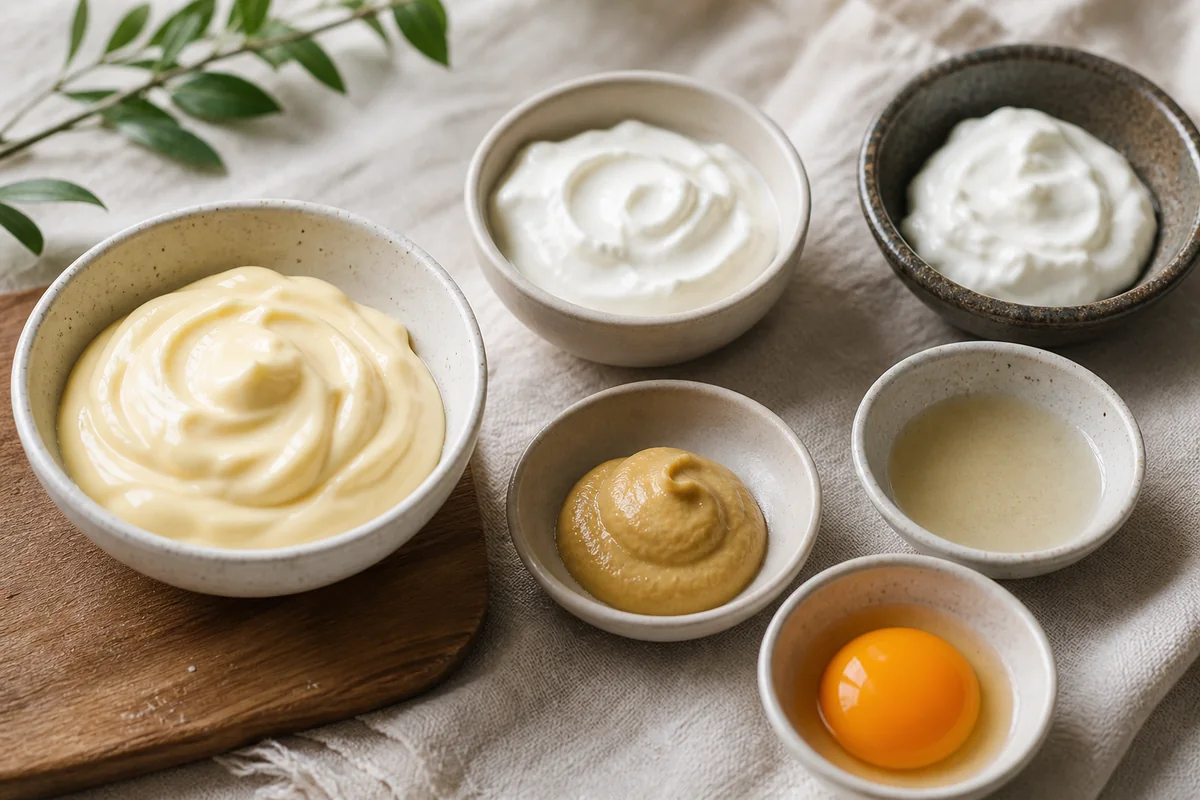
5 Best Kewpie Mayo Substitutes (Easy Swaps)
Ingredients
Equipment
Method
- Pick your use-case first: cold dressing/dip needs an emulsified, spoonable texture; baking needs richness with stable tang.
- Choose the closest match from the table, starting with Japanese mayonnaise or full-fat mayo + rice vinegar for the most Kewpie-like bite.
- If your substitute tastes flatter, add acid in small increments (rice vinegar or lemon juice) until the tang matches your dish.
- If your substitute is too thick or breaks (especially yogurt-based swaps), thin with a teaspoon of water or milk and stir/blend until smooth.
- Taste and adjust seasoning at the end; for sweet-salty Kewpie-style flavor, a tiny pinch of salt usually restores balance.
Notes
- For dressings, prioritize emulsified texture first; flavor comes second.
- For baking, choose the richer swaps (mayo or Japanese mayo) to avoid a tangy “set” aftertaste.
Tried this recipe?
Let us know how it was!
Carrie is a food writer and editor with more than 15 years of experience. She has worked for some of the biggest names in the food industry, including Bon Appétit, Food & Wine, and Martha Stewart Living.
As the Editor in Chief of EpicureDelight, Carrie oversees all of the content on the site. She also manages the team of contributing writers and editors, who help to create delicious recipes, helpful tips, and informative articles that you’ll find on the site.
A native of the Chicago area, Carrie is passionate about all things food. She loves trying new restaurants and experimenting with new recipes in her kitchen. She’s also a graduate of the Culinary Institute of America, so she knows a thing or two about food!



