
Running low on liquid aminos mid-cook is a real problem, especially when your stir-fry or marinade depends on that salty, lightly sweet, savory depth. The good news is several pantry staples can step in without throwing your dish off balance.
Liquid aminos are a seasoning liquid made from soybeans or coconut sap. They deliver umami with mild sweetness and less salt than standard soy sauce.
If you're asking what can I use instead of liquid aminos, the answer depends on how close you need the flavor and whether gluten-free or low-sodium is a priority.
Coconut aminos is the closest swap at 1:1. Gluten-free tamari works for deeper umami but start at ¾:1. Low-sodium tamari keeps the flavor gentle. Brand-variant liquid aminos should be tasted first. Fish sauce is a last resort, diluted to ¼:1.
5 Best Liquid Aminos Substitutes Ranked by Flavor and Salt
Start with this table before choosing. Each swap is listed in order of how close it lands to the original flavor.
| # | Substitute | Best For | Ratio | Key Note |
|---|---|---|---|---|
| 1 | Coconut Aminos | Both | 1:1 | Slightly sweeter, close profile |
| 2 | GF Tamari / Soy Sauce | Both | ¾:1 | Saltier, start low |
| 3 | Low-Sodium Tamari | Both | 1:1 | Mild, may need salt boost |
| 4 | Brand-Variant Liquid Aminos | Both | 1:1 | Taste first, brands differ |
| 5 | Fish Sauce (diluted) | Cooked | ¼:1 | Strong, needs dilution |
Color alone should never drive your choice. Pick based on flavor and salt level first, then correct sweetness with a pinch of sugar or a small splash of vinegar at the end.
When you're also thinking about fresh leftover stir-fry, timing your seasoning adjustments before storage matters too.
1. Coconut Aminos
Coconut aminos sit in the same flavor family as liquid aminos. Both are mild, slightly sweet, and savory without the sharp edge of standard soy sauce.
This is the go-to swap when you want the least disruption to a recipe. It reads a touch sweeter, so if your dish already uses honey or hoisin, reduce one of those by about a teaspoon.
Knowing storing it properly keeps the bottle fresh once opened, which matters if you only use it occasionally.
- Closest taste: Nearly identical salty-savory profile with a gentle sweetness that most palates won't flag
- Adjust sweetness: If your dish is already sweet, cut sugar or honey by 1 teaspoon to stay balanced
- Best uses: Stir-fries, marinades, and dipping sauces where liquid aminos play a background seasoning role
Skip if: you need a more neutral, less-sweet seasoning and can't compensate by reducing other sweet ingredients.
2. Gluten-Free Tamari or Soy Sauce
Tamari hits harder than liquid aminos. It's darker, saltier, and the umami is more forward, which makes it excellent but easy to overdo.
- Start low: Use ¾ tablespoon for every 1 tablespoon liquid aminos, then taste before adding more
- Pair it well: Ginger and garlic soften tamari's sharper edge in both marinades and sauces
- Finish smart: Add a small pinch of sugar or a few drops of rice vinegar at the end to re-balance
If you're curious about how salty fermented seasonings compare in depth and finish, tamari lands on the deeper end of that spectrum. It's your best bet for anything that needs a serious savory backbone.
Skip if: you're very salt-sensitive. Even at ¾:1, tamari can tip a dish salty before you realize it.
3. Low-Sodium Tamari
Low-sodium tamari is the version of the swap that gives you the same fermented soy depth without the salt overload. It works at a 1:1 ratio right out of the bottle. For anyone watching sodium or cooking for people who are, this is the liquid aminos replacement that asks the least of you.
The one catch is that the flavor can feel slightly thin once it's in the dish. Taste at the end and add a small pinch of salt or a few drops of rice vinegar to sharpen it.
If your recipe already has miso, capers, or olives contributing salt, keeping your fermented sauces fresh and pulling from lighter options like this one avoids a dish that tips too salty before you've even finished cooking.
Skip if: your recipe already has several salty components. Low-sodium tamari can make the overall flavor feel thin rather than balanced.
4. Brand-Variant Liquid Aminos
Not all bottles labeled "liquid aminos" are the same product. Some are soy-based like Bragg's, some are coconut-derived, and a few are blended.
The ratio is still 1:1, but the salt level and sweetness vary noticeably between brands.
Soy-Based Liquid Aminos (e.g., Bragg)
Works for: most savory applications; saltier, less sweet, closer to tamari
Skip if: you need a coconut-free or lower-sodium option
Coconut-Based Liquid Aminos
Works for: sweeter profiles, dishes where mild umami matters more than salt
Skip if: the original recipe uses a soy-based amino and your dish relies on that sharper salt note
When you're unsure about a new brand, treating it like any new ingredient helps. Read the label for sodium per serving, then cross-reference with your recipe's salt sources.
If you're also exploring other ways of swapping soy-based sauces in a recipe, this brand-reading habit carries over directly.
- Taste before committing: Dip a spoon and compare sweetness and saltiness to the brand you normally use
- Re-season if needed: Add salt ¼ teaspoon at a time, or a drop of rice vinegar to cut sweetness
- Best applications: Marinades and stir-fries tolerate brand variation best; delicate dressings are less forgiving
Verify the label before a 1:1 swap, especially if gluten-free or coconut-free is a strict requirement.
5. Fish Sauce (Diluted)
Fish sauce is a last-resort swap, and it has to be diluted. Straight from the bottle it's far too concentrated and the aroma will dominate the dish.
Mix ¼ teaspoon fish sauce with ¾ teaspoon warm water to replace 1 teaspoon liquid aminos. This keeps the umami without the punch.
If you decide this approach doesn't fit your pantry, there are other fermented sauce alternatives worth considering that skip the fishy notes entirely.
- Dilution method: Combine 1 part fish sauce with 3 parts warm water in a small bowl before adding to the pan
- Best uses: Dark stir-fries, braised meats, and noodle dishes where the aroma will cook off with heat
- Mask the aroma: Add minced garlic and ginger to the pan first. They soften the fish sauce's edge once everything hits the heat together
Skip if: you or your guests are sensitive to fish aromas. Even diluted, fish sauce stays detectable unless buried under aromatics and a longer cook time.
Making Liquid Aminos Substitutes Work
The three-step frame is simple: choose your ratio, taste early, and adjust one variable at a time. When you're working with this savory fermented seasoning's flavor as your target, the first taste after adding the substitute tells you which direction to correct.
Go sweet or go acid, not both at once.
- Rebalance sweetness: If the substitute reads flat or sharp, stir in a small pinch of sugar or a drop of honey to restore the mild sweetness liquid aminos naturally carry
- Rebalance salt and acid: If the dish feels heavy or one-dimensional, add 1 teaspoon rice vinegar or a small squeeze of lemon to lift and separate the flavors
- Give it heat time: In stir-fries and marinades, add the substitute early and let it simmer 1 to 2 minutes so the saltiness mellows and melds into the other ingredients
Skip this step if you're making a no-cook dressing. Taste and adjust at the very end since there's no heat to meld the flavors together.
Frequently Asked Questions
Yes. Coconut aminos share the same mild, salty-sweet profile and work at a 1:1 ratio. They're slightly sweeter, so reduce any added sugar in your stir-fry by about a teaspoon.
Yes, as long as the tamari is certified gluten-free. Start at ¾:1 because tamari is saltier, then taste and adjust before serving.
Add a splash of rice vinegar or a small squeeze of lemon juice to cut the salt perception. A pinch of sugar also helps balance if the dish tastes harsh.
Coconut aminos work best for mild marinades. For deeper, more savory results, gluten-free tamari at ¾:1 gives better penetration and umami into proteins.
Only if you dilute it at ¼:1 and cook it with garlic and ginger. Even then, some fish aroma will remain, so it's best reserved for cooked dishes.
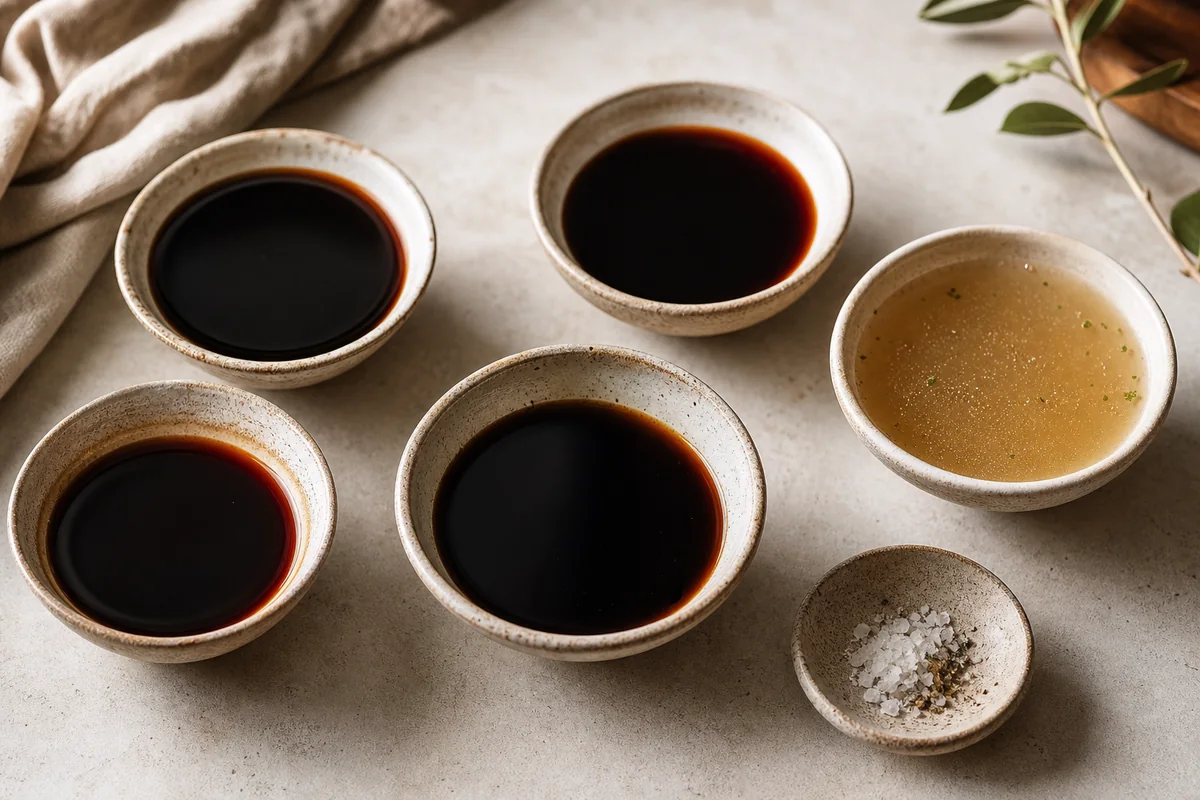
5 Best Liquid Aminos Substitutes (Easy Swaps)
Ingredients
Equipment
Method
- Choose the closest match: coconut aminos for flavor similarity, tamari for deeper salt umami, or fish sauce diluted for emergencies.
- Use the listed ratio first; for tamari and fish sauce, start slightly low (¾:1 or ¼:1) to avoid oversalting.
- Adjust balance: if it tastes flat, add 1–2 teaspoons of rice vinegar or lemon juice; if it’s too sharp, add a small pinch of sugar.
- In stir-fries and marinades, add the substitute early enough to coat, then simmer 1–2 minutes so it melds.
- Taste at the end and correct salt/sweet/acid so the swap matches the original dish goal (savory balance vs. glaze).
Notes
- For recipes that rely on liquid aminos as the main seasoning, prioritize the 1:1 swaps first.
- If the substitute is more intense than liquid aminos (tamari, fish sauce), reduce the initial amount and build.
Tried this recipe?
Let us know how it was!
Carrie is a food writer and editor with more than 15 years of experience. She has worked for some of the biggest names in the food industry, including Bon Appétit, Food & Wine, and Martha Stewart Living.
As the Editor in Chief of EpicureDelight, Carrie oversees all of the content on the site. She also manages the team of contributing writers and editors, who help to create delicious recipes, helpful tips, and informative articles that you’ll find on the site.
A native of the Chicago area, Carrie is passionate about all things food. She loves trying new restaurants and experimenting with new recipes in her kitchen. She’s also a graduate of the Culinary Institute of America, so she knows a thing or two about food!



