Marshmallow is one of those ingredients that pulls triple duty. It melts into a glossy coating, puffs up a frosting, and holds a rice cereal treat together all at once.
Knowing which job it's doing in your recipe is the first step to finding a solid marshmallow substitute that actually works.
The texture is what trips people up. Sweetness is easy to match.
Airy structure, a smooth melt, or a soft set that holds its shape? Those need a bit more thought.
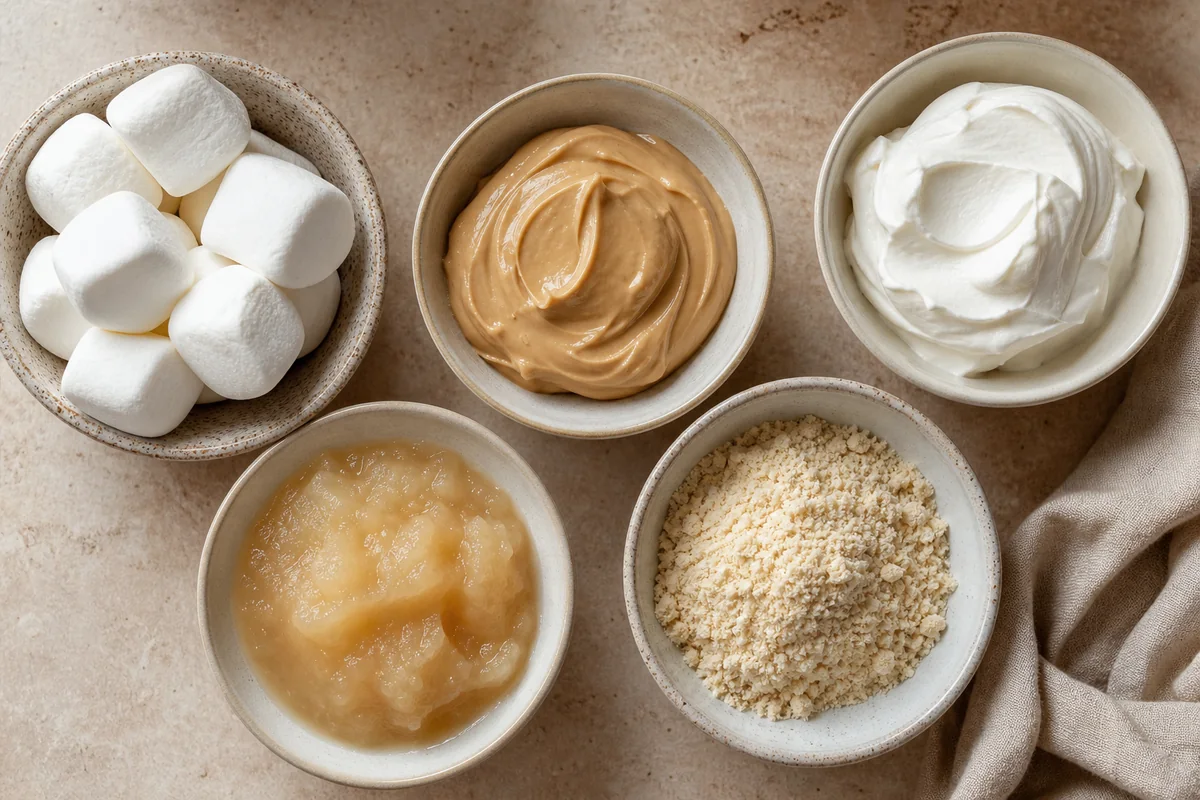
The best swap depends on what marshmallow is doing in your recipe. For creamy melt, use marshmallow creme or jarred fluffy spread at 1:1. For a soft set, pair honey or maple syrup with gelatin or agar. For dessert creaminess only, sweetened cream of coconut works at 1:1.
5 Best Marshmallow Substitute Options
| # | Substitute | Best For | Ratio | Key Note |
|---|---|---|---|---|
| 1 | Marshmallow Creme | Both | 1:1 | Smooth melt, reduce sugar |
| 2 | Fluffy Marshmallow Spread | Baking | 1:1 | Airy base, warm gently |
| 3 | Honey + Binder | Both | ¾:1 | Needs gelatin or cornstarch |
| 4 | Maple Syrup + Gelatin/Agar | Baking | ¾:1 | Caramel flavor, chill to set |
| 5 | Cream of Coconut (Sweetened) | Dessert | 1:1 | Chill for body, no stretch |
Match by texture first, then ratio. If your recipe needs a stretchy, pull-apart candy texture, start with options 1 or 2.
If you only need sweetness with a soft set, options 3 and 4 deliver.
1. Marshmallow Creme
Marshmallow creme is the most direct swap because it already has the same sweetness profile and melts into recipes the same way. It works especially well in rice cereal treats, fudge, and no-bake fillings where you need smooth incorporation.
- Ratio: Start at 1:1 by volume for most recipes.
- Sweetness check: Reduce any added sugar in the recipe by 10-15%, as creme runs slightly sweeter.
- Best uses: Rice cereal treats, fudge, no-bake bars, and creamy frostings.
- Mixing tip: Stir it in off-heat to keep the texture smooth without breaking it down.
Skip if your recipe needs individual marshmallows to hold their shape during baking. Creme will spread and melt rather than stay put.
2. Jarred Fluffy Marshmallow Spread
Jarred fluffy spread is close to creme but typically has more air beaten in, which gives it a lighter body. That extra lift makes it a better fit when the recipe leans on the aerated base of marshmallow rather than pure sweetness.
Fluffy Spread vs. Standard Marshmallows
Works for: Aerated filling, fast melt, creamy no-bake desserts, s'mores dip
Skip if: Recipe depends on slicing individual marshmallows or clean, firm edges without chilling
- Ratio: 1:1 by volume; warm gently over low heat if it needs to mix into a hot base.
- Chill trick: For firmer results, refrigerate the finished dessert 20-30 minutes before serving.
- Avoid high heat: Too much heat loosens the structure and makes it runny fast.
For recipes where the fluffy texture really matters, this spread is the safer call over plain creme.
3. Honey with a Setting Binder
Honey brings a glossy sweetness that works in a wide range of dessert recipes, but it needs help to mimic marshmallow's structure. On its own, this golden sweetener is too fluid to hold any shape.
Pair it with gelatin or a cornstarch slurry and the result is a soft, glossy set that behaves much closer to a marshmallow base.
Use ¾ cup honey for every 1 cup of marshmallow called for. The flavor runs floral and distinct, so it works best in recipes where a little honey character fits rather than distracts.
- With gelatin: Bloom 1 teaspoon of gelatin in cold water, warm the honey slightly, then whisk together.
- With cornstarch: Mix 1 tablespoon cornstarch with 2 tablespoon cold water, stir into warm honey, and heat until it thickens.
- Salt tip: Add a small pinch of salt to stop the sweetness from tasting flat.
- Best uses: Soft-set bars, glazes, and dessert sauces where you're choosing a binder anyway.
Skip if you need a truly airy or whipped texture. Honey won't foam, and no binder will change that.
4. Maple Syrup with Gelatin or Agar
Maple syrup has a warm, caramel-adjacent flavor that adds depth to desserts in a way plain sugar doesn't. Like honey, it needs a setting agent to get anywhere close to marshmallow structure, but the payoff is a soft, cuttable set with real flavor.
If you're curious how syrup flavor profiles shift across grades, darker grades add more intensity here.
- With gelatin: Bloom gelatin per package instructions, warm the syrup, combine off-heat, and pour into your pan to set. If you're weighing picking a setting agent, gelatin gives a softer result than agar.
- With agar: Dissolve agar in hot liquid before adding the syrup; it sets firmer and faster than gelatin.
- Chill before cutting: Let it firm fully in the fridge, then fold or cut gently so you don't deflate the set.
- Best uses: Soft-set candy bars, layered desserts, and fillings where flavor depth matters.
Skip if your recipe needs volume from whipping. Maple syrup won't foam up no matter what you add.
5. Cream of Coconut (Sweetened)
Sweetened cream of coconut has a natural richness that mimics the creamy sweetness of marshmallow without any stretch or foam. It works best in cakes, layered bars, and frostings where you need that marshmallow-like sweetness and body in the background.
Understanding the difference between coconut products matters here. Make sure you're using sweetened cream of coconut, not unsweetened coconut cream, or the swap will fall flat on sweetness.
- Ratio: 1:1 by volume; whip briefly before using for better body.
- In hot mixtures: Stir in off-heat so it stays creamy rather than separating.
- Chill time: 15-30 minutes in the fridge firms it up enough for slicing or layering.
- Best uses: Coconut cake frosting, no-bake bars, and creamy dessert fillings.
| Use | Ratio | Notes |
|---|---|---|
| Frosting or filling | 1:1 | Whip first, chill 20 min for structure |
| No-bake bars | 1:1 | Add off-heat, refrigerate to set fully |
| Hot dessert sauces | ¾:1 | Stir in last, remove from heat immediately |
Skip if your recipe needs marshmallow's airy bounce or the ability to toast cleanly under a broiler.
Making Your Marshmallow Substitute Work
The most common mistake is choosing a substitute based on sweetness alone. Marshmallow does three distinct jobs: it aerates, it melts and coats, or it sets into a sliceable structure.
Match the function first, then apply the ratio. If your recipe needs airy lift, lean on creme or fluffy spread.
If it needs a soft set, add a binder to honey or maple syrup. Temperature matters too.
Most spread-based swaps need a gentle warm rather than high heat, and most syrup-based swaps need a chill before they're ready.
- Start small: Test your swap on one portion before committing the whole batch, since texture varies by recipe.
- Fix runny results: Add 1 teaspoon of cornstarch slurry or bloom more gelatin if the mixture won't hold its shape after chilling.
- Fix sweetness: A small pinch of salt (about ⅛ tsp) pulls the sweetness back into balance without changing the texture. Also, if you're exploring maple-based swaps beyond syrup, some alternatives add less sugar overall and need no reduction.
Frequently Asked Questions
Marshmallow creme is the closest option. Use it at a 1:1 ratio and stir off-heat for the same sticky, glossy bind that holds cereal treats together.
Yes, at a 1:1 ratio by volume. It won't hold individual shapes in baked goods, but it melts and incorporates well in most fillings and fudge-style recipes.
Add a setting agent. Bloom gelatin or dissolve agar in hot liquid, then combine with the syrup and chill until firm enough to cut or layer.
Runny results usually mean the swap needs more chill time or a binder. Grainy texture often comes from overheating a spread-based substitute at too high a temperature.
Sweetened cream of coconut whipped briefly and chilled gives the best frosting-style body. Marshmallow creme works too and is closer to the classic flavor.
5 Best Marshmallow Substitutes You Can Trust
Ingredients
Equipment
Method
- Identify the role marshmallow plays in your recipe: fluffy filling, stretchy candy, or a sweet melt/coating.
- Choose the substitute that matches that role, then use the listed ratio starting point.
- If your substitute is wetter (spreads, coconut), simmer/whisk briefly and chill 15–20 minutes before final setting.
- If your substitute is less “puffy” (syrups), add gelatin/agar/binder and let it set before cutting or serving.
- Test in a small batch or on one portion first; adjust sweetness with a pinch of salt or a little sugar based on your final texture.
Notes
- For baking, prioritize substitutes that melt smoothly; for no-bake desserts, prioritize aerated/creamy options.
- If your recipe needs “stretch,” use spreads/jarred bases first, then adjust with gentle heat to regain meltability.
Tried this recipe?
Let us know how it was!
Carrie is a food writer and editor with more than 15 years of experience. She has worked for some of the biggest names in the food industry, including Bon Appétit, Food & Wine, and Martha Stewart Living.
As the Editor in Chief of EpicureDelight, Carrie oversees all of the content on the site. She also manages the team of contributing writers and editors, who help to create delicious recipes, helpful tips, and informative articles that you’ll find on the site.
A native of the Chicago area, Carrie is passionate about all things food. She loves trying new restaurants and experimenting with new recipes in her kitchen. She’s also a graduate of the Culinary Institute of America, so she knows a thing or two about food!