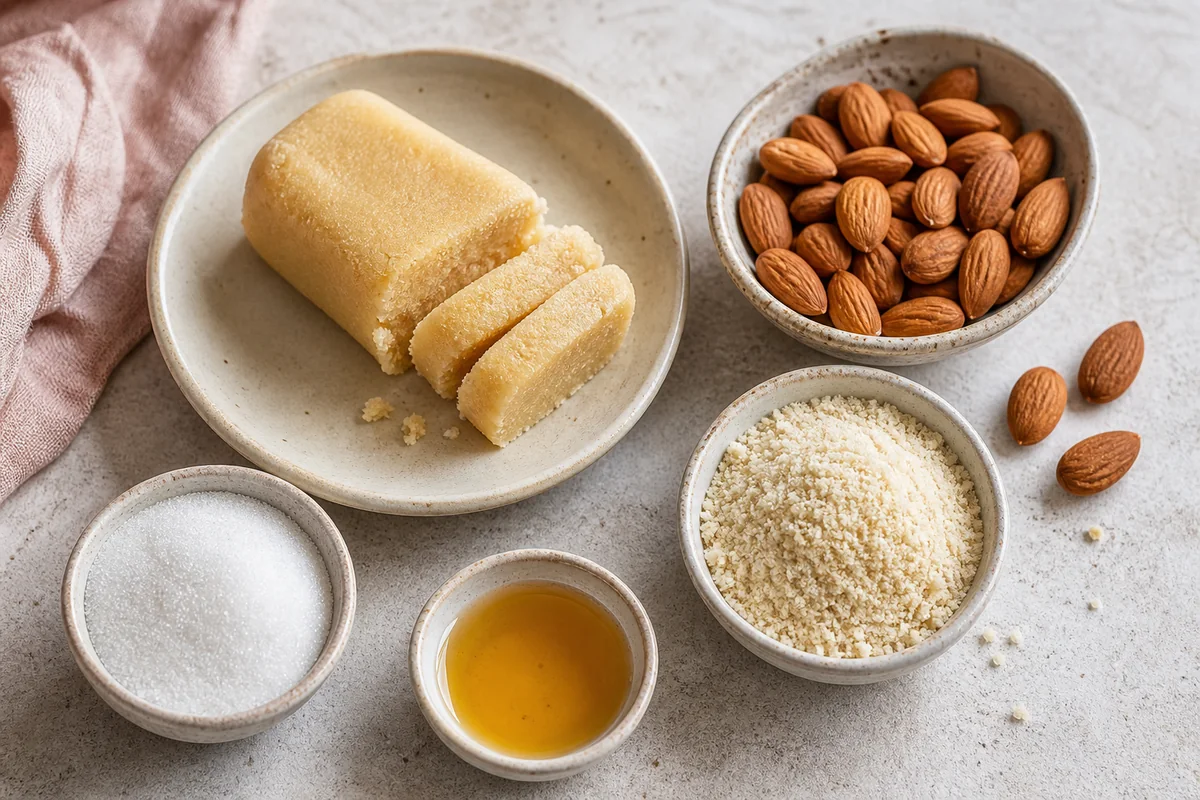
Biting into a good marzipan is almost disarmingly simple-just ground almonds, sugar, and enough moisture to hold a shape. Yet replacing it trips up even experienced bakers, because a marzipan substitute has to do two very different jobs: deliver that distinct sweet-almond note AND behave like a pliable paste when you need to roll, fill, or mold.
The paste-versus-cream difference is what catches most people off guard. Some swaps nail the flavor but turn soupy when baked.
Others hold shape but taste flat.
The five options below are sorted by how well they handle each job. Know before you start whether your recipe needs structure (shaping, rolling, truffle-style filling) or just almond flavor baked into a batter.
Almond paste is the closest swap at a 1:1 ratio for both baking and shaping. For a homemade version, blend ground almonds with powdered sugar and a small binder. Use frangipane-style cream or almond extract for flavor-only needs in baked goods. Tahini works as an emergency option with an almond extract boost.
5 Best Marzipan Substitutes, Ranked by Use
The table below is your fast-scan reference. Each substitute is matched to its strongest use case and given a starting ratio by weight.
Check storing paste correctly before you stock up, since almond-based pastes can turn rancid faster than expected.
For baking-only swaps, keeping powdered sugar fresh matters too-stale sugar turns any homemade paste gritty.
| # | Substitute | Best For | Ratio | Key Note |
|---|---|---|---|---|
| 1 | Almond Paste | Both | 1:1 | Add sugar if less sweet |
| 2 | Ground Almonds + Sugar Paste | Both | 1:1 | Blend very fine first |
| 3 | Frangipane-Style Cream | Baking | ¾:1 | Softer, won't hold shape |
| 4 | Almond Extract + Sugar | Baking | Flavor only | No structural body |
| 5 | Tahini + Powdered Sugar | Baking | ¾:1 | Add extract to steer flavor |
1. Almond Paste
Almond paste is the most practical direct swap. It has the same paste body as marzipan, and the almond flavor profile is nearly identical.
The main difference is sweetness: most commercial almond paste is less sweet than marzipan, so you'll often add a teaspoon or two of powdered sugar per 100 g to close that gap.
Almond Paste vs Marzipan
Works for: rolling, molding, cake filling, cookie centers, chocolate-dipped confections
Skip if: your paste is coarse or grainy-fillings will feel gritty, not smooth
- Ratio: 1:1 by weight; no other adjustment needed if sweetness is close
- Sweetness fix: Stir in 1-2 teaspoon powdered sugar per 100 g if the paste tastes flat
- Texture check: Press a small ball between your fingers-it should hold without crumbling
- Best use: Any recipe where marzipan is rolled, shaped, or layered (Battenberg, stollen, sculpted figures)
Skip if: your almond paste is grainy or coarse-ground. The grit won't smooth out in baking.
2. Ground Almonds + Powdered Sugar Paste
This is the homemade route, and it works well when you can control the grind. Blend raw or blanched almonds into a very fine meal first-coarser grinds leave the paste gritty.
Then mix with an equal weight of powdered sugar and bind with 1-2 teaspoon of egg white or milk per cup of dry mix until the paste holds a shape without cracking. Once mixed, swapping ground almonds for other nut meals is possible, though the flavor will shift.
- Grind first: Blend almonds in a food processor until flour-fine before adding sugar
- Binder choice: Egg white gives a firmer, more rollable paste; milk gives a softer, spreadable one
- Target texture: The paste should feel like stiff Play-Doh-pliable but not sticky
- Chill before shaping: Wrap in plastic and refrigerate 20 minutes if the paste is too soft to roll cleanly
- Ratio: Use 1:1 by weight as a direct marzipan replacement
Skip if: you only have pre-ground almond flour and can't re-blend it finer. The result is often too sandy for shaping, though it bakes acceptably.
3. Frangipane-Style Almond Cream
Frangipane is softer and wetter than marzipan, so it behaves differently the moment heat hits it. It spreads slowly while baking, sets to a soft crumb, and delivers a solid almond flavor in tarts, croissants, and danish pastries.
Use about ¾ of the marzipan weight when substituting. More than that and the filling can overflow or turn soggy.
- Best use: Baked goods where filling is spooned or spread-tarts, galettes, filled pastries
- Spread behavior: It will expand slightly in the oven, so leave a 1 cm gap at the edge
- Doneness cue: Filling should look set and lightly golden, not jiggly, when done
Skip if: you need to roll it or mold it into a shape. Frangipane cream won't firm up enough to hold any structure, even after chilling.
4. Almond Extract + Sugar (Flavor-Only)
This swap reframes the question entirely. If marzipan is in your recipe purely for flavor-think cookies, brownies, or a butter cake batter-you don't need a paste at all.
A small amount of choosing the right extract matters here, because some brands run harsh and artificial. Start with ¼ teaspoon per 100 g of base recipe and taste once mixed.
- When to use: Cookies, bar cookies, and cake batters where marzipan dissolves into the crumb
- Starting dose: ¼ teaspoon almond extract + 2 tablespoon powdered sugar per 100 g marzipan called for
- Adjust carefully: Add extract in ⅛ teaspoon increments-it intensifies fast and can turn medicinal
- Sweetness note: Increase powdered sugar slightly if the batter tastes less sweet than expected
Skip if: your recipe needs structural body-truffles, rolled figures, or any filled confection where the paste must hold its own shape.
5. Tahini + Powdered Sugar
Tahini is a genuine emergency option, not a preferred one. The concentrated nutty essence of sesame is the biggest hurdle-it comes through even after sweetening.
Adding ¼ teaspoon of almond extract per 100 g of tahini steers the flavor noticeably toward almond territory.
- Ratio: Use ¾ of the marzipan weight; tahini spreads more than paste and adds moisture
- Sweetening: Start with 3 tablespoon powdered sugar per 100 g tahini and adjust by taste
- Thickening: If the mix is too loose, stir in powdered sugar 1 tablespoon at a time until it holds shape
- Best recipe types: Rich chocolate cakes, dense bars, and fillings where other bold flavors mask sesame
- Extract dose: ¼ teaspoon almond extract per 100 g is usually enough without tasting artificial
Skip if: you want a pure almond taste. Sesame will come through in any recipe where marzipan is a feature flavor, not a background note.
Making Marzipan Substitutes Work
The fix usually comes down to one of three problems: the paste won't roll, it won't spread, or the almond flavor is off. Knowing which problem you have is the first step.
Check the paste-based swap options if you're finding texture hard to control with your current choice.
- Too dry to roll: Add 1 teaspoon egg white or milk at a time and knead until the paste is pliable without cracking at the edges
- Too soft to shape: Stir in powdered sugar 1 tablespoon at a time, then chill for 15 minutes before trying to roll again
- Flavor off: Add 1-2 drops of almond extract and a pinch of salt to bring the almond note forward without sweetening further
Needs Structure
Works for: rolling, molding, truffle centers, cake covering-use almond paste or homemade ground-almond paste, chill before use
Skip if: your substitute is still sticky after chilling and adding sugar-it won't hold detail in molded shapes
Needs Flavor Only
Works for: batters, fillings, bar cookies-use frangipane-style cream, almond extract, or tahini blend
Skip if: the recipe bakes for under 20 minutes and the filling needs to set fully-softer swaps may stay wet
One thing worth noting: always taste your substitute before it goes into the recipe. Sweetness varies a lot between almond paste brands, and homemade pastes can run bland if the almonds were old.
Frequently Asked Questions
Almond paste at a 1:1 ratio is the closest option for rolled or molded work. Add 1-2 teaspoon powdered sugar per 100 g if the paste is less sweet than your marzipan.
Yes, a 1:1 swap by weight works in most baked recipes. Taste the paste first and adjust sweetness with powdered sugar if needed.
Add 1 teaspoon milk or egg white to loosen a dry paste; knead in powdered sugar 1 tablespoon at a time to firm up a soft one. Chill 15 minutes before rolling if still sticky.
No. Frangipane is too soft and wet to hold a rolled or molded shape. Use it only in baked fillings where spreading is acceptable.
For bland paste, add almond extract in ⅛ teaspoon increments and taste after each addition. For overly sweet paste, a small pinch of salt balances it without adding bitterness.
5 Best Marzipan Substitutes (Flavor-Matched)
Ingredients
Method
- Match your goal: if you need to roll/mold, prioritize almond paste or a ground-almond+powdered-sugar paste; if you just need almond flavor for baking, frangipane-style cream works.
- Use the listed ratio to replace marzipan by weight; if your substitute is softer or wetter, start with ¾ of the amount and adjust after mixing.
- Tune texture: add powdered sugar to thicken, or a teaspoon of milk/egg white to loosen until it holds shape.
- Taste and finish: add a few drops of almond extract (or a pinch of salt) only if your substitute tastes “off” compared with marzipan.
- Proceed with your recipe: chill 10–15 minutes before rolling if needed, or spread immediately for baked fillings.
Notes
- For shaping, aim for a firm, pliable paste (it should roll without cracking).
- For baking fillings, slightly softer substitutes can work—reduce the amount to prevent overflow.
Tried this recipe?
Let us know how it was!
Carrie is a food writer and editor with more than 15 years of experience. She has worked for some of the biggest names in the food industry, including Bon Appétit, Food & Wine, and Martha Stewart Living.
As the Editor in Chief of EpicureDelight, Carrie oversees all of the content on the site. She also manages the team of contributing writers and editors, who help to create delicious recipes, helpful tips, and informative articles that you’ll find on the site.
A native of the Chicago area, Carrie is passionate about all things food. She loves trying new restaurants and experimenting with new recipes in her kitchen. She’s also a graduate of the Culinary Institute of America, so she knows a thing or two about food!