
That glossy, savory-sweet coating you get from oyster sauce is surprisingly hard to fake. It has salt, umami depth, a faint sweetness, and a reduction-driven cling that most single-ingredient swaps only partially match.
The good news: the right oyster sauce substitute can get you 90% of the way there.
Oyster sauce does three things at once. It seasons, it sweetens slightly, and it adds a glossy coat when it hits a hot pan.
Your best swap options are thick, savory sauces like hoisin, or soy-based blends you build yourself with sugar and a second umami source.
Oyster sauce brings salty umami, mild sweetness, and a glossy cling. Hoisin sauce is the closest 1:1 swap for stir-fries. For deeper color, try dark soy plus sugar. Emergency options like soy plus Worcestershire or a small amount of fish sauce work well when nothing else is available.
5 Best Oyster Sauce Substitutes, Ranked
| # | Substitute | Best For | Ratio | Key Note |
|---|---|---|---|---|
| 1 | Hoisin Sauce | Both | 1:1 | Add water if too thick |
| 2 | Dark Soy + Sugar | Both | 1:1 | 1 teaspoon sugar per tablespoon soy |
| 3 | Teriyaki Sauce | Cooking | 1:1 | Reduce if glaze is thick |
| 4 | Soy + Worcestershire | Cooking | ¾:1 | Worcestershire adds depth |
| 5 | Fish Sauce + Soy | Cooking | 1:3 | Start very small, build up |
Start with option 1 if you have it. Move down the list only when your pantry forces it.
Each substitute below includes a ratio, a method, and an honest note on where it falls short.
1. Hoisin Sauce
Hoisin is the closest single-bottle swap. It has the same thick, glossy body as oyster sauce, and its sweet-savory profile lands in a similar place.
The fermented soybean base gives it real umami, not just saltiness. Learn how the fermented spread behaves before you use it in a delicate sauce.
It does run sweeter and spicier than oyster sauce. A splash of water (about 1 teaspoon per tablespoon) loosens it and dials the sweetness back.
- Ratio: Use 1:1 as your starting point in stir-fries.
- Reduce sweetness: Add ½ teaspoon soy sauce per tablespoon to push savory forward.
- Fix thickness: Thin with 1-2 teaspoon water or unsalted stock if the sauce clumps.
- Color: Hoisin is darker; expect a slightly deeper finish on proteins and vegetables.
Hoisin vs. Oyster Sauce
Works for: stir-fries, glazed proteins, noodle sauces, marinades
Skip if: your hoisin has strong five-spice notes that would clash with a simple garlic-ginger base
2. Dark Soy Sauce + Sugar
Dark soy is thicker and less salty than regular soy, and it brings real color and depth. One teaspoon of sugar per tablespoon of dark soy gives you oyster sauce's mild sweetness without a bottle of anything specialty.
Check how long you can store your opened soy before mixing a big batch.
- Ratio: 1 tablespoon dark soy + 1 teaspoon sugar replaces 1 tablespoon oyster sauce.
- Thin it: Add ½ teaspoon water if the mixture feels too syrupy before it hits the pan.
- Boost umami: A tiny pinch of MSG or a drop of fish sauce can close the gap further.
- Salt check: Taste before adding more soy; dark soy is already concentrated.
Skip if your dish is already sweet (teriyaki-marinated proteins, ketchup-based sauces) and you don't want to push sweetness higher.
3. Teriyaki Sauce
Teriyaki has the gloss and a similar sweet-savory ratio. It coats noodles and proteins well, and it behaves nicely in a hot pan.
If you're deciding between swapping out teriyaki options, the same logic applies in reverse here.
Glaze-style teriyaki (the thick bottled version) is sweeter than oyster sauce. Thin it with water or balance it with extra soy before it goes in the pan.
| Use | Ratio | Notes |
|---|---|---|
| Stir-fry | 1:1 | Add 1 teaspoon soy to cut sweetness |
| Noodle toss | 1:1 | Loosen with 1 tablespoon water first |
| Marinade | ¾:1 | Use slightly less; teriyaki is sweeter |
- Thick glaze versions: Dilute with 2 teaspoon water per tablespoon before adding to the pan.
- Too sweet: Balance with ½ teaspoon soy sauce and a pinch of salt.
- Thin sauce versions: Use 1:1 and let it reduce 30 seconds longer to build cling.
Skip if your teriyaki is a high-starch glaze and your dish is already savory-forward with no sweetness to balance it.
4. Soy Sauce + Worcestershire
This is a true pantry blend. Soy handles the salt and base umami.
Worcestershire brings a fermented, slightly tangy depth that reads close to the "oyster-like" background note in the real thing. When you want to understand the salty base layer better, the flavor comparison is worth a quick read.
Use about 2 parts soy to 1 part Worcestershire. Too much Worcestershire and the dish picks up a sharp, almost meaty tang.
- Base ratio: 2 teaspoon soy + 1 teaspoon Worcestershire replaces 1 tablespoon oyster sauce.
- Add water: Stir in 1 teaspoon water to prevent over-seasoning if the dish is already salty.
- Add sweetness: A pinch of sugar rounds out any sharpness from the Worcestershire.
- Simmer first: Whisk and let it sit 2 minutes before tasting; flavors meld quickly.
Skip if you can't use Worcestershire (it contains anchovy) or you need a strict fish-free kitchen.
5. Fish Sauce + Soy Sauce
Fish sauce is potent. One teaspoon delivers more umami punch than a full tablespoon of oyster sauce.
Use it sparingly and let soy fill out the base, not the fish sauce. If you ever need to swap it out instead, seafood-free alternatives are worth knowing.
Start at 1 part fish sauce to 3 parts soy. Add a tiny pinch of sugar to round the sharp edges.
Stop increasing fish sauce the moment the dish smells noticeably fishy.
- Starting ratio: ¼ teaspoon fish sauce + ¾ teaspoon soy replaces 1 teaspoon oyster sauce.
- Sweetness fix: Add ¼ teaspoon sugar to soften the brine-forward edge.
- Color: This blend runs lighter; expect less gloss than oyster sauce delivers.
- Stop point: If you can smell fish before the dish is in front of you, you've added too much.
Fish Sauce Blend: Too Much vs. Just Enough
Works for: a clean umami lift in stir-fries, noodle sauces, and quick glazes
Skip if: your dish is seafood-light and any fishy note would read as a mistake
Making Oyster Sauce Substitutes Work
Every substitute here has two variables you control: salt and umami strength, and sweetness plus thickness. Get those two in balance and the dish won't taste like something is missing.
When adjusting soy-based blends, the same tasting logic applies: season in stages, not all at once.
- After 30-60 seconds of simmering: Taste before you adjust. Heat changes how sweet and salty a sauce reads, so let it cook briefly first.
- Too salty: Add ½ teaspoon water and ¼ teaspoon sugar. Stir and taste again before adding more of either.
- Too thin or no gloss: Let it reduce another 30 seconds on high heat, or stir in a small slurry (½ teaspoon cornstarch dissolved in 1 teaspoon cold water) to restore cling.
Frequently Asked Questions
Hoisin sauce at a 1:1 ratio is the closest single-bottle swap. Add a splash of water and ½ teaspoon soy to balance its extra sweetness before tossing with your vegetables.
Yes, but hoisin is sweeter and thicker. Start 1:1 and thin with 1-2 teaspoon water; add a small dash of soy if the sauce tastes too sweet.
Mushroom soy sauce is the cleanest vegetarian option. It gives deep umami without seafood; use it 1:1 and add a pinch of sugar to match oyster sauce's mild sweetness.
Add ½ teaspoon soy sauce at a time until the savory note comes forward. A small pinch of salt also helps cut perceived sweetness without adding more liquid.
Hoisin or dark soy plus sugar both work in savory baked glazes. Avoid fish sauce blends in baking; the sharp notes amplify in dry heat and can turn acrid.
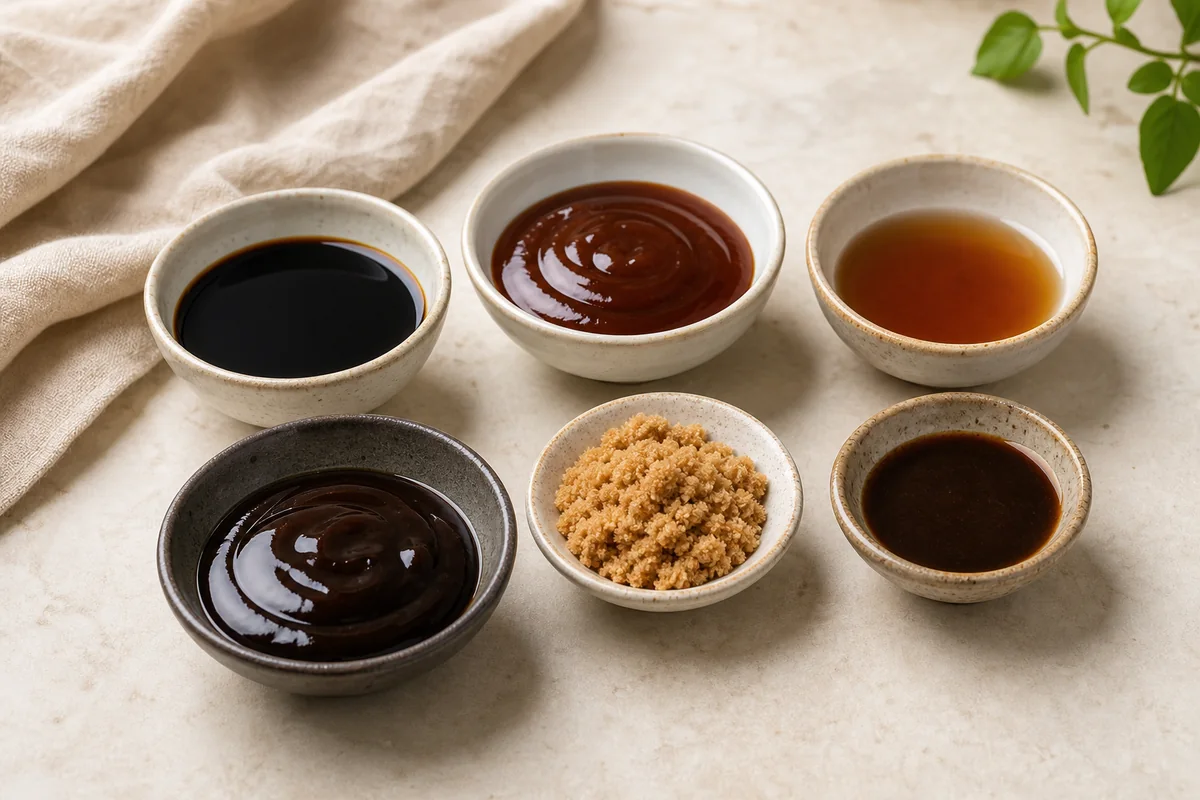
5 Best Oyster Sauce Substitutes (Tested)
Ingredients
Equipment
Method
- Identify your dish goal: stir-fry gloss, braise depth, or noodle sauce coating—this determines how much sweetness/thickness you need.
- Start with the listed ratio for the substitute you picked, then loosen with 1–2 teaspoons water if it’s too thick.
- If the substitute is sweeter than oyster sauce, reduce by 1–2 teaspoons per tablespoon and add a little soy/stock to balance.
- Taste once the sauce simmers (30–60 seconds for stir-fries); adjust salt/sweetness before the final toss.
- For glossy coating, add the substitute at the end and toss briefly so it clings without turning harsh.
Notes
- Oyster sauce is usually salty-savory with a light sweetness; substitutes often skew sweeter or thinner—adjust with water, soy, or a tiny pinch of sugar.
- If your substitute is very salty (fish sauce, concentrated soy), start lower than the oyster sauce amount.
Tried this recipe?
Let us know how it was!
Carrie is a food writer and editor with more than 15 years of experience. She has worked for some of the biggest names in the food industry, including Bon Appétit, Food & Wine, and Martha Stewart Living.
As the Editor in Chief of EpicureDelight, Carrie oversees all of the content on the site. She also manages the team of contributing writers and editors, who help to create delicious recipes, helpful tips, and informative articles that you’ll find on the site.
A native of the Chicago area, Carrie is passionate about all things food. She loves trying new restaurants and experimenting with new recipes in her kitchen. She’s also a graduate of the Culinary Institute of America, so she knows a thing or two about food!



