
Running out of tomato sauce mid-recipe is one of those small kitchen emergencies that feels bigger than it is. The good news: several pantry staples can step in, and most of them already share tomato sauce's core profile, which is that balance of sweet, acidic, and savory.
The right tomato sauce substitute depends on two things: thickness and sweetness. A watery swap can flood a braise; a too-sweet one can throw off a pizza base.
Understanding those two variables makes every swap below easier to apply.
Tomato-forward flavor notes matter here, too. If your sauce is carrying the whole dish, you want a replacement that reads like tomato, not just something red. This guide ranks five practical options by how close they behave in the pot, with quick ratios and a "skip if" for each.
The five best tomato sauce substitutes are crushed tomatoes, tomato paste, marinara sauce, canned diced tomatoes, and tomato purée. Each one matches tomato sauce's base flavor. Choose by thickness: purée and paste are thicker, crushed and diced need simmering, and marinara is ready to use.
5 Best Tomato Sauce Substitutes, Ranked by Behavior
Every option below is sorted by how closely it mimics tomato sauce's thickness and simmer behavior. The table gives you the ratio and a fast note on what to expect in the pan.
| # | Substitute | Best For | Ratio | Key Note |
|---|---|---|---|---|
| 1 | Crushed Tomatoes | Both | 1:1 | Simmer 5-10 min to thicken |
| 2 | Tomato Paste | Both | 1:3 paste:liquid | Whisk well; avoid metallic taste |
| 3 | Marinara Sauce | Both | 1:1 | Taste first; already seasoned |
| 4 | Diced Tomatoes | Both | 1:1 | Blend briefly before using |
| 5 | Tomato Purée | Both | 1:1 | Thin slightly if too thick |
1. Crushed Tomatoes
Crushed tomatoes are the most faithful swap for tomato sauce. They share the same base flavor and only need a short simmer to build the body that sauce already has.
If you're choosing canned tomato options, crushed is the first one to reach for.
- When to choose it: Any simmered dish, pasta sauce, shakshuka, or braised meat
- How long to simmer: 8-12 minutes over medium heat with the lid off
- Texture target: It should coat the back of a spoon before you add pasta or protein
- Seasoning note: Crushed tomatoes are unseasoned; add salt, garlic, and a pinch of sugar if it tastes sharp
- Best use case: Long-simmered braises and pasta sauces where you control every seasoning
Skip if: your recipe needs a very smooth sauce and you won't blend. Crushed tomatoes stay slightly rustic, and that texture will show in a refined dish.
2. Tomato Paste
Tomato paste is the most concentrated tomato product in your pantry. It needs thinning, but once diluted it behaves extremely well in the pot and delivers a deep, cooked tomato flavor that plain sauce rarely matches.
- Ratio: 1 part paste to 3 parts water or broth; adjust until it coats a spoon
- Best liquids: Vegetable broth adds flavor; plain water keeps it neutral
- Technique: Whisk paste into liquid until fully smooth before adding to the pan
- Simmer time: Cook 5 minutes to drive off that sharp, raw-paste edge
- Add aromatics early: Bloom garlic or onion in oil first; stir paste into that base for the best flavor
- Shelf note: If your concentrated paste in the tube has been open a while, check color and smell before using
Skip if: you don't plan to add liquid. Undiluted paste will taste overpowering and turns sauces unpleasantly dense.
3. Marinara Sauce
Marinara is the easiest convenience swap because it already has a tomato base, cooked-down body, and built-in seasoning. Knowing the tangy herb character it carries helps you decide whether it fits your recipe before you open the jar.
Most jarred marinara leans herby and slightly sweet. If your recipe is a neutral tomato base, those added flavors may compete.
- Taste before adding: Compare the marinara's salt level to what your recipe needs
- Simmer if needed: A 5-minute simmer tightens the body if the jar sauce is thin
- Adjust seasoning after: Hold extra salt and herbs until you've tasted the finished dish
Skip if: your recipe calls for a plain tomato base with no added herbs. Marinara's seasoning will change the final flavor noticeably.
4. Canned Diced Tomatoes
Diced tomatoes come out of the can chunky, but a quick blend closes most of that gap. The path is simple: blend for smoothness, then simmer for thickness.
Diced (Unblended)
Works for: chunky pasta sauces, stews, shakshuka, or any dish where texture is welcome
Skip if: you need a smooth, spoonable sauce for pizza or a silky pasta
Diced (Blended 15 Seconds)
Works for: pasta sauce, braises, casseroles, any use that calls for standard tomato sauce body
Skip if: you can't blend and need the smooth consistency right away
- Best blend approach: Use an immersion blender directly in the can or transfer to a countertop blender; 10-15 seconds is enough
- Simmer duration: 10 minutes at medium heat after blending to reach sauce-like body
- Seasoning timing: Add salt and aromatics after blending, not before, so you don't over-season the concentrated version
Skip if: you have no blender or immersion tool. The chunks won't break down enough on their own in a short cooking window.
5. Tomato Purée
Tomato purée is the substitute closest to tomato sauce in texture. It is smooth, thick, and already cooked, so it needs very little work before going into a recipe.
For a deeper look at purée flavor profiles, it reads milder and less acidic than crushed tomatoes.
| Use | Ratio | Notes |
|---|---|---|
| Pasta sauce | 1:1 | Use straight from can; simmer 5 min with seasoning |
| Pizza base | 1:1 thinned by 1 tablespoon water | Thin slightly so it spreads without tearing dough |
| Braise | 1:1 | Add with broth; no extra reduction needed |
| Casserole | 1:1 thinned by 2 tablespoon water | Thins to pourable consistency for layered dishes |
- When to thin: Add water 1 tablespoon at a time until it pours smoothly off a spoon
- Simmer vs. no simmer: A 5-minute simmer with garlic and salt is enough; you can skip it for no-cook uses if already well seasoned
- Seasoning timing: Purée is mostly unseasoned; add salt, garlic, and herbs right at the start
Skip if: your purée is very thick and you're making a no-cook pizza topping. Thin it first, or it will dry out on the dough and taste pasty.
Making Tomato Sauce Substitutes Work
The method is the same regardless of which swap you choose. First, match the thickness: reduce watery substitutes and thin concentrated ones.
Second, taste for sweetness and acid before the dish finishes cooking. Third, add your aromatics after the swap is in, not before, so you season the final mixture instead of guessing.
Knowing how storing your sauce properly affects quality helps here, too. A poorly stored tomato product can taste flat or sharp before you even start swapping.
And if marinara is your go-to backup option, understanding jarred sauce storage keeps your pantry reliable.
- Match body first: Simmer watery swaps 8-12 minutes uncovered, or whisk paste with 3 parts liquid until it coats a spoon
- Taste for balance: If the swap is too sharp, add a pinch of sugar; if it's too flat, add a splash of red wine vinegar or a squeeze of tomato paste
- Season at the end: Add garlic, oregano, and pepper after the swap is in the pan so you're seasoning the real final flavor, not an intermediate one
If you're only using the substitute as a binder, skip the reduction step. A quick stir-through is enough when no simmering is involved.
Frequently Asked Questions
Yes, use crushed tomatoes at a 1:1 ratio. Simmer uncovered for 8-10 minutes to reduce the extra liquid and build a thicker, sauce-like body before adding to your dish.
Use 1 part tomato paste whisked into 3 parts water or broth to equal 1 part tomato sauce. Simmer 5 minutes to mellow the sharp, concentrated flavor before using.
Marinara works well in lasagna at a 1:1 swap. Taste it first and reduce any added seasoning in your recipe, since jarred marinara already carries salt and herbs.
Simmer the ketchup 3-5 minutes with a splash of water and a pinch of salt to mellow the sugar. A small squeeze of tomato paste also shifts the balance toward savory.
You can use tomato purée straight if the recipe has other cooking time built in. For no-cook applications like pizza, thin it slightly and season well before spreading.
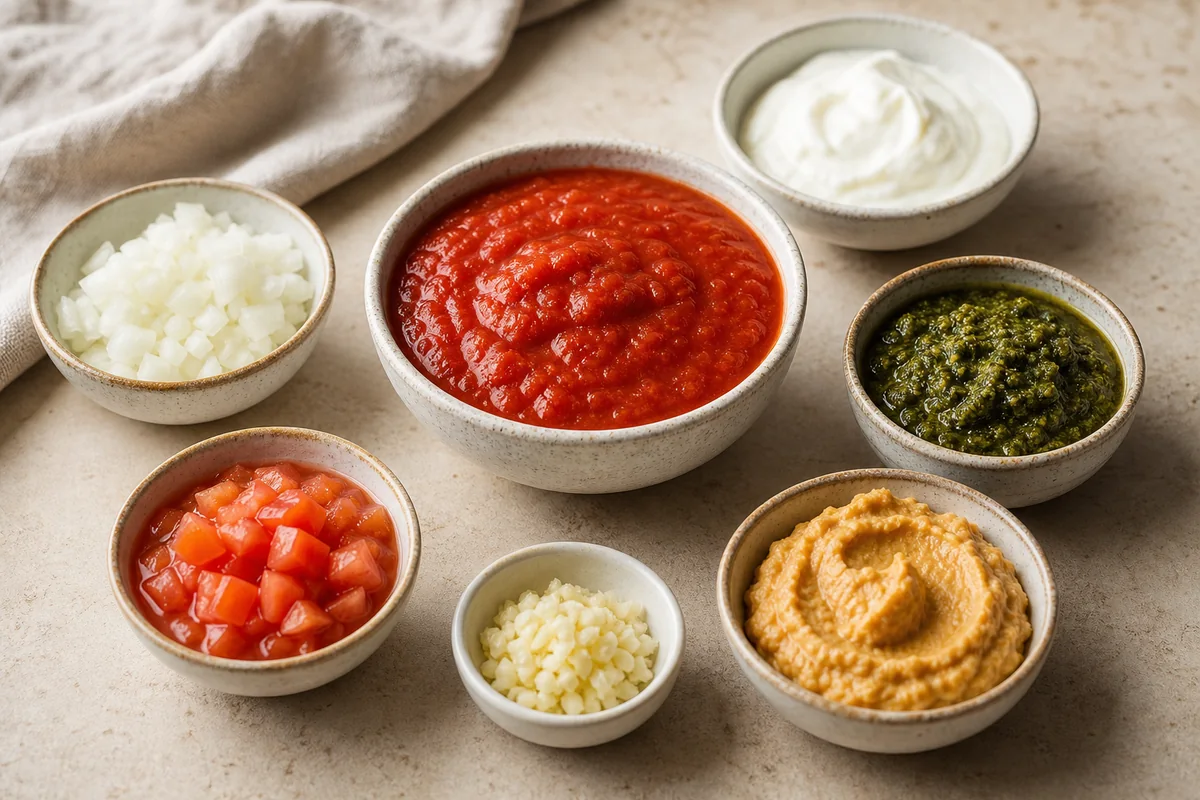
5 Best Tomato Sauce Substitutes for Better Results
Ingredients
Equipment
Method
- Identify your dish: pasta sauce, pizza base, braise, or stew—then match the substitute by thickness (pourable vs. reduced).
- Use the listed ratio. For concentrated options (tomato paste), thin with water or broth until it coats a spoon.
- Simmer if the substitute is watery (crushed or diced tomatoes) so it reduces into a tomato-sauce body.
- Taste for sweetness and salt. If it’s too sweet, simmer a little longer; if it’s too sharp, add a pinch of sugar or a splash of fat.
- Adjust seasoning after swapping (garlic, oregano, pepper) so the flavor reads like tomato sauce in your specific recipe.
Notes
- For any swap, the quickest match is: reduce watery tomatoes, thin concentrated paste, and then season to taste.
Tried this recipe?
Let us know how it was!
Carrie is a food writer and editor with more than 15 years of experience. She has worked for some of the biggest names in the food industry, including Bon Appétit, Food & Wine, and Martha Stewart Living.
As the Editor in Chief of EpicureDelight, Carrie oversees all of the content on the site. She also manages the team of contributing writers and editors, who help to create delicious recipes, helpful tips, and informative articles that you’ll find on the site.
A native of the Chicago area, Carrie is passionate about all things food. She loves trying new restaurants and experimenting with new recipes in her kitchen. She’s also a graduate of the Culinary Institute of America, so she knows a thing or two about food!



