
That drizzle at the end of a dish, the one that makes pasta smell like something you'd pay too much for, usually comes from truffle oil. When you're out of it, or when the bottle you have smells more like cheap synthetic musk than forest floor, the right truffle oil substitute can still get you close.
Truffle oil does two jobs: it adds finishing aroma and it carries richness as a liquid fat. Most substitutes do one well and the other partly, so knowing which job matters more in your dish is how you choose correctly.
Truffle oil is mainly a finishing oil, so the best swaps mimic its aroma first and its richness second. Truffle salt is the closest table-finish match. Mushroom truffle paste holds up in heat. Porcini oil keeps the liquid feel. Pick by use, then adjust salt and fat to balance.
5 Best Truffle Oil Substitutes for Better Results
Aroma intensity is the first thing to match, liquid consistency is second. The table below ranks each option by how closely it mirrors truffle oil's finishing behavior and earthy depth.
| # | Substitute | Best For | Ratio | Key Note |
|---|---|---|---|---|
| 1 | Truffle Salt | Finishing | ¾:1 | Reduce added salt |
| 2 | Mushroom Truffle Paste | Cooking | 1:1 | Bloom early in sauce |
| 3 | Porcini Oil | Drizzle | 1:1 | Strong mushroom flavor |
| 4 | Black Garlic Paste | Depth | ½:1 | Start with less |
| 5 | Balsamic + Olive Oil | Emergency | 1:2 | Watch the acidity |
1. Truffle Salt
Truffle salt is the substitute that comes closest to truffle oil's table-finish role, especially when your dish just needs that last hit of earthy aroma before it leaves the kitchen. It won't replace the oily mouthfeel, but the fragrance release is remarkably similar to a good-quality truffle oil drizzle.
Start at a ¾:1 ratio versus truffle oil and cut any other salt in the recipe before tasting. The salt content stacks up fast, and one heavy pinch too many will flatten everything else.
- Best timing: Add at the very end, just before plating, so heat doesn't kill the aroma.
- Texture note: Use fine-grain truffle salt, not coarse, so it dissolves into warm food evenly.
- Pairing: Works particularly well on pasta, popcorn, scrambled eggs, and roasted potatoes.
Truffle Salt vs. Truffle Oil
Works for: table-finish aroma, dry applications, dishes that don't need added fat
Skip if: your recipe needs truffle oil as a liquid fat base or a wet drizzle texture
Understanding earthy finishing notes in truffle oil helps you judge how much salt to add before the dish tastes right.
2. Mushroom Truffle Paste
Paste works where oil can't: inside a sauce, stirred into risotto, or folded into a compound butter that gets melted over steak. The earthy aroma doesn't blow off in steam the way a drizzle oil does.
Add it early when the pan is warm but not screaming hot. That short bloom, about 60 seconds in a little butter or oil, pushes the aroma deep into the base of whatever you're building.
- Ratio: Use a 1:1 swap but taste at the halfway point since paste concentrations vary by brand.
- Dissolving tip: Stir into soft butter first, then add that butter to the pan for even distribution.
- Finish option: A small dab stirred into hot pasta water just before draining adds subtle background depth.
Skip this if you want a pure drizzle texture at the table. Paste is thicker and won't coat food the way a liquid oil does.
If your stored paste has been open a while, check opened fat storage guidelines before using.
3. Porcini Oil
Porcini oil is an infused olive oil that shares truffle oil's liquid consistency and its role as a finishing drizzle. It skews more savory and unmistakably mushroom-forward, but the mouth-coating richness is the closest you'll find in a bottle.
- Pasta and risotto: Drizzle over just before serving; a teaspoon goes a long way.
- Roasted vegetables: Warm the oil briefly in the pan, then toss vegetables through it off the heat.
- Soup: Add a few drops to the bowl at the table, not into the pot while cooking.
- Quick pan sauce: Swirl 1 teaspoon into a finished butter sauce right before it leaves the stove.
Skip porcini oil if mushroom flavor is already strong in your dish. It can push the profile too far into savory-earthy territory, and there's no easy way to pull it back.
4. Black Garlic Paste
Black garlic doesn't smell like truffle, but it delivers the same sense of quiet luxury that truffle oil gives a dish. The fermentation process creates a deep, malty, almost balsamic-like depth that reads as "something special" without being obviously garlicky.
If you're cooking something where a mushroom-forward substitute would clash, like a cream sauce or a butter-based seafood dish, aged savory aromatics from black garlic can fill the depth gap cleanly. Start at ½:1 versus truffle oil and add more only after tasting.
- Dissolving method: Mash paste into room-temperature butter, then melt that into the dish at the end.
- Cream sauces: Whisk in ½ teaspoon per two servings; it blends without breaking the sauce.
- Finishing trick: A thin smear on toast under a fried egg replaces the truffle drizzle people usually reach for.
Skip this if your dish already has strong sweet components. Black garlic has a notable natural sweetness, and it will amplify any caramel or fruit notes already present.
5. Balsamic + Olive Oil Drizzle
No truffle product in the house at all? This is the move.
Balsamic brings aged complexity and a faint sweetness that mimics truffle oil's layered aroma better than plain olive oil alone.
| Use | Ratio | Notes |
|---|---|---|
| Pasta finish | 1:2 balsamic:olive oil | Whisk together just before drizzling |
| Roasted vegetables | 1:2 balsamic:olive oil | Add after roasting, not before |
| Simple salad | 1:3 balsamic:olive oil | Use aged balsamic for less sharpness |
- Balsamic quality matters: Aged balsamic is less acidic and closer in complexity to truffle oil's depth.
- Balance step: If it tastes too tangy, a pinch of flaky salt and an extra drizzle of grassy cold-pressed oil rounds it out.
- Works best on: Salads, roasted root vegetables, bruschetta, and simple pasta with parmesan.
Understanding vinegar acidity differences helps you pick the right balsamic grade so the drizzle doesn't overwhelm a delicate dish. Skip this swap if your dish can't handle any acidity at all.
Cream sauces and delicate white fish won't pair well with balsamic's tang.
Making Your Truffle Oil Substitute Taste Like the Real Thing
The gap between "pretty good" and "actually truffly" usually comes down to timing. Truffle oil's impact is almost entirely aromatic, so adding a substitute too early in the cooking process means the aroma cooks off before anyone tastes it.
Add your chosen swap late, taste the dish just before it leaves the heat, and adjust from there.
- Measure precisely first: Start below the listed ratio, especially with truffle salt and black garlic paste, because both are easy to overdo and hard to correct.
- Control timing: Finishing oils and salts go in last; pastes go in early during a short bloom in warm fat so the aroma distributes before the sauce thickens.
- Balance salt and fat: If the substitute tastes flat, add a small pinch of salt and a few extra drops of olive oil; if it tastes too intense, thin it with a half-teaspoon of warm water or neutral oil.
Frequently Asked Questions
No. Start at a ¾:1 ratio and reduce other added salt in the dish. Truffle salt is denser in flavor and adds sodium that truffle oil does not.
Porcini oil is the closest match for a finishing drizzle on pasta. Truffle salt also works well if you want to skip an extra oil entirely.
Mushroom truffle paste is the best choice for cooking. It survives heat better than oil and blooms into a sauce when stirred in early.
You likely used too much. Thin the dish with a small splash of neutral olive oil or a few drops of warm water, then retaste before adding anything else.
Porcini oil keeps the same liquid texture as truffle oil. Mushroom paste is thicker and will slightly increase the body of a sauce or spread.
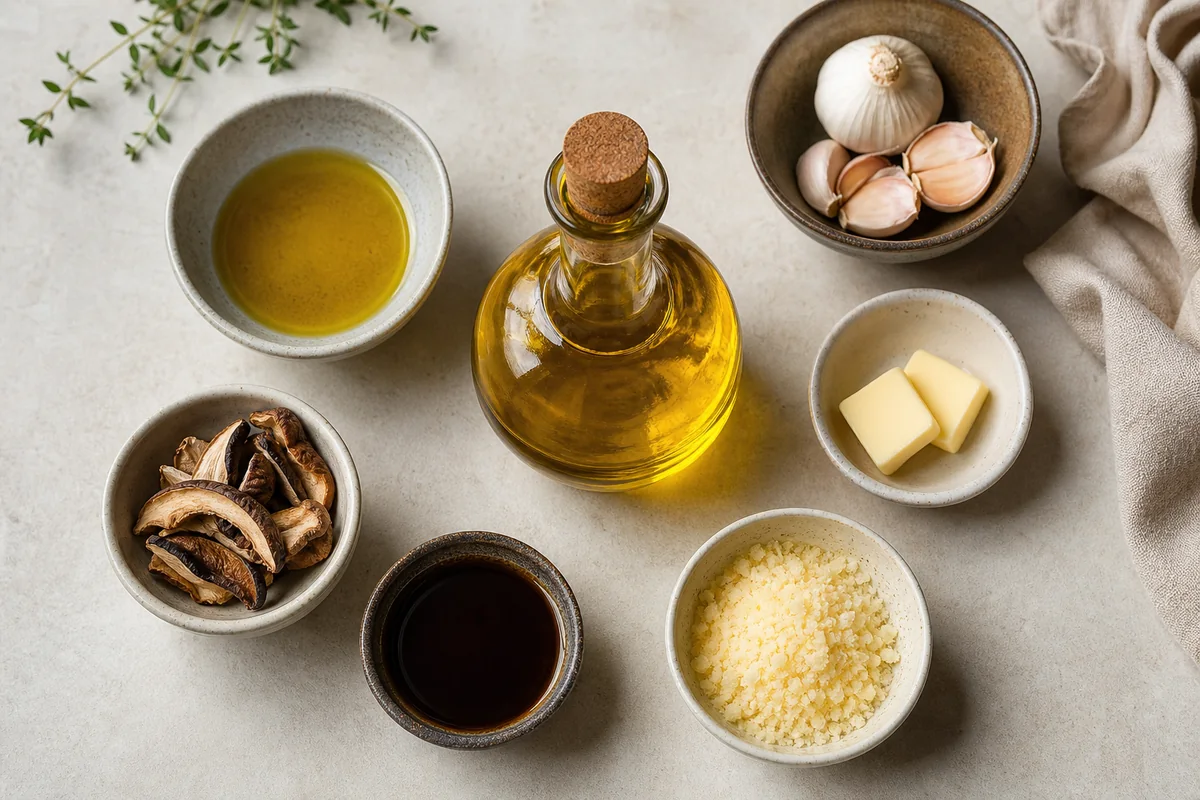
5 Best Truffle Oil Substitutes for Better Results
Ingredients
Equipment
Method
- Decide whether you’re using truffle oil as a finishing drizzle or cooking ingredient—finishing calls for truffle salt or porcini oil; cooking favors truffle paste.
- Start with the ratio in the WPRM table and use less if your substitute is saltier or stronger (truffle salt and pastes are easy to overdo).
- Bloom the flavor: for pastes, stir in early; for oils, warm the oil briefly in the pan or add at the end for maximum aroma.
- Balance the dish: if the swap tastes flat, add a pinch of salt; if it tastes too intense/earthy, thin with a little extra olive oil or a tiny splash of lemon.
- Taste and adjust right before serving—truffle oil is mainly about aroma and finishing.
Notes
- Use truffle-flavored products at the end for aroma, earlier for integrated earthy depth.
- If your substitute is saltier than truffle oil, reduce added salt in the recipe.
Tried this recipe?
Let us know how it was!
Carrie is a food writer and editor with more than 15 years of experience. She has worked for some of the biggest names in the food industry, including Bon Appétit, Food & Wine, and Martha Stewart Living.
As the Editor in Chief of EpicureDelight, Carrie oversees all of the content on the site. She also manages the team of contributing writers and editors, who help to create delicious recipes, helpful tips, and informative articles that you’ll find on the site.
A native of the Chicago area, Carrie is passionate about all things food. She loves trying new restaurants and experimenting with new recipes in her kitchen. She’s also a graduate of the Culinary Institute of America, so she knows a thing or two about food!



