
Baking with wheat bran is easy until you run out of it mid-recipe. The fiber and absorbency it brings are harder to replace than most people expect.
A good wheat bran substitute has to do two things well: soak up liquid at roughly the same rate and keep some texture in the finished crumb. Swap in something too fine or too binding, and your muffin or bread will come out either gummy or crumbly.
The right pick depends on what your recipe is actually asking the bran to do.
Oat bran is the closest match for baking texture and absorbency. Ground flaxseed works for moisture binding but can tighten the crumb. Psyllium husk is a strong binder at half the ratio. Ground oats and barley bran are solid everyday swaps at 1:1.
5 Best Wheat Bran Substitutes for Better Results
Use the table below for a fast ratio check, then read each H3 for how and when to apply the swap. Absorbency and particle size are the two variables worth matching.
| # | Substitute | Best For | Ratio | Key Note |
|---|---|---|---|---|
| 1 | Oat Bran (Fine-Milled) | Both | 1:1 | Closest fiber texture |
| 2 | Ground Rolled Oats | Both | 1:1 | Less chewy crumb |
| 3 | Ground Flaxseed | Baking | ¾:1 | Adds gel-like binding |
| 4 | Psyllium Husk Powder | Cooking | ½:1 | Start low-strong binder |
| 5 | Barley Bran / Ground Barley | Both | 1:1 | May need extra liquid |
1. Oat Bran (Fine-Milled)
Oat bran is the substitute we reach for first. It absorbs moisture at nearly the same rate as wheat bran and delivers a fiber-forward crumb that works well in muffins, quick breads, and dense bread doughs.
For bakers tracking how fiber-forward bran flavors compare, oat bran reads a little nuttier but not distracting in most recipes.
- When it shines: Muffins, bran loaves, pancake batter, and high-fiber cookies
- Prep tip: If your wheat bran was coarse, pulse oat bran briefly in a blender to a finer grind for smoother batter
- Ratio: 1:1 with no other changes needed in most recipes
- Moisture check: If batter thickens more than usual, add 1-2 teaspoons of liquid and rest 5 minutes
Skip if your recipe requires a very neutral flavor base. Oat bran's mild nuttiness can shift the taste slightly in delicate preparations.
2. Ground Rolled Oats
Ground rolled oats give your baked goods body and structure without the pronounced chew that bran brings. This makes them the better pick when you want a softer crumb or you're baking for someone who finds bran's texture too coarse.
The long-lasting coarse grain in rolled oats means shelf stability is rarely a concern.
- Ideal recipes: Soft muffins, oat-forward quick breads, breakfast bars, and pancakes
- Particle size: Pulse oats in a food processor to a sandy texture before measuring; visible flecks are fine but larger pieces can affect rise
- Ratio: 1:1 for a direct swap in most recipes
- Rest note: Let batter sit 5-10 minutes before baking so the ground oats fully hydrate and don't steal moisture from the crumb
Skip this if you want the same pronounced bran chew. Ground oats produce a noticeably more tender result, which is a plus or a minus depending on your recipe.
3. Ground Flaxseed
Ground flaxseed binds moisture rather than simply absorbing it. When it hydrates, it forms a light gel that makes the crumb tighter and more cohesive.
That is great for loaf-style breads and dense muffins, but less ideal if your recipe depends on a loose, open texture. If you're weighing other options, picking flax alternatives is worth a look for recipes where gel formation is a problem.
- Ratio: Start at ¾ the amount of wheat bran called for; do not go 1:1 on a first attempt
- Hydration: Add 1-2 extra tablespoons of liquid if batter looks stiff after mixing, then rest 10 minutes
- Flavor: Golden flax is milder than brown; both stay fairly neutral in baked goods
Ground Flaxseed
Works for: Dense muffins, loaves, and recipes where cohesion matters more than open crumb
Skip if: Your recipe relies on wheat bran's loose, dry texture-flax gel can over-tighten the crumb
4. Psyllium Husk Powder
Psyllium husk is one of the most water-absorbing ingredients you'll find in a pantry. A small amount thickens and binds far more than wheat bran would, so you use much less.
It is most useful in gluten-free recipes where structure is the goal, not chew.
Start at half the amount your recipe calls for in wheat bran. Give the batter a full 10 minutes to rest before baking, because this gel-forming husk needs time to fully absorb liquid and won't look right until it does.
- Ratio: ½:1 (half the volume of wheat bran called for)
- Rest time: 10 minutes minimum before baking
- Best use: Recipes that need thickening or binding more than texture
5. Barley Bran / Ground Barley
Barley bran and this earthy milled grain behave a lot like wheat bran in baked goods. They bring a coarse, fibrous body to breads and muffins, and the grind size you choose controls how close the texture lands to the original.
The main variable is moisture: barley can drink up liquid at a different rate than wheat bran depending on brand and grind.
| Use | Ratio | Notes |
|---|---|---|
| Muffins | 1:1 | Barley bran; add splash of milk if batter stiffens |
| Quick breads | 1:1 | Ground barley; rest batter 5-10 min before baking |
| Dense loaves | 1:1 | Either; check dough feel and add 1-2 teaspoon water if dry |
- Prep tip: If using whole barley, grind to a medium-coarse texture; too fine and it behaves more like flour
- Ratio: 1:1 in all standard recipes
Skip this if your recipe is sensitive to grain flavor. Barley reads earthier than wheat bran and can come through in mild-flavored recipes like plain muffins or white sandwich bread.
Making Wheat Bran Substitutes Work (Moisture + Texture Checks)
The biggest reason a substitute fails is not the ingredient-it's the lack of a rest period. Most bran-like substitutes need 5-10 minutes of hydration time after you mix the batter so they don't keep pulling moisture from the crumb during baking.
Getting familiar with the fibrous, slightly bitter character of original wheat bran helps you judge whether your swap is landing close enough.
- Hydration rest: After mixing, cover the bowl and rest the batter for 5-10 minutes before baking; this step matters most for flax and psyllium, which need extra time to fully gel
- Liquid adjustment: If batter looks too stiff after resting, add liquid 1 teaspoon at a time until it reaches your usual consistency; if too loose, add 1 teaspoon of your substitute
- Preventing gummy vs. dry outcomes: Reduce binder substitutes (flax, psyllium) if the crumb sets gummy; increase liquid by 1-2 tablespoons if the crumb comes out dry and crumbly after baking
Frequently Asked Questions
Oat bran is the best all-around choice for baking because it matches wheat bran's absorbency and texture at 1:1. Flax and psyllium both bind more aggressively and work better in denser loaves where structure matters more than crumb.
Yes for oat bran, ground oats, and barley bran-all work cleanly at 1:1. Reduce flaxseed to ¾:1 and psyllium to ½:1 to avoid gummy results.
Your substitute is absorbing liquid before the rest of the batter can hydrate. Rest the batter 5-10 minutes, then add liquid one teaspoon at a time until the consistency returns to normal.
They can if you use too much. Keep flax at ¾:1 and psyllium at ½:1, and always allow a 10-minute rest so the gel sets before the batter goes into the oven.
Yes. Ground rolled oats give body without the coarse bite of bran. Pulse them to a sandy texture before measuring for the smoothest result.
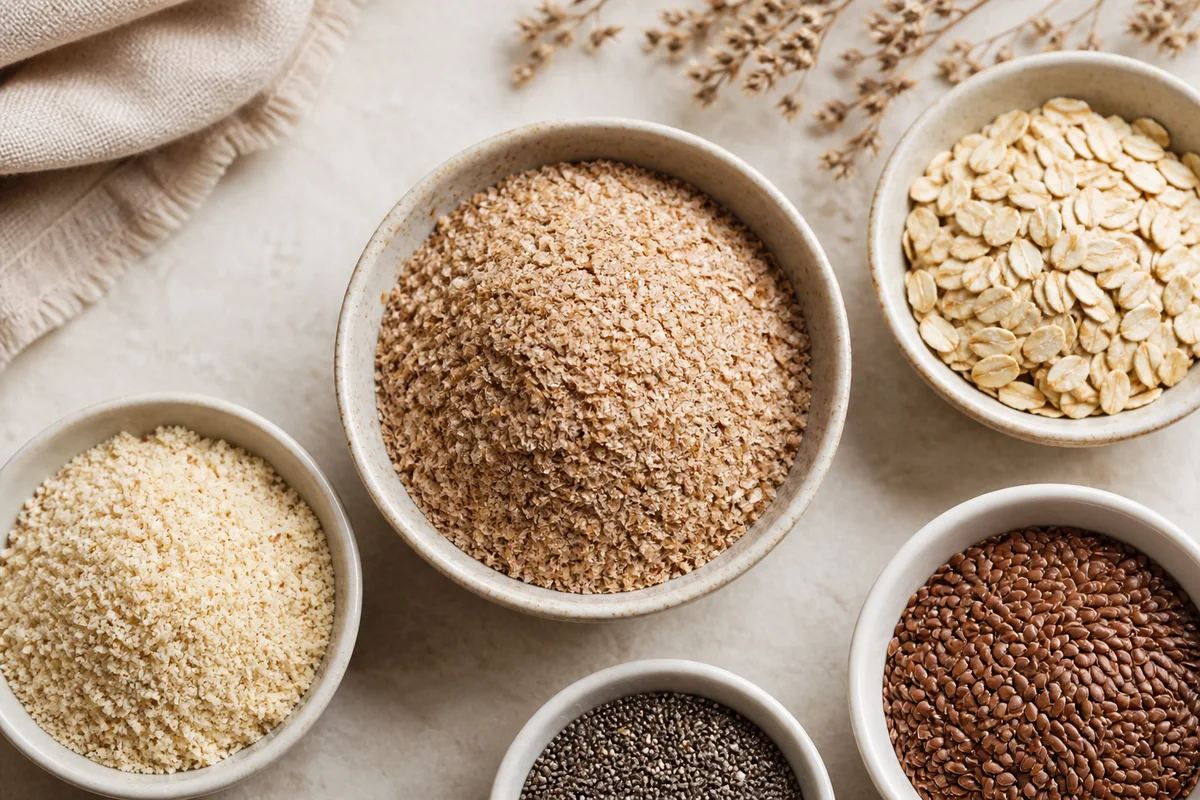
5 Best Wheat Bran Substitutes for Better Results
Ingredients
Equipment
Method
- Identify what your recipe relies on: moisture absorption (quick breads), fiber chew (muffins/breads), or binding (loafs).
- Replace wheat bran using the listed ratio, then mix thoroughly to fully wet any bran-like particles.
- Let the batter rest 5–10 minutes (especially for flax or psyllium) before baking or cooking.
- If batter looks dry, add 1–2 teaspoons of water/milk at a time; if it looks too thick, loosen with a splash of liquid.
- Bake/cook as directed, then adjust next time: add less substitute if the crumb gets gummy, or add a bit more if it’s too dry.
Notes
- For the closest results, choose the substitute with a similar particle size to your wheat bran (fine vs. coarse).
- Rest time matters: flax and psyllium hydrate and thicken quickly; bran-like flakes need a shorter rest.
Tried this recipe?
Let us know how it was!
Carrie is a food writer and editor with more than 15 years of experience. She has worked for some of the biggest names in the food industry, including Bon Appétit, Food & Wine, and Martha Stewart Living.
As the Editor in Chief of EpicureDelight, Carrie oversees all of the content on the site. She also manages the team of contributing writers and editors, who help to create delicious recipes, helpful tips, and informative articles that you’ll find on the site.
A native of the Chicago area, Carrie is passionate about all things food. She loves trying new restaurants and experimenting with new recipes in her kitchen. She’s also a graduate of the Culinary Institute of America, so she knows a thing or two about food!



