
Whole wheat flour does something distinct in a batter: the bran cuts through gluten strands, limiting rise and trapping water. That's not a flaw.
It's the behavior your whole wheat flour substitute needs to match, or at least approximate, depending on what you're baking.
What can I use instead of whole wheat flour largely depends on one question: do you need bran-level fiber behavior, a softer crumb, or a gluten-free result? Each option below targets a different answer.
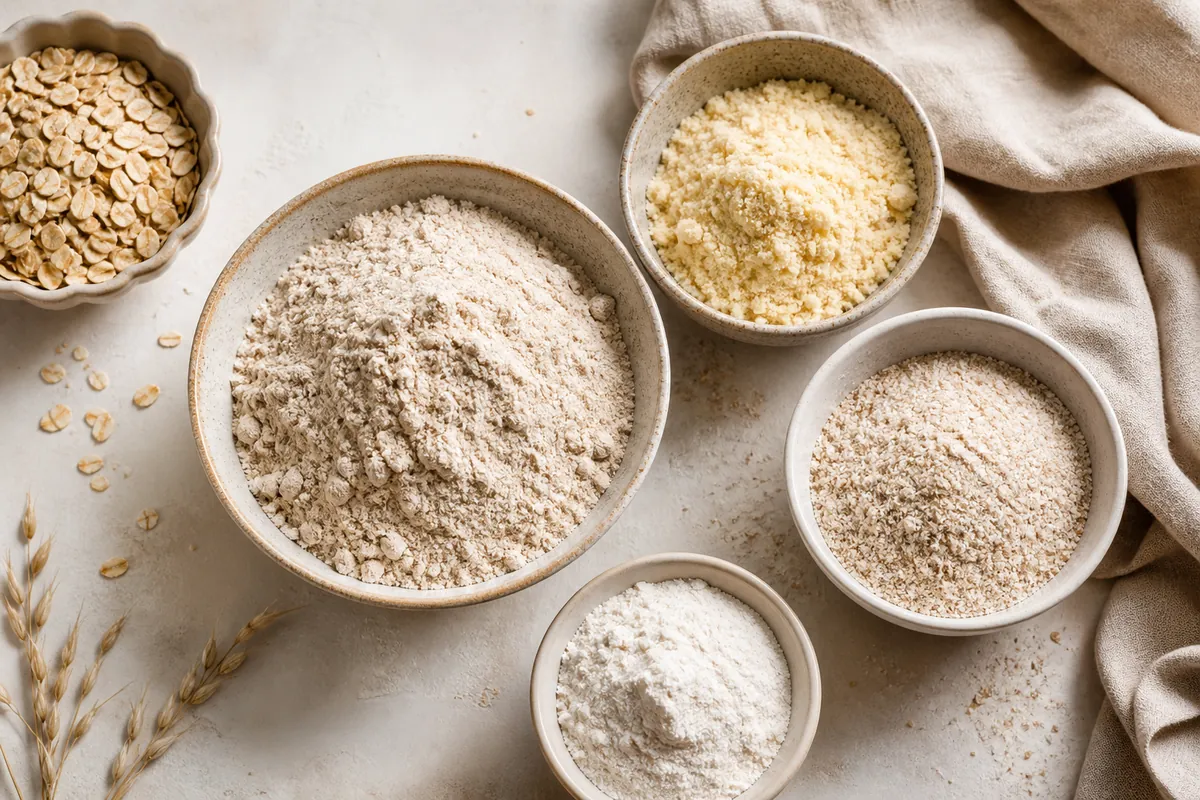
The best whole wheat flour substitute depends on your baking goal. All-purpose flour + wheat bran is the closest structural match. Spelt flour behaves like whole wheat without tasting heavy. Oat flour gives tenderness. Flaxseed + AP flour adds fiber and binding. For gluten-free needs, use a certified 1:1 gluten-free blend.
5 Best Whole Wheat Flour Substitutes (With Ratios)
| # | Substitute | Best For | Ratio | Key Note |
|---|---|---|---|---|
| 1 | AP Flour + Wheat Bran | Both | 1:1 | Closest bran structure |
| 2 | Spelt Flour | Both | 1:1 | Softer, nuttier crumb |
| 3 | Oat Flour | Baking | 1:1 | Tender; rest batter first |
| 4 | AP Flour + Ground Flaxseed | Baking | 1:1 | Fiber boost, adds binding |
| 5 | Gluten-Free 1:1 Blend | Baking | 1:1 | No wheat; lighter crumb |
Pick based on texture goal: bran-mix for the closest bite, spelt or oat for tenderness, and the gluten-free blend only when wheat is off the table entirely.
1. All-Purpose Flour + Wheat Bran
Mixing wheat bran into this lighter base flour replicates whole wheat's absorption and adds the fiber that tightens crumb structure. The ratio is straightforward, and the result is the most honest copy of whole wheat you can make from pantry staples.
- Ratio: ¾ cup all-purpose flour plus 2 tablespoons wheat bran equals 1 cup whole wheat flour
- Hydration: Bran absorbs more liquid; add 1 extra tablespoon of water or milk per cup of mix if dough feels tight
- Best recipes: Sandwich loaves, muffins, pancakes, and dense cookies all respond well to this swap
- Storage: Check this coarse fiber ingredient's shelf life before mixing a large batch; it goes rancid faster than AP flour
Skip if you have a wheat bran allergy or cannot source it. Also skip for very delicate sponge cakes where a lighter crumb is the priority.
2. Spelt Flour
Spelt is an ancient wheat variety, and it behaves closer to whole wheat than most swaps on this list. Its gluten is slightly weaker, which gives baked goods a softer, nuttier result.
You can read more about spelt's grain flavor profile before deciding if that nuttiness suits your recipe.
- Ratio: 1:1 straight swap; no adjustment needed in most recipes
- Handling note: Spelt gluten is more fragile, so do not overmix doughs; stop mixing as soon as ingredients come together
- Best bakes: Pancakes, quick breads, muffins, and flatbreads all work well; yeast sandwich loaves may be slightly denser than expected
- What to watch: In yeasted doughs, reduce knead time by about 2 minutes to avoid breaking down the gluten structure
Skip if your recipe depends on a strong, chewy gluten network, like a high-hydration sourdough or bagel dough.
3. Oat Flour
Oat flour produces a noticeably tender crumb and helps cookies and muffins brown more evenly. It absorbs liquid differently than whole wheat: batters may look slightly wetter at first, then firm up as oats hydrate.
Oat Flour
Works for: muffins, cookies, pancakes, banana bread; gives soft, moist crumb and even browning
Skip if: recipe needs bran-heavy structure or firm, chewy bite; oat flour won't replicate wheat density
Whole Wheat Flour
Works for: hearty loaves, dense muffins, crackers; bran provides structural tightness and earthy flavor
Skip if: you need a light, tender crumb or gluten-free result
You can find a refined approach to lighter wheat swaps if your recipe already leans toward the delicate side.
- Ratio: 1:1 by volume; weigh if your recipe is sensitive (oat flour is lighter per cup)
- Hydration tip: Let batter rest 5 minutes after mixing; oat flour needs time to absorb liquid before you judge consistency
- Best uses: Muffins, cookies, pancakes, and quick breads all work; avoid yeast breads entirely
Skip if you need a firm, bran-heavy texture, or if oat cross-contamination is a concern for your household.
4. All-Purpose Flour + Flaxseed
Ground flaxseed does two things when mixed into all-purpose flour: it adds dietary fiber and it mimics some of bran's binding effect. The result is a slightly nutty, denser bake that holds together better than plain AP flour alone.
| Dough Condition | Ratio | Adjustment |
|---|---|---|
| Normal consistency | ⅞ cup AP + 2 tablespoon ground flaxseed per 1 cup whole wheat | No extra liquid needed |
| Dough feels dry or stiff | Same ratio | Add 1-2 teaspoon extra water or oil and rest 5 min |
| Batter-style recipes | Same ratio | Reduce mix time; flax thickens batter as it sits |
Flaxseed adds a mild, earthy flavor. Most people don't notice it in muffins or quick breads, but it's more detectable in plain flatbreads.
If you are considering other flax-based binding options, that resource covers what else works in a similar role.
- Ratio: ⅞ cup all-purpose flour plus 2 tablespoons ground flaxseed per 1 cup whole wheat flour
- Rest time: Let dough rest 5 minutes before shaping; flax continues to absorb moisture after mixing
- Best bakes: Quick breads, muffins, dense cookies, and savory flatbreads are all reliable matches
Skip if you or your household dislikes the earthy taste of flax, or if your recipe is meant to stay very light and airy.
5. Gluten-Free 1:1 Baking Flour
A certified gluten-free 1:1 baking blend is the right move when wheat is off limits entirely. These blends typically combine rice flour, potato starch, and a binder like xanthan gum, so structure comes from the blend itself rather than gluten.
The crumb will be lighter and less earthy than whole wheat, but the swap is predictable in most quick-bake recipes.
- Ratio: 1:1 by weight or volume; do not reduce the amount
- Best recipes: Cookies, muffins, pancakes, and quick breads work well; yeast breads are unreliable with most blends
- Mixing note: Do not overmix; gluten-free batters toughen if worked too long, and extra thickeners in the blend amplify that effect
- Doneness check: Use a toothpick or probe thermometer (quick breads are done at 200-205°F internal) since gluten-free bakes can look done while still gummy inside
Skip if you want that hearty, bran-heavy bite. Also skip if your blend already includes xanthan gum and your recipe adds more separately.
Making the Substitute Work (Ratio + Hydration Tips)
Every swap above uses a 1:1 ratio by volume, but the real difference shows up in hydration and mix time. Whole wheat flour absorbs more liquid than white flour because bran soaks up water.
When your substitute is finer or less absorbent, like a freshly stored AP flour, the batter may feel wetter than expected. Check the bran-content details of your swap before adjusting.
- Hydration adjustment: Add liquid 1 tablespoon at a time if dough feels stiff; reduce liquid by the same increment if batter looks too thin. Let the dough rest 5 minutes before deciding.
- Mix time control: Shorter is almost always better when substituting. Oat flour, spelt, and flax blends all toughen quickly with overworking. Stop mixing the moment dry flour disappears.
- Doneness cue: Substitutes often bake 2-3 minutes faster than whole wheat originals because they carry less bran to slow heat transfer. Start checking early, and use an internal temperature probe for loaves.
Frequently Asked Questions
Yes, and the cookies will spread a little more and taste lighter. Reduce liquid by 1 tablespoon per cup if the dough feels loose after mixing.
Bran in whole wheat absorbs significantly more water than white flour does. When swapping to a finer substitute, reduce liquid by 1-2 tablespoons first and add back from there.
It works, but expect a slightly denser loaf because spelt gluten is weaker. Reduce kneading time by about 2 minutes to avoid overworking the dough.
Gumminess usually means underbaking or too much liquid. Let the batter rest 5 minutes before baking and check doneness with a toothpick, not just color.
Yes, quick breads are the most forgiving format for this swap. The crumb will be lighter and less earthy, but the loaf should bake and slice cleanly.
5 Best Whole Wheat Flour Substitutes (Tested)
Ingredients
Equipment
Method
- Identify your recipe type (bread/loaf, muffins/cookies, pancakes, or thick batter).
- Choose the closest swap: bran-mix for closest whole-wheat structure, spelt for similar wheat behavior, oat/flax for tenderness/fiber, or 1:1 gluten-free for no-gluten needs.
- Use the stated ratio (1:1). Measure by weight if your recipe is sensitive to flour weight (especially cookies and quick breads).
- If your substitute is finer/drier than whole wheat (like oat flour), add a small splash of liquid or let batter rest 5 minutes to hydrate before baking.
- Taste and adjust next time: for less dryness, reduce bran content or increase liquid; for more wheaty depth, add a small pinch of extra whole-grain flour in the next batch.
Notes
- If your recipe specifies whole wheat flour for structure, start with the bran-mix swap for the most similar bite.
- Whole wheat absorbs more liquid than many all-purpose alternatives—expect to adjust hydration slightly.
Tried this recipe?
Let us know how it was!
Carrie is a food writer and editor with more than 15 years of experience. She has worked for some of the biggest names in the food industry, including Bon Appétit, Food & Wine, and Martha Stewart Living.
As the Editor in Chief of EpicureDelight, Carrie oversees all of the content on the site. She also manages the team of contributing writers and editors, who help to create delicious recipes, helpful tips, and informative articles that you’ll find on the site.
A native of the Chicago area, Carrie is passionate about all things food. She loves trying new restaurants and experimenting with new recipes in her kitchen. She’s also a graduate of the Culinary Institute of America, so she knows a thing or two about food!



