
Wondra flour has one job it does better than almost anything else in the pantry: it mixes in fast and thickens without clumping. That quick-dissolving behavior comes from its pre-gelatinized, granulated structure, which is very different from regular flour.
Finding a good wondra flour substitute means deciding first whether you need that smooth thickening power or the lighter texture Wondra brings to baked goods.
The answer changes depending on the recipe. For sauces and gravies, starches like cornstarch and potato starch are closer matches.
For baking, softer flours take the lead.
For thickening, cornstarch or potato starch match Wondra's smooth, fast-dispersing behavior best. For baking, cake flour or all-purpose flour give you the lighter crumb Wondra is known for. Use ¾:1 cornstarch or 1:1 potato starch for sauces; use 1:1 cake flour for tender baked goods.
5 Best Wondra Flour Substitutes (And When to Use Them)
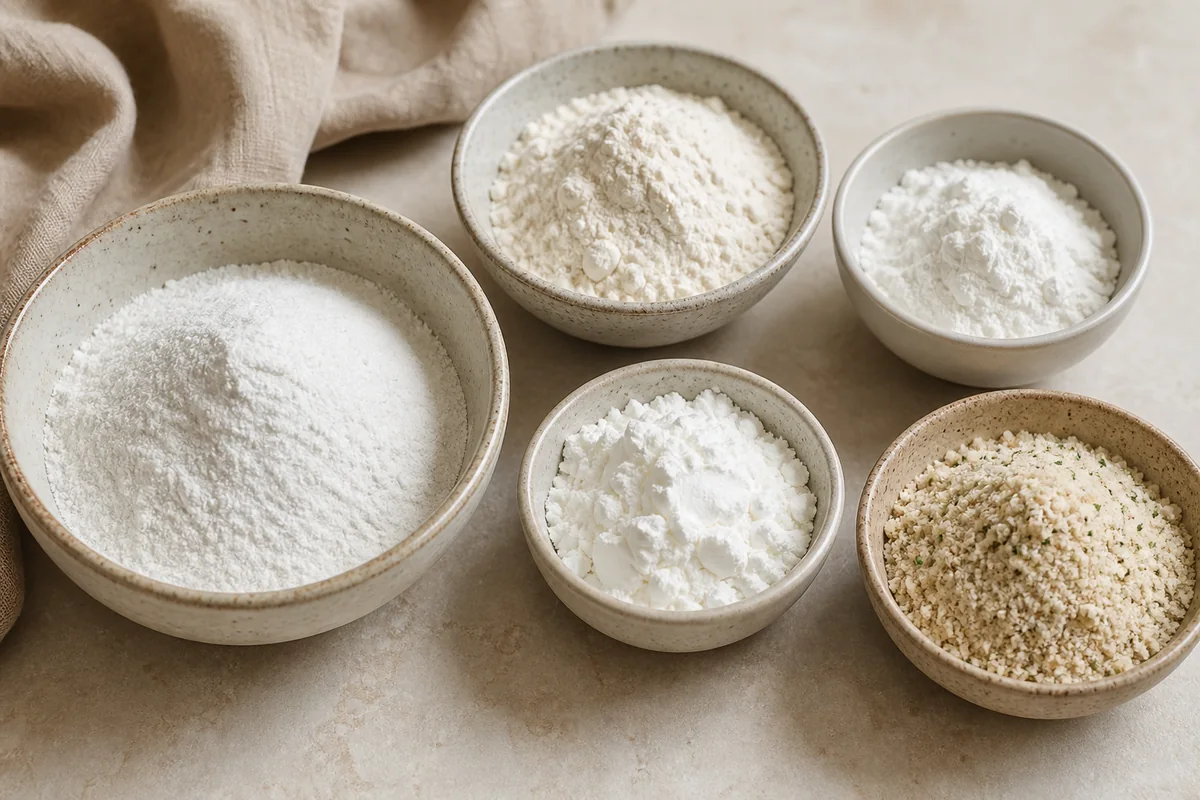
Each substitute below is matched to a specific texture goal, whether you're thickening a pan sauce or lightening a batter. The table gives you the ratio and use at a glance.
Every H3 section that follows adds the detail you need to apply it without guessing.
| # | Substitute | Best For | Ratio | Key Note |
|---|---|---|---|---|
| 1 | Cornstarch | Thickening | ¾:1 | Cold slurry, no raw taste |
| 2 | Potato Starch | Thickening | 1:1 | Fast, neutral, glossy finish |
| 3 | Cake Flour | Baking | 1:1 | Tender crumb, weak thickener |
| 4 | All-Purpose Flour | Both | 1:1 | Simmer longer, roux helps |
| 5 | Rice Flour | Coating/Baking | 1:1 | Light coating, weaker sauce body |
Choose starch-based swaps for the smoothest sauce thickness. For baking tenderness, softer flours are the better fit.
That single decision will narrow your choice immediately. If you want to understand this granulated flour's neutral flavor profile before swapping, that context helps with ratio decisions.
1. Cornstarch
Cornstarch is the closest thing to Wondra's quick-thickening behavior in most kitchens. It disperses fast in cold liquid and thickens almost instantly once the pan heats up, which mirrors how Wondra behaves in sauces and gravies.
Use ¾ teaspoon of cornstarch for every 1 teaspoon of Wondra when thickening. Start there, then nudge up in small increments if you need more body.
Cornstarch
Works for: pan sauces, gravies, stir-fry glazes, fruit fillings
Skip if: you need flour structure in baking, or prefer a more matte, floury finish in a sauce
For the roux-versus-slurry decision, cornstarch only works as a slurry. It will clump badly if you drop it dry into a hot pan.
- Best for: gravies, pan sauces, stir-fry glazes, and fruit pie fillings
- Ratio: ¾:1 (cornstarch to Wondra); add by ¼ teaspoon increments if needed
- Mixing tip: Always dissolve in cold liquid first before adding to the hot pan
- Texture note: Gives a slightly glossy, clear finish rather than a matte floury one
Skip if you're baking and need gluten-based structure. Cornstarch alone can't provide that.
2. Potato Starch
Potato starch is the quietest substitute on this list. It has almost no flavor of its own, so it won't shift the taste of a delicate sauce even slightly.
It disperses quickly in liquid and produces a very clean, smooth texture. Storing potato starch properly matters here because moisture degrades it fast and clumping becomes a problem.
- Best for: pan sauces, light gravies, Asian-style stir-fry sauces, clear broths
- Ratio: 1:1 for thickening; it's forgiving and rarely needs adjustment
- Heat timing: It thickens quickly once it hits heat, so simmer only until the sauce looks glossy and coats a spoon
- Appearance: Stays clear and bright, not cloudy like AP flour
Skip if you need flour to add any structure or chew. Potato starch is purely a thickener.
3. Cake Flour
Cake flour is the baking substitute here, not the thickening one. Its low protein content produces a soft, tender crumb that comes close to the lightness Wondra brings to coatings and quick batters.
For flour protein comparisons, cake flour sits at the low end, which is exactly what makes it work here.
- Ratio: 1:1 for baking; expect less thickening power than any starch option
- If thickening: Increase simmer time to let the flour fully hydrate before judging consistency
Skip if you need quick, lump-free thickening in a liquid. Use cornstarch or potato starch instead.
4. All-Purpose Flour
All-purpose flour is the default fallback most home cooks reach for first. It works, but it needs more time and attention than Wondra to perform well.
The main issue is raw flour taste. Without enough cooking time, AP flour leaves a starchy, almost chalky note in sauces.
You can also check flour flavor differences to understand why that raw note appears and how long you need to cook it out.
All-Purpose Flour
Works for: roux-based sauces, stews, gravies when you have extra simmer time, most baking
Skip if: you need fast, smooth dispersion without extended cooking time
- Ratio: 1:1 for thickening; the same for baking
- Whisk tip: Blend into cold liquid or make a roux first to minimize lumps
- Cook time: Simmer at least 5 minutes longer than you would with Wondra to cook out the raw taste
- Best use: Roux-based gravies, white sauces, and braised dishes that cook long anyway
Skip if you're in a hurry or need the smoothest possible result fast. A starch will outperform it there.
5. Rice Flour
Rice flour is a light, slightly gritty-textured flour that works well for thin coatings and some baking. For thickening sauces, it's the weakest option on this list, but it has its moments.
It works best when you want a mild, neutral-tasting coating on proteins or a gluten-free alternative in quick breads. Expect to use a bit more and simmer a bit longer if you're thickening with it.
- Best for: light coatings on fish or chicken, gluten-free quick breads, thickening as a last resort
- Ratio: 1:1 to start; increase by 1 teaspoon increments if the sauce isn't thickening enough
- Adjustment: Simmer longer than you would with Wondra; rice flour takes more heat to fully hydrate
- Pairing tip: Mix with a small amount of cornstarch if you need stronger sauce body alongside it
Skip if you need a strong, glossy, quick thickener. Use cornstarch or potato starch instead.
Making Wondra Substitutes Work (No Lumps, Right Texture)
The most common mistake when swapping Wondra is treating all substitutes the same way. Starches thicken fast and can go gummy if you overcook them.
Flours need longer heat exposure to hydrate fully and lose their raw taste. Knowing which category your substitute falls into is the first step to a smooth result.
For more background on technique, flour freshness and performance is worth reviewing before you start.
- For starches (cornstarch, potato starch, arrowroot): Make a cold slurry first, stir into the hot liquid, and stop simmering once the sauce coats the back of a spoon. Overcooking breaks the gel and thins the sauce.
- For flours (AP, cake, rice): Use a roux or cold-liquid slurry, then simmer for at least 5 minutes to cook out the raw starch taste before judging consistency.
- Adjusting thickness at the end: Add extra thickener in tiny increments (¼ teaspoon at a time), or loosen with a splash of broth or water. Dump-and-stir is the fastest way to break a sauce.
Frequently Asked Questions
Cornstarch and potato starch are the closest matches. Both disperse quickly and thicken smoothly without the raw flour taste that AP flour can leave behind.
Potato starch works at 1:1. Cornstarch is stronger, so start at ¾:1 and add more in small increments if the sauce needs more body.
Always mix the substitute into cold liquid before it hits a hot pan. This slurry method prevents clumps regardless of which substitute you use.
Cake flour is the best baking swap at 1:1 for tender texture. Starches don't replace Wondra in baking because they lack the gluten structure baked goods need.
Starch-thickened sauces can break down when reheated too aggressively. Reheat gently over low heat and add a small splash of liquid if it tightens up too much.
5 Best Wondra Flour Substitutes for Home Cooks
Ingredients
Equipment
Method
- Identify your goal: silky thickening (sauces/gravy) or tender baking (crumb/structure).
- Choose the closest substitute from the table (start with cornstarch/potato starch for thickening, cake/AP for baking).
- Measure using the ratio in the table; for sauce thickening, whisk the substitute into a cold slurry first if you’re seeing lumps.
- Adjust cook time: starches thicken quickly once heated, while flours need a longer simmer to lose raw taste and fully hydrate.
- Taste and adjust consistency at the end—add a splash of liquid for looseness or extra thickener (small increments) for body.
Notes
- Wondra’s main advantage is fast hydration and smooth thickening—prioritize starches for the smoothest results in liquids.
- If substituting for baking, focus on protein/softness; if substituting for sauces, focus on thickening power and cook time.
Tried this recipe?
Let us know how it was!
Carrie is a food writer and editor with more than 15 years of experience. She has worked for some of the biggest names in the food industry, including Bon Appétit, Food & Wine, and Martha Stewart Living.
As the Editor in Chief of EpicureDelight, Carrie oversees all of the content on the site. She also manages the team of contributing writers and editors, who help to create delicious recipes, helpful tips, and informative articles that you’ll find on the site.
A native of the Chicago area, Carrie is passionate about all things food. She loves trying new restaurants and experimenting with new recipes in her kitchen. She’s also a graduate of the Culinary Institute of America, so she knows a thing or two about food!



