
That clean, sliceable set in a molded jelly or chilled dessert comes from one thing: the right gelling agent, dosed correctly. Agar agar is the go-to for plant-based gel work, but running out mid-recipe is a real problem. The good news is that several substitutes can step in, as long as you match the swap to what your dish actually needs.
Set texture matters more than most cooks expect. A spoonable panna cotta needs a different swap than a firm, unmoldable fruit terrine.
Pick based on end texture first, then adjust your ratio and technique.
The best agar agar substitute depends on whether you need a sliceable, spoonable, or jam-like set. Gelatin is closest for creamy desserts, carrageenan works for glossy gels, and pectin suits acidic fruit recipes. Match your swap to the texture goal, then adjust ratio and hydration.
5 Best Agar Agar Substitutes by Texture
Before scanning the table, note what your recipe actually needs. A firm gel that unmolds cleanly is not the same as a thick, spoonable pudding.
Each substitute below is ranked by how close its set behavior comes to agar agar's clean snap.
| # | Substitute | Best For | Ratio | Key Note |
|---|---|---|---|---|
| 1 | Gelatin | Sliceable / Spoonable | 3:1 | Bloom in cold liquid first |
| 2 | Carrageenan | Glossy Gels | 1:1 | Dissolve fully before molding |
| 3 | Pectin | Jam / Fruit Gel | 2:1 | Needs acid and sugar to set |
| 4 | Konjac | Clear Springy Gel | 4:1 | Pre-hydrate to avoid lumps |
| 5 | Cornstarch | Spoonable Only | 2:1 | Simmer to activate; won't mold |
1. Gelatin
Gelatin is the most reliable agar agar substitute when your recipe calls for a firm, sliceable set. It produces a gel with a slight wobble rather than agar's brittle snap, but the behavior is close enough that most chilled desserts work well.
For readers who want to understand skipping gelatin entirely, plant-based options like carrageenan or konjac are covered further down.
Start at a 3:1 ratio (gelatin to agar agar) and taste-test your set after full chilling. If it's too soft, add a small amount more next time rather than over-correcting in one batch.
Gelatin (Powder or Sheets)
Works for: Chilled panna cotta, molded desserts, fruit jellies that need refrigeration
Skip if: You need a plant-based or vegan gel, or you want a firm set at room temperature
- Ideal use: Creamy chilled desserts, molded jellies, layered cakes with set filling
- Ratio: Use 3 parts gelatin for every 1 part agar agar
- Bloom step: Sprinkle over cold liquid, wait 5 minutes, then warm gently until dissolved
- Chill time: Allow at least 4 hours in the fridge before unmolding
2. Carrageenan
Carrageenan is the substitute that looks most like agar agar in finished texture. It produces a glossy, smooth gel that sets as the mixture cools in the mold.
For a detailed side-by-side of how these two seaweed-derived gelling agents compare, the two-agent tradeoff is worth reading before you buy.
Use a 1:1 ratio, and keep one thing in mind: concentration matters. A slightly over-concentrated carrageenan solution can turn grainy.
- Best use: Panna cotta, fruit jelly, glossy molded desserts
- Ratio: 1:1 with agar agar; start conservatively
- Activation: Simmer in liquid for 2-3 minutes, stirring constantly until fully dissolved
- After chilling: Expect a firm, glossy set - slightly less snappy than agar but very close
Skip if: Your recipe is a jam or fruit preserve. Carrageenan doesn't perform well with high-sugar, high-acid fruit mixtures.
3. Pectin
Pectin is the right swap when your recipe is already working with fruit, acid, and sugar. It produces a jam-like set rather than the clean geometric slice that agar delivers.
If you've seen that thin, slightly waxy coating on ripe produce, that's the same fruit-derived gelling compound at work in nature.
The critical detail is that pectin needs both acid and sugar to gel. Without enough of either, the mixture stays soft no matter how much pectin you add.
Use 2 parts pectin for every 1 part agar agar when the recipe is fruit-forward and acidic. In low-acid recipes, pectin simply won't set cleanly.
Skip if: Your recipe is low-sugar, low-acid, or requires a neutral, clear gel for a molded dessert.
4. Konjac
Konjac (also sold as glucomannan) forms a gel that is springy and clear, closer to agar's look than most starch-based options. It works well in applications where you want transparency, like clear fruit jellies or layered desserts.
The gel has an elastic quality that some people prefer over agar's brittle snap.
Hydration is the key step here. Konjac powder clumps badly if added to hot liquid directly.
Konjac (Glucomannan)
Works for: Clear jellies, elastic gels, plant-based desserts that need transparency
Skip if: You want a classic creamy wobble or you can't pre-hydrate before cooking
- Ratio: Use 4 parts konjac for every 1 part agar agar
- Hydration step: Mix konjac into cold liquid and let sit for 5-10 minutes before heating
- Activation: Warm gently, stirring constantly, until fully dissolved and slightly thickened
- Texture expectation: Springy and elastic rather than firm-brittle; holds shape after unmolding
5. Cornstarch
Cornstarch will thicken your mixture, but it won't give you a clean gel that slices or holds a mold shape. Think of it as a spoonable-texture swap, not an agar replacement for jellies.
That said, for puddings, pie fillings, or sauces that need body, the neutral-flavored starch is a solid pantry fix.
Use a 2:1 ratio (cornstarch to agar agar) and plan on a full simmer to activate the thickening.
- When it works: Puddings, pie fillings, thick dessert sauces
- Slurry method: Mix cornstarch with cold liquid first, then add to the hot base
- Simmer time: Cook for at least 1-2 minutes after the mixture thickens to remove raw starch taste
- After chilling: The mixture may firm slightly but will not hold a mold shape
Skip if: You need a firm, unmoldable dessert or a stable gel that holds at room temperature.
Making an Agar Agar Substitute Work
Every substitute on this list responds to two variables: how much thickener you use and how you activate it. Getting either wrong produces a set that's too soft, too stiff, or grainy.
The universal adjustment is to start conservative, chill completely, then evaluate. Resist the urge to add more thickener before the first batch has fully set.
If you're curious about what authentic agar agar brings to a recipe, the firm, neutral gel is a useful flavor and texture benchmark to keep in mind.
- Step 1 - Hydrate or bloom: Gelatin needs cold liquid for 5 minutes before warming. Konjac needs cold liquid pre-soak. Carrageenan and pectin dissolve directly in warm liquid with stirring.
- Step 2 - Activate with heat: Simmer or warm gently; do not boil gelatin after blooming. Cornstarch and pectin both need a proper boil to activate fully.
- Step 3 - Chill and test: Pour into molds, chill completely, then test firmness. If too soft, reduce liquid by 2 tablespoon in the next batch rather than increasing thickener.
Frequently Asked Questions
Gelatin is the closest match for chilled, sliceable desserts. Use a 3:1 ratio and bloom in cold liquid before warming. For vegan recipes, carrageenan at a 1:1 ratio is the next best option.
Yes. Sprinkle gelatin over cold liquid and wait 5 minutes before heating. Skipping this step produces a weak or uneven gel.
Generally no. Pectin requires sugar and acid to set, and it produces a jam-like texture rather than agar's clean, sliceable gel. It works for fruit jellies, not neutral molds.
Both starches thicken rather than gel. They produce spoonable, soft textures that won't hold a mold shape. Use them for fillings and puddings, not sliceable desserts.
First, confirm the batch has chilled for the full 3-4 hours. If still soft, reduce the liquid by 2 tablespoon in your next attempt rather than adding more thickener at once.
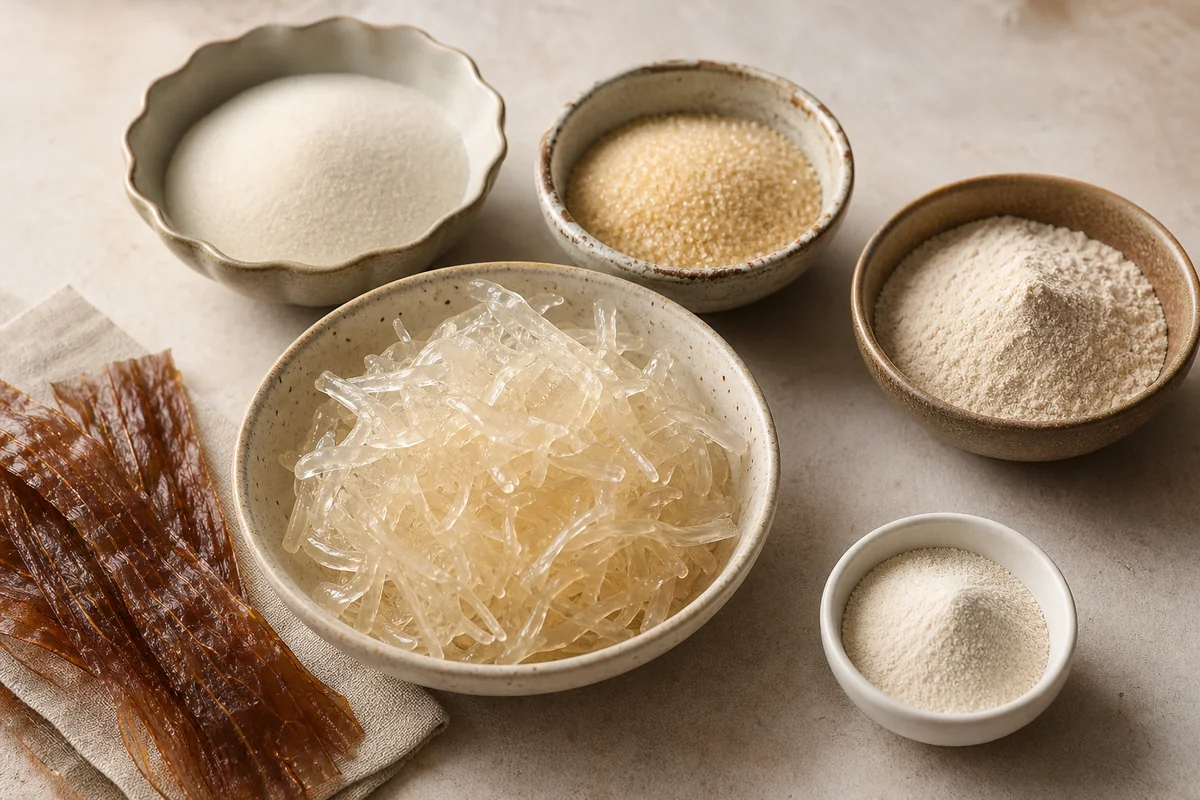
5 Best Agar Agar Substitutes Worth Trying
Ingredients
Equipment
Method
- Identify your goal: sliceable (jellies), wobble/spoonable (desserts), or jam-like (fruit gels).
- Pick the closest match from the WPRM list above and start with the listed substitution ratio.
- If using gelatin or konjac, hydrate/bloom first; then dissolve gently (do not aggressively boil).
- If using pectin, make sure your mixture is acidic and dissolve pectin into warm liquid before setting.
- Chill until the center fully sets, then do a quick spoon test; adjust next batch by adding a touch more thickener or reducing liquid.
Notes
- Use agar agar typically produces a firmer, cleaner set without refrigeration dependence—substitutes vary in sliceability and melt behavior.
- Always account for liquid level: most non-agar thickeners need a tighter liquid balance to avoid a soft set.
Tried this recipe?
Let us know how it was!
Carrie is a food writer and editor with more than 15 years of experience. She has worked for some of the biggest names in the food industry, including Bon Appétit, Food & Wine, and Martha Stewart Living.
As the Editor in Chief of EpicureDelight, Carrie oversees all of the content on the site. She also manages the team of contributing writers and editors, who help to create delicious recipes, helpful tips, and informative articles that you’ll find on the site.
A native of the Chicago area, Carrie is passionate about all things food. She loves trying new restaurants and experimenting with new recipes in her kitchen. She’s also a graduate of the Culinary Institute of America, so she knows a thing or two about food!



